How to Choose a Durable Thin Necklace Chain: A Complete Buying Guide
Discover how to choose a durable thin necklace chain. Compare metal grades, chain styles, and clasp types to find the perfect delicate jewelry piece.

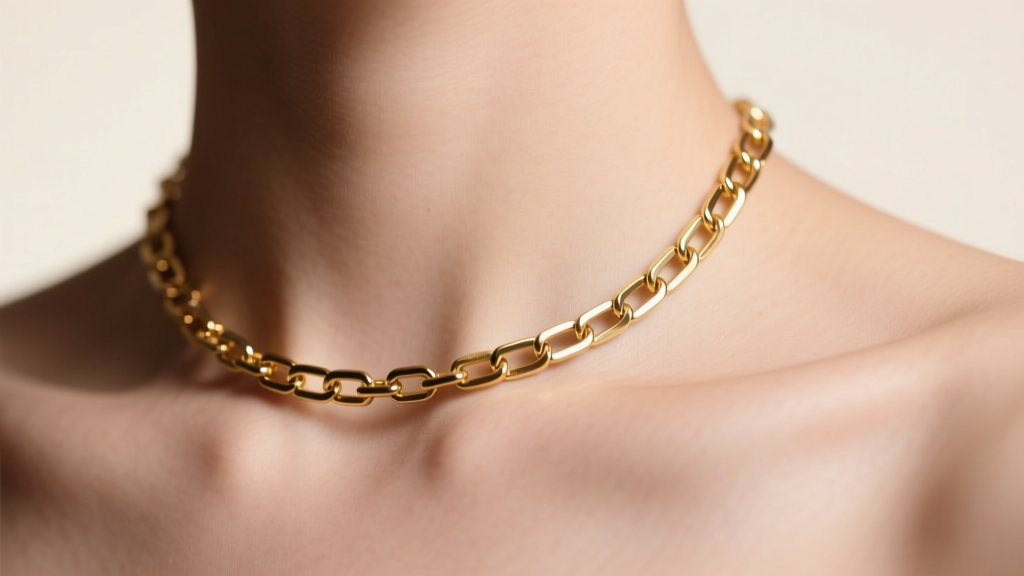
The Paradox of Delicate Jewelry: Balancing Aesthetics and Tensile Strength
The appeal of a thin necklace chain lies in its understated elegance, effortless layering potential, and modern minimalist aesthetic. However, the jewelry industry's push toward ultra-micro chains (0.5mm and below) has created a widespread durability crisis for everyday consumers. When a chain's cross-sectional area decreases, its tensile strength drops exponentially, making it highly susceptible to micro-fractures, kinking, and catastrophic failure from minor snags.
As a buyer in 2026, navigating the delicate jewelry market requires looking beyond the karat stamp and understanding the structural engineering of fine links. This comprehensive buying guide breaks down the metallurgy, link geometry, and mechanical weak points of thin chains, empowering you to invest in pieces that survive daily wear without sacrificing that coveted barely-there look.
Decoding Chain Styles: Which Thin Links Survive Daily Wear?
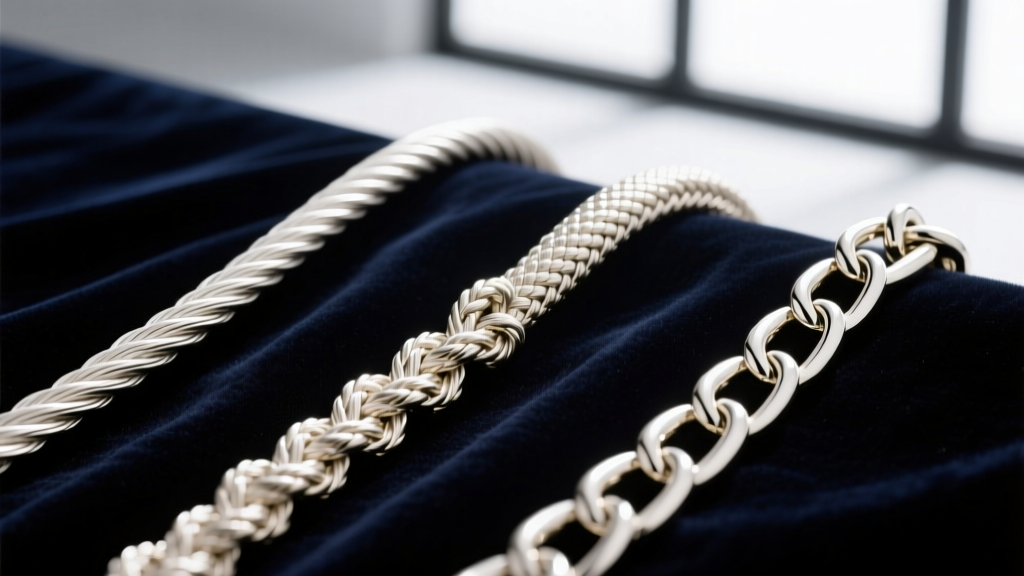
Not all chain weaves are created equal. The structural integrity of a thin necklace chain is heavily dictated by how the metal is manipulated. Here is how the most popular delicate styles perform under stress:
- Box Chains (0.8mm - 1.2mm): Constructed from interlocking square links, box chains offer exceptional durability for their size. The geometric distribution of weight prevents twisting. However, if a box chain snaps, it is often due to the links stretching and thinning out over time rather than a clean break.
- Cable Chains (0.7mm - 1.0mm): The classic oval-link design. While beautiful, thin cable chains are prone to catching on hair and clothing. The soldered joints on micro-cable chains are often the first point of failure, as the solder can degrade with exposure to lotions and friction.
- Rope Chains (1.0mm - 1.5mm): Twisted links mimic the look of a rope. Because the links are tightly woven and multi-directional, they hide kinks well and resist snapping. They are slightly heavier, making them a robust choice for a thin necklace chain that needs to hold a small pendant.
- Snake Chains (0.8mm - 1.2mm): Buyer Beware. Snake chains are made of tightly joined metal rings forming a smooth, flexible tube. While sleek, they are notorious for permanent kinking. Once the internal structure bends past a 45-degree angle, the chain is permanently weakened and cannot be fully repaired.
Metallurgy Matters: Why Karat and Alloy Dictate Lifespan
Consumers often assume higher karat gold equals higher quality. In the realm of thin chains, this is a dangerous misconception. Pure 24k gold is far too malleable for delicate links; it will stretch and deform under the weight of even a lightweight charm.
According to the Gemological Institute of America (GIA), the alloy metals mixed with pure gold dictate the chain's tensile strength and scratch resistance:
- 14k Gold (58.5% Gold): The undisputed champion for thin chains. The higher proportion of copper, zinc, and silver alloys creates a rigid, highly durable metal matrix that resists stretching and snapping. It is the optimal choice for chains under 1.0mm.
- 18k Gold (75% Gold): Offers a richer, warmer color but is noticeably softer. An 18k thin chain requires meticulous care and should be reserved for occasional wear or layered setups where it is protected by heavier chains.
- Platinum: Incredibly dense and durable, platinum does not lose metal when scratched; it merely displaces. However, platinum thin chains are heavy, expensive, and tend to stretch rather than snap, requiring occasional professional tightening.
- Sterling Silver (925): A budget-friendly option, but silver is inherently soft and prone to oxidation. Thin silver chains require frequent polishing and are highly susceptible to snapping if caught on fabric.
The Danger of Micro-Plating
If you are buying a gold-toned thin necklace chain on a budget, you will encounter terms like 'gold vermeil' and 'gold plated.' The Federal Trade Commission (FTC) strictly regulates these terms. Gold vermeil requires a base of sterling silver and a minimum of 2.5 microns of gold plating. Standard gold plating over brass can be as thin as 0.5 microns. On a thin chain, the friction points (the clasp and the back of the neck) will wear through micro-plating in a matter of weeks, exposing the base metal and leading to rapid degradation and skin irritation. For a chain meant to be worn daily, solid 14k gold is a non-negotiable investment.
Thickness vs. Pendant Weight: The Golden Ratio
A common failure mode occurs when buyers pair a heavy pendant with an ultra-thin chain. The constant kinetic friction of the pendant bail rubbing against the delicate center links acts like a microscopic saw, eventually cutting through the metal. Use this structural matrix to match your chain thickness to your pendant weight:
| Chain Thickness (mm) | Max Pendant Weight | Best Use Case & Structural Notes |
|---|---|---|
| 0.5mm - 0.7mm | Under 2 grams | Micro-charms, bare-neck layering. High risk of snapping if snagged. |
| 0.8mm - 1.0mm | 2 to 5 grams | Standard daily wear, small gemstone solitaires. The optimal balance of delicacy and strength. |
| 1.1mm - 1.5mm | 5 to 12 grams | Medium pendants, vintage lockets. Sturdy enough to withstand minor pulling. |
The Weakest Link: Clasp Mechanics and Soldering
The clasp assembly is responsible for over 60% of all thin chain losses. Many mass-market jewelers cut costs by attaching oversized, cheap spring-ring clasps to delicate chains using unsoldered jump rings.
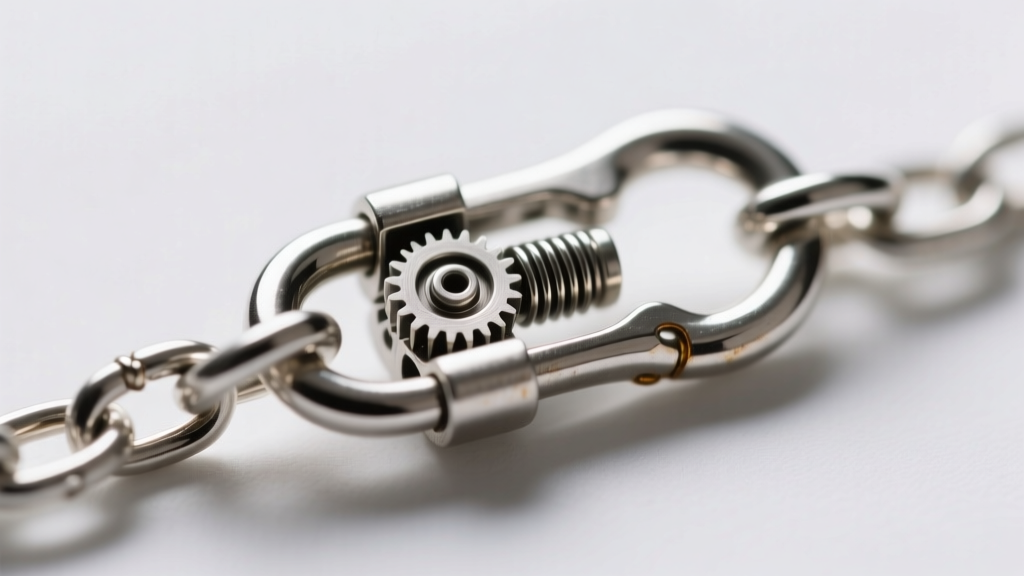
Spring Ring vs. Lobster Claw: Avoid spring rings on chains thinner than 1.0mm. The internal spring mechanism in micro-spring rings is notoriously weak and frequently fails to close completely, leading to lost chains. A 5mm or 6mm solid lobster claw clasp provides a much more secure closure due to its heavier internal spring and thicker structural walls.
The Soldered Jump Ring: Inspect the jump ring connecting the clasp to the chain. If there is a visible slit in the ring, it will eventually pull apart under tension. High-quality thin chains feature laser-soldered or flash-soldered jump rings, creating a continuous, unbroken circle of metal that cannot be pulled open.
Real-World Troubleshooting: Repairing Micro-Chains
Even the most carefully chosen thin necklace chain can snap if caught in a zipper or tangled in hair. How the chain is repaired dictates its future lifespan.
Traditional torch soldering is often disastrous for chains under 1.0mm. The broad heat distribution of a jeweler's torch can melt the surrounding micro-links, fusing them together and creating a rigid, brittle spot that will inevitably snap again. According to Jewelers of America, modern repair standards dictate the use of laser welding for delicate chains. Laser welders use a highly focused beam of light to fuse metal at a microscopic level without transferring heat to the adjacent links. When taking a thin chain in for repair, explicitly ask the jeweler if they utilize laser welding for micro-link reconstruction.
Final Verdict: What to Buy
To secure a thin necklace chain that offers both ethereal beauty and everyday resilience, target a 14k solid gold box or rope chain measuring between 0.8mm and 1.0mm. Ensure it is fitted with a securely soldered lobster clasp, and strictly respect the pendant weight ratios. By prioritizing structural geometry and alloy tensile strength over fleeting micro-trends, your delicate chains will remain a permanent, unbroken staple in your jewelry wardrobe.


