Material Guide: Choosing the Perfect 3 Strand Beaded Necklace
Discover how bead composition, stringing wire, and clasp metals impact the drape, durability, and price of a 3 strand beaded necklace in our expert guide.

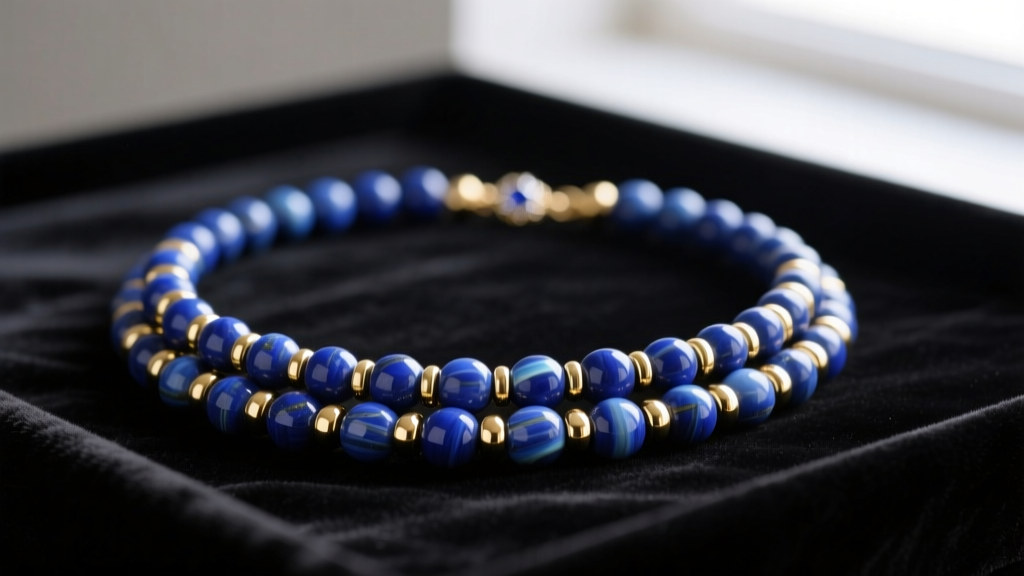
A 3 strand beaded necklace is an exercise in structural engineering as much as it is an aesthetic statement. Unlike a single-strand chain that drapes with simple gravity, a multi-strand piece introduces complex tension vectors, varied weight distributions, and intricate nesting geometry. When selecting or designing a multi-strand necklace, the materials you choose dictate not only the visual impact but the functional lifespan of the jewelry. In this comprehensive material guide, we break down the exact properties of beads, stringing mediums, and metallurgical clasp components to help you make informed, expert-level decisions.
Bead Material Comparison: Density, Hardness, and Optical Properties
The beads themselves are the primary variable in a 3 strand beaded necklace. The specific gravity (SG) of your chosen material will determine how heavily the necklace pulls on the cervical spine, while the Mohs hardness scale dictates its resistance to the inevitable friction of multi-strand wear. According to the Gemological Institute of America (GIA), understanding these physical properties is critical for pairing the right stones with the correct stringing tension.
| Material Type | Specific Gravity (SG) | Mohs Hardness | Best Stringing Match | Relative Price Tier |
|---|---|---|---|---|
| Czech Glass (Pressed) | 2.40 - 2.60 | 5.5 - 6.5 | 49-Strand Micro Wire (0.015') | $ |
| Freshwater Pearls | 2.60 - 2.85 | 2.5 - 4.5 | Knotting Silk (Size F) or PowerPro | $$ |
| Natural Amethyst | 2.65 | 7.0 | 49-Strand Micro Wire (0.018') | $$$ |
| Porous Turquoise | 2.60 - 2.90 | 5.0 - 6.0 | Coated Wire to prevent acid transfer | $$$ |
| High-Grade Acrylic | 1.18 - 1.20 | 3.0 | Nylon Monofilament or Silk | $ |
When mixing materials in a single 3 strand beaded necklace, always place the heaviest beads (highest SG) on the innermost strand. The inner strand has the shortest radius and rests closest to the collarbone, providing a stable anchor. Placing heavy gemstones on the outermost strand creates a pendulum effect, causing the necklace to swing and tangle excessively during movement.
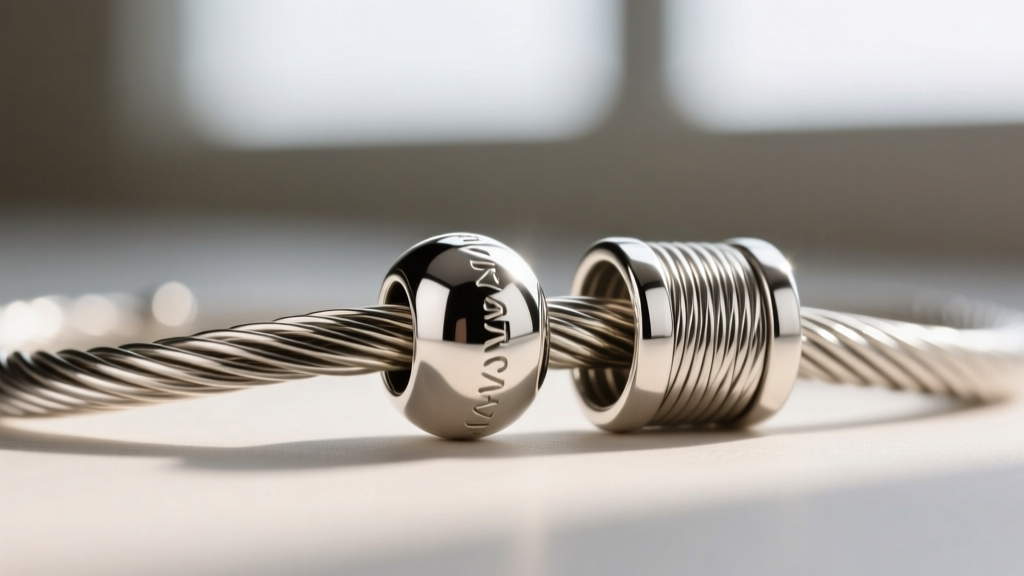
The Hidden Skeleton: Stringing Materials for Multi-Strand Tension
The most common failure point in a 3 strand beaded necklace is the stringing material. The outer strand of a multi-strand piece bears up to 40% more tension than the inner strand due to the wider arc it must form around the neck. Standard nylon threads or cheap monofilaments will stretch, warp, and eventually snap under this uneven load.
Stainless Steel Micro-Wire
For gemstone and glass beads, a 49-strand stainless steel micro-wire (such as those manufactured by Beadalon) is the industry standard. The 49 tiny filaments woven together provide incredible flexibility, allowing the necklace to drape like fabric rather than stiff plastic. For standard 6mm to 8mm glass beads, a 0.015-inch gauge is sufficient. However, if your 3 strand beaded necklace features heavy 10mm+ natural stones, you must upgrade to a 0.024-inch gauge wire to prevent the wire from kinking or shearing inside the bead holes.
Braided Polyethylene (PowerPro)
If your design incorporates freshwater pearls or soft organic beads, wire will eventually saw through the delicate nacre. Braided polyethylene thread offers a tensile strength of up to 30 lbs while remaining soft enough to knot. When knotting a 3 strand pearl necklace, use a micro-drop of flexible jewelry cement (like GS Hypo Cement) on each knot to prevent unspooling without making the thread brittle.
Clasp Metallurgy and Load-Bearing Capacities
A multi-strand necklace requires a specialized clasp to gather the three strands cleanly without pinching the skin or twisting the wires. The two most common styles are the multi-strand tube clasp and the slide clasp, but the metal composition is where longevity is won or lost.
- Sterling Silver (925): While beautiful, sterling silver is relatively soft. Over time, the constant friction of the jump rings and the pulling tension of three strands can oval out the loops on a silver tube clasp. If using silver, ensure the end caps are soldered and the loops are reinforced with steel inserts.
- 14k Gold-Filled: Offering a much harder surface than plated brass, 14k gold-filled clasps resist tarnishing and provide excellent structural integrity. The thick layer of karat gold mechanically bonded to a brass core handles the shear stress of a heavy 3 strand beaded necklace beautifully.
- Neodymium Magnetic Clasps: Magnetic tube clasps are highly popular for multi-strand pieces due to ease of use. However, ensure the magnets are graded N52 (the strongest commercially available). Lower-grade magnets (like N35) will fail to hold the dead weight of three strands of heavy gemstones, leading to catastrophic drops.
Drape Dynamics: The Mathematics of Nesting
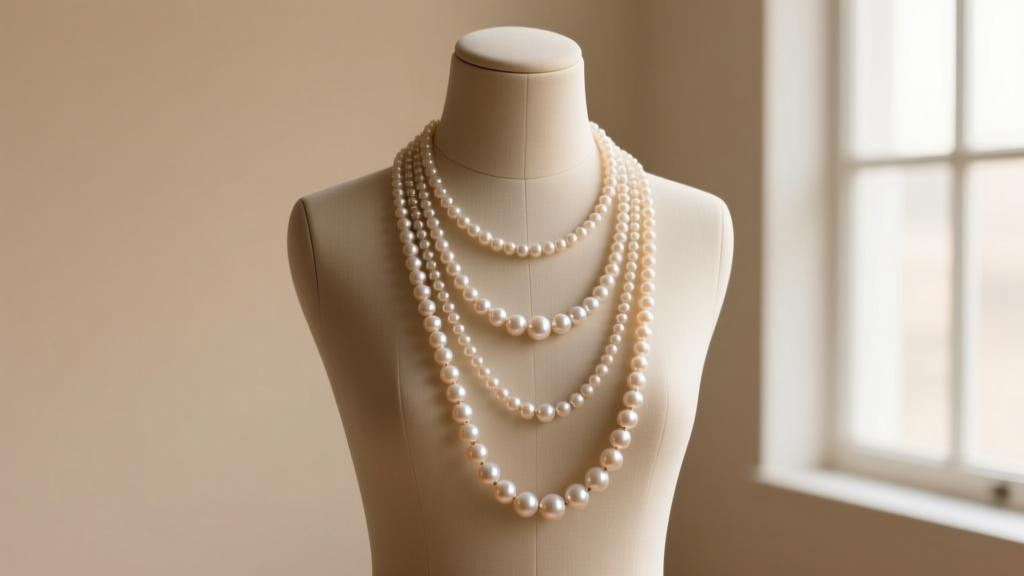
Material choice means nothing if the geometry is flawed. A 3 strand beaded necklace must be engineered with precise length differentials to prevent the 'choke effect'—where all three strands stack directly on top of one another, looking like a single, thick, clumsy rope.
The general rule of nesting dictates that the length differential between strands must be at least 1.5 times the diameter of the largest bead used in the design.
For example, if your 3 strand beaded necklace features 8mm round lapis lazuli beads, the minimum differential between the inner and middle strand should be 12mm (approx. 0.5 inches), but practically, a 1.25-inch to 1.5-inch difference per strand yields a flawless, cascading silhouette. Therefore, your strands should be cut at 16 inches (inner), 17.5 inches (middle), and 19 inches (outer). If you are using flat, disc-shaped beads or nuggets, the differential can be slightly reduced, as their lower vertical profile takes up less space when layered.
Real-World Troubleshooting and Maintenance
Even the finest 3 strand beaded necklace requires specific maintenance protocols based on its material makeup. Porous stones like turquoise, malachite, and lapis lazuli are highly sensitive to the acids in human sweat and the chemicals in perfumes. If the inner strand of your necklace rests directly against the skin, wipe the beads with a damp, lint-free microfiber cloth after every wear to prevent the matrix of the stone from dulling or chalky degradation.
If you notice the outer strand of your necklace beginning to sag or hang lower than the middle strand, the stringing wire has experienced plastic deformation (stretching). Do not attempt to re-crimp the existing wire; the structural integrity of the metal has been compromised. The only safe repair is to cut the strand, restring it on fresh 49-strand wire, and use a new sterling silver crimp cover to maintain the aesthetic continuity of the piece. By respecting the physical properties of your materials, your multi-strand jewelry will remain a flawless, wearable work of art for decades.


