Tiger Eye Gold Necklace Styling & 2026 Trend Guide
Discover 2026 tiger eye gold necklace trends, gemological grading, karat pairings, and expert styling frameworks for grounded opulence.

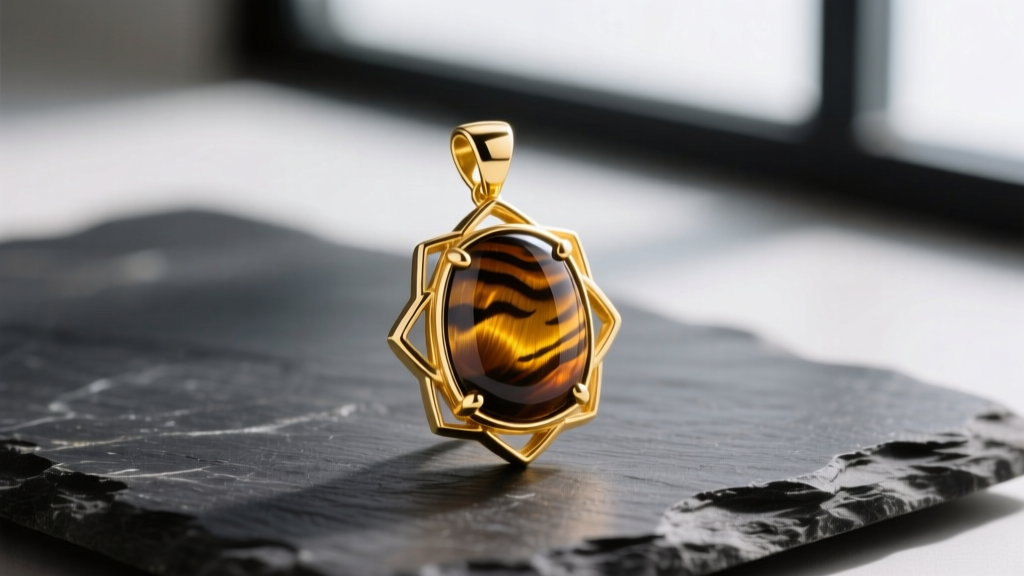
The 2026 Shift: Grounded Opulence and the Tiger Eye Gold Necklace
As we navigate the jewelry landscape of 2026, the sterile, hyper-minimalist aesthetics of the early 2020s have officially given way to a movement industry insiders are calling 'Grounded Opulence.' This trend prioritizes organic textures, earth-born materials, and pieces that feel both ancient and meticulously crafted. At the absolute center of this shift is the tiger eye gold necklace. No longer relegated to bohemian souvenir shops or basic crystal-healing catalogs, high-grade tiger's eye has been reclaimed by fine jewelers and luxury houses. When paired with the warm, rich tones of yellow or rose gold, this striking quartz variant offers a masterclass in wearable, earthy luxury. But not all tiger's eye is created equal, and understanding the gemological and metallurgical nuances is critical for the modern collector.
Gemological Deep Dive: Sourcing and Chatoyancy
To appreciate a premium tiger eye gold necklace, one must first understand the optical phenomenon that gives the stone its name: chatoyancy. According to the Gemological Institute of America (GIA), tiger's eye is formed through a complex pseudomorphic replacement process where fibrous crocidolite (a type of asbestos) is gradually replaced by silica over millions of years. The resulting stone retains the fibrous structure, which reflects light in a sharp, sweeping band reminiscent of a feline's eye.
When evaluating a stone for a fine jewelry setting, gemologists look for three specific traits:
- Band Sharpness: The 'flash' should be a single, razor-sharp line that glides smoothly across the dome of the cabochon as the light source moves. Blurry or fragmented bands indicate lower-grade material or improper cutting.
- Color Saturation: The finest stones exhibit a deep, honey-brown base with vivid, metallic-gold striations. Stones that lean too heavily into gray or pale yellow are considered commercial grade.
- Origin Markers: While tiger's eye is mined globally, the most prized material with the deepest golden hues and tightest fibrous structures typically originates from the Northern Cape province of South Africa and specific deposits in Western Australia.
Metallurgy Matters: Choosing the Right Gold Alloy
The metalwork in a tiger eye gold necklace is just as vital as the stone itself. The interplay between the gold's karat weight and the stone's natural palette dictates the piece's overall impact.
14k Gold: The Daily Workhorse
Composed of 58.5% pure gold and alloyed with copper and silver, 14k gold offers superior tensile strength. For tiger's eye pendants set in intricate prong settings or delicate wire-wrapped bails, 14k is the superior choice. Its slightly paler yellow hue provides a subtle contrast that allows the stone's internal golden bands to take center stage without competing for attention.
18k Gold: The Luxury Standard
At 75% pure gold, 18k gold possesses a deep, buttery yellow saturation. When paired with a high-dome tiger's eye cabochon, the metal and stone create a seamless, monochromatic gradient of warm earth tones. While 18k is softer and more prone to scratching, it is the undisputed choice for heavy bezel settings and statement pieces designed for evening or occasional wear.
The Rise of Rose Gold
A distinct 2026 trend is the pairing of tiger's eye with 14k or 18k rose gold. The copper-heavy alloy pulls out the subtle reddish-brown undertones hidden within the stone's fibrous inclusions, creating a deeply romantic, vintage-inspired aesthetic that flatters a wide variety of skin tones.

2026 Styling Frameworks: How to Wear It Now
Styling a tiger eye gold necklace in 2026 requires moving beyond the single-strand paradigm. The current ethos favors intentional asymmetry and mixed textures. Here are three expert-approved styling frameworks:
1. The Earthcore Layering Stack
Combine a 16-inch tiger's eye bead or raw-stone choker with a 22-inch 14k gold rope chain featuring a single, polished tiger's eye teardrop pendant. This juxtaposition of rough-hewn and highly polished elements perfectly encapsulates the Grounded Opulence trend. Add an oxidized silver chain in the middle to break up the warm tones and introduce a modern, industrial edge.
2. The Statement Solitaire
For a bold, minimalist approach, opt for an oversized, 30mm to 40mm high-dome cabochon set in a thick 18k gold bezel. Suspend it from a heavy 5mm to 7mm gold curb or Figaro chain. This look relies entirely on the architectural weight of the gold and the optical depth of the stone, making it an ideal pairing for structured blazers or deep-V silk blouses.
3. The Mixed-Metal Asymmetric Drape
Drape a long (28-inch to 32-inch) tiger eye gold lariat necklace so that it hangs off-center. Pair it with a tight, 14-inch gold herringbone choker. This creates a striking visual imbalance that draws the eye downward, elongating the neck and highlighting the collarbone.
Market Pricing & Value Matrix
Understanding the pricing tiers of the tiger eye gold necklace market is essential to avoid overpaying for commercial-grade materials or underestimating artisan craftsmanship. The table below outlines what to expect across different market segments in 2026.
| Market Tier | Price Range (USD) | Gold Karat & Weight | Stone Quality & Cut | Setting Style |
|---|---|---|---|---|
| Entry / Artisan | $80 - $250 | 10k - 14k (Lightweight) | Tumbled, Raw, or Flat Cabochon | Wire-wrapped, Simple Prong, or Glued Bail |
| Mid-Tier / Fine | $300 - $750 | 14k - 18k (Medium Weight) | High-Dome Cabochon, Sharp Chatoyancy | Solid Bezel, Halo, or Custom Fabricated Bail |
| Luxury / Designer | $900 - $2,500+ | 18k - 22k (Heavy/Artisan) | Premium Origin, Precision Carved or Faceted | Artisan Bezel, Pavé Diamond Accents, Hand-Engraved |
Critical Care Protocols and Failure Modes
Despite its alluring beauty, tiger's eye requires specific care protocols that differ significantly from transparent gemstones like diamonds or sapphires. The American Gem Society notes that while tiger's eye sits at a respectable 7 on the Mohs hardness scale, its unique internal structure makes it vulnerable to specific types of damage.
The Ultrasonic Cleaner Trap
Never place a tiger eye gold necklace in an ultrasonic jewelry cleaner. The high-frequency vibrations can exploit the microscopic cleavage planes within the stone's fibrous structure, leading to internal fracturing or a complete split along the banding. Furthermore, if the stone has been treated with oils or resins to enhance its polish, ultrasonic waves will strip these treatments, leaving the stone dull and porous.
Prong Failure and Girdle Chipping
Because tiger's eye is fibrous, it is highly susceptible to chipping at the girdle (the outer edge) if subjected to hard impacts. If your necklace utilizes a prong setting, ensure the prongs are thick, rounded, and checked by a jeweler every six months. For daily wearers, a full bezel setting is strongly recommended, as it completely encases the vulnerable edges of the stone in a protective gold rim.
Chemical Sensitivities
Tiger's eye can be dulled by prolonged exposure to harsh chemicals, including chlorine, bleach, and even the acidic pH of human sweat. Always remove your necklace before swimming, exercising, or applying heavy perfumes. To clean, use only a soft microfiber cloth and a mild, phosphate-free dish soap diluted in lukewarm water, gently wiping the stone and drying it immediately.
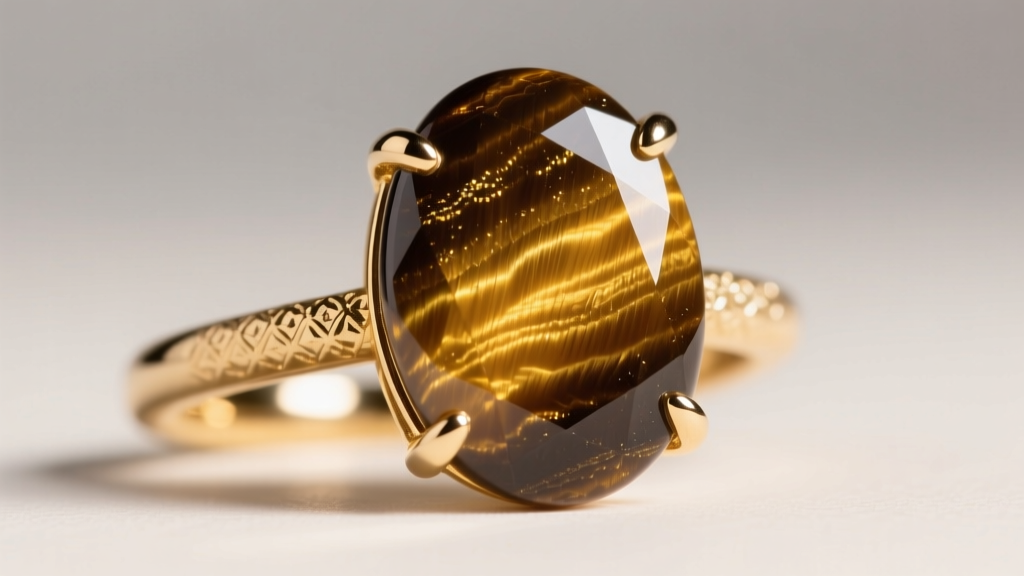
The Collector's Verdict
The tiger eye gold necklace has successfully transcended its historical associations to become a cornerstone of modern, earth-conscious fine jewelry. By prioritizing sharp chatoyancy, selecting the appropriate gold alloy for your lifestyle, and adhering to strict, non-vibrational care protocols, you can secure a piece that is as durable as it is visually captivating. As 2026 continues to champion textures that connect us to the natural world, a masterfully crafted tiger's eye pendant remains an indispensable, grounding anchor in any curated jewelry wardrobe.


