Tigers Eye Crystal Necklace Buying Guide: Quality & Fakes
Learn how to choose a genuine tigers eye crystal necklace. We cover chatoyancy grading, spotting fakes, metal pairings, and pricing tiers.

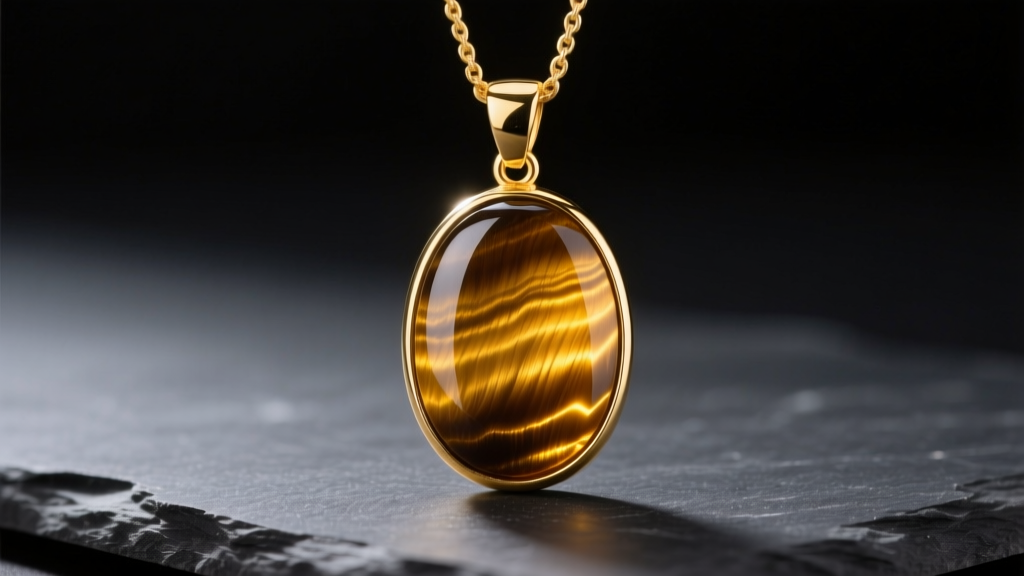
The Gemological Profile: Understanding Tigers Eye
Before investing in a tigers eye crystal necklace, it is crucial to understand the unique geological formation of this captivating stone. According to the Mindat mineral database, tiger's eye is not a traditional crystal but a pseudomorph—a mineral that has taken the external form of another mineral. Specifically, it is a macrocrystalline quartz that has replaced crocidolite (blue asbestos) over millions of years. This replacement process, driven by silica-rich groundwater, preserves the fibrous, parallel structure of the original crocidolite while transforming the material into silicon dioxide.
This unique genesis gives tiger's eye its defining characteristics: a Mohs hardness of 7, a specific gravity ranging from 2.64 to 2.71, and a lack of true cleavage, meaning it exhibits a conchoidal (shell-like) fracture when broken. Because of its fibrous internal architecture, tiger's eye is slightly more prone to chipping along the edges than solid quartz varieties like amethyst or citrine. This structural reality directly impacts how the stone should be cut, set, and worn in jewelry.
Evaluating Chatoyancy: The 'Cat's Eye' Effect
The primary value driver for any tiger's eye crystal necklace is the quality of its chatoyancy—the optical phenomenon that produces a luminous, moving band of light across the surface of the stone. This effect, often called the 'cat's eye' effect, is caused by the reflection of light off the densely packed, parallel fibrous inclusions within the quartz.
When evaluating a pendant or a strand of beads, look for the following chatoyancy markers:
- Band Sharpness: The band of light should be crisp, distinct, and sharply defined against the darker background of the stone. Blurry or diffused bands indicate lower-grade material or improper cutting angles.
- Band Continuity: The flash should run continuously across the entire surface of the cabochon or bead without breaking or splitting into multiple bands.
- Contrast: The highest quality tiger's eye exhibits a deep, rich golden-brown body color that contrasts dramatically with the bright, almost metallic yellow-gold flash.
- Orientation: In a well-cut cabochon pendant, the base of the stone must be cut perfectly parallel to the fibrous inclusions. If the cutter misjudges the angle, the chatoyant band will be off-center or tilted.
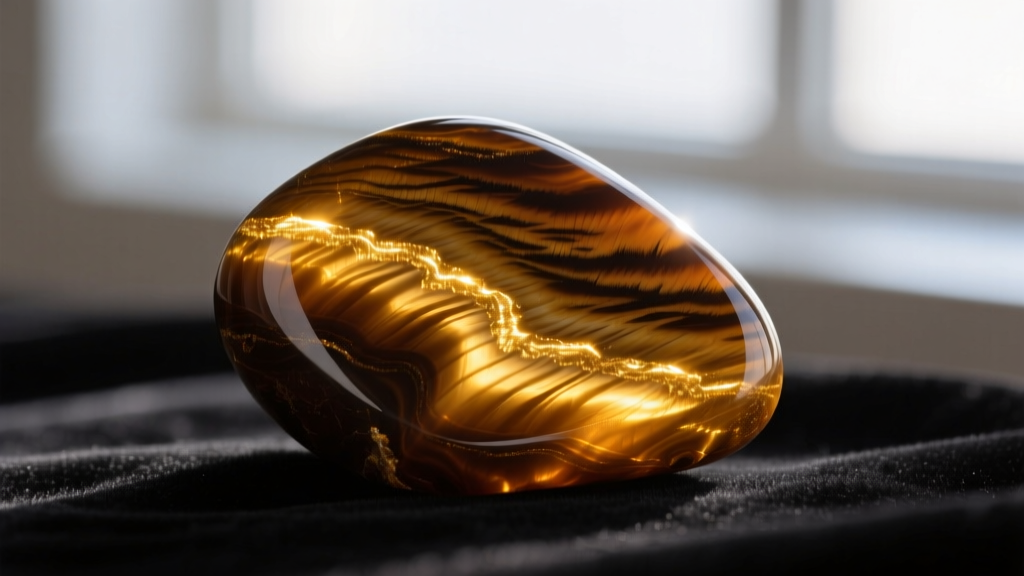
Real vs. Fake: How to Spot Imitations
Because of its popularity, the market is flooded with imitation tiger's eye. Knowing how to distinguish a genuine tigers eye crystal necklace from a synthetic fake is a vital buying skill. The most common imitation is 'Catt's eye glass' or fiber optic glass, a synthetic material manufactured to mimic chatoyancy.
Diagnostic Tests for Authenticity
You can perform several non-destructive tests to verify your stone:
- The Magnification Test: Under a 10x jeweler's loupe, genuine tiger's eye will show natural, slightly irregular fibrous structures and microscopic mineral inclusions. Fiber optic glass will reveal perfectly uniform, machine-extruded hexagonal or circular tubes with zero natural imperfections.
- The Temperature Test: Quartz has a higher thermal conductivity than glass. When pressed against your cheek or the inside of your wrist, real tiger's eye will feel noticeably cool to the touch and will take longer to warm up to your body temperature than glass.
- The Weight Test: Genuine tiger's eye (specific gravity ~2.65) is denser and heavier than most imitation glasses of the exact same volume. A strand of real 8mm beads will have a substantial, heavy drape compared to a synthetic counterpart.
- The Polarization Test: If you view the stone through crossed polarizing filters and rotate it 360 degrees, genuine quartz will exhibit four distinct extinction positions (turning dark), whereas isotopic glass will remain dark in all positions.
For a comprehensive overview of quartz identification and optical properties, the Gemological Institute of America (GIA) provides excellent educational resources on macrocrystalline quartz varieties.
Metal Pairings and Hardware Considerations
The hardware of your necklace is just as important as the stone. Because tiger's eye features warm, earthy golden-brown tones, it pairs exceptionally well with specific metals:
- Yellow Gold (14k or 18k): Enhances the golden flash and creates a luxurious, cohesive look. Ideal for formal or high-end pendants.
- Sterling Silver (925): Provides a striking, high-contrast backdrop that makes the golden bands pop. Excellent for everyday wear and bohemian styles.
- Copper or Brass: Leans into the earthy, rustic aesthetic. Often used in artisan or wire-wrapped tigers eye crystal necklace designs.
Setting Advice: Always opt for bezel settings over prong settings for tiger's eye pendants. The fibrous nature of the stone makes the girdle (the outer edge) vulnerable to chipping if struck. A full or partial bezel protects the perimeter, ensuring the longevity of your jewelry.
Tigers Eye Necklace Pricing Matrix
Pricing varies wildly based on the origin of the rough (South African and Australian material is generally superior), the intensity of the chatoyancy, and the craftsmanship of the setting. Use this matrix to gauge fair market value:
| Quality Tier | Stone Characteristics | Hardware & Setting | Estimated Price Range (USD) |
|---|---|---|---|
| Commercial | Muddy body color, weak or off-center flash, opaque patches. | Base metals, silver-plated, simple wire wrapping. | $15 - $45 |
| Fine | Rich golden-brown, sharp continuous band, high polish. | Solid 925 sterling silver, 14k gold vermeil, secure bezels. | $50 - $150 |
| Collector | Flawless contrast, rare 'marbled' patterns, custom precision cuts. | Solid 14k/18k gold, custom artisan fabrication, diamond accents. | $200 - $600+ |

Styling Lengths and Neckline Pairings
A tigers eye crystal necklace is a versatile wardrobe staple, but its visual weight requires strategic styling. Tiger's eye is an opaque, visually 'heavy' stone compared to transparent gems like aquamarine. Therefore, the length of the necklace dictates how it interacts with your clothing.
- Choker (14-16 inches): Best for off-the-shoulder tops or scoop necklines. A beaded tiger's eye choker adds a bold, grounded focal point to the collarbone. Avoid wearing it with high collars or turtlenecks, as the dark stones will clash with the fabric.
- Princess (18 inches): The most versatile length. It rests perfectly on the clavicle and pairs beautifully with V-neck blouses, button-down shirts, and wrap dresses. The V-shape of the neckline mimics the downward point of a pendant, creating a flattering, elongating effect.
- Matinee (20-24 inches): Ideal for business casual or bohemian layering. A matinee-length tiger's eye pendant draws the eye downward and works exceptionally well over solid-colored crewneck sweaters or simple linen tunics.
Care, Maintenance, and Durability
While tiger's eye ranks at a 7 on the Mohs scale—making it highly resistant to everyday scratches from dust and dirt—it requires specific care to maintain its polish and structural integrity.
What to Avoid
Never clean a tigers eye crystal necklace in an ultrasonic cleaner. The high-frequency vibrations can exploit microscopic fissures within the fibrous structure, causing the stone to crack or splinter internally. Similarly, avoid steam cleaners, as sudden thermal shock can fracture the quartz.
Chemical exposure is another risk factor. Tiger's eye often contains trace amounts of iron oxide, which gives it the golden-brown hue. Prolonged exposure to harsh chemicals, chlorine in swimming pools, or acidic skincare products can dull the polish and potentially alter the surface chemistry over time.
Proper Cleaning Protocol
To clean your necklace, use a mild, phosphate-free dish soap mixed with lukewarm water. Gently scrub the stone and the metal setting with a soft-bristled baby toothbrush. Rinse thoroughly under lukewarm running water and dry immediately with a microfiber cloth. Store your necklace in a fabric-lined jewelry box away from direct, prolonged sunlight, which can cause the organic-looking colors to fade over decades of exposure.
Expert Insight: If you purchase a beaded tiger's eye necklace, inspect the drill holes. High-quality beads will have clean, sharp drill holes with minimal chipping around the edges. Frayed or heavily chipped drill holes indicate mass-produced, low-grade cutting that compromises the bead's structural strength and can lead to premature breakage of the stringing wire.


