Silver Byzantine Necklace Value: Solid vs Hollow Guide
Discover how to assess silver byzantine necklace value. Compare solid vs. hollow links, sterling grades, and pricing to make a smart investment.

The Allure and Architecture of the Byzantine Chain
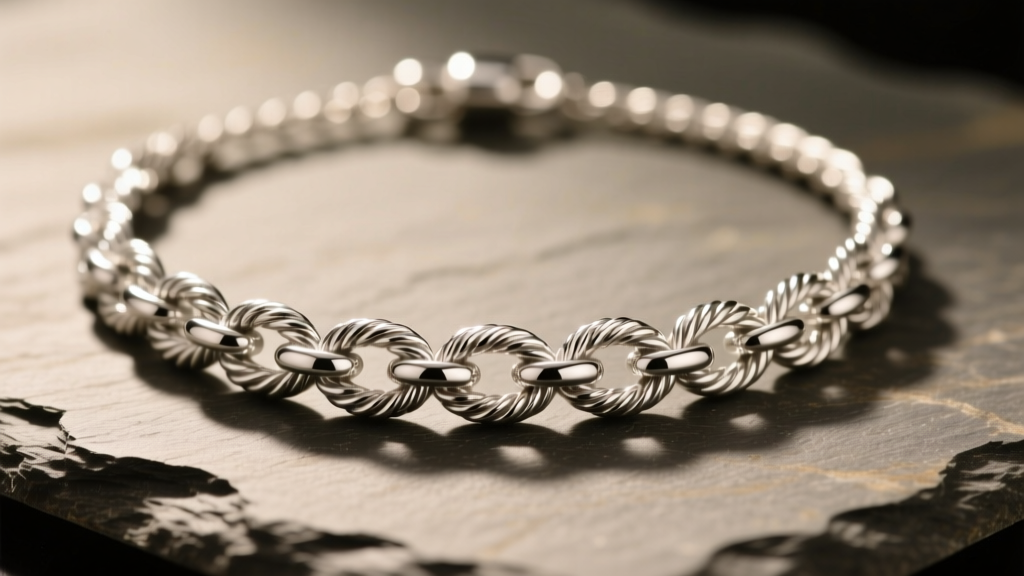
When evaluating statement jewelry, few pieces command attention quite like a silver byzantine necklace. Known for its complex, rope-like texture and fluid drape, the Byzantine weave is a masterpiece of metalworking. Unlike simple cable or curb chains, the Byzantine pattern typically utilizes a 4-in-1 or 6-in-1 linking structure, where each ring passes through four or six others. This intricate architecture creates a dense, dimensional chain that catches the light from multiple angles.
However, this structural complexity directly impacts the manufacturing cost and, consequently, the retail price. Because the weave is so difficult to automate, many high-quality silver byzantine necklaces are still assembled by hand or require highly specialized, slow-running machinery. For buyers navigating the 2026 jewelry market, understanding where your money is actually going—beyond just the melt value of the silver—is crucial for making an informed purchase. This guide breaks down the core value drivers of the Byzantine chain, helping you distinguish between a genuine heirloom investment and an overpriced fashion accessory.
Solid vs. Hollow: The Core Value Proposition
The single most significant factor in assessing a silver byzantine necklace is whether the links are solid or hollow. This distinction dictates the chain's weight, durability, repairability, and ultimate lifespan.
The Hollow Chain Illusion
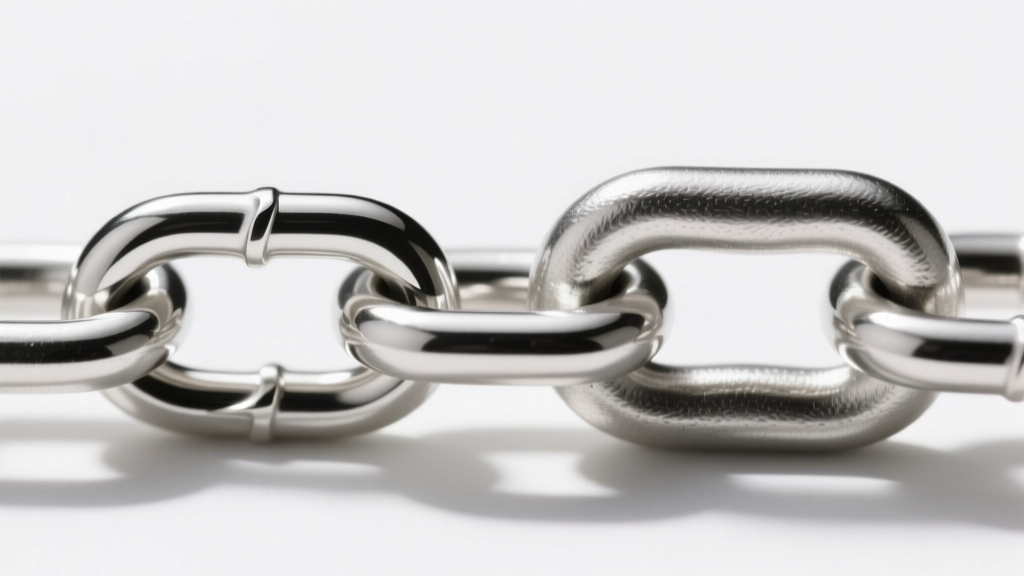
Hollow silver chains are manufactured using a process called electroforming, or by stamping and soldering thin sheets of silver over a base metal core that is later dissolved. The result is a chain that looks remarkably thick and substantial but weighs a fraction of its solid counterpart. While a hollow silver byzantine necklace might retail for an attractive $90 to $150, it comes with severe compromises. Hollow links are highly susceptible to crushing. If you accidentally snag the chain or sleep in it, the thin silver walls can dent or collapse. Furthermore, because the links are essentially empty shells, they cannot be traditionally soldered if they break. A crushed hollow Byzantine chain is almost always a total loss.
The Solid Chain Investment
A solid silver byzantine necklace is crafted from drawn wire that is cut into individual jump rings and woven together. The resulting chain is heavy, luxurious, and incredibly durable. Solid links can withstand significant tensile stress and, if a link ever does pull apart, a skilled jeweler can easily solder it back together without compromising the surrounding weave. The value here is in longevity and repairability. When you pay a premium for a solid Byzantine chain, you are paying for a piece that can be passed down through generations.
| Feature | Solid 925 Silver Byzantine | Hollow 925 Silver Byzantine |
|---|---|---|
| Average Weight (18-inch) | 45g - 85g | 12g - 22g |
| Typical Price Range | $250 - $600+ | $80 - $160 |
| Crush Resistance | High (resists deformation) | Low (dents easily) |
| Repairability | Easily soldered by a jeweler | Nearly impossible to fix |
| Drape & Tactile Feel | Heavy, fluid, luxurious | Light, slightly stiff |
Decoding Silver Grades and Hallmarks
Once you have decided between solid and hollow, the next step in your value assessment is verifying the silver grade. According to the Gemological Institute of America (GIA), pure silver is too soft for functional jewelry, which is why it is alloyed with other metals to increase tensile strength.
- 925 Sterling Silver: The global standard. Composed of 92.5% pure silver and 7.5% copper. The copper provides the necessary hardness for the tight bends required in a Byzantine weave, though it does make the chain prone to tarnishing over time.
- Argentium Silver (935 or 960): A premium upgrade where some or all of the copper is replaced with germanium. Argentium is highly resistant to tarnish and has a brighter, whiter luster. A solid Argentium silver byzantine necklace will command a 15% to 25% price premium over standard sterling, but the reduced maintenance often justifies the cost for daily wearers.
- 999 Fine Silver: Rarely used for complex chain weaves. Fine silver is generally too soft to hold the structural integrity of a 4-in-1 Byzantine pattern without stretching or warping under its own weight. If a vendor claims a heavy Byzantine chain is 999 fine silver, approach with extreme skepticism.
2026 Market Pricing: What Should You Actually Pay?
To accurately assess value, you must separate the intrinsic metal value from the craftsmanship premium. You can track the daily spot price of silver on markets like Kitco. In early 2026, with silver hovering around $28 to $32 per troy ounce, the raw melt value of silver is approximately $0.90 to $1.05 per gram.
If you are buying a 60-gram solid sterling silver byzantine necklace, the raw silver value is roughly $55. However, a retail price of $300 to $450 for this exact piece is entirely fair and expected. Why? Because the Byzantine weave is one of the most labor-intensive chains to produce. The markup on a Byzantine chain is heavily skewed toward manufacturing labor, quality control, and the precise soldering of the clasp, rather than the raw commodity. Conversely, if you see a 60-gram "solid" Byzantine chain selling for $70, it is mathematically impossible for it to be solid 925 silver; it is either heavily plated base metal or a hollow chain mislabeled by the seller.
Red Flags and Quality Control Checklist
When inspecting a silver byzantine necklace in person or evaluating high-resolution photos online, use this checklist to identify poor craftsmanship that ruins the chain's value:
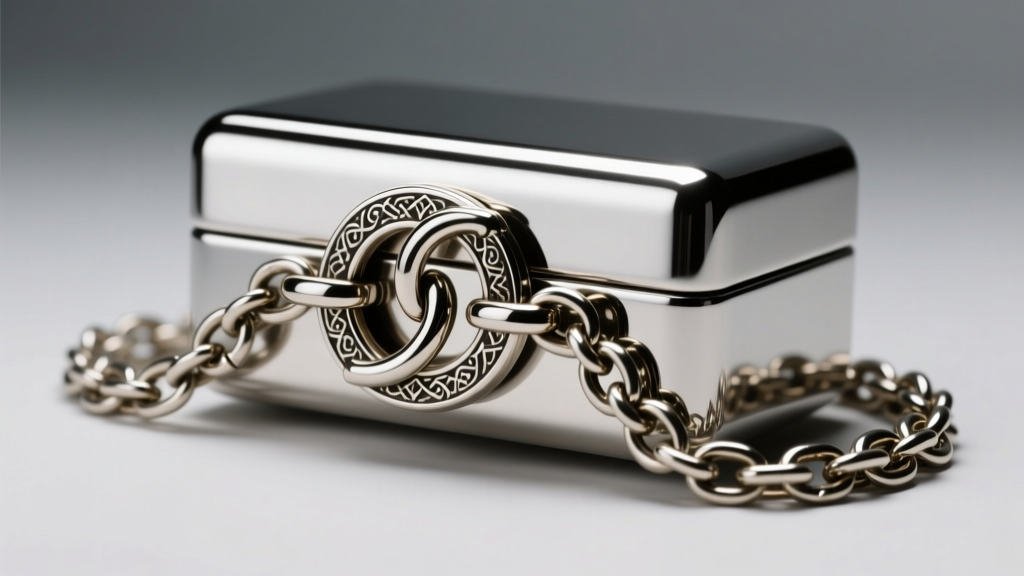
- The Clasp Mismatch: A heavy, solid Byzantine chain requires a robust clasp. Look for a cast lobster clasp or, ideally, a box clasp with a figure-8 safety latch. If a thick chain is attached to a tiny, flimsy spring-ring clasp, it is a massive red flag indicating the manufacturer cut corners on the most critical stress point.
- Unsoldered Jump Rings: Run your fingernail lightly along the weave. If the links catch or pull at your skin, the jump rings may not be properly soldered shut. In a high-quality chain, every single link should be seamlessly soldered to prevent stretching and hair-pulling.
- Stiff Drape: Pick up the chain by one end. A well-made solid Byzantine necklace should drape like liquid metal, folding effortlessly over itself. If the chain feels rigid, kinks easily, or holds a stiff shape, the links were likely machine-pressed too tightly or the wire gauge is disproportionately thick for the ring diameter.
- Plating Wear at the Clasp: Inspect the area where the clasp meets the chain. If you see a yellowish or grayish undertone bleeding through the silver, you are looking at a silver-plated brass or copper chain, not solid sterling.
"The true test of a Byzantine chain's quality isn't just how it looks on the velvet pad, but how it behaves in motion. A master-crafted weave will articulate fluidly without pinching, while a poorly calibrated machine weave will bind and snap under tension." — Master Bench Jeweler
Final Verdict: Budgeting for Your Byzantine Piece
Assessing the value of a silver byzantine necklace requires looking past the initial price tag and evaluating the cost-per-wear over its lifetime. If your budget is strictly under $150, a hollow silver chain or a simpler weave (like a solid rope or curb chain) is a safer bet, as a hollow Byzantine chain will inevitably crush and become unrepairable.
However, if you are allocating $300 to $600, a solid 925 or Argentium silver byzantine necklace is an exceptional investment. The unparalleled visual depth of the weave, combined with the heavy, satisfying drape of solid silver, creates a statement piece that transcends seasonal trends. By verifying the weight, demanding proper hallmarks, and ensuring the clasp is engineered to handle the chain's mass, you can confidently purchase a Byzantine masterpiece that will retain its structural integrity and aesthetic brilliance for decades.


