Is the Necklace From Titanic Real? The Heart of the Ocean Explained
Discover if the Heart of the Ocean necklace from Titanic is real. We explore the movie prop, the Hope Diamond, and Harry Winston's $1.4M replica.

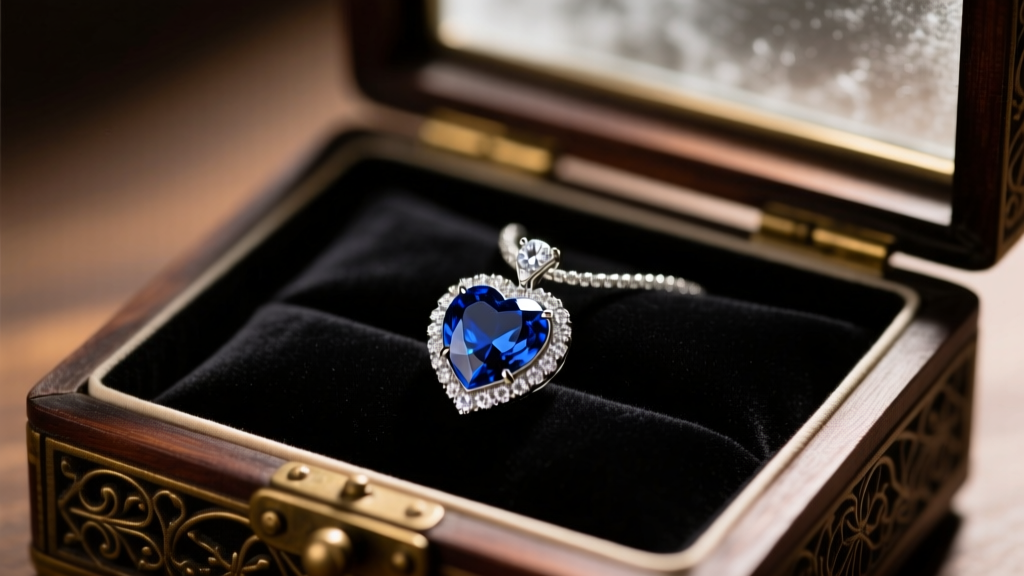
The Cinematic Legend of the Heart of the Ocean
When James Cameron’s 1997 epic Titanic swept the globe, audiences were captivated not just by the tragic romance of Jack and Rose, but by a singular, mesmerizing piece of jewelry: the Heart of the Ocean. Decades later, the query 'is the necklace from titanic real' remains one of the most frequently asked questions in jewelry history. The short answer is both yes and no. The exact necklace worn by Kate Winslet on screen was a movie prop, but the inspiration behind it was a very real, historically significant diamond, and a multi-million-dollar authentic replica was later created for the real world. In this beginner-friendly explainer, we will dive deep into the gemology, history, and modern buying guides for sapphire and diamond heart pendants.
The Short Answer: Was the Movie Prop Real?
The necklace featured in the film was not a genuine sapphire and diamond masterpiece. Creating a priceless jewel for a movie set involving water stunts, salt spray, and chaotic filming conditions would have been an insurance nightmare. Instead, the movie’s jewelry department, alongside the historic British firm Asprey & Garrard, crafted a prop. The primary filming necklace was made using a heart-shaped cubic zirconia (CZ) stone set in white gold. Cubic zirconia is a synthesized crystalline material that mimics the brilliance of a diamond but lacks the hardness (CZ is an 8.5 on the Mohs scale, compared to a diamond's 10) and the deep, natural saturation of a true Ceylon sapphire. While it looked breathtaking on camera under carefully calibrated studio lighting, it was ultimately a piece of costume jewelry.
The Real Inspiration: The Hope Diamond
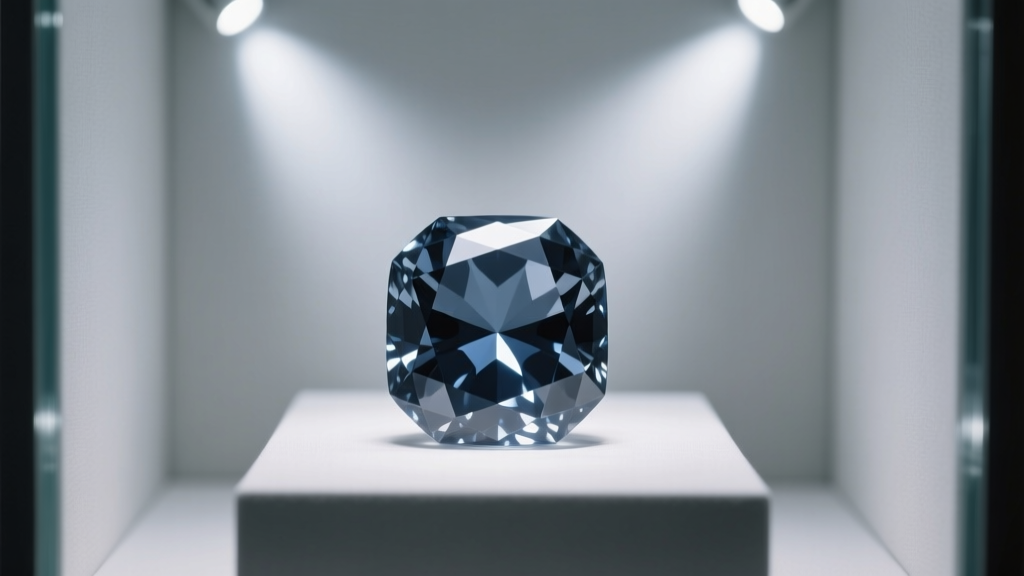
While the Heart of the Ocean is fictional, its narrative and visual inspiration is undeniably the Hope Diamond, currently housed in the Smithsonian National Museum of Natural History. The Hope Diamond is a 45.52-carat Fancy Deep Grayish-Blue VS2 diamond. Unlike the heart-shaped sapphire in the film, the Hope Diamond features an antique cushion cut. Its history is steeped in lore, tracing back to the French merchant traveler Jean-Baptiste Tavernier, who allegedly purchased the original 112-carat stone in India. It was later cut into the 'French Blue' for King Louis XIV before being stolen during the French Revolution and eventually resurfacing in London in the possession of the Hope family. The movie’s fictional lore of a cursed diamond worn by Louis XVI and lost in the Titanic sinking was a brilliant screenwriting device designed to mirror the Hope Diamond’s infamous 'curse' and tragic ownership history.
The Harry Winston Masterpiece: A Real Heart of the Ocean
After the film's massive success, the public demanded to see a real version of the necklace. Enter Harry Winston, the legendary American jeweler. To celebrate the film's dominance at the 1998 Academy Awards, Harry Winston designed a breathtaking, authentic Heart of the Ocean necklace for Celine Dion to wear during her performance of 'My Heart Will Go On.' This piece was undeniably real and staggeringly valuable. It featured a massive 177-carat Ceylon sapphire, surrounded by 103 carats of brilliant white diamonds, all set in platinum. The valuation of this unique piece was estimated at $1.4 million. Ceylon sapphires, sourced from Sri Lanka, are prized for their vibrant, medium-toned 'cornflower blue' hue, which perfectly matched the cinematic vision of Rose's necklace. Today, this masterpiece remains in the private archives of the House of Harry Winston.
How to Buy a Sapphire Heart Pendant Today
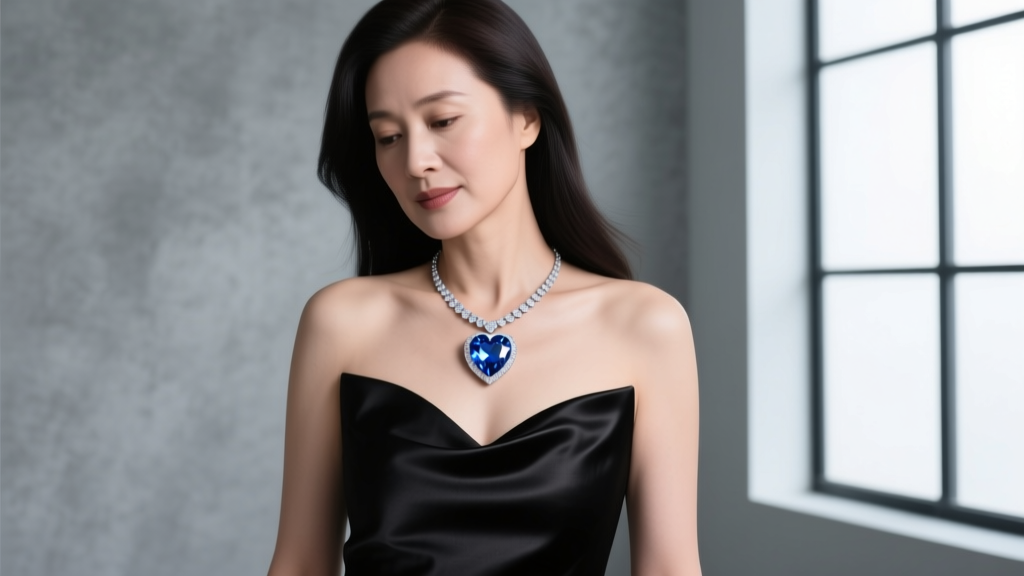
If you are inspired by the Titanic aesthetic and want to purchase a blue heart pendant, understanding gemstone grading is crucial. According to the Gemological Institute of America (GIA), color is the most critical factor in determining a sapphire's value. Here is a beginner’s framework for shopping:
1. Natural vs. Lab-Grown Sapphires
Natural sapphires are mined from the earth and often contain microscopic inclusions (like silk or fingerprints) that prove their origin. Lab-grown sapphires are chemically, physically, and optically identical to natural stones but are created in controlled environments using the Verneuil (flame fusion) or Czochralski (pulling) methods. For a beginner on a budget, a lab-grown sapphire offers the exact same vivid blue color and Mohs 9 hardness for a fraction of the cost.
2. Understanding Treatments
Over 90% of natural sapphires on the market are heat-treated to improve their color and clarity. This is a permanent, universally accepted practice in the gemological world. However, beginners must avoid 'lattice diffusion' or 'glass-filled' sapphires. These treatments drastically alter the stone's integrity and value. Always ask for a gemological report from a reputable lab (like GIA, AGL, or Gübelin) if you are spending over $2,000 on a natural sapphire.
3. Choosing the Right Metal Setting
To replicate the Titanic look, platinum or 18k white gold is mandatory. Yellow gold will reflect into the sapphire, altering its perceived color to a greenish-blue. Platinum is highly recommended for its durability; its prongs are less likely to snap or wear down over decades compared to white gold, which requires periodic rhodium plating to maintain its bright white finish.
Market Comparison: Sapphire Heart Pendants
To help you navigate the market, here is a structured breakdown of what to expect when shopping for a sapphire heart necklace in 2026.
| Tier | Stone Type & Size | Metal Setting | Estimated Price Range |
|---|---|---|---|
| Budget / Fashion | Lab-Grown Sapphire or Blue Topaz (1-2 carats) | Sterling Silver or 10k White Gold | $80 - $350 |
| Mid-Range / Fine | Natural Heat-Treated Sapphire (2-4 carats) with CZ or Diamond Halo | 14k or 18k White Gold | $1,200 - $4,500 |
| Luxury / Investment | Unheated Ceylon or Kashmir Sapphire (5+ carats) with VVS Diamond Halo | Platinum | $15,000 - $100,000+ |
Styling Your Heart Pendant: Necklines and Chain Lengths
A heart pendant, especially one with a diamond halo, draws the eye directly to the center of the chest. To maximize its impact, you must pair it with the correct neckline and chain length.
- The Princess Length (18 inches): This is the most versatile length, falling just below the collarbone. It pairs beautifully with V-necklines, scoop necks, and open-collared blouses, allowing the heart shape to sit perfectly in the negative space of the garment.
- The Choker / Collar Length (14-16 inches): Best reserved for off-the-shoulder gowns, sweetheart necklines, or boat necks. This creates a striking, vintage-inspired silhouette reminiscent of the Edwardian era (the actual time period of the Titanic's maiden voyage).
- Chain Styles: Opt for a delicate platinum or white gold box chain or cable chain. Avoid thick rope or curb chains, as they will visually compete with the intricate halo and heart shape of the pendant.
Conclusion
So, is the necklace from titanic real? The cinematic prop was a masterful illusion of cubic zirconia and white gold, but the legacy it spawned is very real. From the cursed depths of the Hope Diamond to the $1.4 million Harry Winston masterpiece worn on the Oscars stage, the Heart of the Ocean represents the pinnacle of romantic jewelry design. Whether you opt for an accessible lab-grown sapphire or invest in a natural Ceylon gem, understanding the gemology and styling principles behind this iconic piece ensures your own heart pendant will remain a timeless treasure.


