Titanic Necklace Real or Fake? Prop History & Sapphire Guide
Discover if the Titanic necklace is real. We analyze the Heart of the Ocean prop, its sapphire origins, auction values, and styling tips.

The Myth vs. Reality: Was the Heart of the Ocean Real?
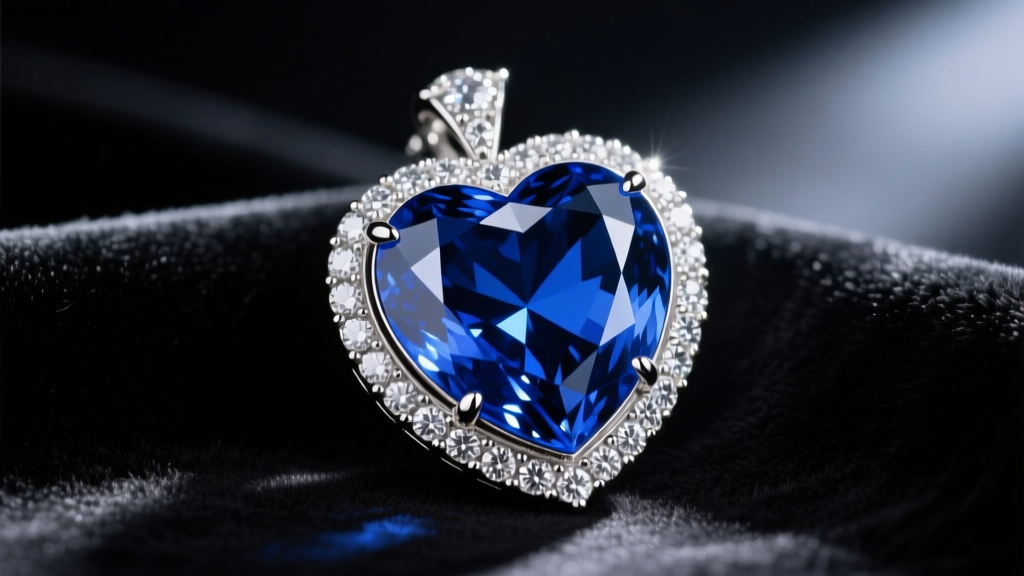
When James Cameron’s cinematic masterpiece debuted in 1997, the 'Heart of the Ocean' immediately became one of the most iconic pieces of jewelry in pop culture history. The fictional 56-carat blue diamond pendant captivated audiences, sparking a decades-long surge in demand for blue gemstone heart pendants. But for collectors and jewelry enthusiasts, a persistent question remains: Is the Titanic necklace real? The answer is a fascinating blend of Hollywood fabrication, high jewelry craftsmanship, and genuine historical tragedy. To understand the legacy of this piece, we must separate the cinematic prop from the multi-million-dollar auction reality and the actual historical artifacts that inspired it.
The Cinematic Prop: Asprey & Garrard's Creation
The necklace seen on screen during the film's production was not a diamond, nor was it a priceless antique. The film's art department commissioned the prestigious British jeweler Asprey & Garrard to create the hero prop. According to jewelry historians, the original movie necklace featured a heart-shaped blue tanzanite surrounded by cubic zirconia, set in white gold. Tanzanite was chosen for its intense violet-blue hue and its ability to mimic the fictional blue diamond under the harsh, reflective lighting of a film set. While the prop itself was never intended to be a high-value masterpiece, its design became the blueprint for thousands of replica pendants that flooded the market in the late 1990s and early 2000s.
The Oscar Sapphire: The $2.2 Million Reality
While the movie prop was relatively inexpensive, Asprey & Garrard later crafted a genuine, high-jewelry version of the necklace to capitalize on the film's massive success and the impending awards season. This authentic piece featured a staggering 171-carat Ceylon sapphire surrounded by 103 diamonds, set in platinum. Celine Dion famously wore this exact necklace to the 1998 Academy Awards when she performed 'My Heart Will Go On.' Shortly after the Oscars, the piece was auctioned off for $2.2 million, with the proceeds donated to the Diana, Princess of Wales Memorial Fund. This remains the only 'official' real Heart of the Ocean necklace in existence.
Historical Inspirations Behind the Fictional Gem
James Cameron’s script described the Heart of the Ocean as a rare blue diamond, a gemological anomaly that drew direct inspiration from some of the world's most famous cursed and historic gems. However, the real history of the Titanic's actual passengers reveals a much more grounded, yet equally heartbreaking, sapphire legacy.
- The Hope Diamond Connection: The fictional lore of the Heart of the Ocean heavily mirrors the Hope Diamond, a 45.52-carat deep-blue diamond currently housed in the Smithsonian. The movie's plotline regarding the gem's 'curse' and its ownership by French royalty is a direct homage to the Hope Diamond's storied past.
- Kate Phillips’ Sapphire Necklace: In real life, a sapphire necklace was indeed aboard the Titanic. Henry Morley, a married man who planned to start a new life in America with his mistress, Kate Florence Phillips, gifted her a sapphire and diamond necklace before the ship sank. Henry perished in the freezing waters, but Kate survived, clutching the necklace. Her family kept the piece hidden for decades before it was eventually revealed to the public, proving that real sapphires, not blue diamonds, were the true luxury stones of the Edwardian era.
- The Edwardian Aesthetic: The design of the movie necklace, with its intricate diamond halo and delicate chain, perfectly mimics the Edwardian jewelry style (1901-1915), which favored platinum, milgrain detailing, and elaborate diamond pierce-work.
Market Analysis: Sapphire vs. Tanzanite Heart Pendants
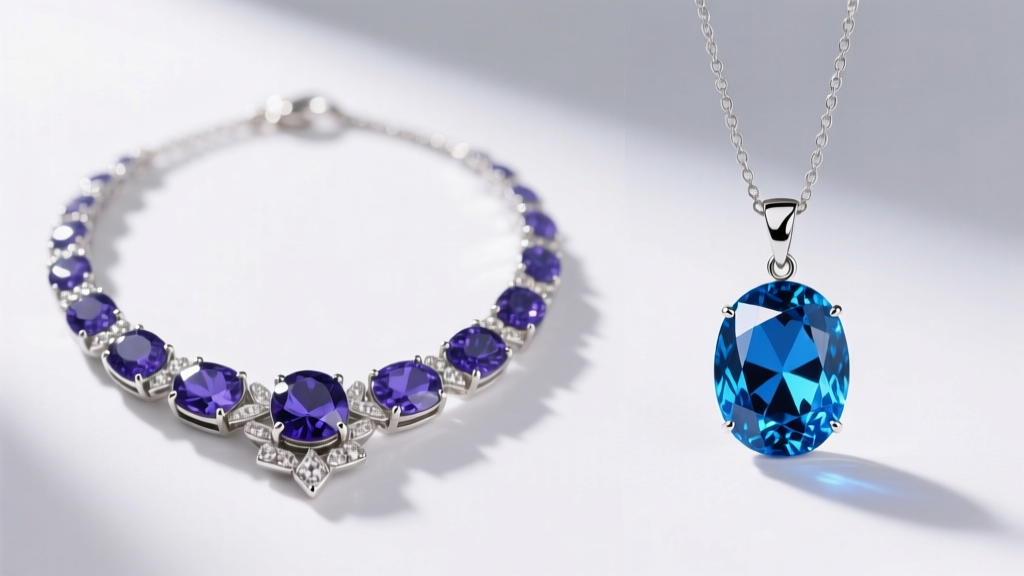
If you are looking to invest in a blue heart pendant today, understanding the gemological differences between the stones used in the prop and the real Oscar necklace is critical. Below is a comparative analysis of the top blue gemstones used in luxury pendants, based on data from the Gemological Institute of America (GIA).
| Gemstone | Mohs Hardness | Avg. Price per Carat (Fine Quality) | Durability & Setting Recommendations |
|---|---|---|---|
| Ceylon Sapphire | 9 | $1,500 - $6,000+ | Exceptional. Ideal for prong or bezel settings; suitable for daily wear. |
| Tanzanite | 6.5 - 7 | $300 - $800 | Moderate. Highly pleochroic; requires protective halo or bezel settings to prevent chipping. |
| Blue Diamond | 10 | $100,000 - $3M+ | Superior. Rare and typically reserved for high-investment auction pieces. |
| London Blue Topaz | 8 | $20 - $50 | Good. Features perfect cleavage, meaning it can split if struck hard; best for occasional wear. |
For collectors seeking the exact look of the movie prop without the sapphire price tag, tanzanite remains the most authentic choice. However, as noted by the GIA's tanzanite profile, tanzanite's relative softness means it must be set in a protective mounting, unlike the exposed prong settings often seen in cinematic replicas.
How to Style a Statement Heart Pendant in 2026
The oversized, heavy heart pendant trend of the late 90s has evolved. Today, the focus is on proportion, layering, and modernizing vintage silhouettes. Whether you are wearing a sapphire heirloom or a tanzanite replica, styling a statement heart necklace requires an understanding of neckline geometry and chain mechanics.
Neckline Pairings & Chain Lengths
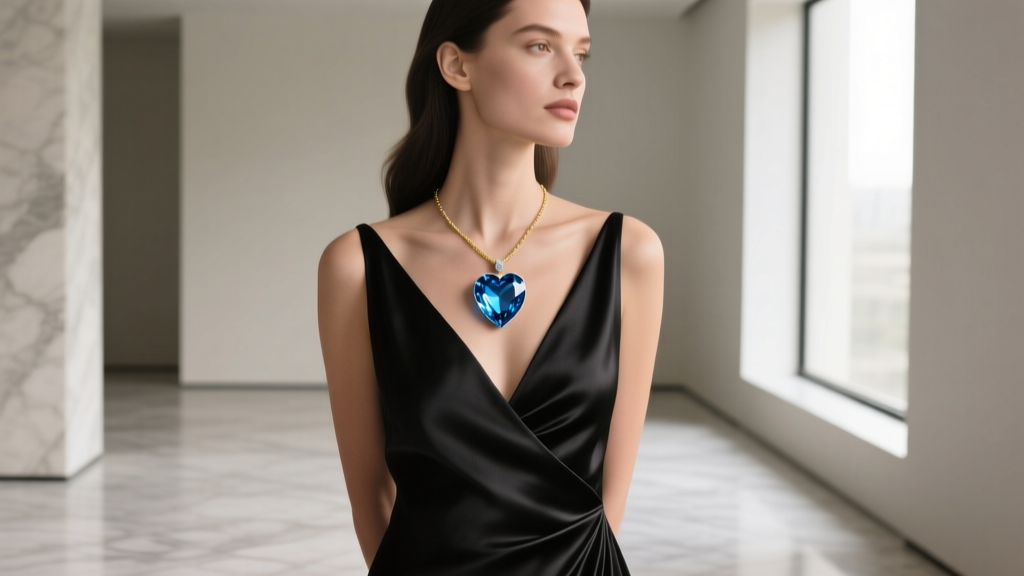
The visual weight of a heart pendant demands a complementary canvas. A 16-inch choker length will cause a large, gem-heavy pendant to sit awkwardly against the collarbone, creating a cluttered look. Instead, opt for an 18-inch or 20-inch chain, allowing the pendant to rest in the 'décolletage zone'—the sweet spot just below the collarbone and above the bust line. This length perfectly frames deep V-necks, sweetheart necklines, and open silk blouses.
'The secret to wearing a heavy gemstone pendant is contrast. If the stone is a deep, saturated Ceylon blue, pair it with stark white, ivory, or black fabrics. Avoid busy patterns that compete with the refractive index of the gem.' — Elena Rostova, Senior Jewelry Stylist
The Art of the Asymmetrical Layer
To modernize the 'Heart of the Ocean' silhouette, avoid wearing it as a solitary piece. Layer the 20-inch heart pendant with a delicate, 14-inch diamond station chain in a matching metal (platinum or white gold). This asymmetrical layering technique draws the eye vertically and breaks up the heavy, solitary nature of the heart motif, making it appropriate for both evening galas and elevated daytime wear.
Sourcing Authentic Blue Gemstone Necklaces
When shopping for a sapphire or tanzanite heart necklace, always request a gemological report from a reputable lab like the GIA or AGL. For sapphires, the report will disclose crucial information regarding heat treatment. An unheated Ceylon sapphire commands a massive premium over a heat-treated or lattice-diffused stone. For tanzanite, nearly all stones on the market are gently heated to enhance their blue-violet color, but the cut quality and depth of color saturation remain the primary drivers of value. By understanding the real history, gemology, and styling mechanics behind the Titanic's most famous piece of jewelry, you can confidently curate a collection that honors the legacy of the Heart of the Ocean without falling for cinematic illusions.