The Necklace From the Titanic: 2026 Trend Analysis & Buying Guide
Explore the 2026 revival of the necklace from the Titanic. Discover Edwardian design secrets, gemstone alternatives, and expert buying tips.

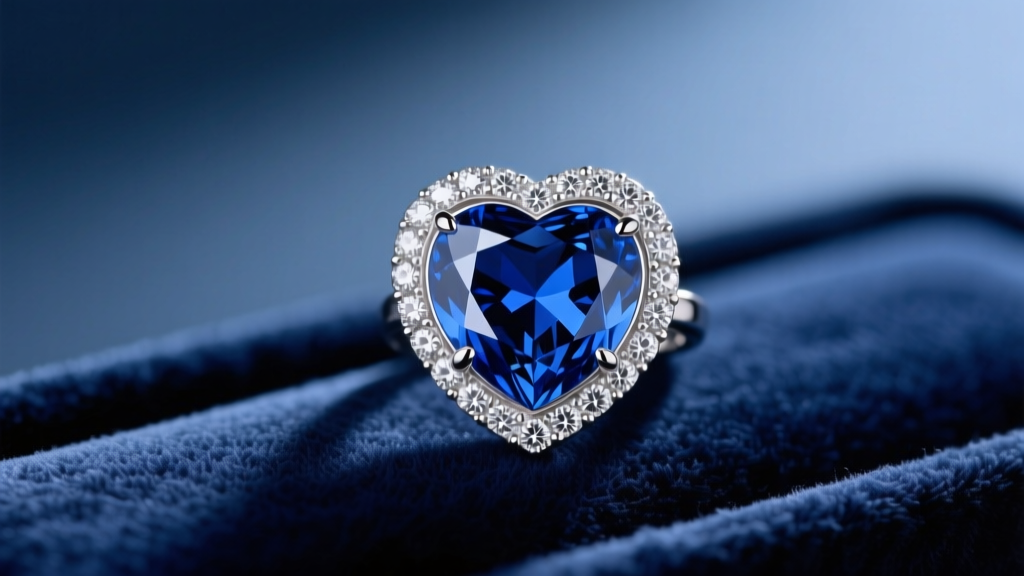
The Cultural Anchor: Why the Titanic Aesthetic Endures in 2026
When James Cameron’s cinematic masterpiece debuted, it didn't just break box office records; it fundamentally altered the trajectory of fine jewelry design. The necklace from the Titanic—fictionalized as the 'Heart of the Ocean'—cemented the blue sapphire and diamond halo pendant as a cultural touchstone. Fast forward to 2026, and we are witnessing a massive Belle Époque and Edwardian jewelry revival. Modern collectors and style connoisseurs are moving away from minimalist, micro-pavé trends, opting instead for the bold, romantic, and highly structured maritime aesthetics that the iconic film popularized.
But translating a Hollywood legend into a wearable, heirloom-quality piece requires a deep understanding of gemology, structural engineering, and historical design. This guide deconstructs the anatomy of the world's most famous cinematic jewel, offering actionable frameworks for sourcing, styling, and commissioning your own interpretation.
Historical Blueprints: Hollywood Props vs. High Jewelry
To understand the trend, we must separate cinematic fiction from horological and gemological fact. The original movie prop was crafted by the prestigious London-based house Asprey & Garrard. It featured an 18-karat white gold setting, a heart-shaped blue sapphire center stone, and a halo of cubic zirconia. Following the film's unprecedented success, Harry Winston created a real-world counterpart: a breathtaking 15-carat blue diamond heart surrounded by white diamonds, valued at over $20 million, which Gloria Stuart famously wore to the 1998 Academy Awards.
The true historical inspiration for the necklace from the Titanic aesthetic, however, traces back to the French Blue and the legendary Hope Diamond. The Edwardian era (1901-1910), which perfectly aligns with the Titanic's 1912 maiden voyage, was defined by the use of platinum, intricate milgrain detailing, and the contrast of deep blue sapphires against brilliant white diamonds. According to the Smithsonian's National Museum of Natural History, the fascination with cursed or legendary blue diamonds has captivated jewelers for centuries, providing the psychological backdrop for why this specific colorway remains the ultimate symbol of tragic romance and luxury.
Deconstructing the Design: Anatomy of a Maritime Masterpiece
Creating a high-quality homage requires more than just selecting a blue stone. The structural integrity of a large heart-shaped pendant is notoriously difficult to engineer.
The Vulnerable Cleft: Setting Mechanics
The heart cut is essentially a modified brilliant cut with a deep cleft (the dip at the top) and a sharp bottom point. These two areas are structural weak points. In 2026, master jewelers mandate the use of a specialized V-prong at the top cleft and a protective bezel or heavy prong at the bottom point. Standard four-prong settings leave the cleft exposed to impact, which can easily cleave a sapphire or tanzanite along its natural crystal planes.
Weight and Suspension: Chain Engineering
A 10-to-15-carat heart center stone, combined with a platinum halo and bail, will weigh between 8 and 14 grams. Most commercial jewelry is fitted with 0.8mm or 1.0mm cable chains. Suspending 14 grams on a 1.0mm chain will result in metal fatigue, chain stretching, and eventual snapping. For a piece of this magnitude, you must engineer the suspension correctly.
- Chain Type: Platinum Wheat (Spiga) or Box chains.
- Thickness: Minimum 1.8mm to 2.2mm.
- Clasp: A heavy-duty lobster clasp with a reinforced jump ring, or a custom tongue-and-groove box clasp for seamless integration.
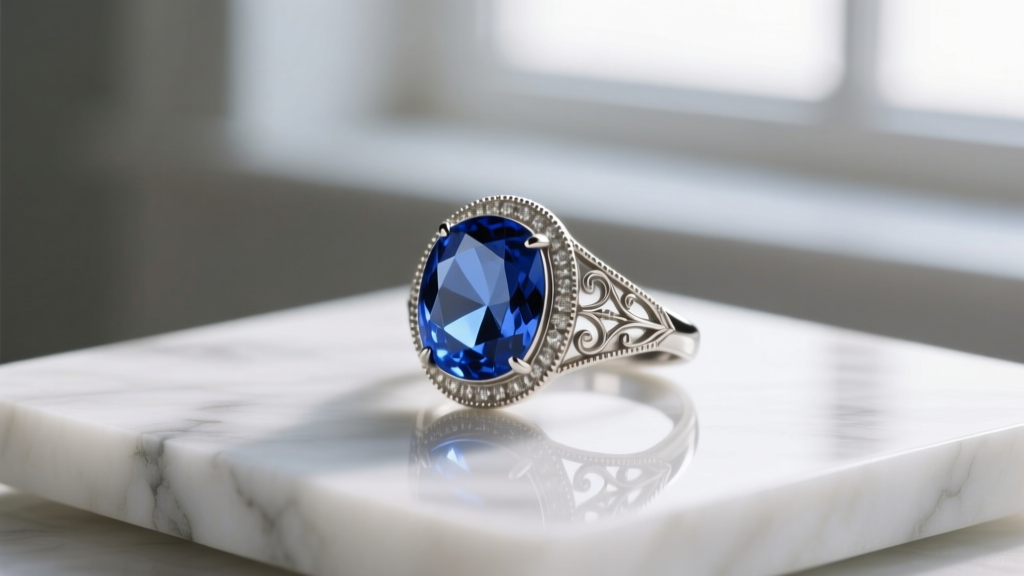
Gemological Deep Dive: Sourcing the 'Ocean Blue'
The defining characteristic of the necklace from the Titanic is its mesmerizing blue hue. While a natural blue diamond is reserved for billionaires, modern gemology offers spectacular alternatives that capture the exact cinematic saturation. According to the Gemological Institute of America (GIA), trace elements of iron and titanium are what give corundum its blue coloration, but achieving the 'cornflower' or 'royal' blue seen on screen requires careful sourcing.
| Gemstone | Mohs Hardness | Refractive Index | Avg. Price/Carat (2026) | Best Application |
|---|---|---|---|---|
| Ceylon Blue Sapphire | 9.0 | 1.76 - 1.77 | $2,500 - $8,000+ | Heirloom Investment & Daily Wear |
| Tanzanite | 6.5 - 7.0 | 1.69 - 1.70 | $400 - $1,200 | Deep Violet-Blue Hue (Evening Wear) |
| London Blue Topaz | 8.0 | 1.61 - 1.62 | $20 - $50 | Budget-Friendly, Large Carat Sizes |
| Cobalt Blue Spinel | 8.0 | 1.712 | $800 - $3,000 | Brilliant, Single-Refractive Alternative |
Expert Insight: If you are commissioning a custom piece, demand an AGL (American Gemological Laboratories) or GIA report for sapphires to verify the absence of beryllium diffusion treatment. For tanzanite, ensure the stone is 'Exceptional' or 'Fine' in tone, as overly dark stones will read as black in low-light environments, completely losing the 'ocean' effect.
2026 Styling Framework: Proportions and Necklines
A 15mm x 16mm heart pendant is a dominant focal point. The 2026 styling ethos dictates that statement pieces require negative space to breathe. Layering a massive sapphire halo pendant with delicate gold chains is a structural and aesthetic mistake; the heavy pendant will crush the lighter chains and create visual clutter.
The Neckline Matrix
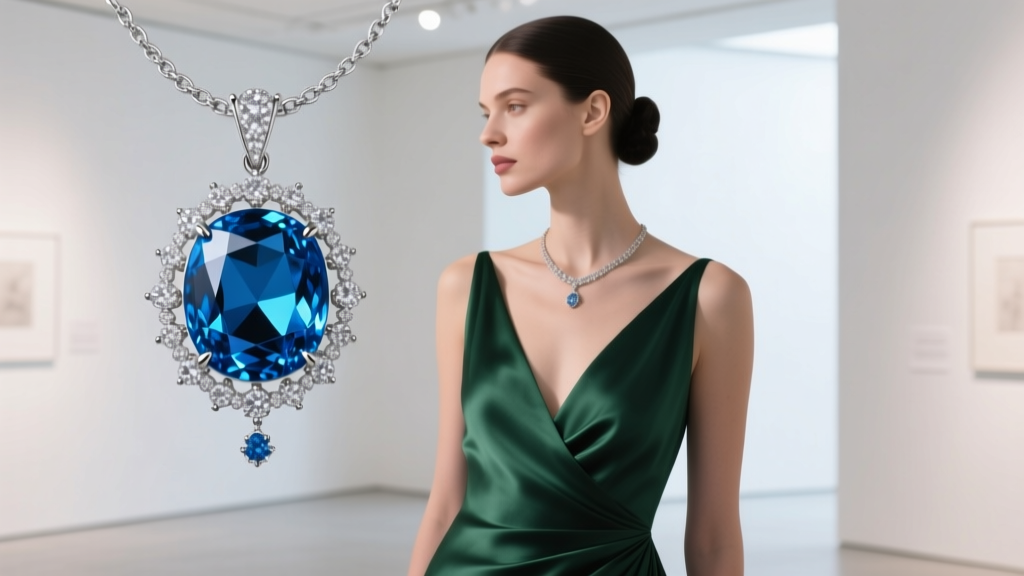
- Deep V-Neck & Sweetheart: The optimal canvas. The geometric lines of the neckline mirror the bail and the cleft of the heart, drawing the eye directly to the center stone.
- Scoop & Boat Neck: Avoid. The horizontal lines of the collarbone will clash with the vertical drop of the pendant, making the chain look awkwardly short.
- Strapless / Off-the-Shoulder: Highly recommended for evening wear, provided the pendant drops exactly to the upper sternum (requiring a precise 16.5-inch chain length).
Commissioning Your Own: A Buyer's Checklist
Whether you are hunting for an authentic Edwardian antique or commissioning a modern master to recreate the necklace from the Titanic, adhere to this strict quality checklist to avoid the 'costume jewelry' trap:
The Melee Diamond Rule: The halo and bail must feature VS-clarity, F-G color melee diamonds. Using SI2 or I1 melee diamonds in a halo will result in a cloudy, grayish ring that severely diminishes the light return of the center sapphire. The white diamonds must act as a mirror, not a shadow.
Furthermore, insist on Platinum 950 (95% platinum, 5% ruthenium or iridium). White gold requires rhodium plating, which will eventually wear off around the high-contact areas of the bail and clasp, revealing the yellowish alloy beneath. Platinum's natural white luster and superior tensile strength make it the only historically accurate and structurally sound choice for a maritime heirloom designed to survive a century.


