Diamond Eternity Necklace Budget & Value Guide 2026
Discover how to maximize value when buying a diamond eternity necklace in 2026. Compare lab vs. natural prices, settings, and clarity grades.

Navigating the Diamond Eternity Necklace Market
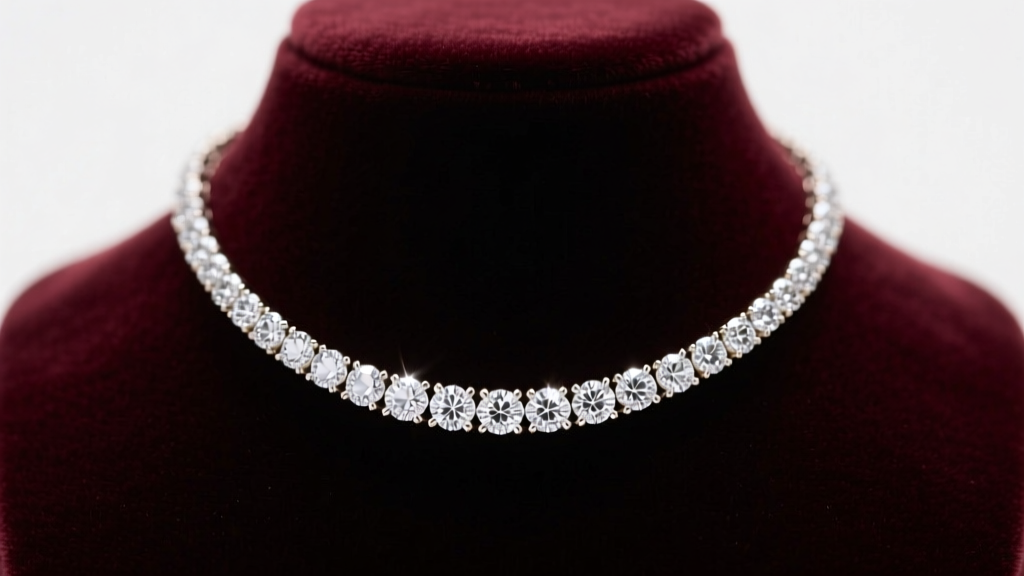
The diamond eternity necklace—often referred to interchangeably as a tennis necklace when featuring a continuous, uniform line of stones—remains one of the most coveted staples in fine jewelry. Unlike a pendant that draws the eye to a single focal point, an eternity necklace provides a continuous ribbon of brilliance that frames the face and elevates any neckline. However, purchasing a continuous line of diamonds presents a unique budgetary challenge: you are not buying a single stone, but rather dozens of them, meaning minor compromises in quality are magnified, and carat weight adds up rapidly.
In 2026, the jewelry market offers more flexibility than ever before, primarily driven by the maturity of the lab-grown diamond sector and shifting consumer preferences regarding metal alloys and setting styles. This guide provides a rigorous, data-driven framework to help you assess value, allocate your budget efficiently, and avoid overpaying for invisible characteristics when shopping for a diamond eternity necklace.
The 2026 Pricing Landscape: Lab-Grown vs. Natural Diamonds
The most significant value lever available to modern buyers is the choice between natural and lab-grown diamonds. According to the Bain & Company Global Diamond Industry Report, lab-grown diamonds have firmly transitioned from a niche alternative to a dominant market force, particularly in the multi-stone necklace category where total carat weight (CTW) drives the price.
Because an eternity necklace requires matched stones in color, clarity, and cut, sourcing natural diamonds of high uniformity commands a steep premium. Lab-grown diamonds, created via Chemical Vapor Deposition (CVD) or High Pressure High Temperature (HPHT) methods, offer identical optical and physical properties at a fraction of the cost. As noted by the Gemological Institute of America (GIA), lab-grown diamonds possess the same fire, scintillation, and brilliance as their mined counterparts, making them the undisputed champions of visual value for continuous-line necklaces.
Price Comparison: 5.00 CTW Eternity Necklace (14k White Gold)
| Specification | Natural Diamond (Estimated) | Lab-Grown Diamond (Estimated) | Value Delta |
|---|---|---|---|
| 5.00 CTW, G-H Color, SI1 Clarity, Excellent Cut | $11,500 - $15,000 | $1,400 - $2,200 | ~85% Savings |
| 8.00 CTW, F-G Color, VS2 Clarity, Excellent Cut | $24,000 - $32,000 | $2,800 - $4,500 | ~86% Savings |
| 3.00 CTW, I-J Color, SI2 Clarity, Very Good Cut | $5,500 - $7,500 | $800 - $1,300 | ~83% Savings |
Note: Prices reflect direct-to-consumer and online luxury retailers in early 2026. Legacy brick-and-mortar brands may carry a 40-60% markup on these baselines.
Strategic Compromises: The 4 Cs in a Necklace Context
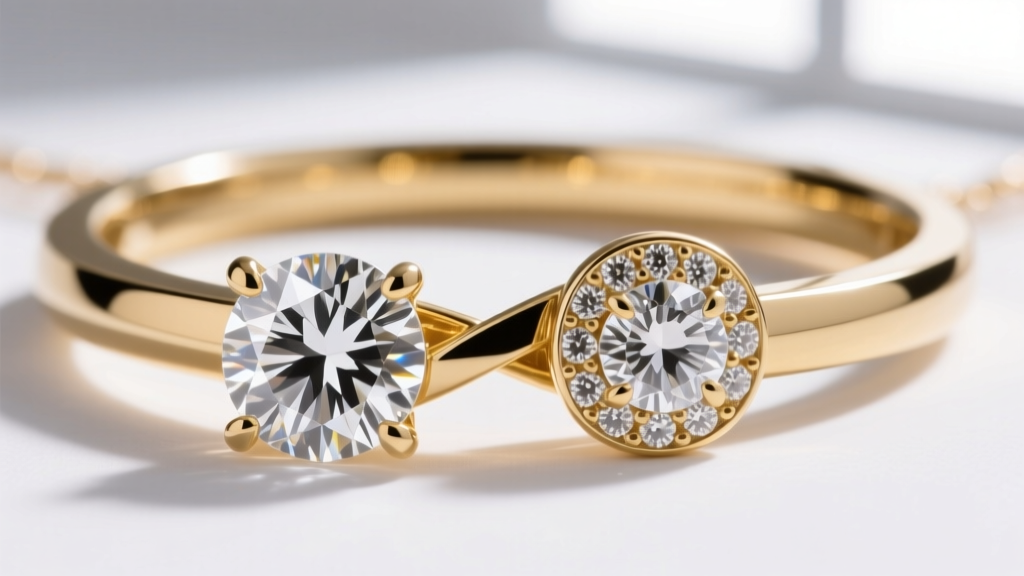
When evaluating a single engagement ring diamond, buyers often obsess over flawless clarity and colorless grades. For a diamond eternity necklace, this approach destroys your budget. A necklace rests 6 to 10 inches away from the observer's eye, and the diamonds are typically much smaller (ranging from 0.05 to 0.25 carats each). This physical distance fundamentally changes how the human eye perceives the 4 Cs.
1. Cut: The Non-Negotiable Metric
Never compromise on cut. In a continuous line of diamonds, light return is what creates the "ribbon of fire" effect. If the diamonds are poorly cut, the necklace will look like a string of dull glass, regardless of the carat weight. Insist on "Excellent" or "Ideal" cut grades for round brilliants, and ensure elongated shapes (like ovals or marquises) do not exhibit severe "bow-tie" shadows.
2. Clarity: The SI1 Sweet Spot
According to GIA Diamond Clarity Grading standards, inclusions in SI1 (Slightly Included) diamonds are typically only visible under 10x magnification. In a 0.15-carat stone set in a necklace, an SI1 inclusion is entirely invisible to the naked eye. Paying for VVS (Very Very Slightly Included) or IF (Internally Flawless) stones in an eternity necklace is a pure waste of capital. Target SI1 to VS2 clarity grades to maximize your budget.
3. Color: The G-H Illusion
Diamonds in the G-H range (Near Colorless) face up brilliantly white, especially when set in white gold or platinum. The prongs and the surrounding reflection of white metal mask faint yellow tones. Only step up to D-F (Colorless) if you are purchasing exceptionally large individual stones (over 0.30ct each) or setting them in yellow gold, where the contrast would otherwise highlight lower color grades.
4. Carat Weight: Total vs. Individual
Focus on the Total Carat Weight (CTW) relative to the physical millimeter width of the necklace. A 4.00 CTW necklace with 60 small diamonds will look more like a delicate chain, while a 4.00 CTW necklace with 30 larger diamonds will offer a bold, chunky aesthetic. Decide on the desired millimeter width (typically 2.5mm to 4.5mm for everyday wear) rather than fixating solely on the carat number.
Setting Styles That Stretch Your Budget
The metalwork holding your diamonds dictates both the security of the piece and its overall visual impact. Different settings manipulate light and metal visibility in distinct ways.
- Four-Prong Martini Settings: The gold standard for eternity necklaces. Four minimal prongs expose the maximum surface area of the diamond's crown and pavilion, allowing light to enter from all angles. This setting makes smaller carat weights appear larger and more brilliant.
- Bezel Settings: A rim of metal surrounds the diamond's girdle. While highly secure and modern, bezel settings reduce the diamond's visible surface area by roughly 15% and block side-light entry. To achieve the same visual impact as a prong-set necklace, you will need to purchase slightly larger (and more expensive) diamonds.
- Channel Settings: Diamonds are set between two parallel walls of metal. This is common in heavier, more rigid collars but is generally avoided in fluid, draping eternity necklaces because it restricts movement and dulls scintillation.
- Illusion / Cluster Settings: If your budget is strictly capped under $1,000, consider illusion settings, where scalloped metal halos surround tiny diamond chips to mimic the look of a single, larger solitaire link. This sacrifices the pure diamond look but delivers high visual volume for a micro-budget.
Hardware and Metals: The Hidden Value Killers
A diamond eternity necklace is only as good as its weakest structural link. Budget buyers often pour 95% of their funds into the diamonds and ignore the metal and hardware, leading to catastrophic failures.
Metal Selection
14k White Gold is the ultimate value proposition for diamond necklaces. It provides the necessary tensile strength to hold heavy diamond links, costs roughly 30% less than 18k gold, and its rhodium plating ensures a bright white backdrop that enhances G-H color diamonds. Platinum is superior for longevity (it does not require rhodium replating), but the 2026 platinum premium will add $400 to $800 to the base price of the mounting alone.
The Clasp: A Critical Failure Point
Never accept a standard spring-ring or lightweight lobster clasp on a diamond eternity necklace weighing over 3.00 CTW. The kinetic energy of a heavy diamond strand snapping back can easily deform a cheap clasp. Demand a tongue-and-box clasp equipped with double figure-8 safety catches. If a retailer tries to sell you a 5-carat diamond necklace on a lobster clasp, walk away; it indicates severe corner-cutting in the manufacturing process.
The 2026 Buyer's Checklist for Maximum Value
Before finalizing your purchase, run the piece through this rigorous value-assessment checklist to ensure you are getting a fair market deal:
- Matching Certificates: For necklaces over 2.00 CTW, the retailer should provide a master grading report detailing the aggregate color and clarity ranges. If individual stones are over 0.25ct, they should have individual GIA or IGI laser inscriptions.
- Upgrade Policy: The best value-driven retailers offer a 100% credit trade-up policy. This allows you to buy a modest 2.00 CTW lab-grown necklace today and upgrade to a 5.00 CTW piece in three years without losing your initial investment.
- Link Articulation: Drape the necklace over your hand. It should fold and articulate fluidly like a piece of silk fabric. Stiff links indicate poor soldering and will cause the necklace to kink and wear down prematurely.
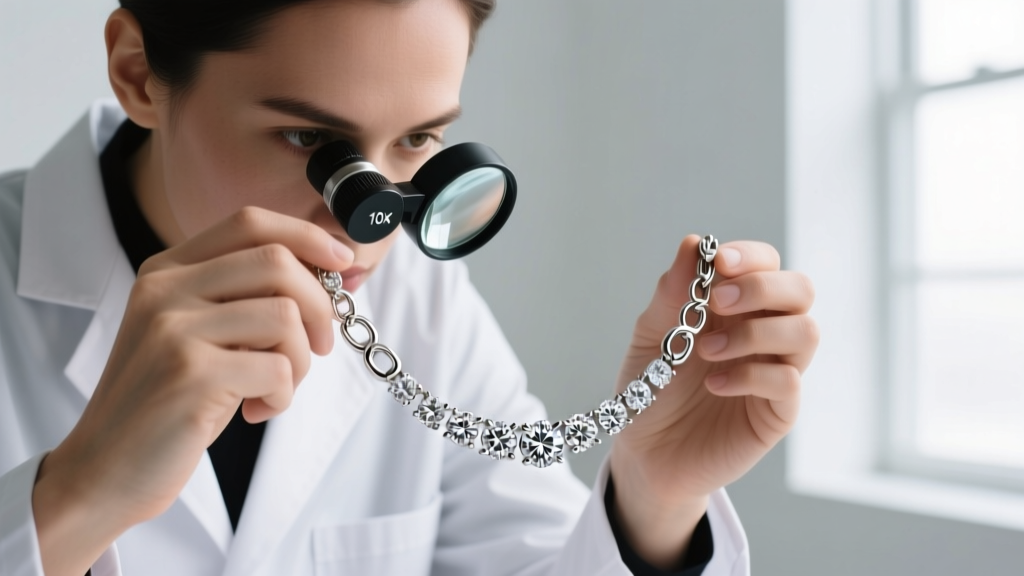
- Prong Uniformity: Inspect the prongs under a loupe. They should be uniform in size, smoothly polished, and completely flush against the diamond crowns. Snagged prongs will catch on clothing and eventually pull the diamonds out of their seats.
Final Verdict
Securing the best value on a diamond eternity necklace in 2026 requires shifting your focus from "flawless rarity" to "optical performance." By embracing lab-grown diamonds, targeting SI1 clarity and G-H color, insisting on excellent cut grades, and prioritizing robust hardware over heavy platinum mountings, you can acquire a breathtaking, heirloom-quality piece of jewelry without overpaying for characteristics that the naked eye will never see.


