How to Clean, Polish, and Protect Your Yu-Gi-Oh Necklace
Learn how to safely clean your Yu-Gi-Oh necklace. Expert tips for polishing sterling silver, protecting enamel paint, and preventing base metal tarnish.


For fans and collectors, a yugioh necklace is far more than a simple fashion accessory; it is a wearable piece of anime history. Whether you own a premium sterling silver replica of the Millennium Puzzle, a gold-plated Blue-Eyes White Dragon pendant, or an enamel-painted Eye of Wdjat, these intricate pieces require specialized maintenance. Unlike standard minimalist jewelry, anime replicas often feature deep crevices, mixed material tiers, and delicate paint applications that can be easily ruined by conventional jewelry dips or harsh polishing cloths.
In this comprehensive 2026 care guide, we break down the exact metallurgical compositions of popular anime pendants and provide a meticulous, step-by-step framework for cleaning, polishing, and storing your collection without degrading its value or aesthetic integrity.
The Material Breakdown: What is Your Pendant Made Of?
Before applying any cleaning solution, you must identify the base material of your yugioh necklace. Merchandise manufacturers utilize vastly different metallurgical standards depending on the price point and release year of the replica.
| Material Tier | Common Pendants | Tarnish Risk | Enamel/Paint Risk | Primary Cleaning Method |
|---|---|---|---|---|
| Zinc Alloy / Base Metal | Mass-market convention replicas | High (Pitting & Oxidation) | Moderate | Dry microfiber, Renaissance Wax |
| 925 Sterling Silver | Premium U-Treasure / Bandai collabs | Moderate (Sulfur Tarnish) | High (If painted) | Aluminum foil ion-exchange bath |
| Brass with Enamel | Eye of Wdjat, Millennium Ring | Low (Under enamel) | Extreme (Heat/Chemicals) | Lukewarm mild soap, soft brush |
| Gold-Plated Stainless | Modern high-end chains | Very Low | N/A | Gentle soapy wipe down |
Step-by-Step Cleaning Guide by Material
1. Sterling Silver (The Millennium Puzzle & Premium Replicas)
Sterling silver (92.5% silver, 7.5% copper) is highly susceptible to hydrogen sulfide in the air, which creates black silver sulfide tarnish. For intricate pieces like the Millennium Puzzle, polishing cloths cannot reach the deep engraved hieroglyphs. Instead, use an electrochemical ion-exchange bath.
- Line a glass bowl with aluminum foil (shiny side up).
- Place your silver yugioh necklace in the bowl, ensuring it physically touches the foil.
- Sprinkle 2 tablespoons of baking soda over the pendant.
- Pour boiling water into the bowl. The resulting chemical reaction transfers the sulfur from the silver to the aluminum, instantly lifting tarnish from deep crevices without abrasive friction.
- Remove with wooden tongs, rinse in distilled water, and pat completely dry with a lint-free cloth.
Note: According to the Gemological Institute of America (GIA), this method is safe for solid silver but should never be used on oxidized (intentionally blackened) silver details, as it will strip the antique finish.
2. Enamel-Painted Brass (The Eye of Wdjat & Colored Pieces)
Enamel is essentially powdered glass fused to metal, or in cheaper replicas, a hardened epoxy resin paint. Both are highly sensitive to thermal shock and chemical solvents.
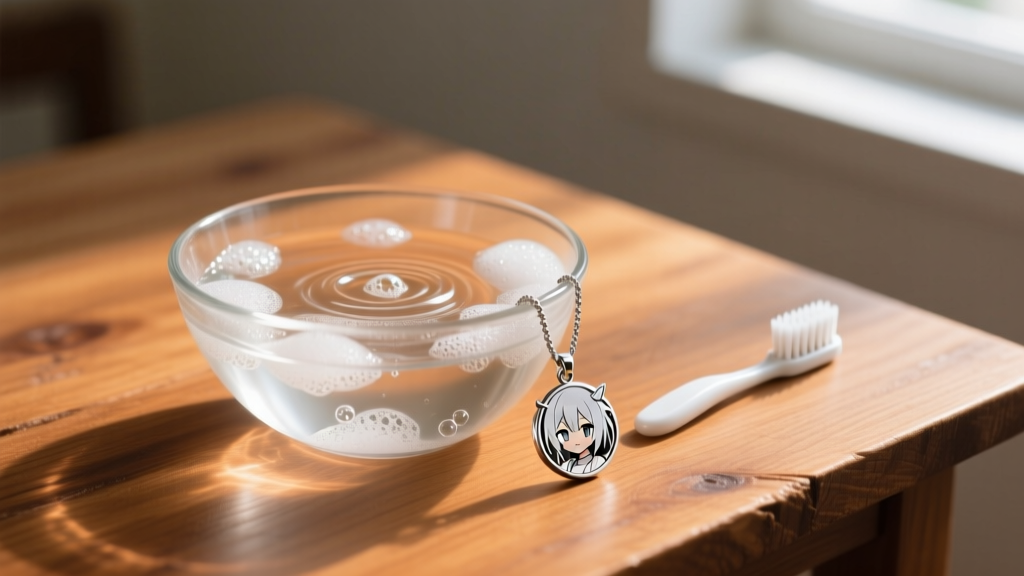
- The Solution: Mix three drops of pH-neutral dish soap (like Dawn) into a bowl of lukewarm water. Hot water expands the brass base faster than the enamel, causing microscopic cracking and crazing.
- The Agitation: Submerge the pendant for no more than 3 minutes. Use an extra-soft baby toothbrush to gently sweep dust out of the gold-painted grooves.
- The Drying: Do not air dry. Hard water spots will permanently etch into the clear-coat finish. Immediately dry with a microfiber cloth and use a can of compressed air to blow moisture out of the chain links.
3. Plated Base Metals (Zinc Alloy Convention Finds)
Base metal replicas are usually cast from zinc alloy and flash-plated with a microscopic layer of gold or silver. Soaking these pieces in water will cause the moisture to seep through microscopic pores in the plating, leading to galvanic corrosion that bubbles up and destroys the finish from the inside out.
Expert Rule: Never submerge a base metal yugioh necklace. Instead, lightly dampen a Q-tip with isopropyl alcohol to spot-clean grime, then immediately buff it with a dry cloth. To protect the plating from skin acids, apply a micro-thin layer of Renaissance Wax using a soft brush, let it haze for 10 minutes, and buff it to a hard, protective shell.
The Dangers of Ultrasonic and Chemical Cleaners
It is highly recommended to avoid commercial jewelry dips and ultrasonic cleaners when maintaining anime merchandise. Ultrasonic cleaners utilize high-frequency sound waves to create microscopic cavitation bubbles in a liquid solvent. While excellent for diamond rings, these shockwaves will shatter cold enamel paint and strip thin micron-plating off brass replicas in seconds. Furthermore, commercial silver dips contain harsh thiourea-based acids that will permanently cloud the protective resin coatings applied to modern collectible jewelry. For authoritative guidelines on avoiding harsh chemicals, refer to the American Gem Society's jewelry care protocols, which emphasize gentle, non-abrasive cleaning for mixed-media pieces.
Storage and Tarnish Prevention Framework
How you store your yugioh necklace is just as critical as how you clean it. The cardboard and plastic packaging that merchandise comes in is often highly acidic and can accelerate tarnishing.
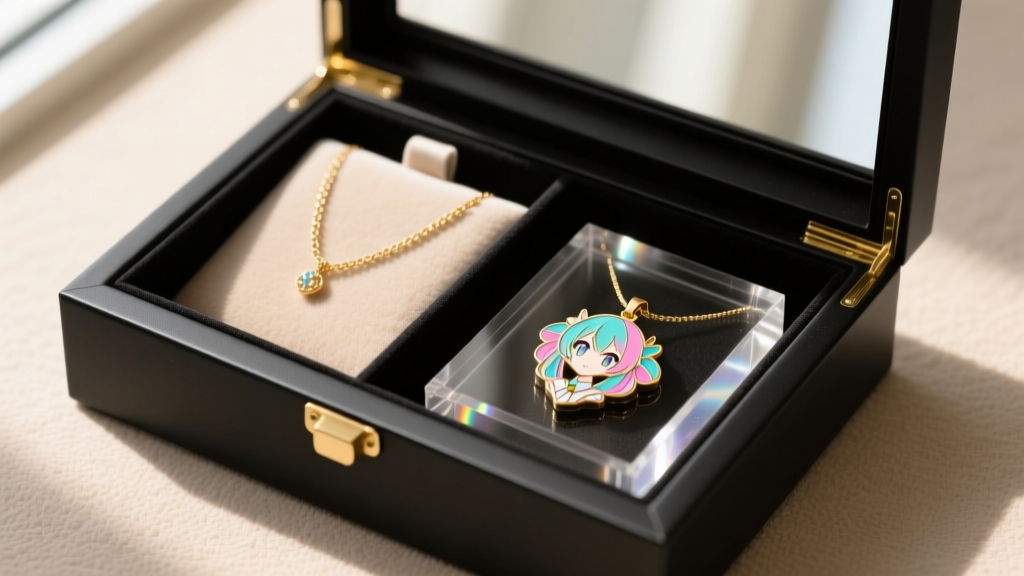
The Anti-Tarnish Protocol
- Ditch the PVC: Never store anime jewelry in soft vinyl or PVC plastic bags. Polyvinyl chloride off-gasses chlorine and sulfur compounds that will rapidly turn sterling silver black and pit base metals.
- Use Activated Charcoal or 3M Strips: Place a 3M anti-tarnish tab or a small sachet of activated bamboo charcoal in your storage drawer. These materials act as molecular sponges, absorbing ambient hydrogen sulfide before it can react with your pendants.
- Moisture Control: Include a silica gel desiccant packet in your storage box to keep relative humidity below 40%, drastically slowing the oxidation process of copper-alloy chains.
Chain Maintenance: Fixing Snags and Clasp Issues
The chains included with anime replicas are often delicate cable or curb chains that easily snag on clothing. If your chain develops a stiff, knotted link, do not pull it. Lay the chain flat on a hard surface, apply a microscopic drop of mineral oil (not WD-40, which attracts dust), and use two sewing needles to gently tease the overlapping links apart.
Additionally, inspect the jump ring connecting the pendant to the chain. Base metal jump rings are frequently left slightly open due to poor factory quality control. Use two pairs of flat-nose jewelry pliers to twist the jump ring closed using a lateral twisting motion—never pull the ring apart outward, as this warps the circular shape and weakens the metal's structural memory.
Conclusion
Maintaining a yugioh necklace requires a departure from traditional jewelry care routines. By respecting the specific material limitations of your pendant—whether that means utilizing ion-exchange for solid silver, avoiding thermal shock on enamel, or applying barrier waxes to base metals—you ensure that your wearable collection remains as pristine as the day you unboxed it. Proper storage and gentle, targeted cleaning will protect both the financial and sentimental value of your anime replicas for decades to come.