Tony Iommi Cross Necklace: Budget & Value Assessment
Discover how to evaluate a Tony Iommi cross necklace. We compare materials, weights, and price tiers to help you find the best value gothic silver cross.

The Anatomy of the Iommi Cross: Beyond the Aesthetic
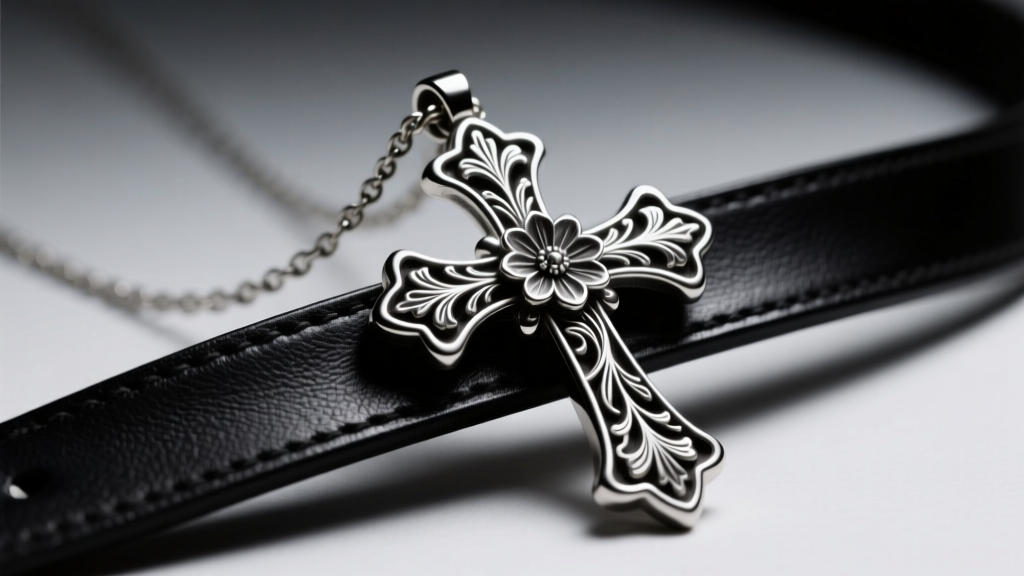
When discussing iconic rock and roll jewelry, few pieces carry the gravitational pull of the Tony Iommi cross necklace. The Black Sabbath guitarist's massive, ornate gothic cross—popularized during the early 1970s 'Master of Reality' era—is more than a fashion statement; it is a cornerstone of heavy metal visual culture. However, as the demand for homages and replicas surges in 2026, the market has become saturated with options ranging from $20 drop-shipped trinkets to $2,500 custom-cast collector pieces. For buyers navigating this space, conducting a rigorous budget and value assessment is critical to avoid overpaying for plated base metals or underestimating the structural requirements of heavy pendants.
A true Iommi-style cross is defined by its sheer volume and intricate, often floral or scrollwork, engraving. Authentic-feeling replicas typically measure between 3.5 and 4.5 inches in height and 2.5 to 3 inches in width. Because of these dimensions, the pendant requires significant mass. A high-quality solid silver piece will weigh anywhere from 55 to 85 grams. Understanding how this weight dictates material choices, chain pairings, and manufacturing methods is the first step in assessing true value.
Material Tiers: Where Your Money Actually Goes
The single largest variable in the pricing of a Tony Iommi cross necklace is the base metal. Manufacturers utilize different casting methods and alloys, which drastically alter both the price point and the longevity of the piece. According to The Silver Institute, understanding the hallmark and alloy composition is essential for determining if a piece holds intrinsic value or merely aesthetic novelty.
Tier 1: Zinc Alloy and Pot Metal ($15 - $35)
At the absolute bottom of the budget spectrum are die-cast zinc alloys. These pieces are incredibly cheap to produce and can be made heavy by simply increasing the volume of the base metal. However, zinc alloy is brittle. The intricate gothic filigree typical of the Iommi cross is prone to snapping under minor torque. Furthermore, these pieces are usually flash-plated with a microscopic layer of silver that wears off within weeks, exposing skin to nickel and copper alloys that cause severe discoloration and allergic reactions.
Tier 2: Plated Brass and Bronze ($45 - $120)
Brass offers a much better foundation for lost-wax casting, allowing for sharper, more detailed engraving that mimics custom silversmith work. A heavy brass cross will have an excellent, satisfying drape. The primary failure point here is the plating. Because the bail (the loop where the chain threads) experiences constant friction, silver plating will inevitably wear through to the yellow brass beneath within six months of daily wear. For budget buyers who don't mind occasional re-plating or who prefer a heavily oxidized, darkened look that masks wear, brass represents a strong value proposition.
Tier 3: 316L Surgical Stainless Steel ($80 - $180)
For the pragmatic buyer, 316L stainless steel is the undisputed king of budget durability. Steel is slightly less dense than silver, meaning a steel cross of identical dimensions will weigh about 10% to 15% less, reducing neck strain. It will never tarnish, requires zero maintenance, and is entirely hypoallergenic. While it lacks the prestige and melt value of precious metals, a CNC-machined or precision-cast steel Iommi cross offers a lifetime of wear for under $200.
Tier 4: Solid 925 Sterling Silver ($400 - $1,500+)
The collector's tier. Solid sterling silver provides the authentic, cold-to-the-touch thermal conductivity and the specific acoustic 'clink' that base metals cannot replicate. In 2026, with silver spot prices remaining robust, the raw melt value of an 80-gram sterling cross is substantial, but you are primarily paying for the artisan's lost-wax casting labor, hand-engraving, and liver of sulfur oxidation treatments. As noted by jewelry manufacturing experts at Rio Grande, the premium for hand-finished castings versus raw machine-cast pieces accounts for the massive price variance in the sterling market.
The Hidden Cost: Chain Pairing and Weight Distribution
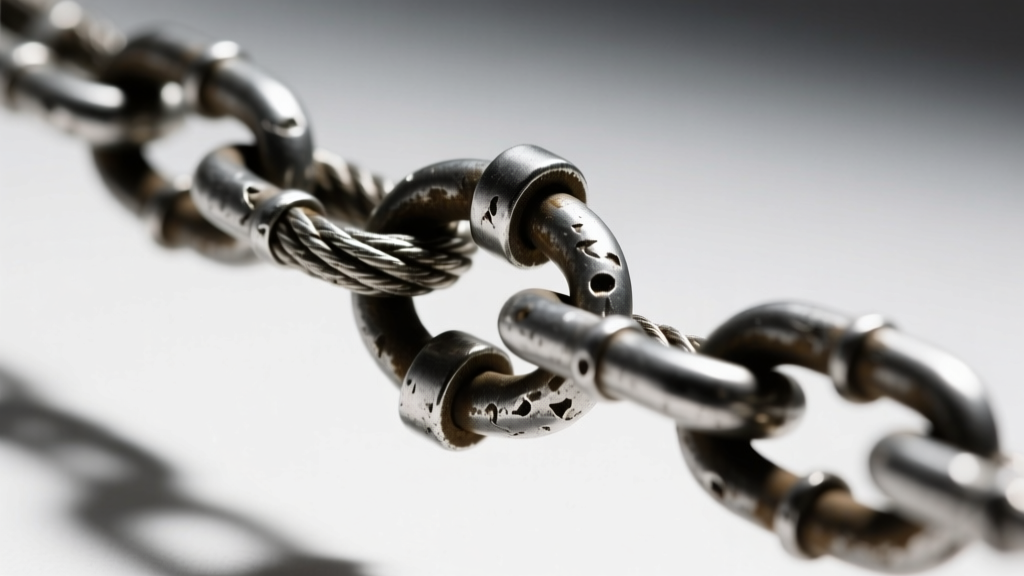
A common trap for budget buyers is allocating 100% of their funds to the pendant while neglecting the chain. A 65-gram Tony Iommi cross will instantly snap a standard 1.5mm or 2mm cable chain. The sheer kinetic energy generated when a heavy pendant swings and drops against the collarbone places immense tensile stress on the chain links and clasp.
To properly support an Iommi-style cross, you must upgrade to a minimum 3.5mm to 5.0mm chain. The best structural choices are:
- Cuban Link (4mm - 5mm): Offers a flat profile that prevents the pendant from flipping, with interlocking links that distribute weight evenly.
- Rope Chain (3.5mm - 4.5mm): Provides a classic, twisted aesthetic that complements gothic engraving, though it is slightly more prone to stretching under heavy loads.
- Figaro Chain (4mm+): A period-accurate choice for the 1970s rock aesthetic, provided the links are soldered shut.
Budget Impact: A 24-inch, 4mm sterling silver Cuban chain will add $250 to $450 to your total budget. If you are strictly capped at $200, you must pivot to a stainless steel pendant and chain combination to ensure structural integrity without compromising on thickness.
Value Assessment Matrix
Use the following matrix to determine which tier aligns with your financial boundaries and wear expectations.
| Material Tier | Est. Pendant Price | Est. Chain Cost (4mm) | Longevity | Best For |
|---|---|---|---|---|
| Zinc Alloy | $15 - $35 | $20 (Plated) | 3 - 6 Months | Costume wear, single-use events |
| Plated Brass | $45 - $120 | $40 (Steel/Plated) | 1 - 2 Years | Detail-oriented buyers on a strict budget |
| 316L Steel | $80 - $180 | $60 - $90 | Lifetime | Daily wear, low maintenance, high durability |
| 925 Sterling | $400 - $1,500+ | $250 - $500+ | Generational | Collectors, purists, intrinsic value seekers |
Hardware and Bail Engineering
When evaluating a Tony Iommi cross necklace in person or via high-resolution macro photography, immediately inspect the bail. The bail is the structural bridge between the pendant and the chain. In cheap manufacturing, the bail is simply cast as a hollow extension of the cross's top arm. These cast-in-place bails are porous and prone to shearing off under the pendulum effect of a heavy cross.
A high-value piece will feature a soldered heavy-gauge wire bail. Look for a bail made from at least 12-gauge or 10-gauge sterling silver or steel wire that has been mechanically or chemically soldered into a pre-drilled hole at the top of the cross. Additionally, the inner diameter of the bail must be at least 6mm to 8mm to accommodate a thick Cuban or Rope chain without causing abrasive friction. If a seller is offering a 'massive' sterling cross for $250, it is almost certainly a hollow electroform or features a weak, cast-in-place bail that will eventually fail.
Final Verdict: Maximizing Your Budget
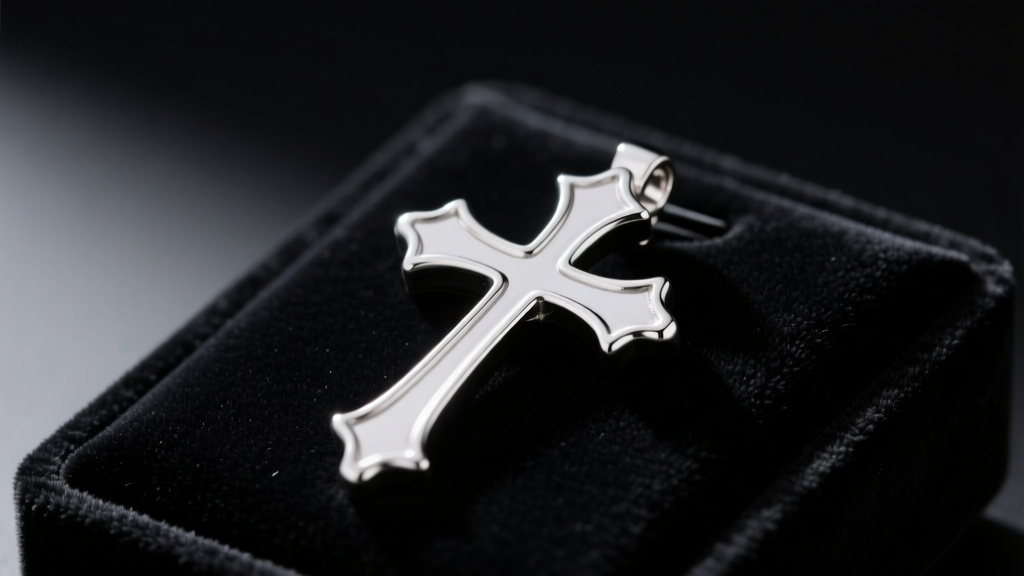
Securing a Tony Iommi cross necklace that respects both your wallet and the legacy of the design requires a strategic approach. If your total budget is under $250, abandon the pursuit of sterling silver. Instead, invest in a high-quality 316L stainless steel set. You will gain a structurally sound, appropriately heavy, and highly detailed piece that will survive decades of daily wear without the anxiety of silver tarnish or chain snap.
For buyers with a budget exceeding $600, solid 925 sterling silver becomes the logical choice. At this tier, demand proof of lost-wax casting, verify the presence of a soldered heavy-gauge bail, and ensure the seller utilizes a deep liver of sulfur oxidation to highlight the gothic engraving. By focusing your capital on structural integrity—specifically chain gauge and bail engineering—rather than just the raw weight of the metal, you ensure your homage to the godfather of heavy metal stands the test of time.


