The Ultimate Torc Necklace Buying Guide: Fit, Metals & Styling
Discover how to choose the perfect torc necklace. Our buying guide covers metal grades, sizing frameworks, clasp types, and neckline pairing for rigid collars.
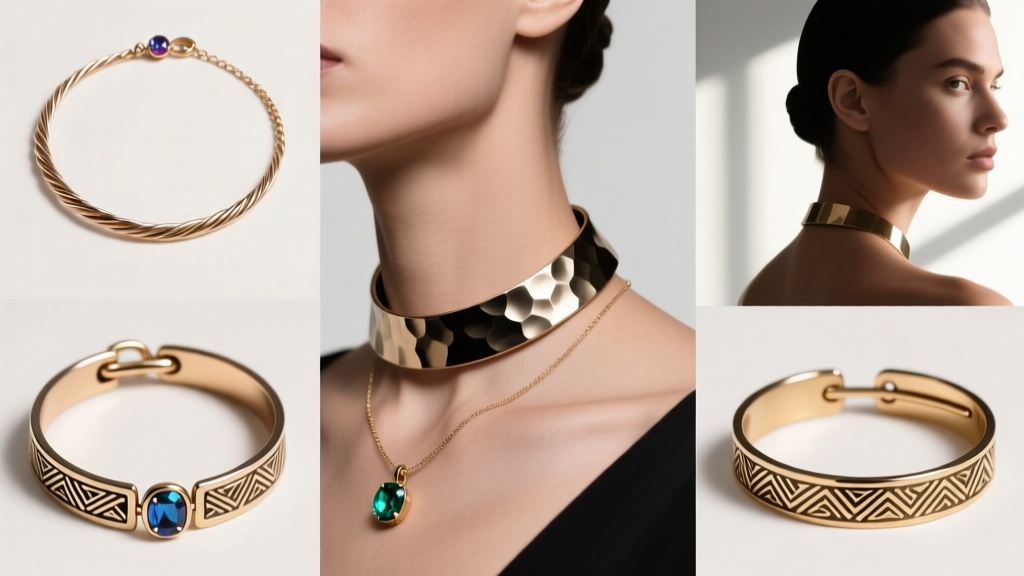
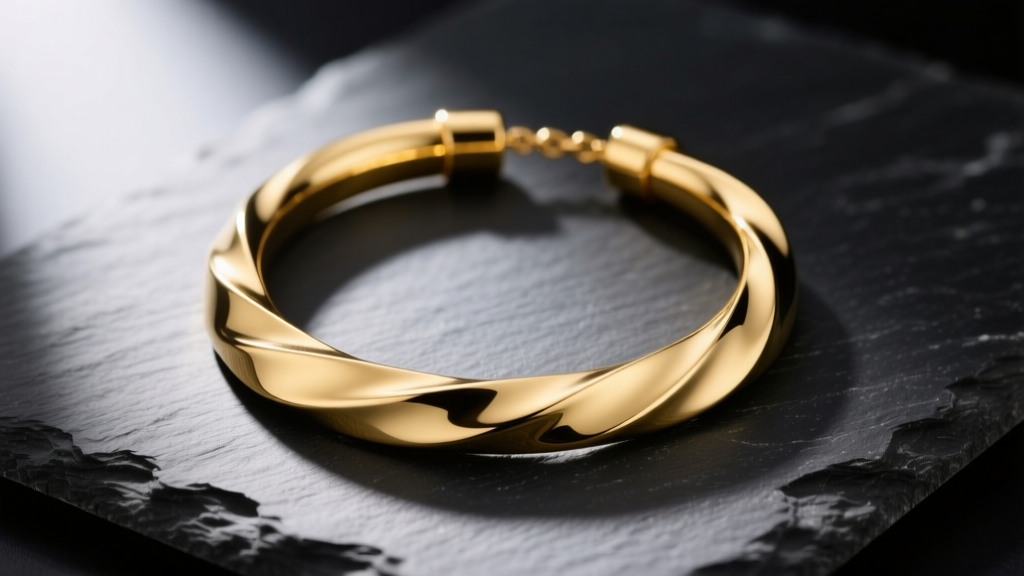
What Defines a Torc Necklace?
Unlike fluid chain necklaces that drape and conform to the body, a torc necklace is a rigid, semi-circular or circular metal collar. Historically rooted in ancient Celtic and European metalwork—as documented by artifacts housed in The British Museum—the modern torc has evolved into a statement piece of architectural jewelry. It sits firmly around the base of the neck, offering a sleek, sculptural silhouette that commands attention.
Because a torc does not bend or drape, buying one requires a completely different approach than purchasing a standard chain. You are essentially buying a piece of wearable hardware. This guide breaks down the metallurgical, structural, and anatomical considerations you must evaluate before investing in a rigid collar necklace.
Material Grades & Wearability Matrix
The structural integrity of a torc relies entirely on its metal composition. A rigid collar must possess enough tensile strength to hold its shape while maintaining enough malleability (in some designs) to allow for slight adjustments. According to data from The Silver Institute, pure silver is far too soft for rigid jewelry, which is why alloying is critical.
Below is a comparative matrix of the most common metals used in contemporary torc necklaces, evaluated on the Vickers Hardness (HV) scale, tarnish resistance, and market pricing.
| Metal Grade | Hardness (HV) | Tarnish Risk | Avg. Price Range (USD) | Best Application |
|---|---|---|---|---|
| Sterling Silver (925) | 60 - 120 HV | High | $150 - $450 | Everyday wear, adjustable tension torcs |
| 14k Yellow/White Gold | 120 - 150 HV | Low | $800 - $2,500 | Heirloom pieces, hinged designs |
| Grade 5 Titanium (Ti-6Al-4V) | 349 HV | None | $200 - $600 | Hypoallergenic needs, ultra-thin profiles |
| Surgical Steel (316L) | 150 - 200 HV | Very Low | $50 - $150 | Budget-friendly, heavy-gauge industrial looks |
| Solid Brass / Bronze | 60 - 150 HV | Very High | $40 - $120 | Vintage aesthetics, temporary fashion pieces |
Expert Insight: If you are buying an open-front tension torc (one that you slightly pull apart to put on), avoid 18k gold or platinum. These metals are either too soft or too stiff, leading to permanent deformation or catastrophic snapping. Stick to 14k gold, sterling silver, or titanium for tension-fit designs.
The Sizing Framework: Calipers vs. Tape Measures
The most common point of failure when buying a torc necklace online is improper sizing. A flexible tailor's tape measure is virtually useless for rigid jewelry because it measures the circumference of your skin, not the internal diameter required for a solid metal ring to clear your jawline and collarbones.
How to Measure for a Rigid Collar
- Measure the Neck Base: Use a flexible tape to measure the exact circumference of the base of your neck, right where a standard collar shirt sits.
- Calculate the Diameter: Divide your circumference measurement by Pi (3.14). For example, a 14-inch neck circumference equates to a 4.45-inch diameter.
- Add the Clearance Factor: You must add 10mm to 15mm (approx. 0.4 to 0.6 inches) to the final diameter. This clearance accounts for the expansion of the sternocleidomastoid muscle when you turn your head and the natural movement of your trachea when swallowing.
Pro Tip: If you are buying a closed-circle torc (no opening or hinge) that must slip over your head, you must measure the widest part of your skull/jawline, not your neck. A standard closed torc requires an internal diameter of at least 6.5 to 7 inches to clear the average adult head.
Closure Mechanisms & Real-World Failure Modes
The hardware that keeps a torc secured to your neck dictates its longevity and security. Here are the three primary closure types and their specific failure modes:
- Tension Fit (Open Ends): The torc is a continuous piece of metal with a gap at the front or back. You gently pull the ends apart to slide it on. Failure Mode: Metal fatigue. Repeated bending causes work hardening, eventually leading to a microscopic fracture and a sudden snap. Never pull a tension torc wider than necessary to clear your neck.
- Hinge and Pin: The metal is split on one side with a precision hinge, and secures on the other with a locking pin or clasp. Failure Mode: Pin loss or hinge warping. If the pin relies on friction rather than a mechanical lock (like a push-button or screw), it can vibrate loose during active wear.
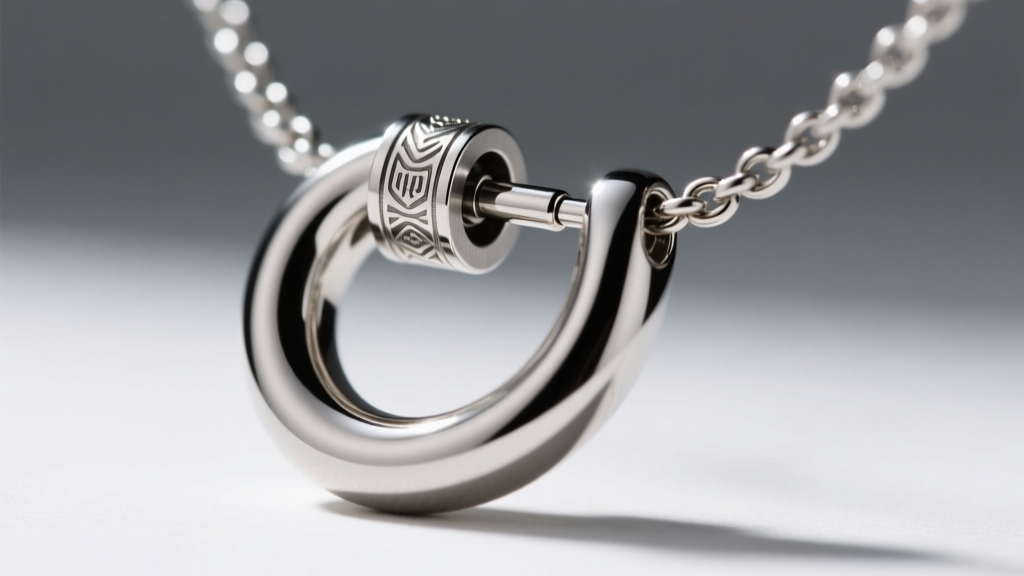
- Screw-In Terminals: The two front terminals screw into a central barrel or directly into each other. Failure Mode: Cross-threading. If forced at an angle, the micro-threads strip, rendering the closure useless. Always align the threads perfectly and spin the terminal backward until you feel a 'click' before tightening forward.

Neckline Pairing & Styling Rules
Because a torc acts as a solid horizontal line across the collarbone, it interacts heavily with the geometry of your clothing. Improper pairing can make the neckline look cluttered or the torc look like an afterthought.
The Ideal Canvases
- Deep V-Necks: The downward angle of a V-neck creates a negative space that perfectly frames the rigid curve of a torc, drawing the eye down toward the décolletage.
- Off-the-Shoulder / Strapless: This is the ultimate pairing. With bare skin acting as the canvas, the torc becomes the undisputed focal point without competing with fabric seams.
- Collared Button-Downs (Unbuttoned): Wearing a sleek, thin-gauge gold torc inside an open silk blouse offers a striking contrast between structured hardware and fluid fabric.
The Clash Zones
- Boatnecks / Bateau: The horizontal line of a boatneck directly competes with the horizontal line of the torc, creating a visually truncated and crowded neckline.
- Heavy Turtlenecks: The bulk of knitted fabric prevents the torc from sitting flush against the skin, causing it to tilt awkwardly outward and catch on the yarn.
Maintenance & Preventing Metal Fatigue
Caring for a torc requires respecting the physical limits of metal. Unlike chains, which can be tossed into a jewelry box, a torc must be stored flat or on a specialized curved neck bust to prevent warping.
For sterling silver torcs, avoid using abrasive silver dips, which can strip the rhodium plating often applied to white gold and silver to enhance shine. Instead, use a microfiber cloth and a non-scratching jeweler's rouge. If your torc features a hinge mechanism, apply a microscopic drop of synthetic watch oil to the hinge pin once a year to prevent friction wear and seizing. By treating your torc as a precision instrument rather than a standard accessory, you ensure its architectural beauty endures for decades.


