Torque Necklace Engineering: Wire Gauges, Metals, and Ergonomic Fit
Discover the technical engineering behind the torque necklace. Explore wire gauges, spring-temper metals, and ergonomic fitting for rigid neck rings.

The Anatomy of a Rigid Torque Necklace
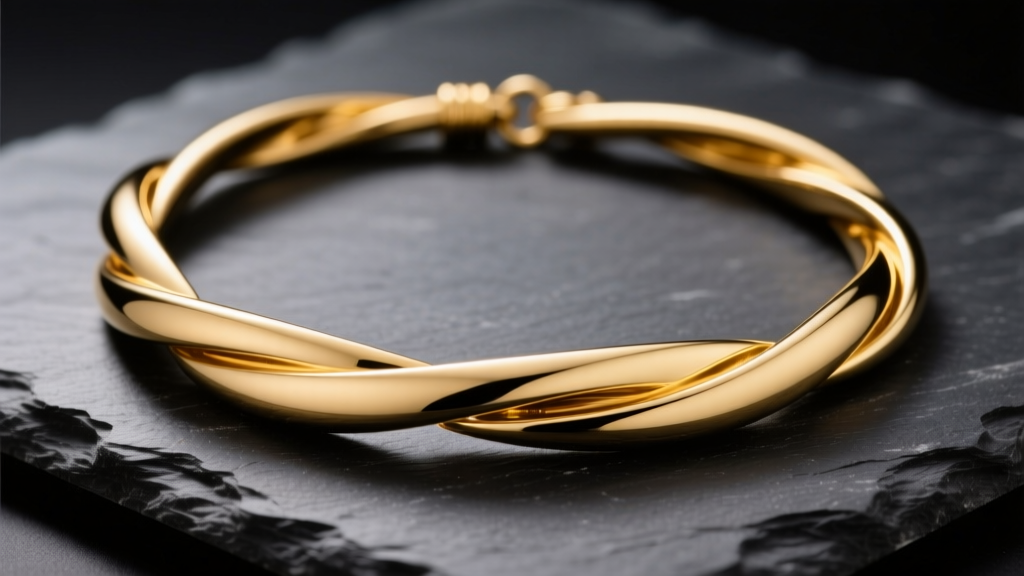
Unlike traditional chain necklaces or flexible chokers, a torque necklace (often spelled torc) is defined by its structural rigidity. It is a continuous, open-ended metal collar that relies on the inherent tension and yield strength of its material to remain secured around the neck. While historical Celtic torcs were often forged from twisted ribbons of bronze or electrum, modern iterations demand exacting precision in metallurgy and geometry. A poorly engineered torque will either deform permanently upon donning or snap under repeated stress. To understand the true craftsmanship behind high-end rigid collars, we must examine the intersection of material science, cross-sectional geometry, and human biomechanics.
Metallurgy and Wire Temper: Why Rigidity Matters
The most critical failure point in torque manufacturing is the selection of the wrong metal temper. If a jeweler uses dead-soft wire to form a collar, the necklace will easily bend open to slip over the head, but it will fail to spring back to its original shape. Over time, the wearer will constantly bend the metal to put it on, leading to rapid work-hardening and eventual brittle fracture.
Spring-Temper vs. Half-Hard Alloys
Expert fabricators utilize spring-temper or extra-hard wire for the main shank of a torque necklace. Spring-temper metals possess a high yield strength, meaning they can undergo a certain degree of elastic deformation (bending) and return to their exact original shape without suffering plastic (permanent) deformation. According to technical standards outlined by Rio Grande's metallurgical resources, spring-temper alloys have been heavily cold-worked, aligning their crystalline grain structure to resist bending forces.
For precious metals like 14k or 18k gold, achieving this temper requires precise alloying. Pure 24k gold is far too soft; it must be alloyed with copper and silver to increase its tensile strength. Beryllium copper is frequently used as a base metal for gold-plated torques because it can be heat-treated to achieve a spring-temper hardness that rivals steel, while remaining lightweight and hypoallergenic.
Wire Gauge and Cross-Sectional Geometry
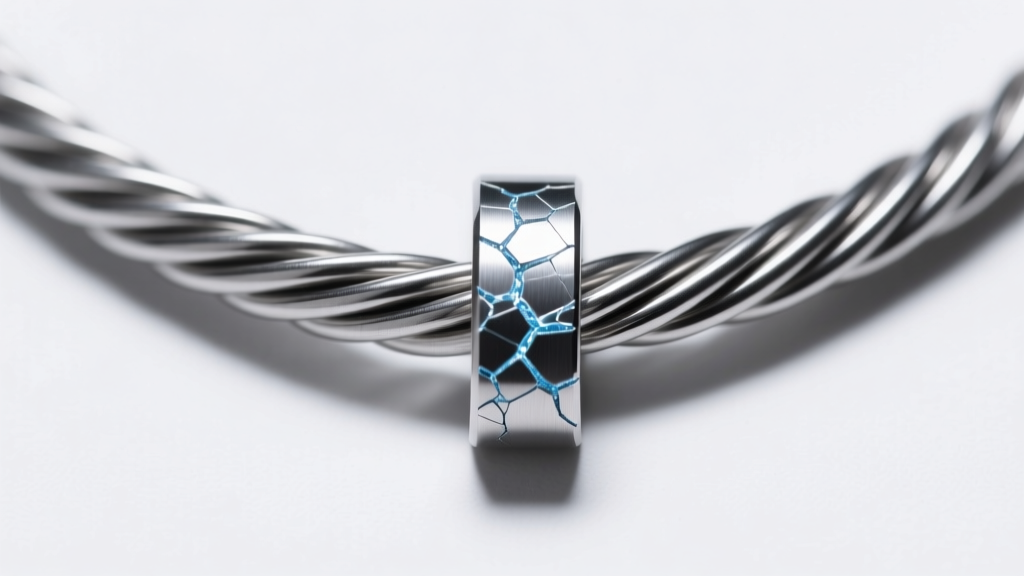
The thickness of the wire, measured in American Wire Gauge (AWG) or millimeters, dictates both the visual weight and the structural integrity of the piece. However, the cross-sectional shape is equally vital for wearer comfort and structural distribution.
| Wire Gauge (AWG) | Diameter (mm) | Structural Characteristics & Best Use Case |
|---|---|---|
| 12 AWG | 2.05 mm | Delicate and lightweight. Requires high-tensile alloys (like spring stainless) to prevent bending. Best for minimalist, everyday collars. |
| 8 AWG | 3.26 mm | The industry standard for luxury torques. Offers excellent balance between visual presence and metallurgical stability. |
| 6 AWG | 4.11 mm | Heavy, bold statement pieces. Often requires a D-shaped cross-section to sit flush against the collarbone without digging in. |
| 4 AWG | 5.18 mm | Sculptural and architectural. Usually hollow-core or cast rather than drawn wire, to prevent the necklace from becoming excessively heavy. |
The Importance of D-Shaped and Oval Profiles
A perfectly round wire cross-section is rarely ideal for a torque necklace exceeding 4mm in thickness. A round wire creates a concentrated point of contact against the skin, which can pinch or dig into the clavicle. Master jewelers often use a rolling mill to flatten the interior curve of the wire into a "D" shape. This creates a broad, flat surface that distributes the weight of the metal evenly across the sternum, vastly improving ergonomics without sacrificing the round visual profile from the exterior.
Ergonomics and the Biomechanics of Neck Fit
The human neck is not a perfect circle; it is an irregular oval, and the base of the neck slopes downward toward the sternum. If a torque is bent around a perfectly circular steel mandrel, it will sit awkwardly, riding up at the back of the neck and gaping at the front.
Calculating the Arc and Drop
To achieve a bespoke fit, the wire must be shaped on an oval, tapered mandrel that mimics the slope of the human shoulders. Furthermore, the terminal ends (the finials) must be angled slightly inward and downward. This "drop" ensures that the gap of the necklace rests naturally at the hollow of the throat. The standard gap for an adult torque necklace ranges between 30mm and 45mm. This gap is mathematically calculated to be wider than the jawline for easy donning, but narrow enough that the natural tension of the spring-temper metal grips the sides of the neck securely.

Common Failure Modes and Stress Fractures
Even when crafted from premium spring-temper alloys, torque necklaces are subject to specific mechanical failure modes if improperly designed or mishandled by the wearer.
- Stress Concentration at the Finials: If the transition from the main shank to the decorative terminal end is too abrupt, it creates a "stress riser." Every time the necklace is flexed open, the bending force concentrates entirely on this sharp geometric transition, leading to micro-fractures and eventual snapping. A gradual, parabolic taper is required to distribute the stress.
- Cyclic Fatigue from Improper Donning: Many wearers make the mistake of pulling the front gap wide open to slip the necklace over their head. This causes severe plastic deformation. The correct method is to slide the torque onto the neck sideways, through the narrower profile of the jaw, and then rotate it 90 degrees to the front.
- Galvanic Corrosion in Mixed Metals: If a torque features soldered joints (such as attached ornamental end-caps) using an alloy with a vastly different nobility than the main shank, exposure to sweat and humidity can cause localized galvanic corrosion, weakening the joint over time. Laser welding is preferred over traditional soldering to bypass this issue.
"A torque necklace is not merely jewelry; it is a tension spring. The artisan must balance the yield strength of the alloy against the elastic limits of the human form." — Master Bench Jeweler Adage
Conclusion
The engineering of a torque necklace requires a rigorous departure from standard chain-making techniques. It demands an intimate understanding of metal temper, precise gauge selection, and a deep respect for human anatomy. When evaluating a rigid collar, look beyond the surface polish. Examine the gradual taper of the terminals, the flattened interior profile, and the spring-back resistance of the alloy. By understanding these technical nuances, collectors and enthusiasts can appreciate the torque not just as a striking fashion accessory, but as a masterclass in wearable metallurgy and structural design.


