Pink Clover Necklace Troubleshooting: Fix Fading & Chips
Is your pink clover necklace fading or chipping? Discover expert troubleshooting tips to restore dyed mother of pearl, fix enamel, and prevent damage.

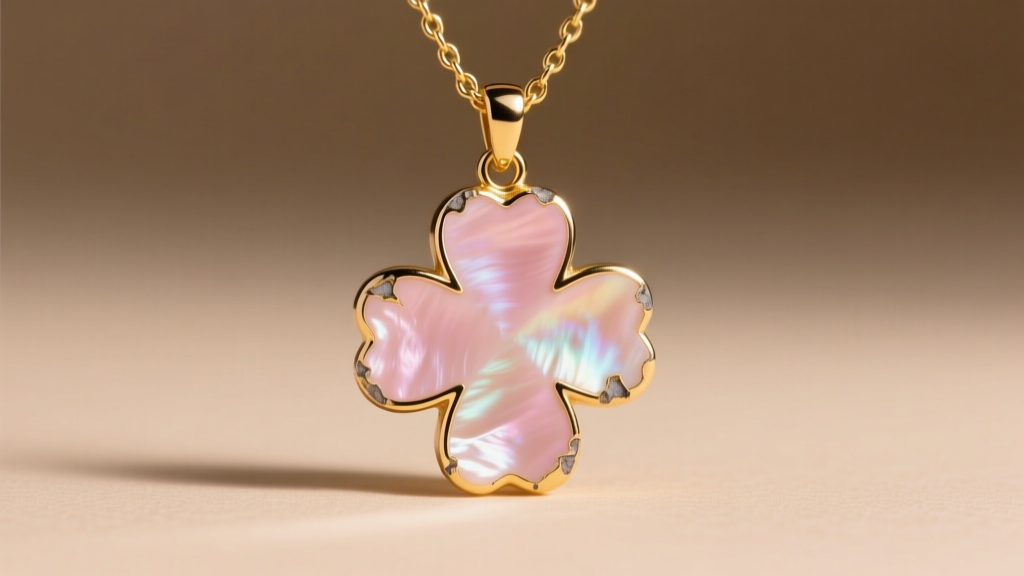
The pink clover necklace has cemented its status as a modern jewelry staple, blending organic motifs with elegant femininity. Whether you own an iconic luxury piece featuring pink mother-of-pearl (MOP) or an artisan-crafted pendant with pink chalcedony and guilloché enamel, these necklaces require meticulous care. Despite their delicate beauty, owners frequently encounter structural and aesthetic failures—from UV-induced color fading to chipped enamel borders and clasp fatigue.
In this comprehensive troubleshooting guide, we dissect the most common failure modes of pink clover necklaces and provide actionable, expert-level solutions to restore and protect your investment.
The Anatomy of a Pink Clover Necklace: Why Damage Occurs
To effectively troubleshoot damage, you must first understand the material composition of your pendant. The "pink" element in clover necklaces typically relies on one of three materials, each with distinct vulnerabilities:
- Dyed Mother of Pearl (MOP): An organic material created by the inner layer of mollusk shells. It is highly porous and usually dyed to achieve a uniform pink hue.
- Pink Chalcedony or Pink Opal: Natural silicate minerals. Chalcedony is durable, while opal contains water and is prone to crazing (cracking).
- Cold Enamel (Epoxy Resin) or Vitreous Enamel: Used to create the colored borders or inlays. Epoxy is a polymer that can yellow or chip, while vitreous enamel is fused glass that can shatter upon impact.
According to the Gemological Institute of America (GIA), organic gems like MOP rank at just 2.5 to 3.0 on the Mohs hardness scale, making them exceptionally susceptible to scratching and chemical degradation compared to their mineral counterparts.
Troubleshooting Color Fading in Dyed Mother-of-Pearl
The most frequent complaint regarding pink MOP clover pendants is gradual color loss, resulting in a washed-out, patchy appearance. This is not a defect in the metal, but a chemical breakdown of the organic dye matrix.
The Science of Dye Degradation
Dyed MOP is highly sensitive to ultraviolet (UV) radiation and prolonged exposure to chlorine or saltwater. UV rays break down the molecular bonds of the organic dyes used to tint the pearl layer. Furthermore, the natural conchiolin (the protein that binds the aragonite platelets in MOP) dries out over time, causing the stone to appear chalky and pale.
Restoration and Prevention Steps
- Rehydration: If the MOP looks chalky but the dye is intact, gently wipe the stone with a microfiber cloth slightly dampened with distilled water and a drop of mineral oil. This temporarily restores the luster by filling microscopic surface pores.
- Professional Re-dyeing: Severely faded MOP cannot be fixed at home. A master jeweler can carefully extract the stone from the bezel, strip the remaining dye, and submerge it in a heated organic dye bath. This process typically costs between $80 and $150, depending on the setting's complexity.
- UV Protection: Store the necklace in a lined, opaque jewelry box. If you display your collection, ensure the display case utilizes UV-filtering acrylic to prevent ambient sunlight from bleaching the stones.
Fixing Chipped Enamel and Scratched Stones
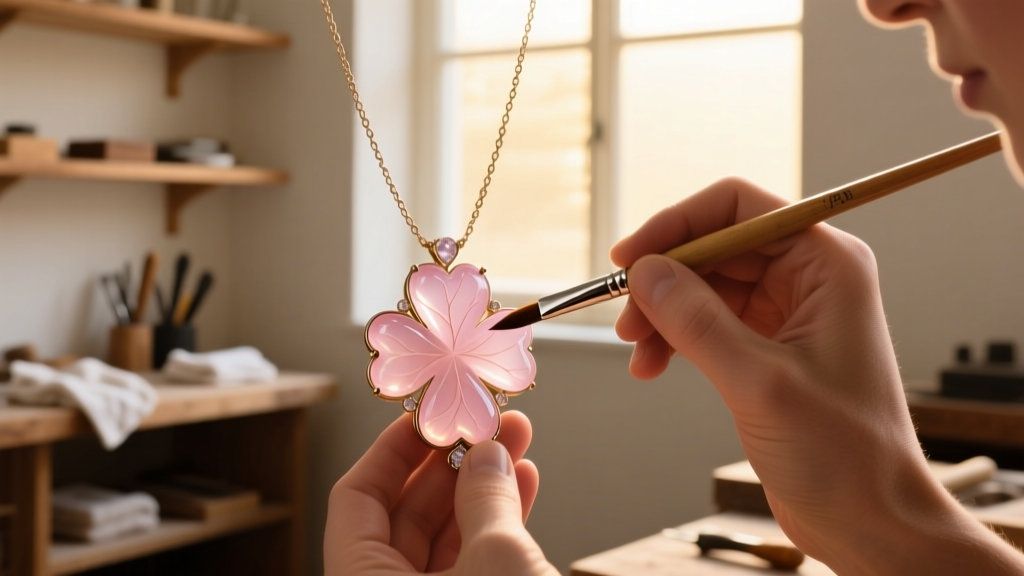
The borders of a clover pendant are often outlined in enamel or set with small diamond accents. When the pendant strikes a hard surface, the enamel is usually the first casualty.
| Material | Mohs Hardness | Common Failure Mode | Repair Viability |
|---|---|---|---|
| Dyed Mother of Pearl | 2.5 - 3.0 | UV Fading, Surface Scratching | Low (Requires Replacement/Re-dyeing) |
| Pink Chalcedony | 6.5 - 7.0 | Edge Chipping from Hard Impacts | Medium (Can be re-polished by a lapidary) |
| Cold Enamel (Epoxy) | N/A (Polymer) | Yellowing, Peeling, Chipping | High (Can be scraped and re-poured) |
| Vitreous Enamel | 5.0 - 6.0 | Shattering, Spider-web Cracking | Low (Requires kiln-firing by a specialist) |
Addressing Cold Enamel Chips
If your pink clover necklace features cold enamel (a two-part epoxy resin commonly used in mid-tier and fashion jewelry), chips can be repaired using a color-matched jewelry epoxy. Clean the chipped area with isopropyl alcohol to remove skin oils. Using a fine-tipped dental pick, apply the tinted resin into the divot, slightly overfilling it. Once cured (usually 24 hours), a jeweler can wet-sand the patch with 2000-grit sandpaper to make it flush with the metal bezel.
Chain and Clasp Failures: Tangles and Breaks
A heavy stone pendant places immense stress on delicate chains and small clasps. The standard lobster clasp, while secure, is prone to mechanical failure if not maintained.
Solving the Lobster Clasp Spring Issue
If your clasp feels "sticky" or fails to snap shut, the internal spring is likely clogged with lotion, dead skin cells, or perfume residue. Never use a needle to pick at the clasp, as this will bend the delicate tension spring. Instead, soak the clasp (and only the clasp, keeping the MOP stone dry) in a small cap of warm distilled water mixed with a drop of mild dish soap. Use a soft-bristled baby toothbrush to gently agitate the lever mechanism. Rinse with distilled water and apply a microscopic drop of synthetic watch oil to the hinge pin.
Preventing Chain Stretch and Breakage
Cable chains and rope chains under 1.2mm in thickness are highly susceptible to stretching when paired with heavy clover pendants (which often weigh between 8 and 15 grams). If you notice the chain links elongating, it is time to upgrade. Transition to a 1.5mm or 2.0mm box chain or a Wheat chain, which offer superior tensile strength and resist kinking.
Metal Tarnish and Skin Discoloration Solutions
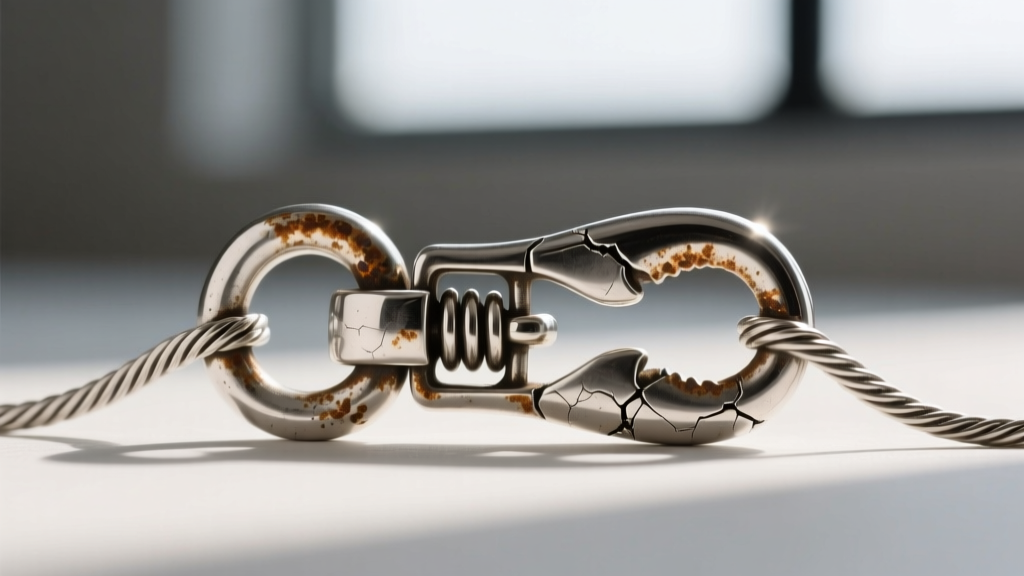
Many pink clover necklaces are crafted from 925 sterling silver or brass base metals plated with 18k gold or rhodium. When the plating wears thin, the underlying metals react with the sulfur and acids in human sweat, resulting in a green or black discoloration on the skin and a dull, tarnished pendant backing.
Expert Insight: The American Institute for Conservation notes that improper polishing of plated jewelry accelerates metal loss. Avoid abrasive silver polishes on gold vermeil or rhodium-plated clover settings, as they will strip the micron-thin plating layer entirely.
The Rhodium Plating Fix
If your silver-backed clover necklace is constantly tarnishing and irritating your skin, the ultimate troubleshooting solution is electroplating. A local jeweler can apply a 0.75 to 1.0-micron layer of rhodium over the silver setting. Rhodium is a platinum-group metal that is completely inert, highly reflective, and will permanently stop skin discoloration and tarnish. Expect to pay between $45 and $90 for this service, which typically lasts 2 to 4 years with daily wear.
Daily Maintenance Checklist for Clover Pendants
To preemptively solve the issues outlined above, integrate these specific care protocols into your routine:
- The "Last On, First Off" Rule: Always put your necklace on after applying perfume, hairspray, and lotions. The alcohol and volatile organic compounds (VOCs) in cosmetics will degrade cold enamel and strip the luster from MOP.
- Ultrasonic Cleaner Warning: Never place a pink clover necklace in an ultrasonic cleaner. The high-frequency cavitation bubbles can fracture internal flaws in chalcedony, shatter vitreous enamel, and cause dyed MOP to delaminate from its backing.
- Friction Storage: Store the necklace flat. Hanging it can cause the heavy pendant to swing and strike other pieces, leading to edge chips. Use an anti-tarnish strip (3M brand) in the storage compartment to neutralize ambient sulfur gases.
By understanding the specific material vulnerabilities of your pink clover necklace, you can move beyond guesswork and apply targeted, professional-grade solutions. Whether you are managing UV fading in organic stones or reinforcing a fatigued clasp, proactive maintenance ensures your pendant remains a vibrant, structural masterpiece for decades to come.


