Tory Burch Pearl Necklace: Material Guide & Authenticity
Explore the material properties of a Tory Burch pearl necklace. We compare crystal pearls, gold-plated brass hardware, and long-term durability.

The Anatomy of Bridge Jewelry: What Are You Actually Buying?
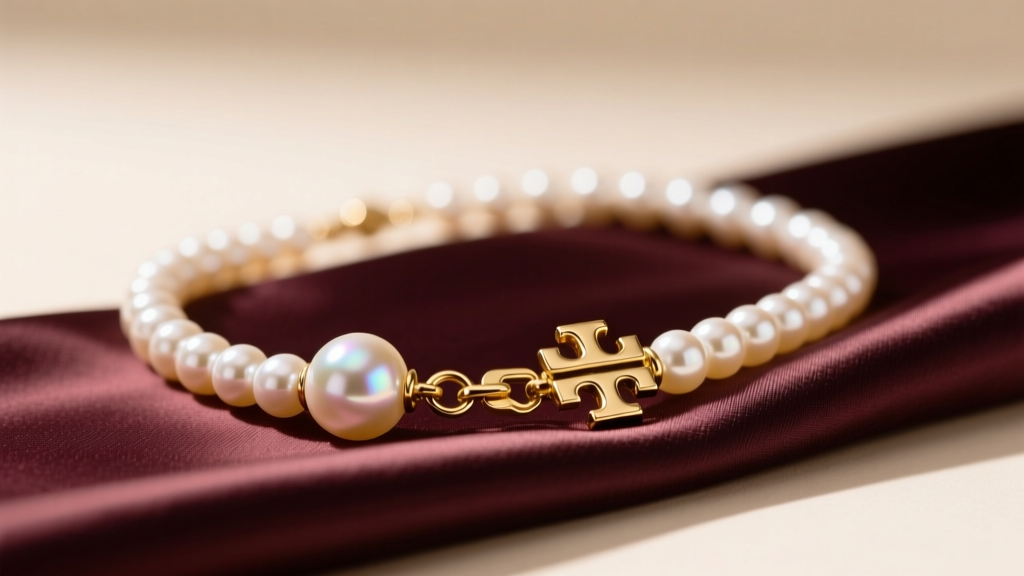
When evaluating a Tory Burch pearl necklace, you are looking at a prime example of "bridge jewelry"—the lucrative market segment that sits between high-end costume pieces and entry-level fine jewelry. To make an informed purchasing decision in 2026, it is crucial to look past the brand's iconic double-T logo and scrutinize the actual material science behind the piece. Unlike heritage fine jewelers that rely on organic saltwater pearls and solid precious metals, Tory Burch utilizes advanced synthetic alternatives and plated base metals to achieve a specific aesthetic at a highly accessible price point. Understanding the exact properties of these materials will help you manage your expectations regarding longevity, tarnish resistance, and overall value.
The Pearls: Advanced Crystal vs. Organic Nacre
The most defining feature of any Tory Burch pearl strand is the pearl itself. The brand predominantly uses high-grade crystal pearls rather than cultured freshwater or saltwater pearls. Historically, these were heavily reliant on Swarovski's crystal pearl technology, though the broader industry's 2026 shift toward strictly lead-free advanced crystal cores has updated the manufacturing baseline.
The Core and Coating Process
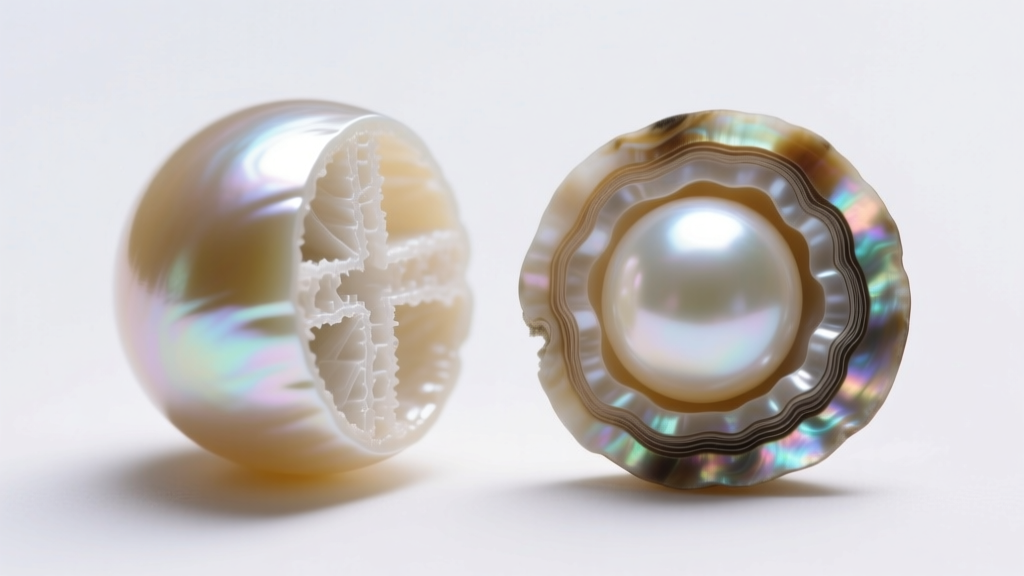
A crystal pearl begins as a precision-cut, high-refractive-index glass or advanced crystal core. This core gives the bead a specific gravity (SG) of approximately 2.8 to 3.0, which closely mimics the satisfying, heavy drape of a genuine saltwater Akoya pearl (SG 2.6 to 2.8). The core is then submerged multiple times in a proprietary pearlescent lacquer. Unlike organic nacre, which is secreted by a mollusk and consists of microscopic aragonite platelets bound by conchiolin, this synthetic coating is entirely uniform. According to the Gemological Institute of America (GIA), natural nacre possesses a unique orient and overtone that is exceptionally difficult to replicate. While the Tory Burch coating offers a flawless, blemish-free surface with a high-gloss mirror finish, it lacks the deep, complex light refraction of genuine nacre.
Hardness and Impact Resistance
On the Mohs scale of mineral hardness, the synthetic pearlescent coating typically rates around 3.5 to 4.0, making it slightly more resistant to surface scratching from everyday dust (which contains quartz particles at a 7.0) than the delicate nacre of a freshwater pearl (Mohs 2.5 to 3.0). However, the rigid crystal core introduces a different vulnerability: shattering. If dropped onto a hard surface like marble or tile, a crystal pearl is highly likely to chip or crack at the drill hole, whereas organic pearls may dent or scratch but are less prone to catastrophic shattering due to their shock-absorbing organic matrix.
Hardware and Base Metals: Plating Thickness and Tarnish
The hardware on a Tory Burch pearl necklace—including the toggle clasps, lobster clasps, and signature logo pendants—is typically crafted from jewelry brass and finished with a gold-tone plating. Jewelry brass is an alloy primarily composed of copper (roughly 70%) and zinc (30%). It is favored in bridge jewelry for its excellent malleability, casting detail, and cost-effectiveness.
The Micron Plating Standard
The gold finish is achieved through electroplating, usually depositing a layer of 14k or 18k gold over the brass base. In this market segment, the plating thickness generally ranges from 0.5 to 1.5 microns. To put this into perspective, the Federal Trade Commission (FTC) guidelines dictate that for a piece to be legally marketed as "gold vermeil," it must feature a sterling silver base with a minimum gold plating thickness of 2.5 microns. Therefore, Tory Burch hardware is classified as gold-plated brass, not vermeil. To extend the lifespan of this relatively thin plating, manufacturers often apply an e-coat (electrophoretic lacquer) to seal the metal and delay oxidation.
Material Property Comparison Chart
To contextualize where a Tory Burch pearl necklace stands in the broader jewelry market, review the material comparison below:
| Property | Tory Burch (Crystal & Brass) | Entry-Level Fine (Freshwater & Vermeil) | Heirloom Fine (Akoya & Solid 18k) |
|---|---|---|---|
| Pearl Core | Lead-Free Advanced Crystal | Organic Mollusk Nacre | Organic Mollusk Nacre (Bead Nucleated) |
| Surface Coating | Synthetic Pearlescent Lacquer | Natural Aragonite Platelets | Thick Natural Aragonite (0.4mm+) |
| Base Metal | Brass (Cu-Zn Alloy) | Sterling Silver (925) | Solid 18k Gold (750) |
| Gold Thickness | 0.5 - 1.5 Microns (Flash/Light) | 2.5+ Microns (Vermeil Standard) | Solid (Infinite) |
| Typical Retail Range | $150 - $350 | $250 - $600 | $1,500 - $5,000+ |
Real-World Failure Modes and Wear Patterns
Understanding how bridge jewelry fails over time is critical for proper maintenance. Based on the material properties of brass and synthetic lacquer, here are the most common failure modes you will encounter with prolonged wear:
- Copper Migration and Verdigris: If the e-coat wears away at high-friction points (like the clasp loop), the underlying copper in the brass will react with sulfur and moisture in human sweat. This creates copper sulfide, resulting in the familiar green or black tarnish that transfers to the skin.
- Friction Point Plating Loss: The 1.0-micron gold plating is highly susceptible to mechanical abrasion. Toggle bars rubbing against O-rings will eventually wear down to the brass base metal within 12 to 24 months of daily wear.
- Drill Hole Chipping: The synthetic pearl coating is thinnest at the drill holes. If the necklace is strung on a wire without protective French wire or silicone spacers, metal-on-coating friction will cause the pearlescent lacquer to flake away, exposing the clear crystal core beneath.
Authenticity Markers and Quality Control
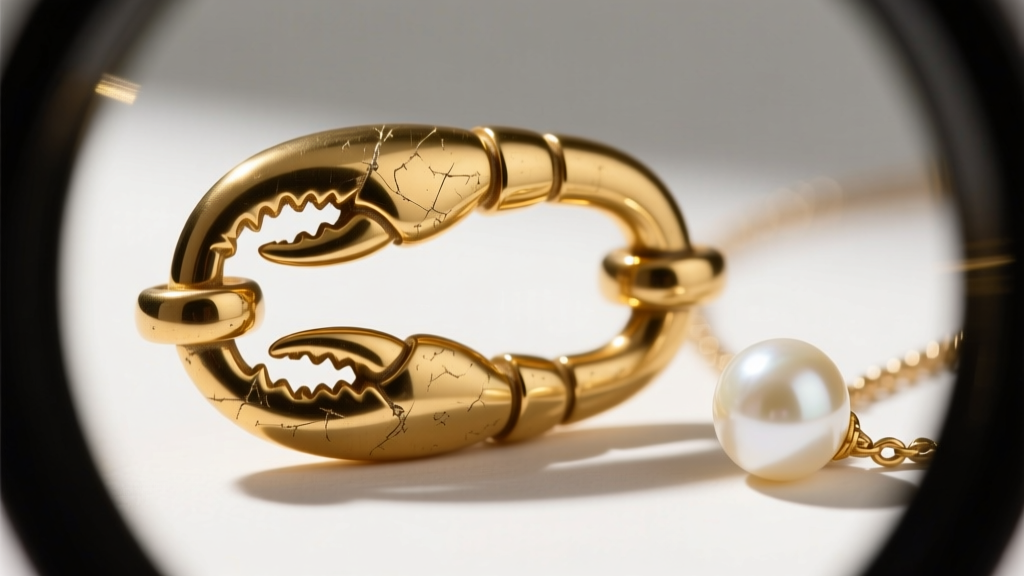
Because of the brand's popularity, the secondary market is flooded with counterfeits. Authenticating a Tory Burch pearl necklace requires examining the material execution rather than just looking for a logo. Genuine pieces feature exceptionally clean casting lines on the brass hardware, with the gold plating evenly distributed even in the recessed areas of the logo. Counterfeit versions often use cheaper zinc-alloy (zamak) bases, which feel noticeably lighter and feature a cloudy, uneven gold wash that quickly turns pinkish as the copper flash-plating oxidizes.
"The true value of bridge jewelry lies in its design and brand cachet, not its intrinsic material melt value. Buyers must treat these pieces as high-end fashion accessories that require meticulous care, rather than heirloom investments that will appreciate or endure decades of neglect."
Care Protocol: Maximizing the Lifespan of Plated Brass and Crystal
To preserve the e-coat and the synthetic pearl lacquer, you must adopt a strict chemical avoidance protocol. Never use ultrasonic cleaners, silver polishing dips, or ammonia-based glass cleaners on a crystal pearl necklace; these solvents will instantly strip the pearlescent coating and cloud the crystal core. Instead, wipe the pearls down with a slightly damp, lint-free microfiber cloth after every wear to remove acidic skin oils. Store the necklace flat or hanging in a low-humidity environment, ideally with an anti-tarnish silica packet to slow the oxidation of the brass hardware. By respecting the material limitations of gold-plated brass and coated crystal, your necklace will maintain its flawless, high-impact aesthetic for years to come.


