Touchstone Crystal Necklace Guide: Grounding Jewelry for Beginners
Discover the calming power of a touchstone crystal necklace. Learn how to choose, style, and care for tactile grounding pendants in our beginner guide.

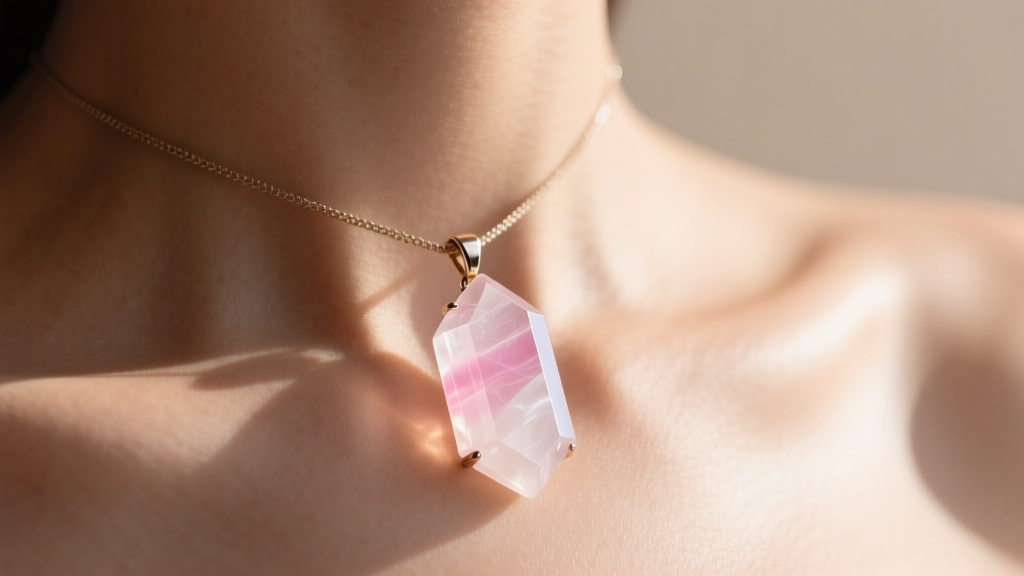
The Rise of Tactile Grounding Jewelry
In an era dominated by digital overstimulation, the jewelry industry has seen a massive pivot toward functional, wellness-oriented accessories. At the forefront of this movement in 2026 is the touchstone crystal necklace. Unlike traditional pendants designed purely for visual aesthetics, a touchstone necklace is engineered for physical interaction. It serves as a wearable grounding tool, a tactile anchor for mindfulness, and a sophisticated alternative to traditional fidget devices.
For beginners, navigating the intersection of gemology, jewelry hardware, and sensory wellness can be overwhelming. What makes a crystal suitable for constant touching? Which chains can withstand the friction and pulling of daily fiddling? This comprehensive guide breaks down the anatomy, material science, and styling principles of touchstone crystal necklaces, ensuring you invest in a piece that is as durable as it is calming.
The Anatomy of a True Touchstone Pendant
Not every crystal pendant qualifies as a touchstone. A true touchstone is specifically cut, polished, or shaped to provide satisfying tactile feedback. When selecting your first piece, you must evaluate the stone's physical geometry and surface finish.
Surface Finish: Cabochon vs. Tumbled vs. Raw
The way a stone feels against the skin is paramount. Cabochon cuts (smooth, domed, and highly polished) offer a glassy, frictionless surface that is ideal for continuous thumb-rubbing. Tumbled stones provide a more organic, slightly textured feel with natural undulations. Conversely, raw or unpolished crystals, while visually striking, can harbor microscopic crevices that trap skin oils and lotions, making them less hygienic for constant tactile interaction.
The 'Worry Stone' Indentation
Many purpose-built touchstone pendants feature a carved ergonomic groove or indentation on one or both sides. Often referred to as a 'worry stone' design, this concave pocket naturally guides the thumb and index finger, providing a repetitive, soothing physical anchor during moments of high stress or anxiety.
Choosing the Right Crystal: Hardness and Tactile Feel
When a crystal is subjected to the natural oils, acids, and friction of human skin, its mineral hardness becomes a critical factor. According to the Gemological Institute of America (GIA), the Mohs scale of mineral hardness dictates how well a gem will resist scratching and surface degradation over time. For a touchstone necklace, you need a stone with a Mohs rating of at least 6.0 to prevent it from becoming dull or pitted from daily handling.
| Crystal Type | Mohs Hardness | Tactile Profile | Best Used For |
|---|---|---|---|
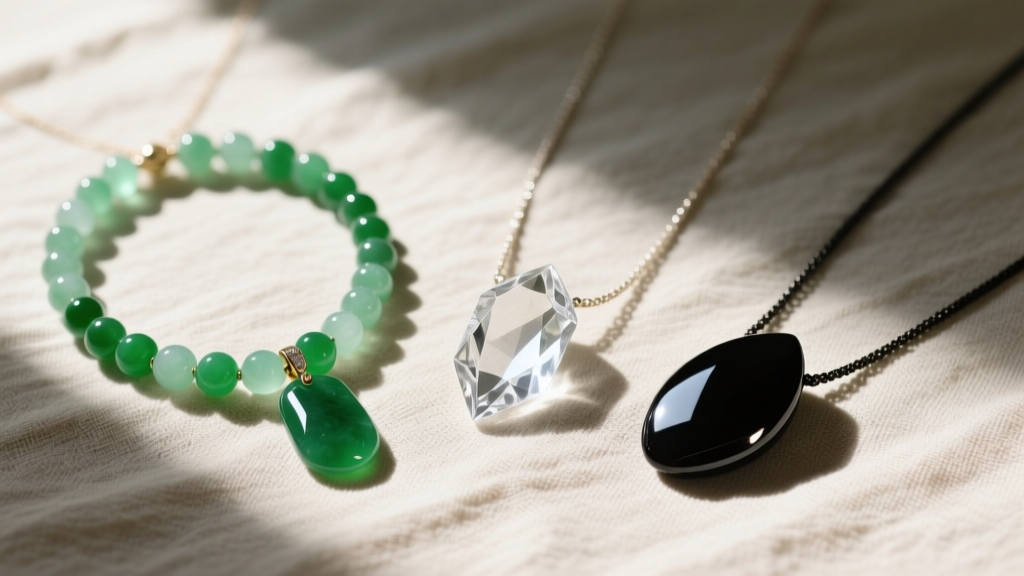
| Rose Quartz | 7.0 | Smooth, warm, glassy | Emotional grounding, self-soothing |
| Nephrite Jade | 6.0 - 6.5 | Buttery, cool, dense | Stress relief, deep focus |
| Clear Quartz | 7.0 | Cool, highly polished | Mental clarity, energy resetting |
| Black Obsidian | 5.0 - 5.5 | Slick, glass-like, cool | Quick anxiety interrupts (requires careful handling) |
| Sodalite | 5.5 - 6.0 | Matte, slightly grippy | Logical thinking, communication prep |
Expert Note: Avoid using Selenite (Mohs 2.0) or Malachite (Mohs 3.5-4.0) as touchstones. Selenite will literally dissolve and warp from the moisture and oils on your fingers, while Malachite can release toxic copper compounds when its surface is degraded by skin acids. For comprehensive mineral data, always cross-reference your stones with databases like Mindat.org before purchasing.
Chain and Bail Engineering: Built for Fiddling
The most common failure point in a touchstone crystal necklace is not the stone itself, but the hardware connecting it to the chain. When you hold, pull, or fidget with a pendant, you transfer kinetic stress directly to the bail and the chain links.
Chain Gauge and Link Style
Standard fashion jewelry chains (typically 0.6mm to 0.8mm thick) will easily snap under the repetitive tension of tactile fiddling. For a functional touchstone necklace, you must upgrade to a heavier gauge.
- Box Chains (1.2mm - 1.5mm): The gold standard for touchstones. The interlocking square links distribute tension evenly and resist kinking when twisted between fingers.
- Wheat Chains (1.2mm+): Braided and incredibly strong, offering a satisfying textured feel if you tend to run the chain itself through your fingers.
- Rope Chains (1.5mm+): Highly durable, though the twisted links can occasionally catch on the porous edges of a tumbled stone if not properly capped.
Avoid delicate cable chains or snake chains, as the latter will permanently dent and weaken if bent or bitten during anxious moments.
The Bail: Mechanical vs. Adhesive
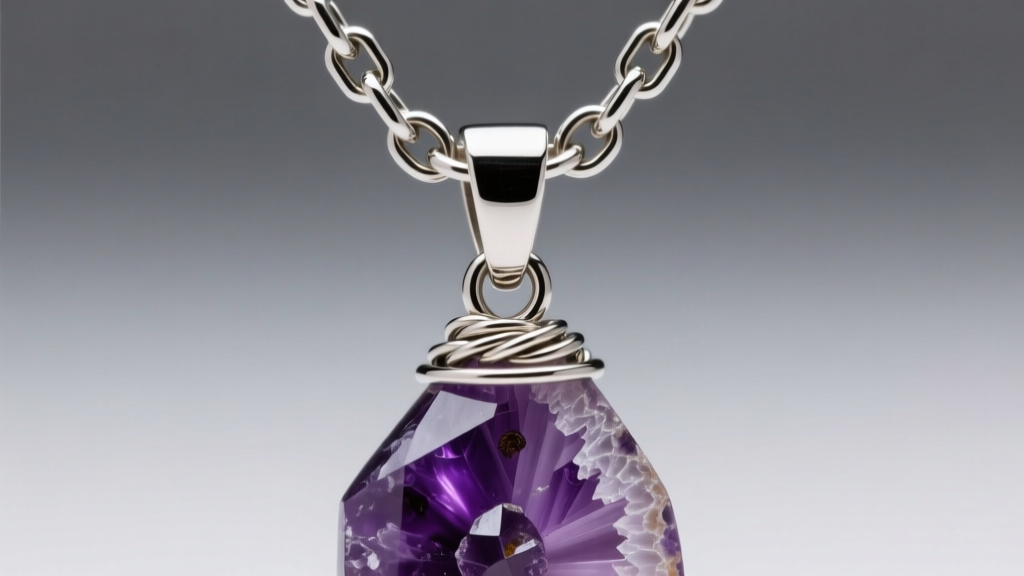
The bail is the loop that connects the pendant to the chain. Many mass-market crystal necklaces use glue-set bails (a metal loop adhered directly to the flat top of the stone). Under the stress of constant pulling, the adhesive will inevitably fail, resulting in a lost stone. Always seek out pendants featuring mechanical wire-wrapping, pinch bails (which grip a drilled hole), or bezel-set pendants where the metal physically encases the stone's edges.
Styling for Tactile Access: Length Matters
A touchstone necklace is useless if it cannot be comfortably reached without disrupting your posture or clothing. The length of the chain dictates the pendant's resting position, which in turn dictates its functionality.
- Choker Length (14-16 inches): Not recommended. Rests too high on the collarbone, requiring you to lift your arms unnaturally to touch the stone, drawing unwanted attention in professional settings.
- Princess Length (18 inches): Ideal for discreet grounding. The pendant rests at the base of the throat or upper chest. You can easily reach up and pinch the stone between your thumb and forefinger while keeping your hands relatively low in your lap.
- Matinee / Sternum Drop (24-28 inches): Best for deep focus. The pendant hangs at the sternum or solar plexus. This length allows the stone to rest naturally where your hands fold when sitting at a desk or meditating, making it the perfect 'worry stone' configuration for working professionals.
Care, Cleansing, and Maintenance
Because a touchstone crystal necklace is subjected to constant contact with human skin, it requires a more rigorous cleaning regimen than standard jewelry. Sebum (skin oil), lotion residue, and dead skin cells will build up in the crevices of the stone and the chain links, creating a dull film and potentially harboring bacteria.
The Weekly Deep Clean
- Prepare a bowl of warm water with a few drops of pH-neutral dish soap (avoid harsh detergents or jewelry dips, which can strip the polish from softer stones like jade).
- Submerge the necklace for 5 to 10 minutes to loosen oils.
- Use a baby-bristle toothbrush to gently agitate the bail, the chain links, and any carved grooves on the touchstone itself.
- Rinse thoroughly under distilled water to prevent hard water spots.
- Pat dry with a microfiber cloth. Never use ultrasonic cleaners on stones with internal fractures (like emerald or raw quartz), as the high-frequency vibrations will shatter the stone from the inside out.
Final Thoughts on Your First Touchstone
Investing in a touchstone crystal necklace is an investment in your daily mental hygiene. By prioritizing high-Mohs minerals like rose quartz or jade, selecting a robust 1.5mm box chain, and ensuring your pendant features a mechanically secured bail, you will acquire a piece of jewelry that transcends mere decoration. It becomes a reliable, tactile companion, ready to ground you in the present moment whenever the world feels a little too fast.


