Heart Wing Necklace Guide: Casting, Metals & Chain Pairing
Explore the technical anatomy of the heart wing necklace. Learn about lost-wax casting, metal alloys, chain gauges, and expert appraisal tips.

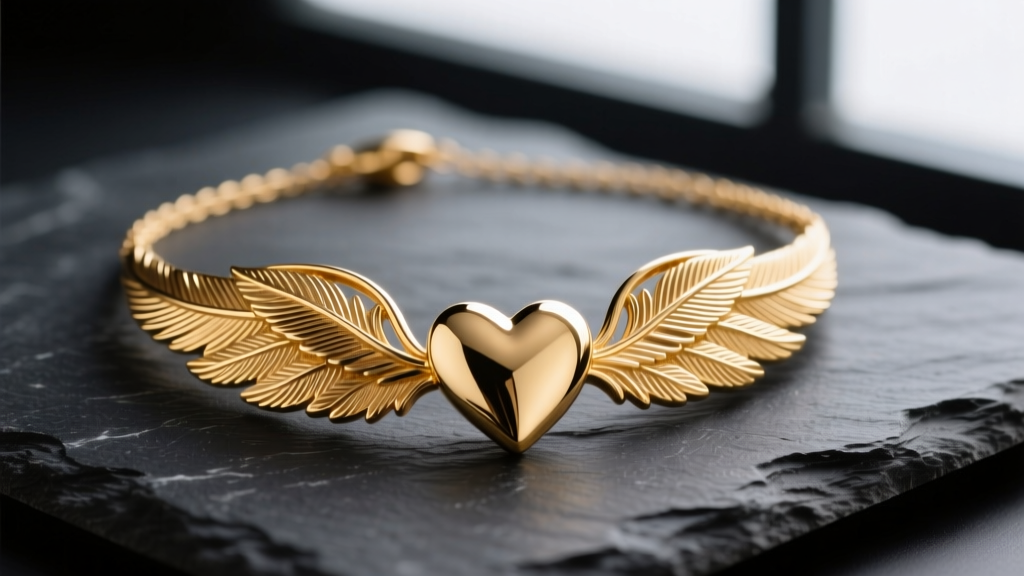
The Architecture of the Heart Wing Motif
The heart wing necklace—often symbolizing guardian angels, spiritual freedom, or memorial tributes—remains a perennial favorite in fine and fashion jewelry. However, beneath its sentimental surface lies a complex matrix of metallurgical decisions, structural engineering, and manufacturing techniques. Unlike simple geometric pendants, a heart wing necklace requires precise visual weight distribution. The solid heart acts as the gravitational anchor of the design, while the extending wings demand extreme tapering and delicate detailing. If the structural integrity of the wing tips is compromised during the design phase, the piece becomes highly susceptible to bending, snagging, and eventual fracture.
In 2026, advancements in CAD/CAM (Computer-Aided Design and Computer-Aided Manufacturing) have allowed jewelers to push the boundaries of how thin these wing feathers can be cast while maintaining durability. Yet, the fundamental rules of jewelry physics still apply. A well-engineered heart wing pendant will feature a reinforced central spine where the wings meet the heart, ensuring that lateral stress is dispersed evenly across the piece rather than concentrating at the solder joints or the bail.
Metallurgy and Material Grades
The choice of metal dictates not only the aesthetic warmth of the necklace but also its Vickers Hardness (HV)—a critical metric for intricate designs with fragile extremities like feathered wings.
14k vs. 18k Gold Alloys
While 18k gold (75% pure gold) offers a richer, deeper yellow hue and higher prestige, it is inherently softer (approximately 130-150 HV depending on the alloy mix). For a heart wing necklace with micro-detailed feathers, 14k gold (58.3% pure gold, alloyed with copper, silver, and zinc) is often the superior technical choice. 14k gold boasts a higher Vickers Hardness (often exceeding 160 HV), providing the necessary rigidity to prevent the delicate wing tips from warping when caught on clothing. According to the Gemological Institute of America (GIA), understanding alloy composition is vital for predicting how a piece will withstand daily mechanical stress.
Sterling Silver and Argentium Innovations
Standard 925 sterling silver is the most common base metal for heart wing pendants, but it is prone to sulfide tarnishing. Modern expert jewelers are increasingly turning to Argentium silver (935 or 960 grade), which replaces some of the copper alloy with germanium. This creates a transparent germanium dioxide layer on the surface that drastically slows tarnish formation, reducing the maintenance burden on the wearer while providing a brighter, whiter reflectivity that mimics white gold.
Rhodium Plating Thickness
For white gold and silver heart wing necklaces, rhodium electroplating is standard. However, mass-market pendants often feature a flash plating of merely 0.1 to 0.25 microns, which wears off the high-friction wing edges within months. A premium, expertly crafted piece should specify a rhodium thickness of 0.75 to 1.0 microns to ensure long-term tarnish resistance and a durable, mirror-like finish.
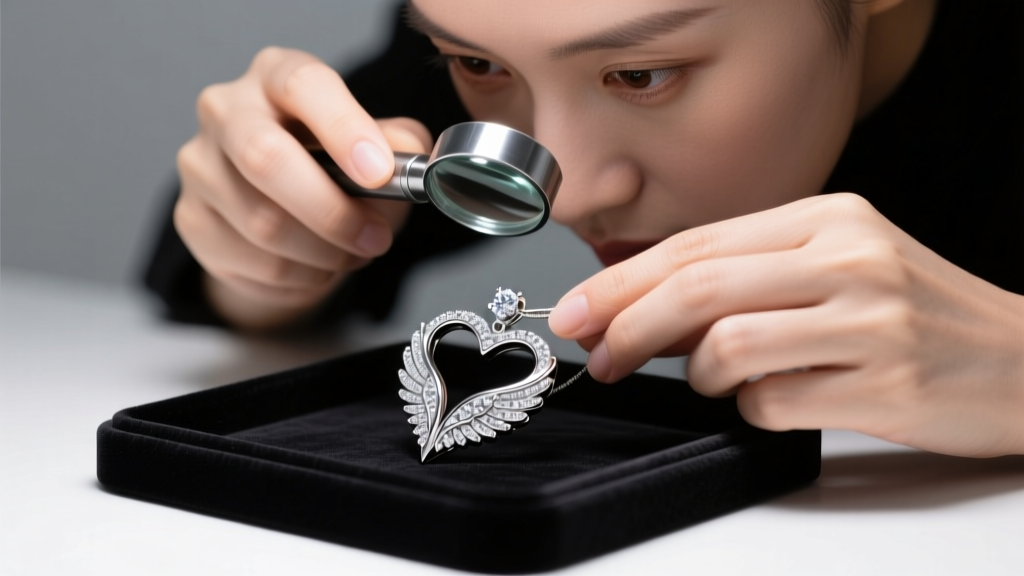
Manufacturing: Lost-Wax Casting vs. Die Striking
The intricate topography of a heart wing necklace—featuring overlapping feathers, curved heart domes, and micro-pave gemstone seats—almost exclusively necessitates lost-wax investment casting. Die striking, while excellent for producing high-density, ultra-strong flat bezels and simple bands, cannot accommodate the complex undercuts and three-depth layering required for realistic angel wings.
The Casting Workflow
- Master Model Creation: A high-resolution 3D printer creates a castable wax or resin master model of the heart wing pendant, including the sprue (the channel through which molten metal will flow).
- Investment and Burnout: The model is encased in a gypsum-bonded investment powder. The flask is placed in a kiln, burning out the wax and leaving a perfect negative cavity.
- Centrifugal or Vacuum Casting: Molten metal is forced into the cavity. Vacuum casting is increasingly preferred for delicate wing structures as it reduces gas porosity in thin cross-sections.
- Quenching and Devesting: The flask is quenched in water, shattering the investment and revealing the raw metal casting.
Porosity and Finishing Defects to Avoid
When appraising or purchasing a high-end heart wing necklace, inspect the piece for common casting failures. Resources like Rio Grande extensively document these manufacturing defects. Look out for:
- Gas Porosity: Tiny, spherical pinholes on the surface of the heart or wings, caused by trapped gases during the pour. This weakens the metal and ruins the polish.
- Shrinkage Porosity: Dendritic, jagged voids usually found near the bail or the thickest part of the heart, occurring when the metal cools unevenly.
- Sprue Nubs: Poorly finished sprue cut-offs. The sprue is typically attached to the bottom tip of the heart or the top bail. If not filed and polished flush, a visible bump will remain, indicating rushed bench work.
Gemstone Integration: Micro-Pave vs. Bezel
Many premium heart wing necklaces incorporate diamonds or colored gemstones. The setting technique heavily influences the pendant's structural integrity. Micro-pave settings on the wings create a brilliant, continuous sparkle but require the removal of metal to create tiny beads that hold the stones. If the wings are already cast too thinly, the micro-pave process can compromise the structural spine of the feather. Conversely, a bezel-set heart center offers maximum stone security and adds a subtle rim of metal that reinforces the heart's perimeter, acting as a protective bumper against impacts.
Chain Pairing: Gauge, Weave, and Bail Mechanics
The most common point of catastrophic failure for a heart wing necklace is not the pendant itself, but the friction wear caused by an improperly paired chain. The bail (the loop connecting the pendant to the chain) on these necklaces is typically small to maintain the delicate aesthetic, often measuring just 3mm x 4mm internally.
Threading a thick 1.5mm rope chain through a 3mm bail creates excessive lateral friction. Over time, the chain acts like a saw, slowly cutting through the bail metal until the pendant snaps off and is lost. Expert jewelers recommend matching the chain gauge to the bail clearance, leaving at least 0.5mm of 'breathing room' to allow the pendant to articulate freely without binding.
| Chain Type | Recommended Gauge | Bail Wear Risk | Visual Proportion |
|---|---|---|---|
| Cable Chain | 0.8mm - 1.0mm | Low | Excellent (Classic & Delicate) |
| Box Chain | 0.9mm - 1.1mm | Very Low | Very Good (Modern & Sleek) |
| Rope Chain | 1.5mm+ | High (Friction Sawing) | Poor (Overpowers Pendant) |
| Snake Chain | 1.2mm | Medium (Stiffness issues) | Good (Fluid drape) |
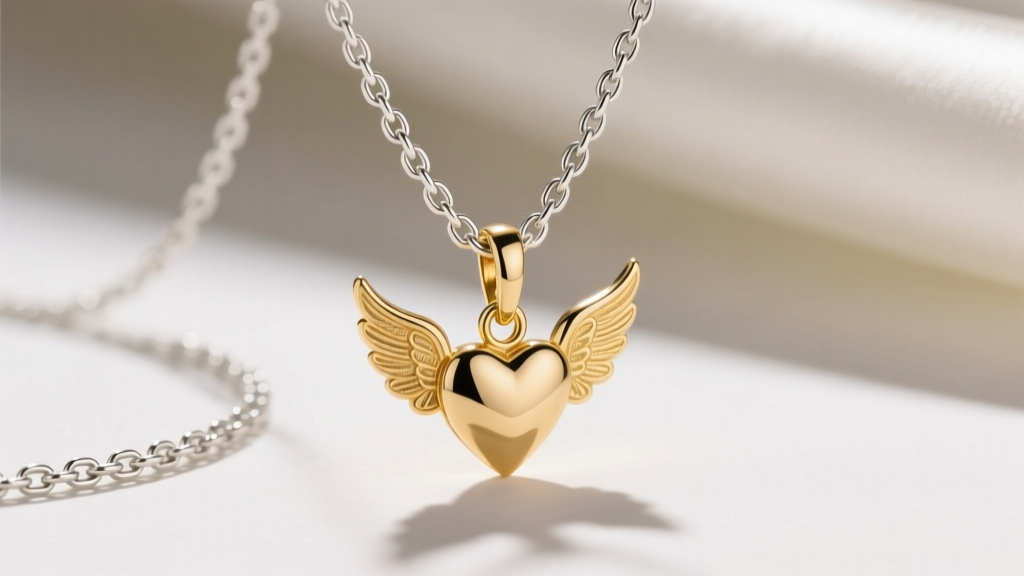
Appraisal and Longevity Maintenance
Maintaining a heart wing necklace requires specific care protocols, particularly if the piece features gemstone accents or oxidized detailing in the feather grooves. According to insurance and care guidelines from Jewelers Mutual, improper cleaning is a leading cause of jewelry damage.
- Ultrasonic Risks: Never place a micro-pave heart wing necklace in an ultrasonic cleaner. The high-frequency vibrations can easily shake loose the tiny diamonds set into the delicate wing feathers, as the metal beads holding them are minuscule.
- Oxidation Preservation: If the pendant features black rhodium or liver of sulfur oxidation to highlight the texture of the wings, avoid harsh silver dip chemicals. These will strip the intentional antiquing, leaving the piece looking flat and overly polished.
- Safe Cleaning Protocol: Use a soft-bristled baby toothbrush, warm water, and a few drops of mild, phosphate-free dish soap. Gently agitate the bristles behind the heart and between the wing feathers to remove sebum and cosmetic buildup, then rinse and pat dry with a microfiber cloth.
Conclusion
The heart wing necklace is far more than a simple sentimental token; it is a feat of micro-sculpting and metallurgical engineering. By understanding the Vickers Hardness of the chosen alloy, scrutinizing the quality of the lost-wax casting, and pairing the pendant with an appropriately gauged chain, you ensure that this symbolic piece remains structurally sound and visually brilliant for generations. Whether you are a collector, a jeweler, or a buyer, demanding technical excellence in these areas separates fine jewelry from disposable fashion accessories.


