How to Tell if a Gold Necklace is Real: The Ultimate Buyer's Guide
Learn how to tell if a gold necklace is real with our expert buying guide. Discover hallmark checks, acid tests, and magnet tricks to avoid fakes.

The Anatomy of Authentic Gold Alloys
When navigating the secondary jewelry market, knowing how to tell if a gold necklace is real requires more than a casual glance. Pure 24-karat gold is inherently soft and malleable, making it entirely unsuitable for the mechanical stress a necklace endures. To create durable chains, gold is alloyed with metals like copper, silver, zinc, and nickel. A genuine 14k gold chain contains exactly 58.3% pure gold, while an 18k piece contains 75%. Counterfeiters often use brass or copper cores coated in a microscopic layer of gold. Understanding these metallurgical realities is your first line of defense against sophisticated fakes.
Decoding Hallmarks and Maker's Marks
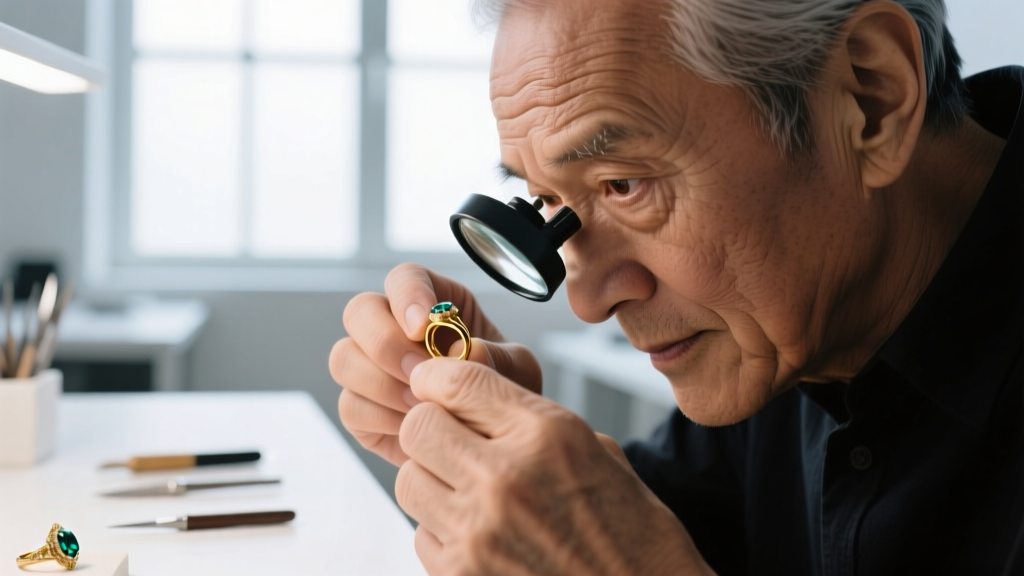
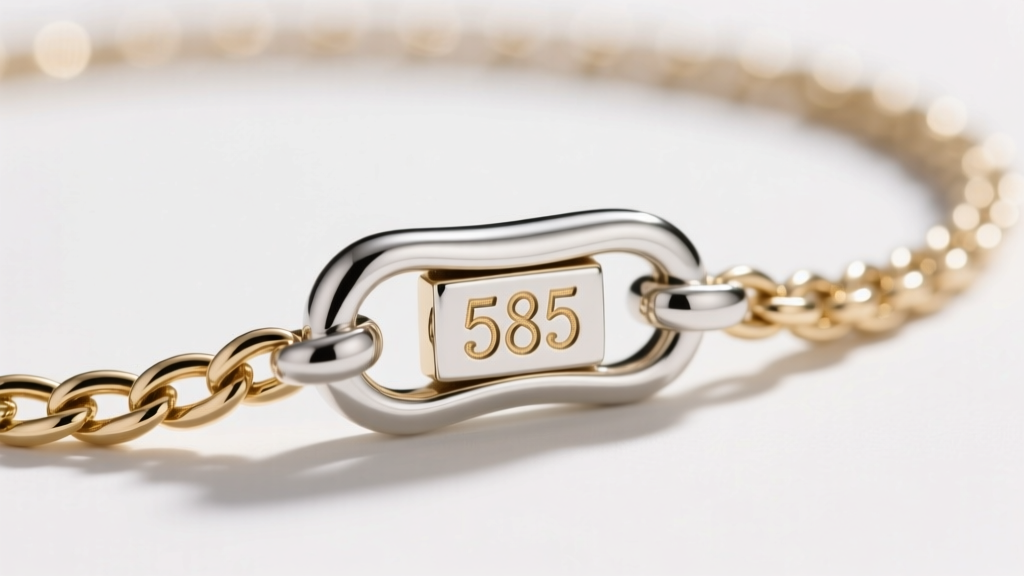
The most immediate way to verify authenticity is inspecting the stamps. In the United States, the National Stamping Act mandates that gold jewelry bear a quality mark indicating its karatage. However, because stamps can be easily forged, a hallmark is a starting point, not a definitive conclusion. Always use a 10x or 20x jeweler's loupe to examine the clasp or the first few links near the clasp.
Standard Gold Purity Markings
| Karat Mark | Millesimal Fineness | Pure Gold Content | Common Alloys Used |
|---|---|---|---|
| 10K | 417 | 41.7% | Copper, Silver, Zinc |
| 14K | 585 | 58.3% | Copper, Silver |
| 18K | 750 | 75.0% | Copper, Silver, Palladium |
| 22K | 916 | 91.6% | Copper, Silver (Rare for chains) |
| 24K | 999 | 99.9% | None (Too soft for chains) |
According to the Federal Trade Commission (FTC) Jewelry Guides, it is illegal to misrepresent the metal composition of jewelry in the United States. However, enforcement in unregulated secondary markets, flea markets, and online auction sites remains a challenge for buyers. If a chain lacks a hallmark entirely, proceed with extreme caution.
The Magnet Test: Avoiding the Clasp Trap
Gold is diamagnetic, meaning it is not attracted to magnets. The magnet test is a popular at-home verification method, but amateur buyers frequently make a critical error: they test the clasp. The internal spring mechanism of a lobster clasp or spring ring must be made of steel or a nickel alloy to maintain tension. Therefore, a 100% genuine gold necklace will exhibit a slight magnetic pull at the clasp. To perform this test correctly, use a strong N52 neodymium magnet and hover it over the center links of the chain. If the links jump to the magnet or stick firmly, the chain is either solid base metal or heavily gold-plated steel.
Specific Gravity: The Water Density Test
For a highly accurate, non-destructive at-home test, measure the necklace's specific gravity (SG). This method relies on Archimedes' principle and is exceptionally effective at identifying tungsten or brass cores. You will need a digital pocket scale accurate to 0.01 grams, a cup of distilled water, and a thin piece of string.
- Weigh the dry necklace on the scale and record the weight in air.
- Tie the string to the necklace, zero out the scale with the cup of water on it, and submerge the necklace completely without letting it touch the sides or bottom.
- Record the weight in water (this will be a negative number or a much lower positive number depending on your scale's tare function).
- Calculate SG using the formula: SG = Weight in Air / (Weight in Air - Weight in Water).
Expected Specific Gravity by Karat
| Gold Karat | Expected Specific Gravity Range |
|---|---|
| 10K Gold | 11.5 - 12.5 g/cm³ |
| 14K Gold | 12.9 - 14.6 g/cm³ |
| 18K Gold | 15.2 - 15.9 g/cm³ |
| 22K Gold | 17.7 - 17.8 g/cm³ |
If your 14k Cuban link chain yields a specific gravity of 8.5, you are holding brass, regardless of what the hallmark says. The Gemological Institute of America (GIA) notes that specific gravity testing is one of the most reliable gemological and metallurgical identification methods available outside of laboratory spectrometry.
Professional Verification: Acid and XRF Testing
When purchasing high-value investment chains, visual and density tests should be followed by professional verification. The traditional method is the acid scratch test. A jeweler will rub the chain against a black siliceous touchstone to leave a visible streak of the metal. They then apply a drop of nitric acid solution calibrated to the claimed karatage (e.g., 14k test acid).
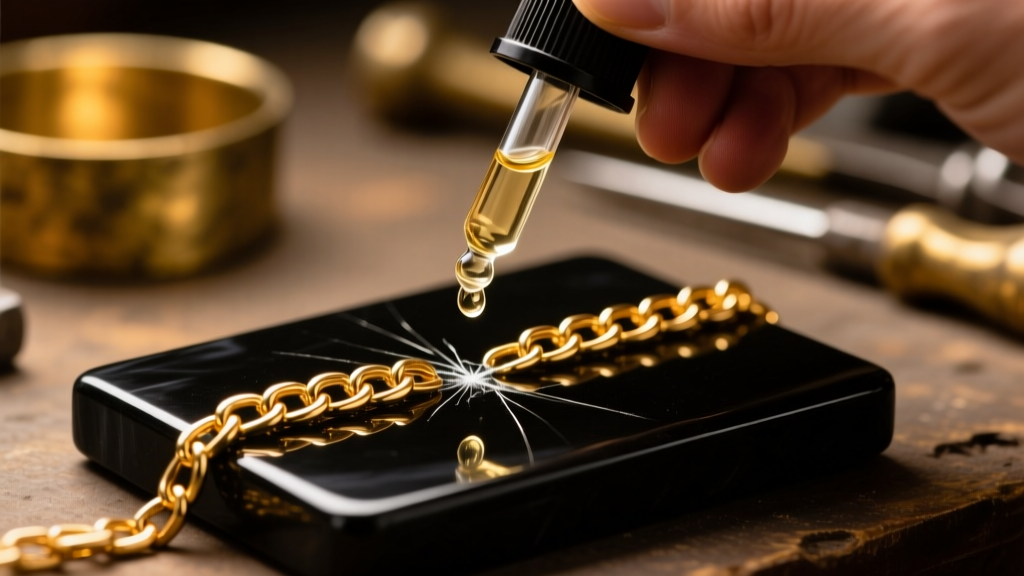
- If the streak disappears: The item is base metal or gold-plated.
- If the streak turns milky: The item is likely silver-plated or a low-karat white gold alloy reacting to the copper/silver content.
- If the streak remains bright and unchanged: The gold purity matches or exceeds the acid's calibration.
For non-destructive, absolute certainty, reputable buyers use X-Ray Fluorescence (XRF) spectrometry. XRF machines fire X-rays into the metal and measure the fluorescent signatures of the atoms, providing an exact elemental breakdown (e.g., 58.4% Au, 31.2% Ag, 10.4% Cu) in seconds without scratching the piece.
Red Flags: Spotting Gold-Plated and Gold-Filled Fakes
Counterfeiters often use deceptive terminology and stamps to mimic solid gold. If you are trying to figure out how to tell if a gold necklace is real, immediately reject any piece bearing the following secondary stamps:
- GP (Gold Plated): A microscopic layer of gold over base metal. Will wear off quickly.
- HGE (Heavy Gold Electroplate): Slightly thicker than standard plating, but still a surface treatment over brass or copper.
- GF (Gold Filled): A thicker layer of gold mechanically bonded to a base metal core. Legitimate and durable, but not solid gold and holds significantly less melt value.
- RGP (Rolled Gold Plate): Similar to gold filled but with a much thinner gold layer.
Pro Tip: Pay attention to the chain's weight relative to its dimensions. A genuine solid 5mm 14k gold Figaro chain will feel substantially heavy and dense. If a thick chain feels suspiciously light, it is likely hollowed out or made of aluminum alloy beneath a gold wash.
Sourcing Authentic Chains in 2026
To guarantee authenticity, source your necklaces from established, LBMA-certified refineries or jewelers who provide a written guarantee of metal purity backed by their reputation. Avoid purchasing 'solid gold' chains from unverified social media sellers or street vendors, as modern electroplating techniques can easily fool the naked eye and basic magnet tests. When in doubt, always insist on an independent appraisal or an XRF scan before completing a high-value transaction.


