How to Build and Style a Secure Custom Keyholder Necklace
Learn how to build, style, and troubleshoot a custom keyholder necklace. Discover the best chain gauges, clasps, and metals for heavy key fobs.

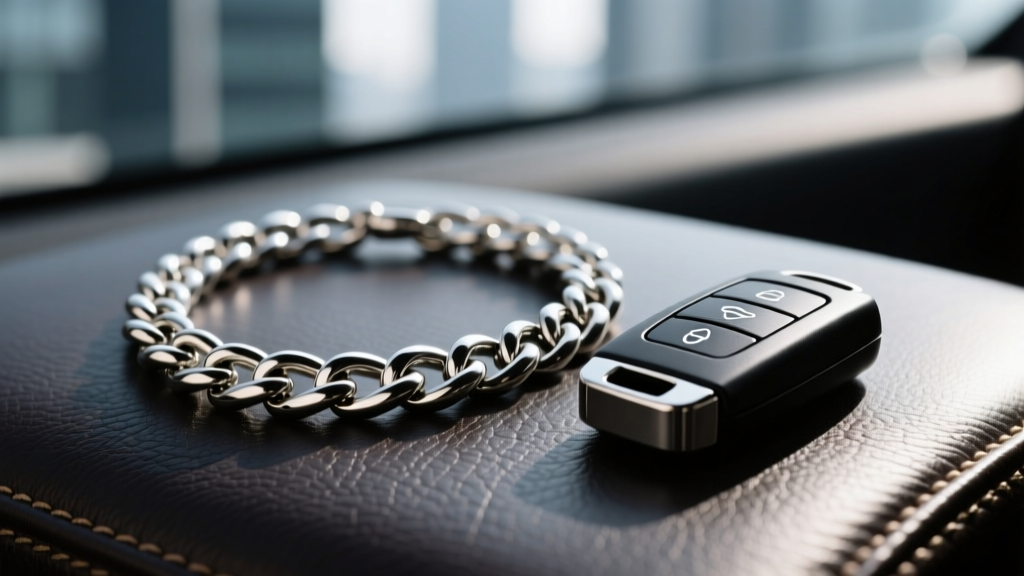
The intersection of Everyday Carry (EDC) utility and modern jewelry has given rise to one of the most practical accessories of the decade: the keyholder necklace. No longer just a utilitarian lanyard, today's keyholder necklace is a statement piece that bridges the gap between rugged functionality and high-end streetwear. However, suspending 40 to 80 grams of jagged metal and electronic smart-fobs around your neck requires serious engineering. A standard fashion necklace will snap, stretch, or fail at the clasp under the dynamic load of bouncing keys.
In this comprehensive guide, we will walk you through exactly how to select, assemble, and style a custom keyholder necklace that guarantees security, comfort, and aesthetic appeal.
The Anatomy of a Functional Keyholder Necklace
Before assembling your piece, you must understand the mechanical stress points. A keyholder necklace is subjected to tensile stress (the dead weight of the keys) and shear stress (the sudden jerking motion when you pull the keys to unlock a door).
Chain Selection: Gauge and Link Style
The most common failure point in functional jewelry is the chain. For a keyholder necklace, you must abandon delicate cable chains and hollow-core ropes. You need solid links with a minimum wire thickness of 8-gauge (3.2mm) to 6-gauge (4.1mm).
- Cuban Link Chains: The gold standard for keyholders. The flat, interlocking links distribute weight evenly and resist kinking. A 4mm solid Cuban link can easily support up to 15 lbs of tensile force.
- Wheat (Spiga) Chains: Excellent flexibility and a braided structure that prevents sharp key teeth from catching in the links.
- Box Chains: Avoid these. The 90-degree angles in box links create structural weak points that easily dent and snap when subjected to the lateral torque of heavy key fobs.
Step-by-Step Guide to Assembling Your Keyholder
Building a secure keyholder necklace requires specific jewelry findings. According to Halstead Bead's guide on jewelry clasps, standard spring-ring clasps are entirely unsuited for heavy pendants. Here is how to build yours correctly.
Step 1: Weigh Your Payload
Use a digital kitchen scale to weigh your key cluster. A standard house key weighs about 5 grams, but a modern smart car fob with a remote start feature can weigh between 45 and 75 grams. Your total payload will dictate your hardware requirements.
Step 2: Select a Load-Bearing Terminal Clasp
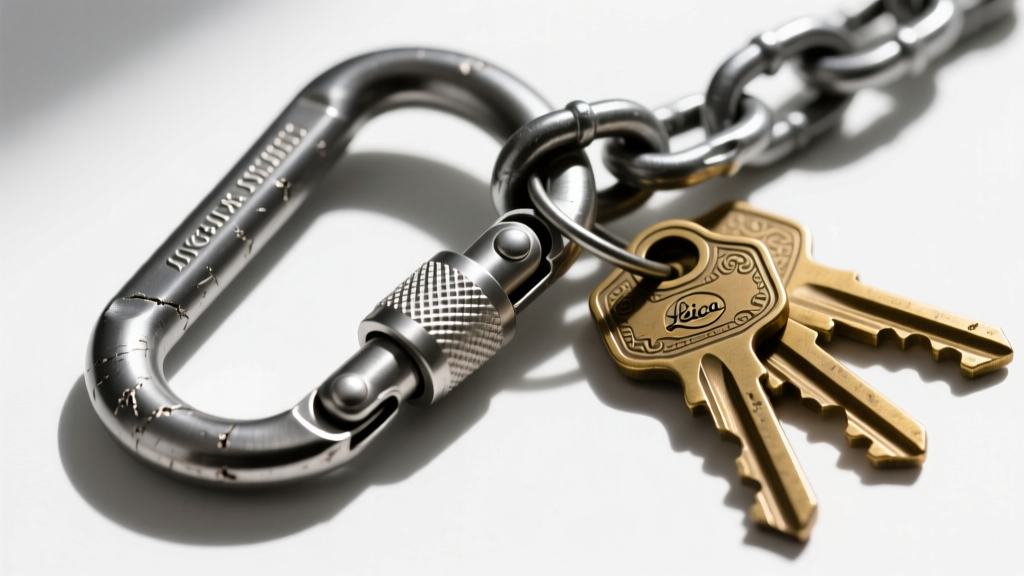
Instead of a traditional lobster clasp, opt for a screw-lock carabiner or a heavy-duty trigger snap. Screw-lock carabiners feature a threaded barrel that physically prevents the gate from opening under vibration or accidental snags.
Step 3: Integrate a Safety Breakaway
Safety Warning: Wearing a heavy, non-yielding chain around your neck poses a severe strangulation hazard if the chain gets caught in machinery, a car door, or during physical altercations. Always integrate a breakaway mechanism.
To build a breakaway, insert a magnetic fidlock clasp or a specialized tension-release jump ring at the nape of the neck. These components are engineered to separate when subjected to 5 to 8 lbs of lateral pull, saving your neck while keeping the keys secure during normal wear.
Step 4: Secure the Split Ring
Never thread keys directly onto a jewelry jump ring; they will slide off. Use a hardened steel split ring (the same mechanism used on fishing lures) sized at 15mm to 20mm. Connect the split ring to your chain using a soldered, closed jump ring to ensure it never pries open.
Material & Gauge Comparison Chart
When sourcing components from suppliers like Rio Grande's stainless steel findings or specialized EDC makers, you must choose the right metal. Gold-plated brass will wear down to the base metal within weeks due to the abrasive friction of steel keys.
| Material | Yield Strength | Weight | Best For | Price Range |
|---|---|---|---|---|
| 316L Stainless Steel | ~215 MPa | Medium-Heavy | Everyday streetwear, high abrasion | $40 - $90 |
| Grade 5 Titanium (Ti-6Al-4V) | ~880 MPa | Ultra-Light | Hypoallergenic needs, ultra-heavy fobs | $120 - $250 |
| 14k Solid Yellow Gold | ~200-400 MPa | Heavy | Luxury EDC, low-impact environments | $800 - $2,500+ |
| Bronze / Raw Brass | ~125 MPa | Medium | Heritage/Workwear styling, develops patina | $50 - $110 |
How to Style a Keyholder Necklace for Everyday Wear
Because a keyholder necklace carries a bulky payload, it naturally sits differently than a standard pendant chain. The weight of the keys will pull the chain taut, creating a deep V-shape. Here is how to style it effectively.
Optimal Lengths and Drops
For a functional keyholder, the ideal chain length is between 26 inches and 30 inches. This allows the keys to rest at the sternum or solar plexus. If the chain is too short (e.g., 20 inches), the keys will bounce uncomfortably against your collarbones when walking. If it is too long (over 32 inches), the keys will swing wildly and catch on desks or steering wheels.
Layering Techniques
The keyholder necklace should act as the foundational, longest layer in your stack. Pair a 28-inch matte black PVD-coated steel keyholder with a 22-inch lightweight titanium bead chain and a 24-inch Cuban link. The contrasting textures and staggered lengths prevent the heavy keys from looking like an afterthought, integrating them seamlessly into a curated streetwear aesthetic.
Matching Necklines
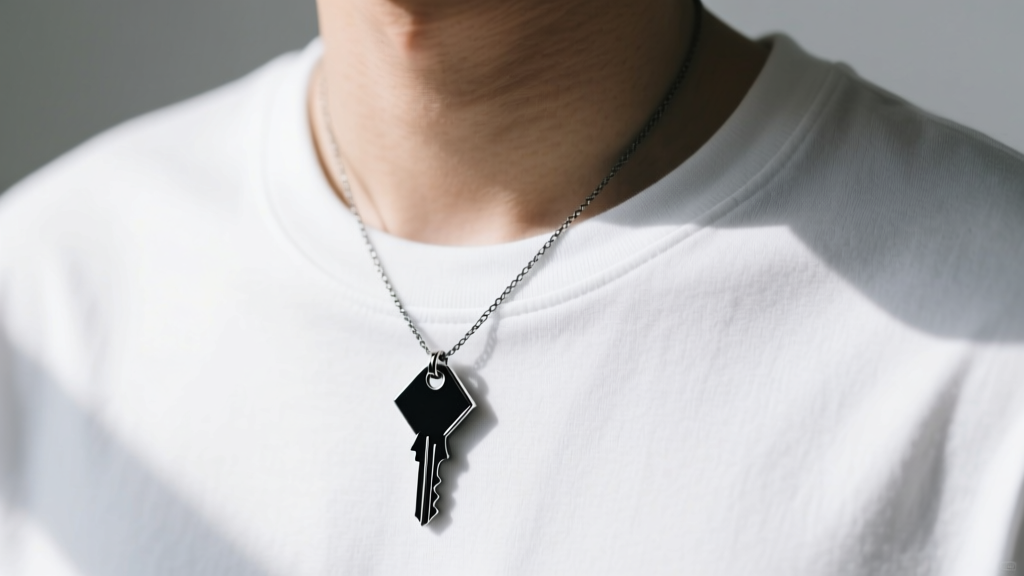
- Crew Necks: The deep drop of a 28-inch keyholder necklace perfectly frames a tight crew neck, drawing the eye downward and elongating the torso.
- Hoodies and Zip-ups: Wear the necklace inside the hoodie to keep the keys secured against your chest, preventing them from swinging out and hitting your face when you lean over.
- Button-Down Shirts: Leave the top two buttons undone and let the heavy clasp and keys rest against the skin for a relaxed, utilitarian vibe.
Troubleshooting Common Keyholder Failures
Even well-built functional jewelry requires maintenance. Here are the most common issues EDC enthusiasts face and how to solve them.
Problem: Micro-Scratches on the Chain
The Cause: Sharp key teeth constantly rubbing against polished metal links will cause micro-abrasions, making polished silver or gold look dull and cloudy over time.
The Fix: Switch to a brushed, matte, or sandblasted finish for the bottom three inches of the chain. Alternatively, use a clear polymer dip (like Plasti-Dip) on the teeth of your house keys, or wrap the key cluster in a slim leather sleeve before attaching it to the split ring.
Problem: The Split Ring Deforms
The Cause: Standard brass split rings will stretch into an oval shape when subjected to the leverage of twisting a key in a stiff door lock.
The Fix: Upgrade to a hardened stainless steel split ring or a tec-titanium key clip. These materials possess a much higher modulus of elasticity and will snap back to their original circular shape even after heavy torque.
Problem: Clasp Gate Failure
The Cause: The tiny spring inside a standard jewelry clasp wears out, leaving the gate slightly open, which allows the key ring to slip out during a run or a jump.
The Fix: Implement a redundant safety system. Use a primary screw-lock carabiner, and run a secondary 2mm Kevlar cord loop through the chain end and the key ring as a backup tether.
Final Thoughts on Functional Jewelry
Building a custom keyholder necklace is an exercise in balancing raw mechanical strength with refined aesthetics. By prioritizing heavy-gauge chains, screw-lock hardware, and essential safety breakaways, you transform a mundane daily burden into a standout piece of functional art. Whether you opt for the ultra-light durability of Grade 5 titanium or the street-ready weight of 316L stainless steel, your keys will remain secure, accessible, and undeniably stylish.


