Troubleshooting & Restringing a Pastel Beaded Necklace
Is your pastel beaded necklace broken or fading? Learn expert troubleshooting, restringing techniques, and wire gauges to restore your jewelry.

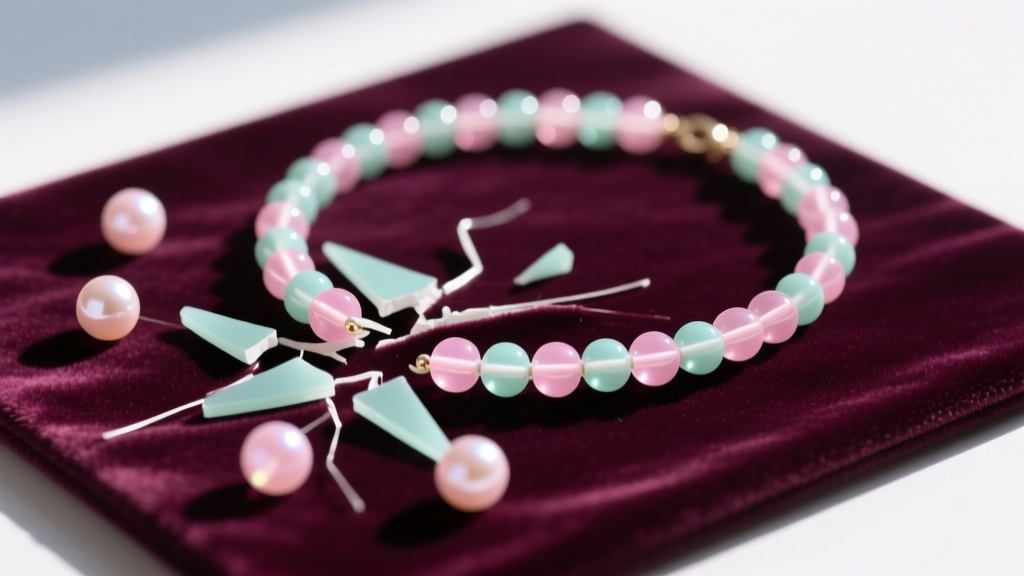
In 2026, the resurgence of soft-girl aesthetics and nostalgic Y2K fashion has pushed the pastel beaded necklace to the forefront of everyday jewelry trends. Whether crafted from frosted sea glass, dyed howlite, or handmade polymer clay, these delicate strands offer a playful yet elegant touch to any neckline. However, beneath their charming exterior lies a structural vulnerability. Pastel bead necklaces are notoriously prone to wire fatigue, clasp slippage, and severe color fading from cosmetic exposure. If your favorite strand has snapped or lost its signature soft hue, you are not alone. This comprehensive troubleshooting guide dives deep into the metallurgy, material science, and hands-on repair techniques required to restore and restring your pastel beaded necklace to professional bench standards.
Diagnosing the Break: Wire Fatigue vs. Thread Fraying
When a pastel beaded necklace snaps, the failure almost always occurs within two inches of the clasp or at a severe kink point along the strand. To properly troubleshoot, you must first identify the stringing material originally used by the manufacturer.
Stranded Beading Wire Kinking
Most commercial pastel necklaces from the early 2000s and 2010s were strung on 7-strand or 19-strand stainless steel beading wire coated in nylon. While strong, lower-strand-count wires lack the flexibility to drape naturally. When a 7-strand wire is bent sharply, the nylon coating permanently deforms, creating a "kink." Over time, the internal steel wires suffer from metal fatigue at this exact stress point, leading to a sudden, catastrophic snap. Upgrading to a 49-strand wire, such as SoftFlex's .015" diameter wire, mimics the drape of silk thread while providing a tensile strength of up to 15 pounds, effectively eliminating kink-related breakage.
Silk and Nylon Thread Degradation
If your necklace was strung on traditional silk or synthetic nylon thread, the break is likely due to friction. Pastel gemstones like dyed jade or rose quartz often feature drill holes with sharp, unpolished interior edges. These edges act like microscopic saws, slowly fraying the thread over months of wear. If you pull the broken ends of the thread and they appear fuzzy or shredded, you must switch to a flexible stranded wire or use French wire (bullion) to line the bead holes near the clasp.
Troubleshooting Color Fading in Dyed Pastel Gemstones
A structural break is easily fixed, but a fading pastel beaded necklace requires a different approach. According to the GIA Gem Encyclopedia, many commercial pastel gemstones—particularly pale pinks, mint greens, and soft lavenders—are not naturally occurring. They are typically porous stones like howlite, magnesite, or low-grade jade that have been vacuum-impregnated with acid or reactive dyes.
These dyes are highly susceptible to three environmental factors:
- UV Degradation: Prolonged exposure to direct sunlight breaks down the chemical bonds in the dye molecules, causing mint and lavender beads to turn chalky white or gray.
- Cosmetic Solvents: Perfumes, hairsprays, and lotions contain alcohols and emulsifiers that can dissolve the surface dye, leading to uneven splotching.
- Skin pH and Sebum: The natural acidity and oils of human skin can slowly strip the dye from beads that rest directly against the collarbone.
Expert Tip: If your dyed pastel beads have already begun to fade, you cannot reverse the chemical loss. However, you can stabilize the remaining color by gently wiping the beads with a microfiber cloth and applying a micro-thin layer of Renaissance Wax, which creates a breathable, UV-resistant barrier without altering the bead's matte or glossy finish.
The 2026 Restringing Matrix: Matching Wire to Pastel Beads
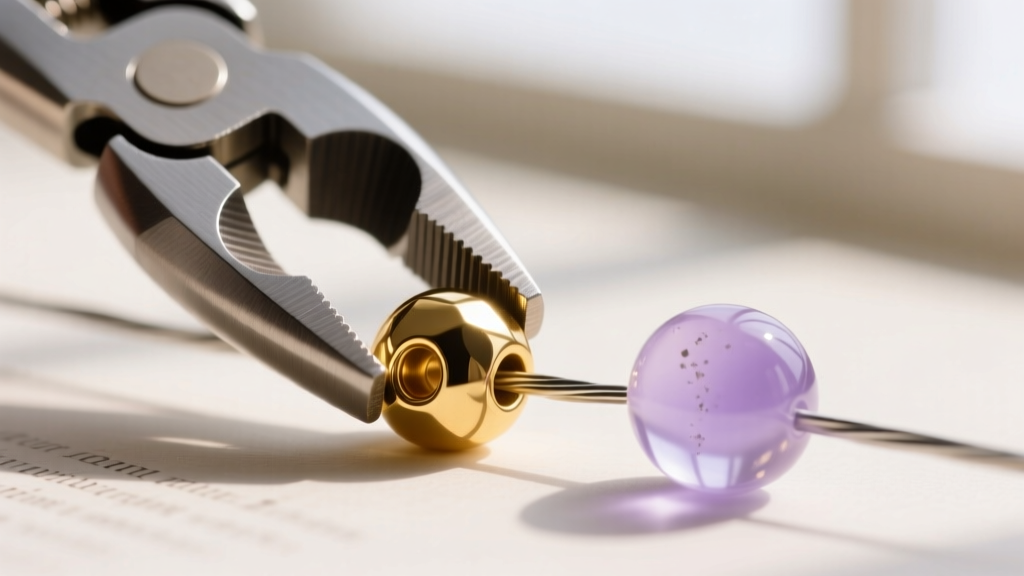
Successfully restringing a pastel beaded necklace requires matching the stringing wire's diameter to the bead's weight and drill hole size. Using a wire that is too thick will cause friction and crack delicate glass beads, while a wire that is too thin will allow heavy gemstones to sag and stress the crimps. Below is the definitive benchmark chart used by professional bench jewelers for pastel bead restringing.
| Bead Material | Average Bead Size | Recommended Wire Type | Wire Diameter | Estimated Tensile Strength |
|---|---|---|---|---|
| Polymer Clay / Frosted Glass | 2mm - 4mm | 49-Strand Micro Wire | 0.012" - 0.014" | 8 - 12 lbs |
| Dyed Howlite / Magnesite | 4mm - 6mm | 49-Strand Standard Wire | 0.015" - 0.018" | 15 - 20 lbs |
| Dyed Jade / Rose Quartz | 6mm - 8mm | 49-Strand Heavy Wire | 0.019" - 0.024" | 25 - 30 lbs |
For a comprehensive breakdown of tensile strengths and nylon coating durability, jewelry designers frequently consult the engineering specs provided by SoftFlex Company, the industry leader in flexible beading wire.
Mastering the Crimp: Securing the Clasp Hardware
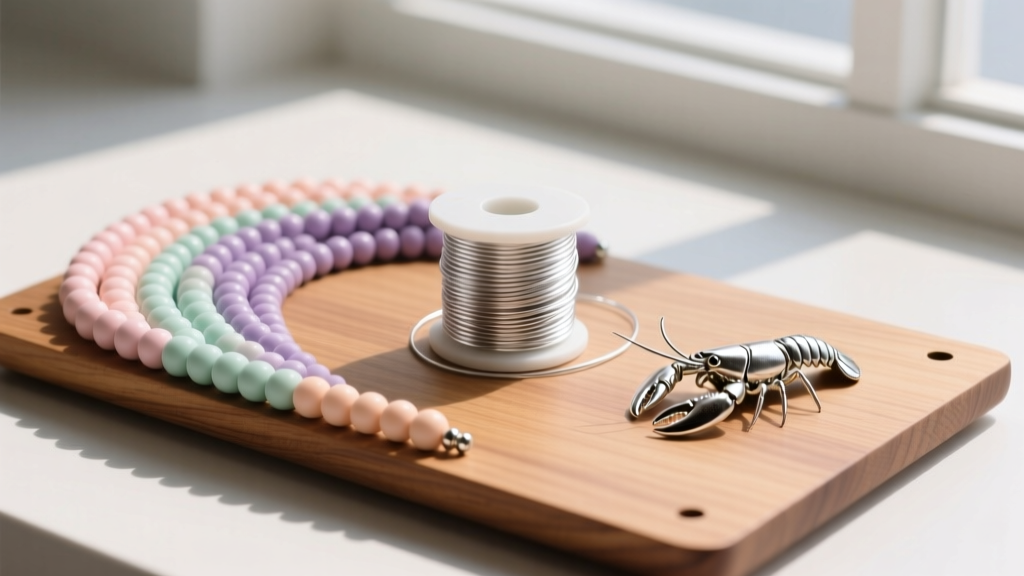
The most common point of failure on a newly restrung pastel beaded necklace is a slipped crimp bead. Many hobbyists rely on standard round metal crimp beads, crushing them haphazardly with flat-nose pliers. This creates a sharp edge that can slice through the nylon coating of the beading wire over time.
For a professional, secure finish, you must use 2x2mm sterling silver or gold-filled tube crimps paired with a micro-crimper tool. The micro-crimper features two distinct notches:
- The U-Notch: Compresses the tube around the wire, separating the two strands of wire into distinct channels.
- The O-Notch: Folds the U-shape back onto itself, rolling the metal into a smooth, rounded bead that will never snag or slice the wire.
Always leave a 1/8-inch gap between the crimp bead and the first pastel bead in your design. This "flex zone" allows the wire to articulate smoothly when the necklace bends around the neck. If the crimp is jammed tightly against the bead, the wire will fatigue and snap precisely at that junction within weeks of wear.
Upgrading Clasp Hardware for Longevity
While the beads dictate the aesthetic, the clasp dictates the lifespan. Many mass-market pastel necklaces utilize cast base-metal lobster clasps with weak internal steel springs. These springs corrode when exposed to humidity and skin oils, causing the clasp to stick open or snap shut unexpectedly.
When repairing your necklace, discard the original clasp and upgrade to a stamped sterling silver lobster clasp or a magnetic neodymium clasp with a stainless steel core. Stamped clasps are forged from a single sheet of precious metal, offering superior structural integrity and a corrosion-resistant spring mechanism. If you frequently layer your pastel beaded necklace with heavier gold chains, consider adding a 2-inch sterling silver extender chain to the clasp end, allowing you to adjust the drape and prevent the delicate pastel beads from bearing the brunt of the necklace's kinetic movement.
Preventative Maintenance and Storage Protocols
Once your pastel beaded necklace has been professionally restrung and the dyes stabilized, implementing a strict maintenance protocol will ensure it survives the 2026 season and beyond.
- The "Last On, First Off" Rule: Always put your beaded jewelry on after applying makeup, perfume, and hairspray, and remove it immediately upon returning home to minimize chemical exposure.
- Flat Storage: Never hang a beaded necklace on a wall hook or jewelry tree. Gravity will constantly pull the beads downward, stretching the wire and putting continuous tension on the crimps. Always store the necklace flat in a lined jewelry box or rolled loosely in a soft anti-tarnish pouch.
- Annual Inspections: Every twelve months, gently pull the wire near the clasp. If you see more than 1/4 inch of exposed wire between the crimp and the clasp ring, the wire has stretched or the crimp has slipped, and it is time to restring the piece before it breaks.
When to Seek a Professional Bench Jeweler
While restringing a standard pastel beaded necklace is an achievable DIY project, certain scenarios require the expertise of a professional bench jeweler. If your necklace features knotting between individual beads (common with pastel freshwater pearls), or if the beads are micro-drilled with holes smaller than 0.5mm, specialized silk-threading needles and professional tensioning blocks are required. Furthermore, if the necklace incorporates high-value pastel sapphires or paraiba tourmalines, a jeweler will use laser-welding techniques to secure custom-fabricated gold bezels and clasps, ensuring your investment remains secure. By understanding the material science behind your jewelry, you can confidently troubleshoot, repair, and preserve your favorite pastel strands for years to come.


