2026 Necklace Display Ideas: Trend-Forward Styling & Storage
Explore 2026 necklace display ideas blending archival preservation with sculptural decor. Expert tips on materials, lighting, and chain-specific styling.

The Evolution of Jewelry Presentation in 2026
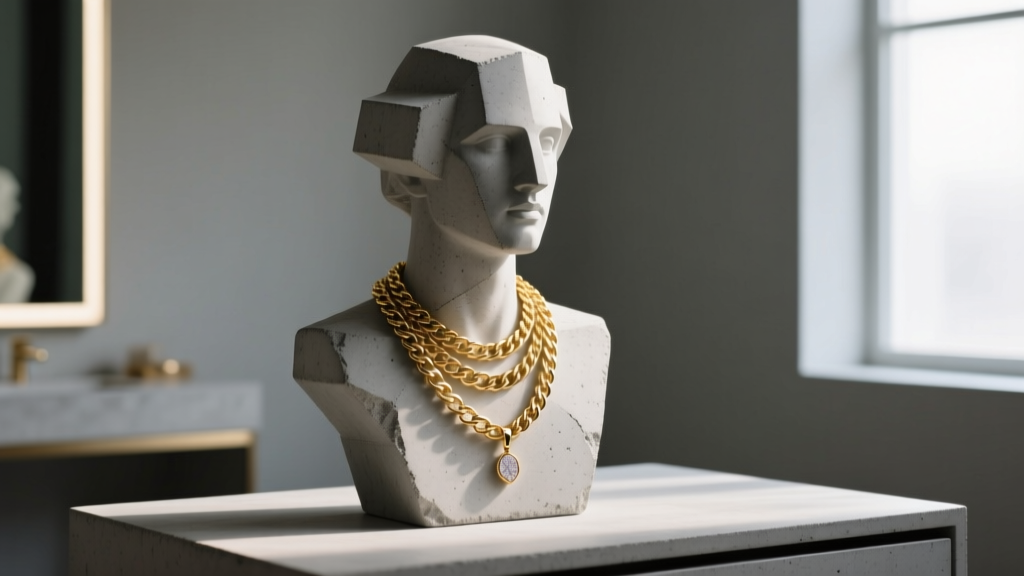
The concept of jewelry storage has undergone a radical transformation. In 2026, necklaces are no longer relegated to dark, velvet-lined drawers or tangled in the back of a closet. Instead, they are treated as wearable sculpture, demanding display solutions that bridge the gap between archival preservation and interior design. The modern collector views their necklaces and pendants as an integral part of their living space aesthetics. This shift has given rise to a new category of home decor where function meets high-end gallery presentation.
Contemporary necklace display ideas now prioritize structural integrity, material compatibility, and environmental control. Whether you are showcasing a heavy 150-gram 22k gold Byzantine chain or a delicate 18-inch diamond tennis necklace, the display mechanism must support the piece without inducing stress on the links or clasps. This comprehensive guide explores the intersection of trend-forward styling and horological-grade preservation, ensuring your collection remains pristine while serving as a striking visual focal point.
Archival-Grade Materials: Beyond Basic Velvet
The foundation of any premium necklace display is the material composition of the stand itself. Traditional polyurethane foams and synthetic velvets are increasingly being abandoned due to off-gassing, which can accelerate the tarnishing of silver and the degradation of porous gemstones like pearls and turquoise. In 2026, the gold standard for display materials centers on inert, natural, or highly stabilized substrates.
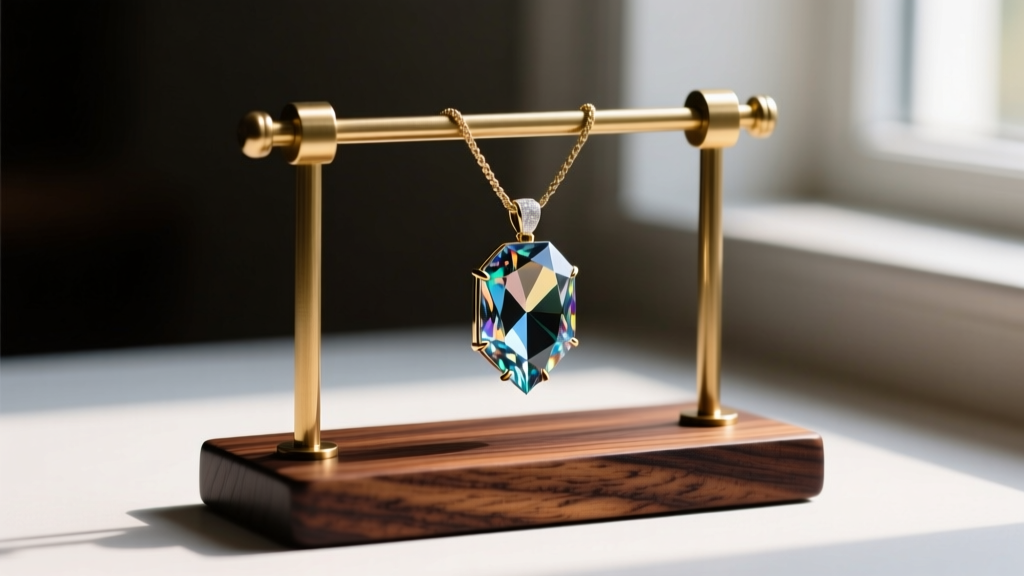
- Kiln-Dried Black Walnut: Hardwoods with a tight grain and low natural acidity, such as kiln-dried black walnut or maple, are ideal for sculptural busts. When finished with a microcrystalline wax rather than polyurethane varnish, they provide a stable, non-reactive base that complements warm gold tones.
- Cast Concrete with Sealed Pores: Brutalist design remains a dominant trend. Raw concrete provides exceptional weight and stability, preventing top-heavy statement pendants from tipping the display. However, concrete is highly alkaline and porous. It must be sealed with an archival-grade, water-based acrylic sealer to prevent moisture transfer and chemical reactions with metal chains.
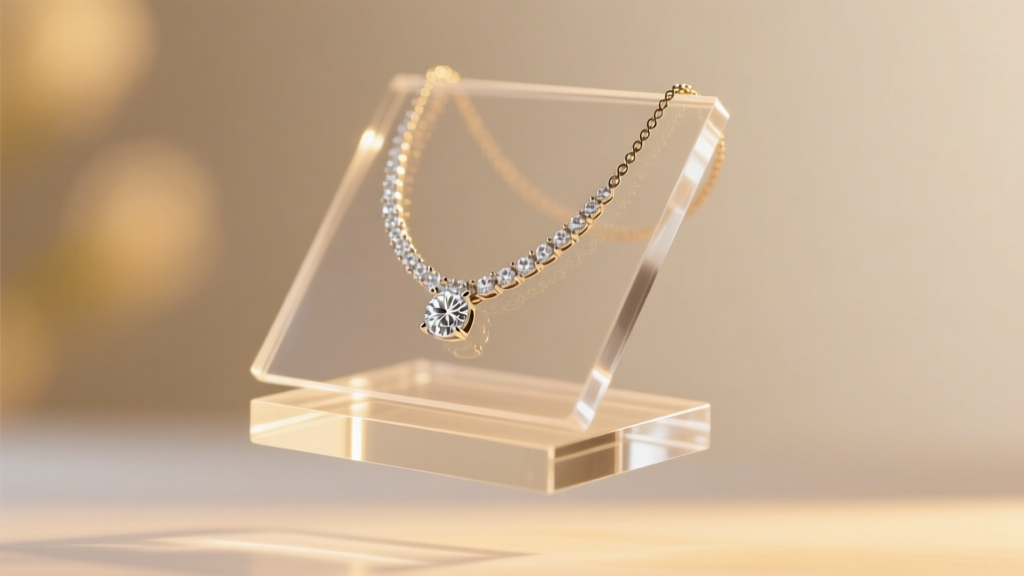
- UV-Stabilized Cast Acrylic: For a modern, floating aesthetic, cast acrylic (not extruded) is preferred. Cast acrylic offers superior optical clarity and can be milled with precise grooves to hold specific chain widths. It must be UV-stabilized to prevent yellowing when exposed to ambient sunlight.
Chain Architecture: Matching Displays to Link Types
One of the most critical, yet frequently overlooked, aspects of necklace display is matching the stand's geometry to the chain's structural architecture. Different link types possess varying degrees of tensile strength and flexibility. Hanging a chain at an improper radius can cause permanent kinking, stress fractures at the solder points, or irreversible deformation.
| Chain Type | Ideal Display Geometry | Material Pairing | Structural Risk Factor |
|---|---|---|---|
| Herringbone | Flat lay or wide-radius curve (min. 4-inch diameter) | Silk-wrapped trays or wide-shouldered velvet busts | High: Prone to permanent kinking if hung on narrow hooks |
| Snake | Wide-radius curve or draped over a broad shoulder | Sculpted wooden busts with 9-inch shoulder spans | Medium: Can develop weak points if bent sharply |
| Figaro / Cable | Vertical hang or draped | Brass hooks, acrylic slots, or T-bar stands | Low: Highly durable, tolerates tight hanging radii |
| Rope | Vertical hang to allow natural twisting | Minimalist metal rods or floating acrylic blocks | Low: Excellent structural integrity, hides minor stress |
For heavy pendants exceeding 40 grams, standard wire hooks are insufficient. The display must feature an internal armature—typically 304 stainless steel or solid brass—capable of bearing the load without bowing. The outer layer of the display should act merely as a protective, non-reactive skin.
Lighting Metrics and Gemstone Preservation
A display is only as effective as its lighting. However, improper illumination can cause irreversible damage to light-sensitive gemstones. According to the Gemological Institute of America (GIA), prolonged exposure to high-intensity light and heat can cause fading in stones such as amethyst, kunzite, and topaz, while heat can dry out the water content in opals and emeralds, leading to crazing.
When designing an illuminated display case or selecting a vanity setup, adhere to these strict lighting parameters:
The 2026 Illumination Standard: Always utilize LED lighting with a Color Rendering Index (CRI) of 95 or higher to ensure accurate color representation of gemstones and metal alloys. For yellow and rose gold, a color temperature of 2700K to 3000K enhances warmth. For platinum, white gold, and diamonds, a cooler 4000K provides optimal brilliance. Crucially, light exposure should be limited to under 50 lux for organic gems like pearls and amber when displayed long-term.
Micro-Climate Control for Silver and Pearls
The invisible enemy of any necklace collection is atmospheric humidity and sulfur compounds, which combine to form silver sulfide—the black tarnish that plagues sterling silver. The Smithsonian Museum Conservation Institute recommends maintaining a relative humidity (RH) between 40% and 50% for mixed metal collections. Humidity above 60% drastically accelerates tarnishing and can cause the silk threads in knotted pearl necklaces to stretch and harbor mold.
To combat this in open-air displays, integrate passive micro-climate controls:
- Pacific Silvercloth Integration: Line the recesses of wooden display trays or the back of bust forms with Pacific Silvercloth. This specialized cotton fabric is embedded with microscopic silver particles that intercept and neutralize airborne sulfur gases before they reach your jewelry.
- Activated Charcoal Vitrines: For enclosed acrylic display cases, incorporate a hidden sub-chamber filled with activated bamboo charcoal. This acts as a desiccant and odor absorber, stabilizing the internal RH and trapping volatile organic compounds (VOCs) that contribute to metal corrosion.
- Anti-Tarnish Strips: 3M anti-tarnish strips utilize a copper-based polymer that absorbs sulfides. Placing one strip within a 2-cubic-foot display area provides up to six months of active protection.
Commercial vs. Bespoke Display Solutions
When sourcing necklace display ideas, collectors must weigh the convenience of commercial products against the precision of bespoke craftsmanship. Commercial brands like Stackers and Wolf offer excellent modular systems featuring acid-free suedette and tarnish-resistant linings, typically ranging from $80 to $250 per module. These are ideal for standardized chains and uniform collections.
However, for collectors of artisanal, asymmetrical, or historically significant pieces, bespoke displays commissioned from specialized woodworkers or acrylic fabricators offer unparalleled advantages. A custom-milled walnut bust, contoured precisely to the drape of a specific 24-inch opera-length chain, ensures that the pendant rests exactly at the intended focal point without swinging or twisting. While bespoke pieces command a premium—often starting at $400 and scaling upward based on material complexity—they elevate the necklace from a mere accessory to a curated artifact, fully realizing the 2026 vision of jewelry as permanent, sculptural decor.


