Expert Guide: The Metallurgy of a Tri Gold Necklace
Explore the metallurgy, alloy compositions, and craftsmanship behind a tri gold necklace. Learn how yellow, white, and rose gold are forged.

The Metallurgical Science of Three-Tone Gold
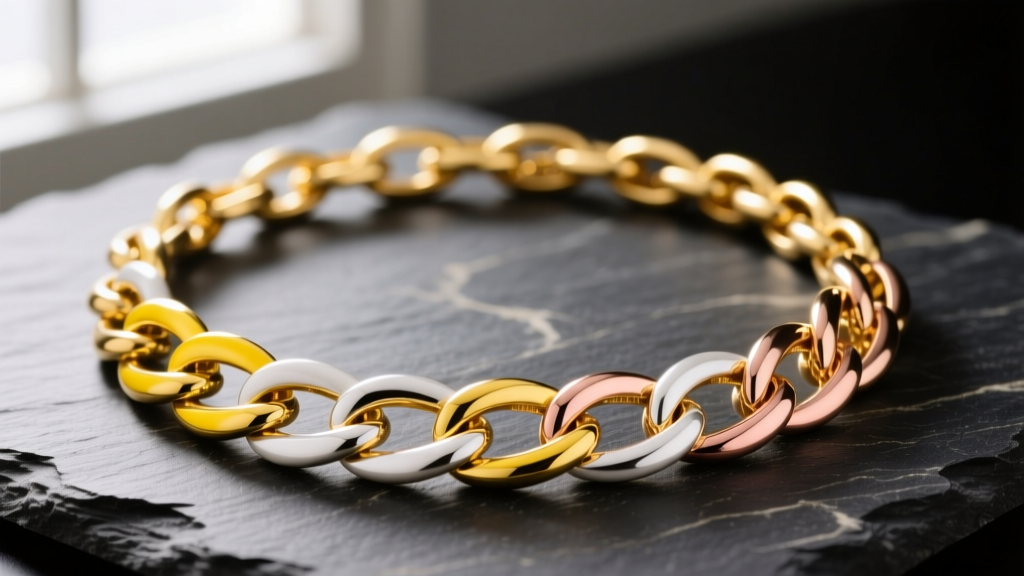
A tri gold necklace—often referred to in the industry as Trinity, Russian, or three-tone gold—is a masterclass in metallurgical balancing. Unlike single-alloy chains, crafting a cohesive piece that features yellow, white, and rose gold requires a profound understanding of how different alloying metals interact with pure 24k gold. In 2026, the standard for luxury tri-gold jewelry remains 18k (75% pure gold), but the remaining 25% is where the true engineering lies.
To achieve the distinct tri-color effect without the colors bleeding or the metals reacting adversely over decades of wear, master jewelers rely on precise elemental compositions. According to the World Gold Council, the specific ratios of copper, silver, palladium, and zinc dictate not only the color but the tensile strength and galvanic corrosion resistance of the final piece.
Deconstructing the 18k Alloys
- 18k Yellow Gold: Typically alloyed with 12.5% copper and 12.5% silver. This equal ratio maintains the warm, classic hue of pure gold while providing enough structural integrity for chain links.
- 18k Rose Gold: The pinkish-red hue is achieved by dramatically increasing the copper content (usually around 22.25% copper and 2.75% silver). Copper acts as a powerful hardening agent, making rose gold the most durable of the three, but it also introduces a higher risk of surface oxidation if not properly sealed.
- 18k White Gold: To neutralize the yellow of pure gold, metallurgists add white metals like palladium (15-20%) or nickel, alongside trace amounts of zinc and copper. Palladium-based white gold is the 2026 industry standard for hypoallergenic tri gold necklace designs, as nickel allergies have become increasingly prevalent.
Manufacturing Techniques: Interlocking vs. Sintering
The physical assembly of a tri gold necklace presents unique thermal challenges. Because the three alloys have slightly different melting points and thermal expansion coefficients, traditional soldering can lead to warped links or weakened joints. Modern jewelry manufacturing utilizes two primary methods to overcome this.

Mechanical Interlocking
Made famous by iconic designs like the Cartier Trinity, mechanical interlocking involves forging three separate, continuous rings or links and weaving them together. This method requires zero heat fusion between the different gold colors. The links are individually formed, polished, and then hand-assembled. The friction and geometry of the interlocking shapes keep the necklace intact, allowing each gold color to move independently, which reduces metal fatigue.
Laser Welding and Powder Metallurgy
For tri-gold chains where multiple colors exist within a single solid link (such as a two-tone or three-tone Cuban link), jewelers use advanced laser welding. As noted by the Gemological Institute of America (GIA), laser welding concentrates heat into a microscopic focal point, fusing white gold to rose gold without raising the ambient temperature of the entire link. This prevents the copper in the rose gold from oxidizing or the palladium in the white gold from becoming brittle. In high-end 2026 manufacturing, powder metallurgy (sintering) is also used to press and heat gold powders of different colors into a single, seamless bi-metal or tri-metal billet before it is drawn into wire.
Durability and Vickers Hardness Comparison
When investing in a tri gold necklace, understanding the Vickers Hardness (HV) of each alloy is critical for predicting how the chain will withstand daily wear, particularly regarding scratching and link deformation.
| Alloy Type (18k) | Primary Alloying Metals | Vickers Hardness (HV) | Wear Characteristics |
|---|---|---|---|
| Yellow Gold | Silver, Copper | ~125 HV | Moderate scratch resistance; develops a soft patina over time. |
| Rose Gold | High Copper, Low Silver | ~145 HV | Highest scratch resistance; copper can oxidize if exposed to harsh chemicals. |
| White Gold (Pd) | Palladium, Zinc, Copper | ~120 HV | Softer than rose; relies on rhodium plating for bright white finish and surface protection. |
Because the rose gold links are inherently harder than the white and yellow gold links, you will often notice that the white gold sections of a tri gold necklace show micro-abrasions first. This is a normal metallurgical reality, not a defect in craftsmanship.
Sourcing and Pricing Frameworks
The pricing of a tri gold necklace diverges significantly from standard single-color gold chains. When evaluating a piece, buyers must account for the "craftsmanship premium," which compensates for the complex alloying, multi-stage polishing, and precision assembly required.
The Melt Value vs. Craftsmanship Multiplier
A standard 18k yellow gold curb chain might retail at 1.5x to 2x its melt value. However, a high-quality 18k tri gold necklace typically commands a multiplier of 3x to 5x the raw gold weight. This is due to the following factors:
- Alloy Segregation: The jeweler must purchase, store, and manage three separate precious metal inventories.
- Rhodium Plating: The white gold sections require meticulous masking and electroplating with rhodium (a platinum-group metal that is often more expensive than gold itself) to achieve a stark contrast against the yellow and rose tones.
- Quality Control: Tri-metal chains undergo rigorous stress testing to ensure the galvanic differences between the copper-heavy rose gold and the palladium-heavy white gold do not cause microscopic corrosion at the solder joints.
"When purchasing a tri-tone chain, always inspect the transition points between the colors. In premium pieces, the color lines should be razor-sharp. Blurry or muddy transitions indicate poor masking during the rhodium plating process or substandard alloy mixing."
Maintenance: Cleaning and Rhodium Re-plating
Maintaining a tri gold necklace requires a more nuanced approach than cleaning a standard yellow gold chain. The presence of high copper in the rose gold and the rhodium plating on the white gold means that standard jewelry cleaning protocols can actually damage the piece.
The Ultrasonic Cleaner Warning
While ultrasonic cleaners are excellent for removing sebum and dirt from diamond settings, they pose a risk to tri-gold jewelry if the wrong chemical solution is used. Ammonia-based ultrasonic solutions can cause the copper in the rose gold to oxidize, leading to a dark, tarnished appearance that requires professional polishing to remove. Furthermore, high-frequency ultrasonic waves can degrade the microscopic layer of rhodium on the white gold links, causing them to yellow prematurely.
Recommended Care Protocol
- Use pH-Neutral Cleaners: Stick to mild, phosphate-free dish soap and warm distilled water. Avoid any commercial dips that contain thiourea or ammonia.
- Microfiber Polishing: When drying and polishing, use a clean, untreated microfiber cloth. Do not use jeweler's rouge or abrasive polishing cloths on the white gold sections, as this will strip the rhodium plating.
- Strategic Re-plating: Expect to have the white gold sections re-plated with rhodium every 18 to 24 months, depending on your skin's pH and friction levels. A skilled jeweler will use a laser or precise masking tape to ensure the rhodium does not bleed onto the yellow or rose gold links during the electroplating bath.
By understanding the precise metallurgy and manufacturing constraints of a tri gold necklace, collectors and enthusiasts can make highly informed purchasing decisions, ensuring their three-tone jewelry remains a vibrant, structurally sound masterpiece for generations.


