Choosing the Best Wooden Necklace With Cross: A Wood Species Guide
Compare wood species for your wooden necklace with cross. Learn about Janka hardness, grain durability, and the best finishes for lasting wear.


The Material Reality of Wooden Cross Pendants
A wooden necklace with cross offers a grounded, organic alternative to traditional precious metal jewelry. Beyond the aesthetic warmth and spiritual resonance, wood provides an incredibly lightweight wearing experience. However, from a materials science perspective, wood is both hygroscopic (absorbing moisture from the air) and anisotropic (expanding and contracting at different rates depending on the grain direction). When selecting a wooden cross pendant, understanding the specific botanical species, its Janka hardness rating, and its natural oil content is critical to ensuring the piece survives daily wear without cracking, warping, or losing its finish.
This guide breaks down the most common wood species used in cross pendants, comparing their structural properties, ideal chain pairings, and the specific finishing techniques required to protect them in varying climates.
Wood Species Comparison: Hardness, Grain, and Longevity
Not all woods are created equal. The durability of your wooden necklace with cross depends heavily on the cellular density of the timber. Below, we analyze the four most prominent species used in artisanal and commercial cross pendants.
Olive Wood: The Traditional Standard
Sourced primarily from the Mediterranean basin, Olive Wood (Olea europaea) is the most historically significant material for religious carvings. It boasts a Janka hardness rating of approximately 2,710 lbf (pounds-force), making it exceptionally resistant to surface denting. Olive wood contains high levels of natural tyloses and extractives, which give it a degree of natural rot resistance. Its interlocking grain pattern creates striking, high-contrast visual swirls, though this same interlocking grain can make it prone to tear-out during the initial carving process if not properly cured. According to The Wood Database, olive wood's natural oils make it highly receptive to hand-rubbed wax finishes, though it requires slow kiln-drying to prevent severe checking (splitting).
Sandalwood: Aromatic but Fragile
Prized for its rich, persistent fragrance, Sandalwood (Santalum album) is a popular choice for meditation and prayer necklaces. However, structurally, it is a relatively soft hardwood with a Janka rating hovering around 900 lbf. This means a sandalwood cross pendant is highly susceptible to denting if dropped or knocked against hard surfaces. Furthermore, the aromatic oils that give the wood its value can sometimes react poorly with synthetic polyurethane sealants, requiring specialized shellac or natural wax finishes to preserve the scent while offering minimal moisture protection.
Ebony: The Dense Hardwood Alternative
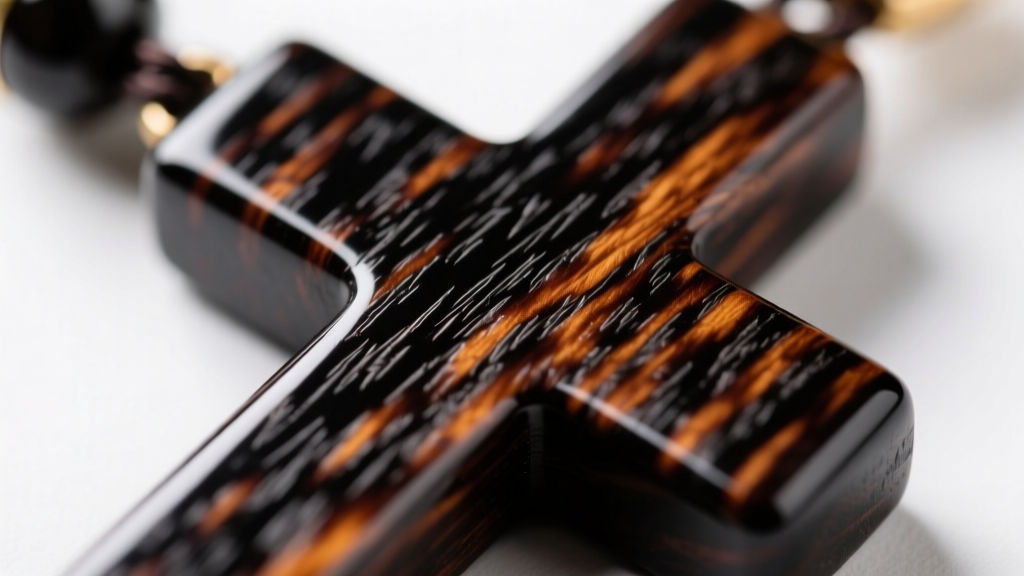
For those seeking a sleek, modern, and nearly indestructible wooden necklace with cross, Ebony (Diospyros ebenum or Diospyros crassiflora) is the premier choice. With a staggering Janka hardness of 3,220 lbf, ebony is so dense it sinks in water. Its cellular structure is incredibly tight, allowing it to be polished to a glass-like sheen without the need for heavy chemical film finishes. The primary drawback is its brittleness; while it resists scratches, a severe impact on a sharp edge can cause it to chip or fracture. Sourcing is also a concern, as many ebony species are heavily regulated under CITES due to overharvesting.
Black Walnut: Stability and Carving Excellence
Black Walnut (Juglans nigra) sits at a moderate 1,010 lbf on the Janka scale. While softer than olive or ebony, walnut is celebrated for its outstanding dimensional stability. It resists warping and shrinking better than almost any other domestic hardwood when exposed to humidity fluctuations. Its rich, chocolate-brown heartwood darkens beautifully over time when exposed to UV light, making it an excellent, sustainable choice for intricately detailed cross carvings.
Comparative Data: Wood Properties at a Glance
To help you make an informed decision, the table below synthesizes the critical material properties of these four species, referencing data standards from the USDA Forest Products Laboratory.
| Wood Species | Janka Hardness (lbf) | Natural Oils | Dimensional Stability | Best Finish Type |
|---|---|---|---|---|
| Olive Wood | 2,710 | High | Moderate | Carnauba Wax / Tung Oil |
| Sandalwood | 900 | Very High | Low | Shellac / Unfinished |
| Ceylon Ebony | 3,220 | Low | High | Micro-crystalline Wax |
| Black Walnut | 1,010 | Moderate | Very High | Polymerized Tung Oil |
Chain and Cord Pairings: Material Compatibility
The material you choose to suspend your wooden cross is just as important as the wood itself. Friction at the bail (the hole where the cord passes through) is the primary failure point for wooden pendants.
- Braided Leather (2mm - 3mm): The most traditional pairing. However, dyed leather cords can transfer colorants into the porous end-grain of the wood bail hole when exposed to sweat. Always seal the inside of the bail hole with a drop of cyanoacrylate (CA) glue or clear nail polish to create a friction barrier.
- Waxed Cotton Cord: An excellent, low-friction alternative to leather. The wax coating prevents the cotton fibers from acting like a microscopic saw against the wood grain. It is also colorfast and highly resistant to moisture.
- Sterling Silver or Gold Chains: While visually striking, metal chains can rapidly abrade softer woods like sandalwood or walnut. If using a metal chain, ensure the pendant features a metal-lined bail or a sterling silver jump ring acting as a sacrificial wear component.
Finishing and Sealing: Protecting Your Cross Pendant
Wood moves as it exchanges moisture with the environment. If a finish is too rigid, the wood's natural expansion will crack the sealant, allowing water to infiltrate and cause localized swelling. Choosing the right finish is paramount.
Penetrating Oils (Polymerized Tung Oil)
Unlike raw linseed oil, which can remain sticky, polymerized tung oil undergoes a chemical cross-linking process when exposed to oxygen. It penetrates deep into the wood's cellular structure and hardens from the inside out. This provides excellent water resistance while allowing the wood to retain its natural, tactile warmth. It is the superior choice for olive and walnut crosses.
Film-Forming Finishes (Polyurethane)
Spray-on polyurethane creates a hard, plastic-like shell over the wood. While it offers maximum waterproofing, it completely masks the natural texture of the wood. Furthermore, if the pendant is dropped and the polyurethane shell chips, moisture will become trapped beneath the film, leading to hidden rot. This finish is generally discouraged for high-quality artisanal pieces.
Surface Waxes (Carnauba and Beeswax)
Carnauba wax, derived from Brazilian palm leaves, is incredibly hard and provides a brilliant, glass-like sheen when buffed. It is the ideal finish for dense, closed-grain woods like ebony. However, wax offers minimal moisture protection and must be reapplied every 6 to 12 months depending on skin contact and environmental humidity.
Care, Maintenance, and Moisture Risks
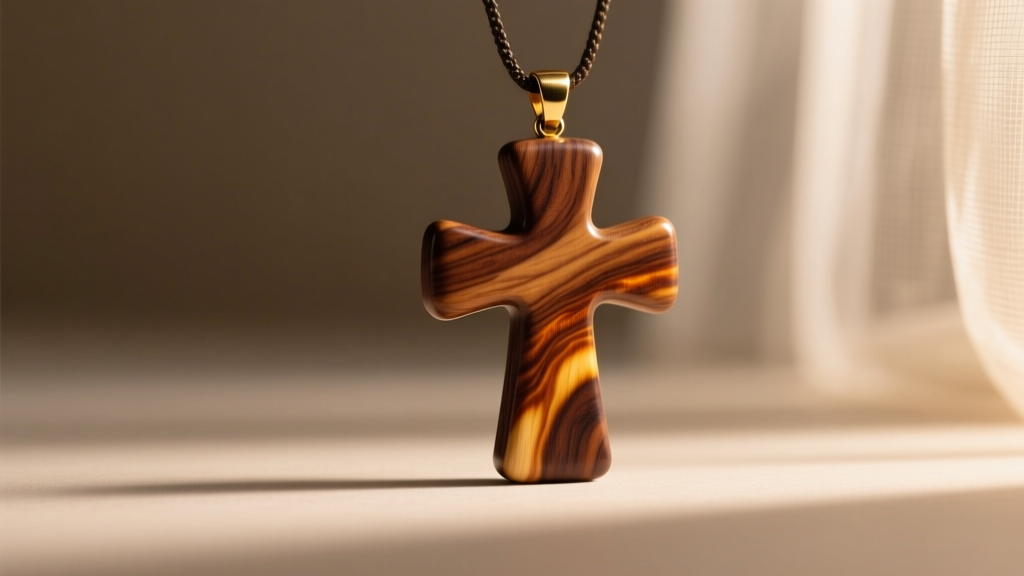
To maximize the lifespan of your wooden necklace with cross, you must respect its hygroscopic nature. Wood is generally stable when its moisture content (MC) remains between 8% and 12%. Sudden spikes in humidity—such as wearing the pendant in a hot shower or jumping into a swimming pool—will cause the wood fibers to swell rapidly. Because the end-grain absorbs water up to 100 times faster than the face-grain, the areas around the carved details and the bail hole are highly vulnerable to blowouts and micro-fractures.
Actionable Maintenance Routine:
- Daily: Wipe the pendant with a dry, lint-free microfiber cloth after wearing to remove acidic skin oils and sweat, which can degrade natural wax finishes over time.
- Bi-Annually: Apply a microscopic amount of pure jojoba oil or specialized butcher block oil to the pendant. Let it sit for 15 minutes, then buff it completely dry. This replenishes the lipids lost to environmental evaporation.
- Storage: Store the necklace in a breathable cotton pouch rather than an airtight plastic bag. Plastic traps ambient moisture and can promote the growth of surface mold on untreated or oil-finished woods.
By understanding the botanical origins, structural hardness, and finishing requirements of your chosen timber, you ensure that your wooden cross pendant remains a durable, meaningful heirloom rather than a fragile accessory. For further reading on timber durability and specific gravity metrics, consult the comprehensive profiles available via The Wood Database's Ceylon Ebony Profile and related hardwood archives.


