Solving Common 30 Inch Necklace Tangling & Fit Problems
Struggling with a 30 inch necklace that tangles, bounces, or breaks? Discover expert troubleshooting tips for clasps, chain weights, and layering fixes.

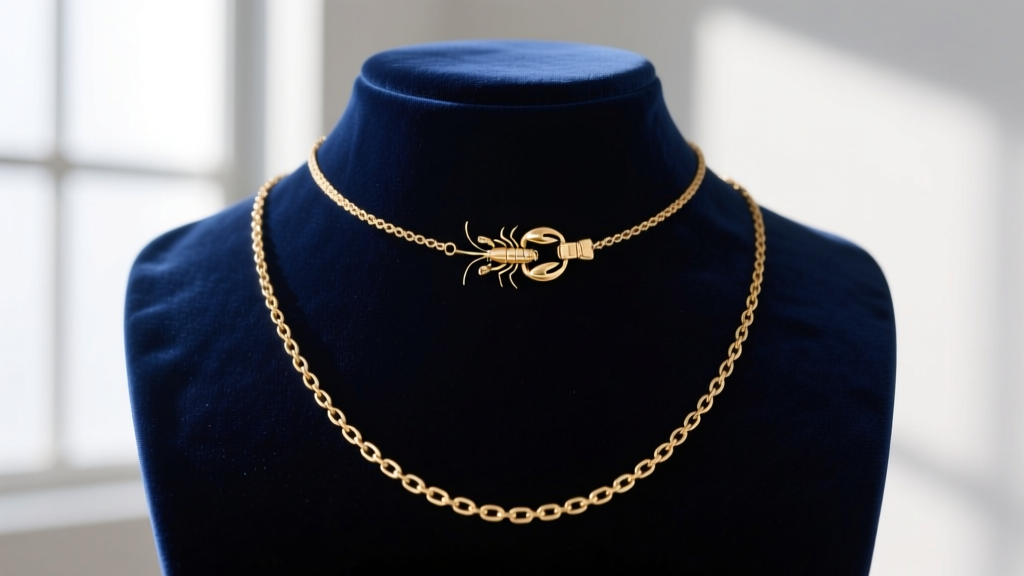
A 30 inch necklace occupies a unique space in jewelry design. For women, it falls into the opera or matinee category, draping elegantly below the bust. For men, it is a standard length for long-hanging pendants, resting near the solar plexus. However, this extended length introduces a specific set of mechanical and physical challenges. The sheer circumference creates a pendulum effect, leading to chronic tangling, clasp migration, and structural fatigue at the jump rings.
If your long chain constantly flips, knots, or slides to the front of your neck, you are not alone. Below, we break down the exact physics causing these issues and provide professional troubleshooting methods to fix your 30 inch necklace permanently.
The Unique Physics of a 30 Inch Necklace
To troubleshoot effectively, you must understand the mechanics of a long chain. A standard 16-inch choker sits tightly against the collarbone, restricting movement. A 30 inch necklace, however, has a drop of roughly 15 inches from the nape of the neck. This creates a massive center of gravity. When you walk, bend, or shift, the chain swings like a pendulum. This kinetic energy is transferred directly to the weakest points of the jewelry: the clasp, the jump rings, and the individual links. According to the Gemological Institute of America (GIA), understanding how kinetic stress affects metal alloys is the first step in preventing premature wear and link distortion in long-form jewelry.
Troubleshooting Clasp Migration (The Sliding Problem)
The most frequent complaint regarding a 30 inch necklace is the clasp sliding from the back of the neck to the front, often resting awkwardly next to the pendant. This happens because the pendant or the center of the chain is heavier than the clasp assembly. Gravity pulls the heaviest point to the lowest vertical position, forcing the lighter clasp upward and forward.
Solution 1: Counterweighting the Clasp
You can solve this by adding a counterweight to the back of the neck. Many high-end jewelers attach a small, 2-to-3-gram decorative metal tag or a slightly heavier lobster claw clasp to the back of the chain. This balances the center of gravity, keeping the clasp anchored at the nape of your neck.
Solution 2: Silicone Necklace Stays
For a non-permanent fix, use a silicone necklace spacer or stay. These small, transparent silicone discs slide onto the chain behind the neck and grip the skin or clothing slightly, creating enough friction to prevent the lightweight clasp from migrating forward without damaging the metal links.
Solving Chain Tangles and Knots in Long Links
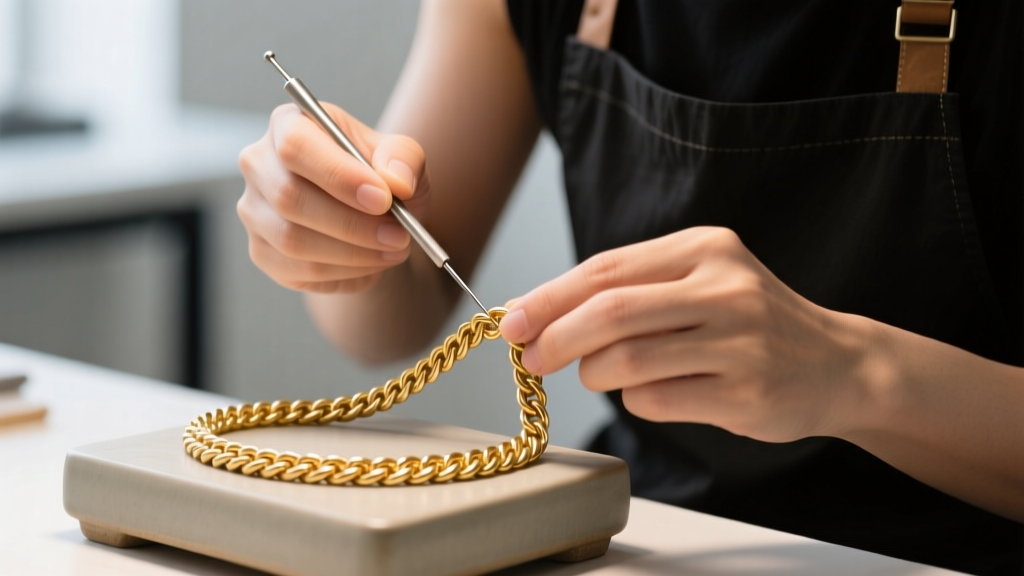
Because a 30 inch necklace loops and folds over itself when stored or worn, certain chain styles are highly susceptible to knotting. Herringbone and snake chains are notorious for kinking, while rope and box chains tend to form complex, tight knots.
The Baby Powder Method for Rope Chains
If your 30 inch rope chain has formed a tight knot, do not pull it. Pulling increases friction and can permanently distort the links. Instead, lay the chain flat on a hard surface. Sprinkle a generous amount of talcum or baby powder over the knot. The powder acts as a dry lubricant, reducing the friction coefficient between the metal links. Use two fine sewing needles or T-pins to gently work the center link of the knot outward. Once loosened, wipe the chain with a microfiber cloth and use an ultrasonic cleaner to remove residual powder.
Flattening Kinked Herringbone Chains
Herringbone chains lack lateral flexibility. If a 30 inch herringbone chain kinks, the flat links bend out of their uniform plane. To fix this, lay the chain on a soft towel, place another towel over it, and gently roll a smooth, heavy glass bottle over the kinked area. The uniform pressure can often coax the flat links back into alignment. For severe kinks, a professional jeweler must use a rolling mill to flatten the chain, as noted in maintenance guidelines by Jewelers of America.
Managing Weight, Bounce, and Neckline Interference
A 30 inch necklace naturally rests on the stomach or lower sternum. When walking, the chain can bounce aggressively, flipping over itself or catching on shirt buttons. The solution lies in selecting the correct chain profile and gauge to dampen this movement.
| Chain Style | Typical Gauge (Width) | Bounce Factor | Troubleshooting Fix |
|---|---|---|---|
| Cuban Link | 4mm - 8mm | Low (Heavy) | Use a magnetic clasp to prevent flip-overs. |
| Rope Chain | 2mm - 5mm | Medium | Add a silicone backing to the pendant bail. |
| Box Chain | 1mm - 3mm | High (Light) | Layer with a heavier 24-inch chain to anchor it. |
| Herringbone | 3mm - 6mm | Low (Flat) | Store completely flat; never wear while active. |
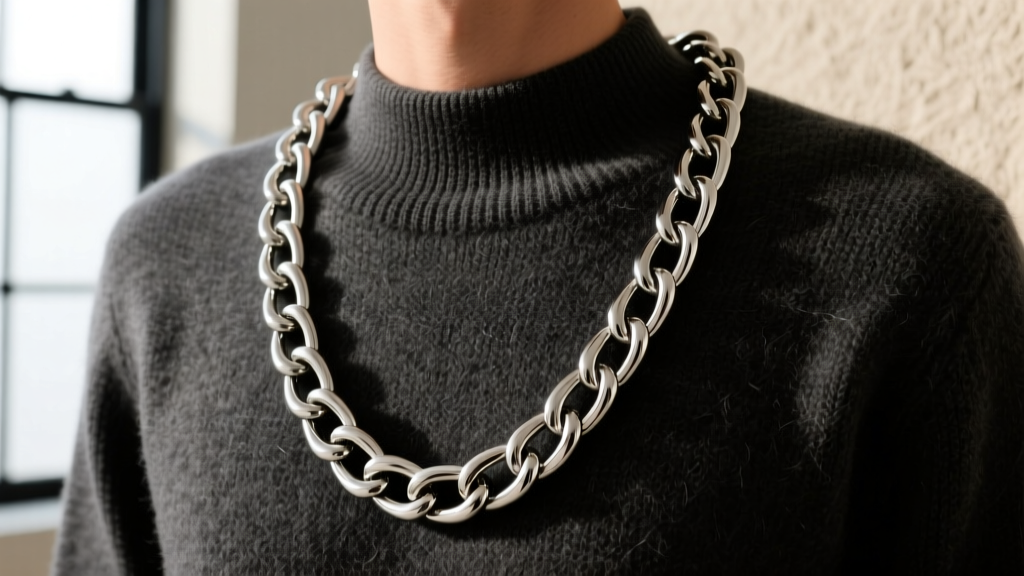
If your current 30 inch necklace is too light and bounces excessively, consider layering it with a heavier, shorter chain (like a 20-inch or 24-inch curb chain). The magnetic pull and physical weight of the shorter chain will help anchor the longer chain against your chest, reducing the pendulum swing.
Fixing Pendant Bail and Link Snagging Issues
When wearing a 30 inch necklace with a pendant, the bail (the loop that connects the pendant to the chain) often becomes a point of failure. Because 30-inch chains are frequently thicker (ranging from 3mm to 6mm to support the length), standard pendant bails are often too small, causing the chain to bunch up or snag inside the bail.
The Fix: Ensure your pendant has an oversized bail. For a 4mm 30 inch chain, you need a bail with an inner diameter of at least 6mm to 8mm to allow the links to articulate freely. If the chain is catching, apply a microscopic drop of mineral oil to the inside of the bail to reduce metal-on-metal friction. Avoid using synthetic lubricants, which can attract dust and create an abrasive paste that will eventually wear through the gold or silver plating.
Preventing Clasp and Jump Ring Failure
The pendulum effect of a 30 inch necklace places immense lateral stress on the jump rings connecting the clasp to the chain. Over time, the swinging motion can slowly pull a standard, unsoldered jump ring open, resulting in the sudden loss of the necklace or pendant.
Expert Rule of Thumb: Never use a standard split-cut jump ring on a chain longer than 24 inches if it features a heavy pendant. The dynamic load of a swinging 30-inch chain will easily compromise a 20-gauge or 18-gauge open jump ring.
The Fix: Replace standard jump rings with split rings (which function like miniature keychains and require the wire to be pulled apart laterally to open) or soldered jump rings. If you are attaching a valuable pendant to a 30 inch necklace, take it to a jeweler to have the jump ring laser-welded or torch-soldered shut. This completely eliminates the risk of the ring pulling open due to kinetic stress.
Final Maintenance Checklist for Long Chains
To ensure your 30 inch necklace remains in pristine condition, follow this quick troubleshooting checklist every few months:
- Inspect the Clasp: Check the spring mechanism inside the lobster clasp. If it feels sluggish, clean it with a soft toothbrush and warm soapy water to remove skin oils and lint.
- Check Link Integrity: Run your fingers lightly over the entire 30-inch length. If you feel any sharp edges or catches, a link has been pulled out of alignment and needs professional resizing before it snaps.
- Storage Protocol: Never store a 30 inch necklace in a loose pile. Always hang it on a velvet-lined jewelry stand or lay it completely flat in a wide drawer. Hanging prevents the chain from folding over itself, eliminating 90% of future tangles.
By addressing the unique mechanical stresses of long-form jewelry, you can transform a frustrating, tangled mess into a comfortable, secure, and elegant staple of your wardrobe.


