Short Choker Necklace Investment: Budget & Value Assessment
Discover the true value of a short choker necklace. We break down material costs, pricing tiers, and durability to help you budget wisely.
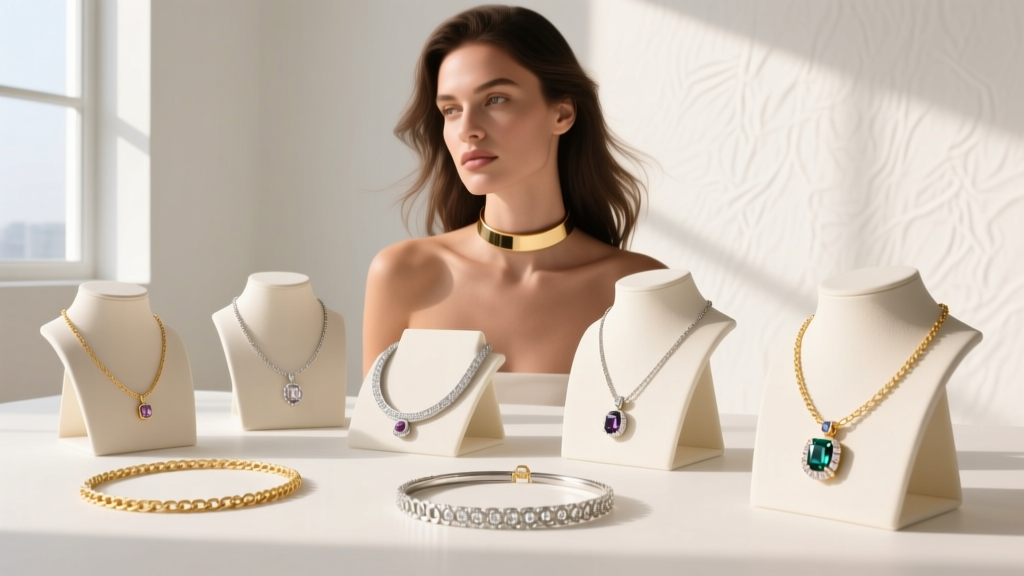
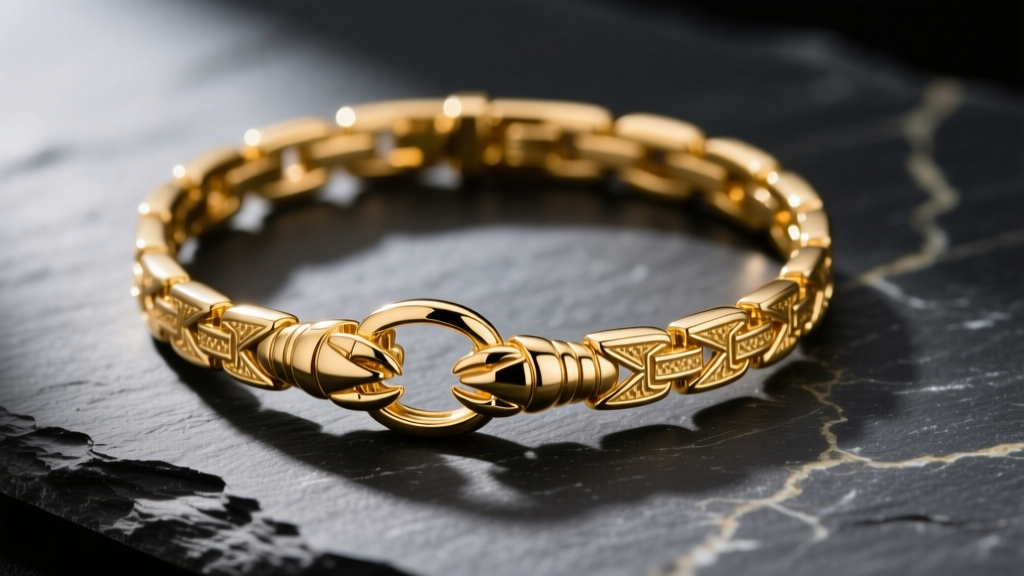
When evaluating jewelry, the short choker necklace occupies a unique space in the market. Sitting snugly at the base of the neck (typically measuring between 14 and 16 inches), this silhouette demands both aesthetic precision and structural durability. In 2026, with precious metal markets experiencing notable volatility, understanding the true value of a choker requires looking past the brand name and examining the metallurgy, hardware, and manufacturing techniques.
As a budget and value assessment, this guide will deconstruct the pricing tiers of short chokers, exposing where manufacturers cut corners and where your money is best spent. Whether you are eyeing a $25 fashion piece or a $600 fine jewelry investment, knowing the mechanical and chemical realities of choker wear is essential.
Material Grades and Price Tiers
The foundation of any necklace's value is its base material. Because a short choker necklace sits tightly against the skin, it is exposed to higher levels of friction, body heat, and perspiration than a standard 18-inch pendant chain. This accelerated wear environment means that material grade directly dictates the lifespan of the piece.
| Material Category | Typical Base Metal | 2026 Price Range | Expected Lifespan (Daily Wear) | Value Rating |
|---|---|---|---|---|
| Fashion / Costume | Brass, Zinc Alloy, Steel | $15 - $45 | 3 - 6 Months | Poor |
| Demi-Fine (Plated) | Sterling Silver (925) | $60 - $130 | 1 - 3 Years | Moderate |
| Demi-Fine (Filled) | Jeweler's Brass | $80 - $150 | 3 - 5 Years | Good |
| Fine Jewelry | Solid 14k / 18k Gold | $350 - $800+ | Lifetime | Excellent |
The Plating Deception: Vermeil vs. Flash Plating
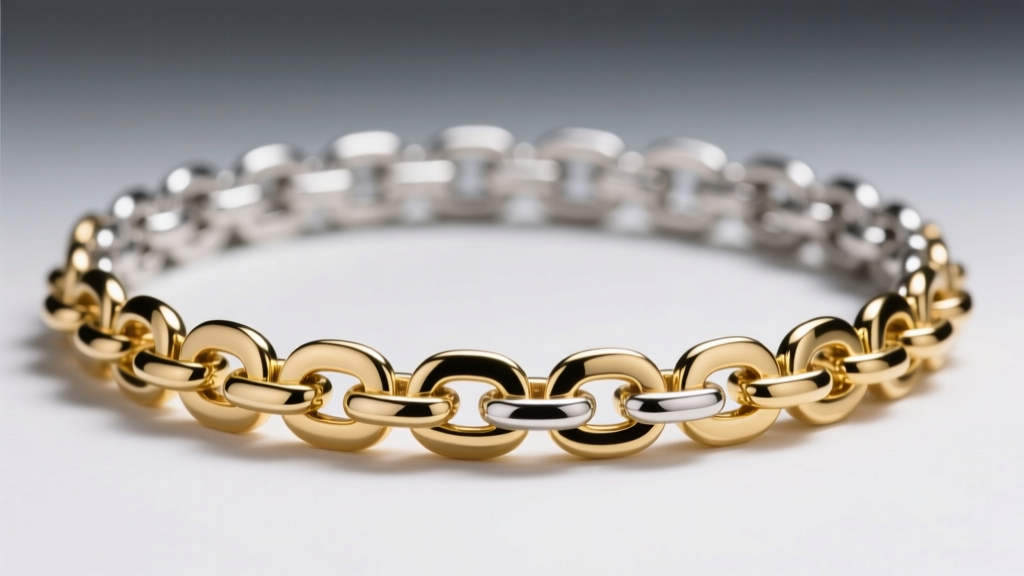
When shopping in the $50 to $120 range, you will frequently encounter the term 'gold vermeil.' According to the Gemological Institute of America (GIA), true vermeil requires a base of sterling silver plated with a minimum of 2.5 microns of gold (usually 10k or higher). Furthermore, the Federal Trade Commission (FTC) strictly regulates these terminology standards to protect consumers from deceptive marketing. However, many brands use the term loosely to describe flash-plated brass, which may only possess 0.1 to 0.5 microns of gold.
For a short choker necklace, flash plating is a poor investment. The constant friction against the nape of the neck will wear through a 0.5-micron layer in a matter of weeks, exposing the base metal to sweat. This leads to rapid tarnishing and the dreaded 'green skin' reaction caused by copper oxidation. Always demand verification of plating thickness; if a brand cannot confirm the 2.5-micron standard, walk away.
Hardware and Clasp Mechanics: Where Value Hides
Consumers obsess over the chain and the pendant, but the clasp is the primary failure point in any necklace. This is especially true for a short choker necklace, which undergoes significant tensile stress when you turn your head, look down, or remove a garment over your head.
Spring Ring vs. Lobster Claw vs. Magnetic
- Spring Ring Clasps: Common in budget pieces under $40. They feature a tiny internal spring that is highly prone to fatigue and snapping. They are difficult to operate with one hand and offer poor long-term value.
- Standard Lobster Claw: The industry standard for demi-fine jewelry. They offer a secure lock but can catch on hair or delicate fabrics if not properly polished.
- Swivel Lobster or Magnetic Clasps: Found in high-end and ergonomic designs. A swivel mechanism allows the clasp to rotate independently of the chain, preventing the torsion buildup that leads to chain snapping. While magnetic clasps offer ease of use, ensure they utilize neodymium magnets encased in solid metal, rather than glued-in magnets that degrade with sweat exposure.
A $90 choker with a cheap spring ring clasp is inherently less valuable than an $85 choker equipped with a solid-cast swivel lobster clasp. Hardware weight and articulation are immediate indicators of manufacturing quality.
Durability and Failure Modes in Chokers
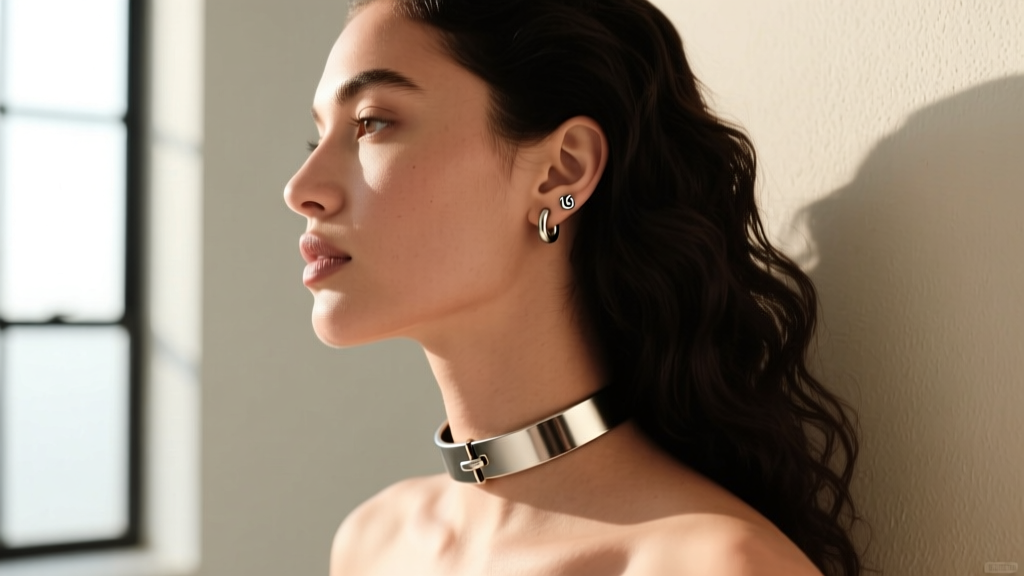
To accurately assess your budget allocation, you must understand how short chokers physically fail. The 14-to-16-inch length restricts movement, meaning the chain absorbs kinetic energy that a longer chain would simply drape around.
Chain Link Architecture
Not all chains handle tension equally. Cable chains, while classic, are highly susceptible to stretching. If a cable chain choker is snagged, the circular links will pull into ovals, permanently ruining the piece. Box chains and Wheat chains, however, feature interlocking geometric links that distribute tension evenly, making them vastly superior for the high-friction environment of a short choker. When evaluating a piece, gently pull the chain between your hands; if the links shift and create gaps, the structural integrity is compromised.
The Solder Point Vulnerability
Every chain link should be soldered closed. In budget manufacturing, links are merely pressed together. Over time, the friction of a short choker will cause these unsoldered links to pry open, leading to sudden breakage. Inspect the links near the clasp and the jump rings under a jeweler's loupe or macro lens before purchasing.
Sizing and Fit: The Hidden Cost of Returns
A frequently overlooked aspect of value assessment is the financial drain of improper sizing. A standard short choker necklace measures 15 inches, but neck circumferences vary wildly. Purchasing a fixed-length choker without measuring your neck often results in return shipping fees and restocking costs, instantly degrading the item's overall value proposition.
To mitigate this, prioritize brands that offer adjustable extenders (ideally 2 to 3 inches of supplementary chain). However, be wary of extenders made from mismatched alloys. If the primary chain is sterling silver but the extender chain is plated brass, the extender will tarnish at an accelerated rate, creating a visually disjointed and structurally weak point. Always verify that the extender chain matches the base metallurgy of the primary necklace.
How to Assess Value Before Buying: The 2026 Checklist
Use this actionable framework to determine if a short choker necklace justifies its price tag:
- Verify the Core Metal: Ensure it is stamped '925' for sterling silver or '14k/18k' for solid gold. Avoid unmarked base metals.
- Interrogate the Plating: If it is gold-toned, ask the retailer for the exact micron thickness and the plating method (electroplated vs. PVD coated). PVD (Physical Vapor Deposition) coating on stainless steel offers vastly superior scratch resistance compared to traditional wet plating.
- Test the Clasp Tension: The clasp should snap shut with an audible, crisp click. A mushy closure indicates a weak internal spring.
- Check the Jump Rings: The rings connecting the chain to the clasp should be thick (minimum 18-gauge) and feature a flush, soldered seam.
- Calculate Cost-Per-Wear: A $120 gold vermeil choker worn twice a week for two years costs $0.57 per wear. A $25 flash-plated choker that degrades in two months costs $2.88 per wear. The higher initial investment often yields superior mathematical value.
Final Verdict: Budgeting for the Perfect Fit
The short choker necklace is a high-impact, high-wear accessory. Budgeting for one requires a shift in perspective: you are not just paying for the aesthetic, you are paying for the metallurgical resilience required to survive the harsh environment of the human neck.
If your budget is strictly under $50, opt for surgical-grade stainless steel with PVD coating rather than gold-plated brass. If your budget allows for $80 to $150, strictly seek out verified 2.5-micron gold vermeil over sterling silver with a swivel lobster clasp. For budgets exceeding $300, solid 14k gold in a wheat or box chain configuration will provide a lifetime of wear, ultimately making it the most financially sound decision in your jewelry wardrobe. By prioritizing structural integrity and transparent material sourcing, you ensure that your investment remains secure and stylish for years to come.