The Mama Diamond Necklace: 2026 Trend Analysis & Style Guide
Discover the 2026 mama diamond necklace trend. Explore styling tips, diamond grading, chain lengths, and how to layer this sentimental fine jewelry staple.

The Evolution of the Mama Diamond Necklace in 2026
The sentimental jewelry market has undergone a massive aesthetic shift over the last decade. Gone are the days of the chunky, oversized block-letter nameplates popularized in the early 2000s. In 2026, the mama diamond necklace has evolved into a masterclass of subtle luxury and refined typography. No longer confined strictly to the traditional 'push present' given immediately after childbirth, this piece has become a versatile milestone marker—celebrating adoptions, foster care journeys, and even the graduation of a child into adulthood.
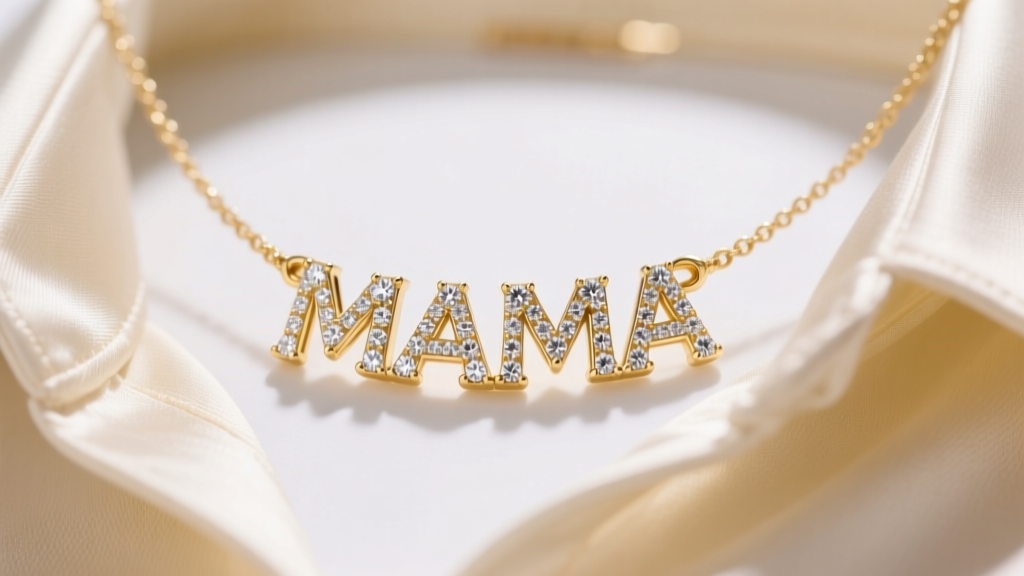
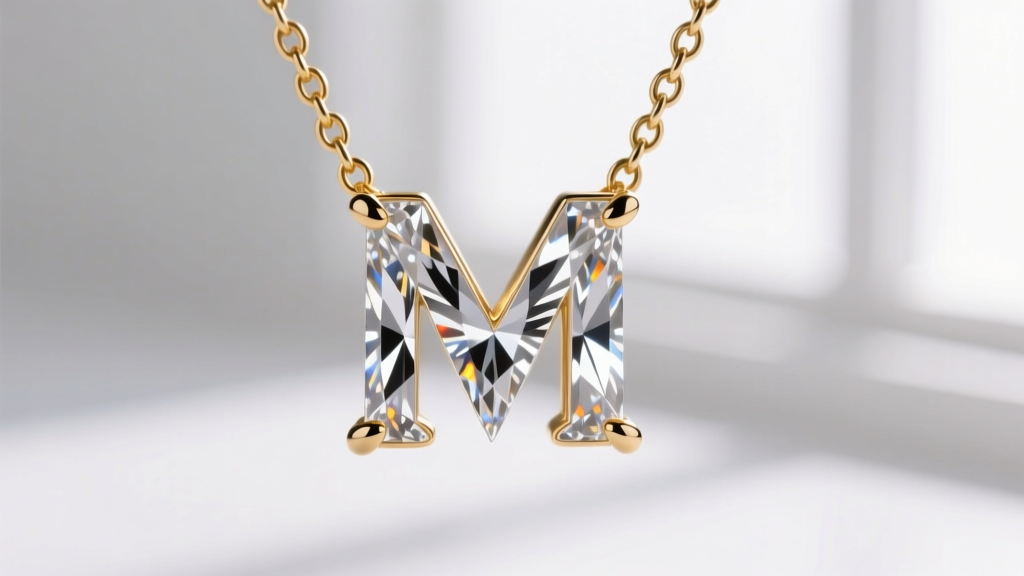
From a design perspective, the 2026 trend heavily favors custom-milled serif fonts, delicate script lettering, and minimalist bezel settings. Jewelers are moving away from hollow, stamped gold letters and instead utilizing CAD (Computer-Aided Design) to cast solid, low-profile letter pendants. The diamonds themselves are no longer just an afterthought; they are integral to the structural geometry of the pendant, often forming the crossbars of the 'A' or the entire body of the 'M'.
Decoding the Diamonds: Melee Specifications and Grading
To truly understand the value of a mama diamond necklace, you must understand the mechanics of melee diamonds. Melee refers to small diamonds, typically weighing between 0.01 and 0.18 carats each. For a standard four-letter 'MAMA' pendant, bench jewelers usually set 1.5mm to 2.0mm round brilliant stones. The total carat weight (TCW) for these pendants generally ranges from 0.25 ctw to 0.75 ctw.
Clarity and Color: Where to Optimize Your Budget
Because melee diamonds are exceptionally small, inclusions are virtually impossible to see without 10x magnification. Paying a premium for VVS (Very Very Slightly Included) or IF (Internally Flawless) clarity in a melee pendant is a poor allocation of your budget. According to GIA's clarity grading scale, SI1 to SI2 (Slightly Included) is the optimal sweet spot for melee stones. These stones are eye-clean to the naked eye, allowing you to maximize your budget for better color or a heavier gold chain.
Color grading requires a strategic approach based on your chosen metal. GIA's color grading standards dictate that color is more easily masked in yellow metals. If you are setting your mama necklace in 14k or 18k yellow gold, Near Colorless (G-H) or even Faint (I-J) grades will blend seamlessly with the warm metal. However, if you prefer platinum or 18k white gold (which is plated with rhodium), you must insist on Colorless (D-F) grades. Lower color grades will look visibly muddy or yellowish against the stark white background of a rhodium-plated setting.
Chain Metallurgy and Hardware: The Backbone of the Pendant
A delicate diamond pendant is only as secure as the chain holding it. In 2026, the industry standard for fine everyday necklaces remains 14k or 18k solid gold. Avoid gold-filled or vermeil chains for sentimental pieces; the friction from daily wear will eventually wear through the microscopic outer layer of gold, exposing the brass or sterling silver core beneath, which leads to tarnishing and skin irritation.
Chain Link Comparison Chart
| Chain Type | Recommended Width | Durability | Drape Quality |
|---|---|---|---|
| Cable Chain | 0.9mm - 1.2mm | Moderate | Fluid, classic, lightweight |
| Rolo Chain | 1.5mm - 2.0mm | High | Structured, catches the light |
| Box Chain | 1.0mm - 1.5mm | Very High | Rigid, geometric, modern |
| Snake Chain | 1.5mm - 2.0mm | Low (prone to kinking) | Sleek, seamless, tube-like |
For a mama diamond necklace, the Rolo chain is currently the top recommendation among bench jewelers. Its interlocking, uniform round links offer superior tensile strength compared to a standard cable chain, and it resists tangling when layered with other necklaces.
Clasp Mechanics for Everyday Wear
Mothers are notoriously busy, and fumbling with tiny jewelry clasps is a common frustration. Standard 5mm spring ring clasps are difficult to operate with one hand or long fingernails. When ordering or buying a mama necklace, look for a 6mm or 8mm lobster clasp. Lobster clasps feature a stronger internal spring mechanism and a wider lever, making them significantly easier to secure. Ensure the jump ring connecting the clasp to the chain is soldered shut; an unsoldered jump ring will eventually pull apart under the weight of a solid gold pendant.
The 2026 Layering Framework: Geometry and Necklines
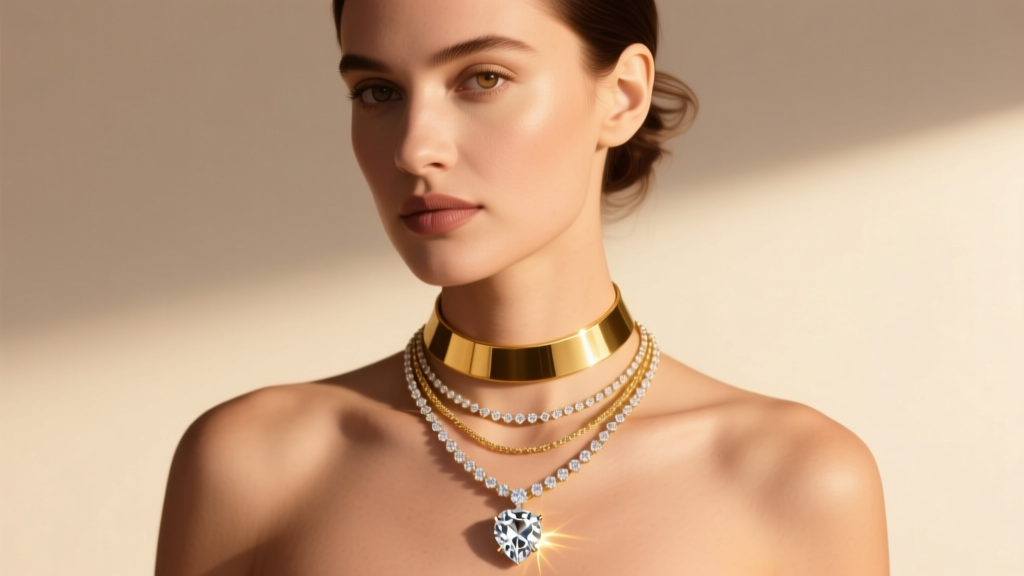
The modern mama necklace is rarely worn alone. The prevailing 2026 styling trend is the 'asymmetrical cascade,' which relies on varying chain lengths, textures, and pendant weights to create a curated, effortless look. To achieve this, follow the Rule of Three:
- The 14-Inch Anchor: Start with a delicate 14-inch gold choker, such as a 1.5mm snake chain or a minimalist bead chain. This sits high on the collarbone and frames the face.
- The 16-Inch Focal Point: This is where your mama diamond necklace lives. At 16 inches, it rests perfectly in the suprasternal notch (the hollow at the base of the throat), drawing the eye directly to the sentimental diamonds.
- The 18-Inch Drop: Finish the stack with an 18-inch or 20-inch chain featuring a heavier, solitary element, such as a bezel-set solitaire diamond drop, a raw gemstone, or a textured gold coin.
Pairing with Necklines
The geometry of your clothing dictates how your necklace stack will perform. A V-neck or wrap dress naturally mirrors the downward angle of a 16-inch or 18-inch mama pendant, creating a cohesive, elongating visual line. For crew necks and high collars, a 16-inch chain will get swallowed by the fabric; opt to lengthen your mama necklace to 18 inches so it rests visibly against the cotton or wool. Scoop necks and wide boat necks provide a broad canvas of skin, making them the ideal backdrop for a dense, multi-layered stack where the 14-inch choker and 16-inch mama pendant can both shine without competing with fabric seams.
Market Analysis: Natural vs. Lab-Grown Pricing in 2026
The most significant disruption to the mama diamond necklace market over the last few years has been the mainstream acceptance of lab-grown diamonds. As confirmed by GIA's comprehensive reports on lab-grown diamonds, these stones possess the exact same physical, chemical, and optical properties as earth-mined diamonds. They are not simulants like cubic zirconia; they are pure crystallized carbon.
This technological advancement has drastically altered the pricing landscape for sentimental jewelry. Below is a realistic market breakdown for a standard 0.50 ctw 'MAMA' pendant in 14k solid gold:
Natural Earth-Mined Diamonds (0.50 ctw, G-H Color, SI1 Clarity): $1,200 – $1,800
Lab-Grown Diamonds (0.50 ctw, G-H Color, VS Clarity): $450 – $750
Because lab-grown diamonds are more affordable, buyers in 2026 are upgrading their specifications. Instead of settling for SI1 clarity and G-H color in a natural stone, consumers are opting for VS (Very Slightly Included) clarity and D-F (Colorless) lab-grown stones within the same budget. This results in a visibly brighter, more brilliant pendant without the traditional luxury markup.
Maintenance and Care for Diamond Melee
Diamonds are lipophilic, meaning they naturally attract and hold onto oils from your skin, lotions, and hair products. A mama necklace worn daily will accumulate a film of sebum and cosmetic residue within weeks, drastically reducing the light return and making the diamonds look cloudy or gray.
To maintain maximum brilliance, clean your necklace weekly using a simple solution of warm water and a few drops of mild, ammonia-free dish soap. Use a soft-bristled baby toothbrush to gently agitate the area behind the diamond settings, where dirt accumulates most heavily. Avoid ultrasonic cleaners if your pendant features fracture-filled diamonds or secondary gemstones like emeralds or opals, as the high-frequency vibrations can shatter treated stones. For standard, untreated diamond melee in solid gold, however, a professional ultrasonic cleaning once a year at your local bench jeweler will keep the prongs tight and the facets blindingly bright.
Final Verdict: Investing in the Modern Heirloom
The mama diamond necklace in 2026 is a triumph of personalized, wearable art. By prioritizing optimal melee grading, selecting a durable rolo or box chain, and embracing the asymmetrical layering trend, you elevate a simple sentimental token into a sophisticated fine jewelry staple. Whether you choose the traditional romance of earth-mined diamonds or the ethical, budget-friendly brilliance of lab-grown stones, ensuring your piece is crafted from solid 14k or 18k gold guarantees it will survive the beautiful chaos of motherhood and eventually be passed down as a true modern heirloom.