How to Repair and Clean an Amethyst Chip Necklace
Learn how to repair broken stringing, clean dull stones, and prevent fading in your amethyst chip necklace with expert troubleshooting tips.

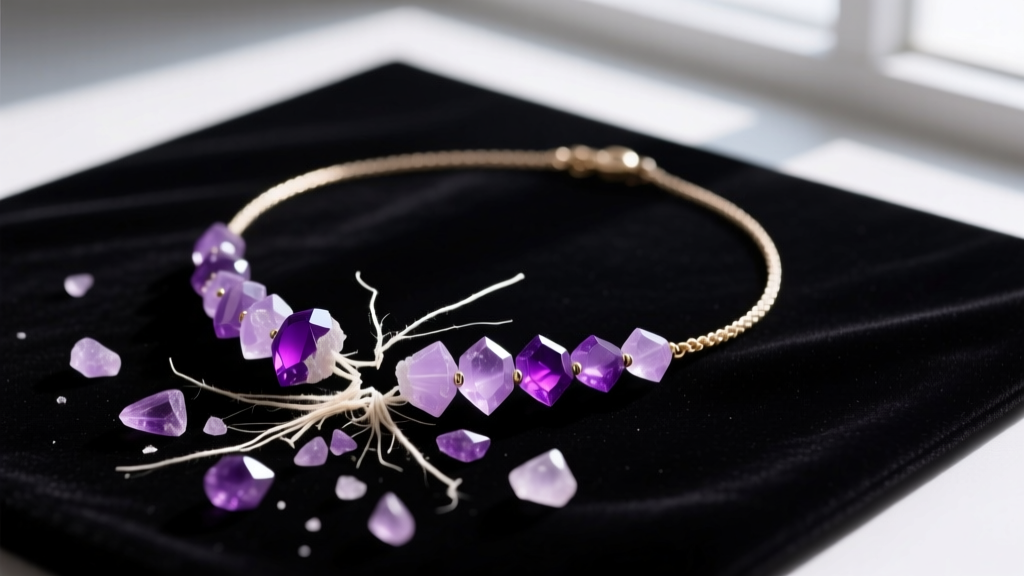
An amethyst chip necklace is a staple in many jewelry collections, prized for its organic, bohemian aesthetic and the deep, calming violet hues of natural quartz. However, because chip beads are irregularly shaped and often mass-strung on inferior materials, they are uniquely prone to a specific set of structural and cosmetic failures. Whether your necklace has snapped at the clasp, the stones are looking cloudy, or the vibrant purple is fading to a dull gray, troubleshooting these issues requires an understanding of both lapidary science and jewelry mechanics.
In this comprehensive repair and maintenance guide, we will diagnose the most common failures associated with an amethyst chip necklace and provide exact, professional-grade solutions to restore your jewelry to its original glory.
Diagnosing the Break: Why Chip Necklaces Snap
The most frequent point of failure for any beaded strand is the stringing material. Chip beads, unlike perfectly round, smooth gemstone beads, have jagged edges and uneven drill holes. When strung on traditional silk thread or cheap elastic, the sharp interior edges of the amethyst chips act like microscopic saws, gradually fraying the cord from the inside out.
If your necklace broke in the middle of the strand, it is almost certainly due to internal abrasion. If it broke right at the clasp, the issue is likely metal-on-wire friction or a failed crimp bead. To permanently solve this, you must abandon traditional knotting techniques and upgrade your stringing medium.
Restringing Your Amethyst Chip Necklace
When restringing an amethyst chip necklace, the goal is to balance tensile strength with fluid drape. Amethyst ranks at a 7 on the Mohs hardness scale, meaning the chips are heavy and rigid. You need a material that can support this weight without stretching over time.
Stringing Material Comparison
| Material | Diameter | Pros | Cons |
|---|---|---|---|
| 49-Strand Micro Beading Wire | 0.015-inch | Exceptional drape, high tensile strength, resists abrasion | Requires crimp beads and specialized crimping pliers |
| Size F Silk Thread | 0.35mm | Traditional look, allows for knotting between beads | Degrades from skin oils, easily sawed by chip edges |
| Stretch Magic (Elastic) | 1.0mm | Easy to slip on and off, no clasp required | Dries out, loses elasticity, snaps unpredictably |
| Nylon Braided Cord | 0.8mm | Very strong, good for heavy, oversized chips | Stiff drape, requires large drill holes to pass through |
The Expert Fix: We highly recommend using a 0.015-inch 49-strand stainless steel beading wire (such as SoftFlex or Beadalon). The 49 micro-strands provide a silk-like drape while the nylon coating protects against the sharp interior edges of the amethyst chips. Avoid 7-strand or 19-strand wires, as they are too stiff and will cause the necklace to kink permanently when stored.
Solving the Fading Problem: UV and Heat Damage
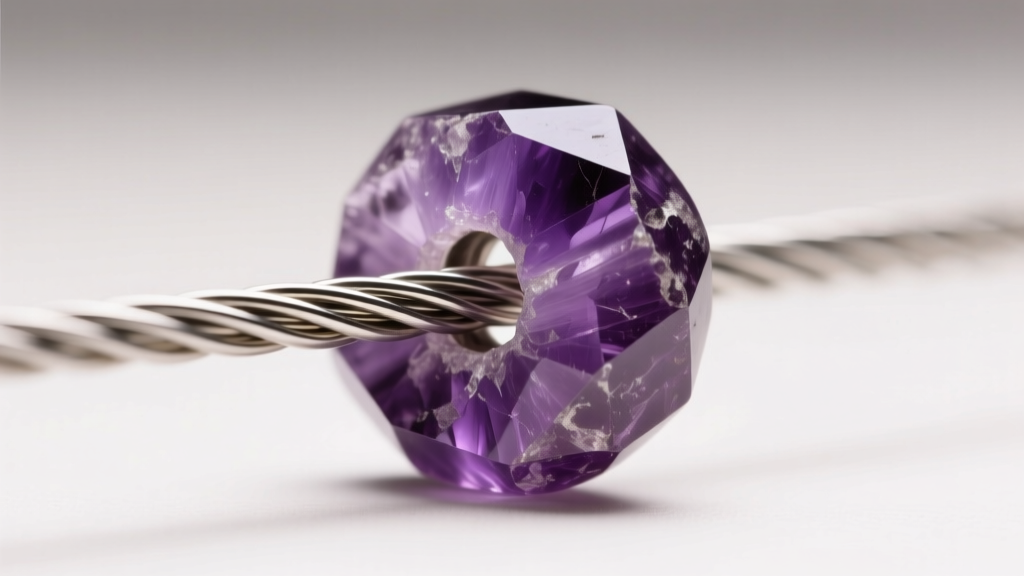
One of the most devastating issues an owner can face is a fading amethyst chip necklace. If your once-deep purple stones are turning pale, grayish, or even slightly yellowish, you are witnessing the alteration of the stone's color centers.
According to the Gemological Institute of America (GIA), the purple color in amethyst is caused by iron impurities and natural irradiation within the crystal lattice. Prolonged exposure to direct ultraviolet (UV) light or high heat can alter these color centers, permanently bleaching the stone. Chip necklaces are particularly vulnerable because the tumbling process used to create the chips can expose microscopic fractures to the surface, accelerating light penetration.
Preventative Storage Protocols
- Never dry in the sun: After cleaning, always pat your necklace dry with a microfiber cloth in the shade. Never leave it on a sunny windowsill to air dry.
- Use UV-blocking storage: Store the necklace in a lined jewelry box or an opaque, anti-tarnish ziplock bag. Avoid clear acrylic jewelry organizers if they sit in naturally lit rooms.
- Remove during high-heat activities: Take off your necklace before using saunas, hot yoga studios, or spending extended hours baking in a hot kitchen.
Cleaning Dull or Cloudy Chips Without Damage
Over time, skin oils, lotions, and environmental dust accumulate in the microscopic crevices of tumbled chip beads, giving the necklace a cloudy, lifeless appearance. Many people mistakenly reach for ultrasonic jewelry cleaners to solve this. Do not use an ultrasonic cleaner on an amethyst chip necklace.
As noted by mineralogical data from Mindat.org, amethyst frequently contains natural liquid inclusions and internal fractures. The high-frequency vibrations of an ultrasonic cleaner can cause these micro-fractures to expand, leading the chips to crack, cleave, or shed gritty quartz dust onto your skin.
The Safe Cleaning Method
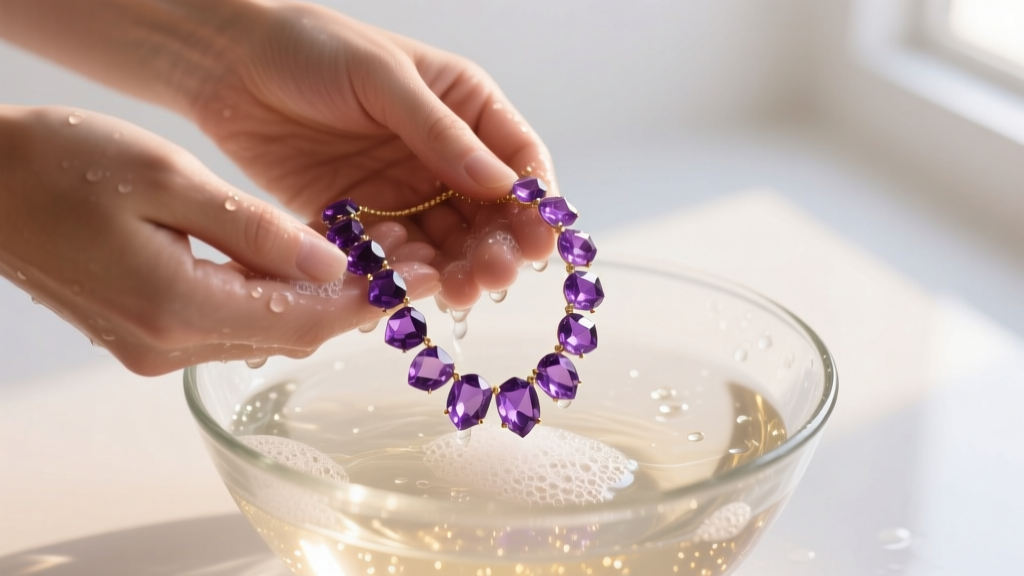
- Prepare a gentle bath: Fill a glass bowl with lukewarm (never hot) water and add two drops of mild, phosphate-free dish soap (like Dawn).
- Soak briefly: Submerge the necklace for no more than 3 to 5 minutes to loosen surface oils.
- Agitate gently: Use an extra-soft baby toothbrush to lightly brush the surface of the chips. Focus on the areas near the drill holes where grime accumulates.
- Rinse and dry: Rinse thoroughly under a gentle stream of lukewarm water. Lay the necklace flat on a clean microfiber towel to dry completely before storing.
Fixing Clasp and Crimp Bead Failures
If your stringing material is intact but the necklace keeps slipping off or breaking at the ends, your hardware is failing. Cheap spring-ring clasps often warp under the weight of a heavy chip necklace, and poorly crushed crimp beads will slide along the wire, causing the strand to unravel.
Upgrading Your Hardware
To troubleshoot end-point failures, you need to rebuild the terminal ends of the necklace using professional findings:
- Wire Guardians (French Wire): These tiny, horseshoe-shaped metal findings protect the beading wire from rubbing directly against the metal jump ring of the clasp. Without a wire guardian, the steel wire will eventually saw through the clasp ring.
- Sterling Silver Lobster Clasp: Upgrade to a 12mm or 15mm 925 sterling silver lobster clasp. The heavy chip beads require a secure locking mechanism that a 10mm base-metal spring ring simply cannot provide.
- Crimp Covers: After securing your crimp bead with a specialized crimping tool (which folds the metal into a neat, U-shape), use a 3mm crimp cover to hide the bead. This prevents the sharp edges of the crushed crimp from scratching your skin or snagging on clothing.
When to Seek Professional Jeweler Help
While restringing and cleaning an amethyst chip necklace is entirely manageable for a dedicated DIYer, there are scenarios where professional intervention is required. If your necklace features a graduated design (where chips are sorted by size from the clasp to the center) and the string breaks, re-sorting the chips requires a large bead board and immense patience. Furthermore, if the amethyst chips are interspersed with delicate pearls or soft organic beads like amber, a professional jeweler will know how to properly knot the silk between the varying materials to prevent them from grinding against one another.
By understanding the unique structural vulnerabilities of chip beads and implementing these targeted troubleshooting techniques, you can ensure your amethyst necklace remains a vibrant, durable, and cherished piece in your wardrobe for decades to come.


