Troubleshooting Your Blue Lapis Necklace: Fakes, Fading & Fixes
Is your blue lapis necklace fading or scratching? Learn expert troubleshooting for cleaning, restringing, and spotting fake lapis lazuli jewelry.

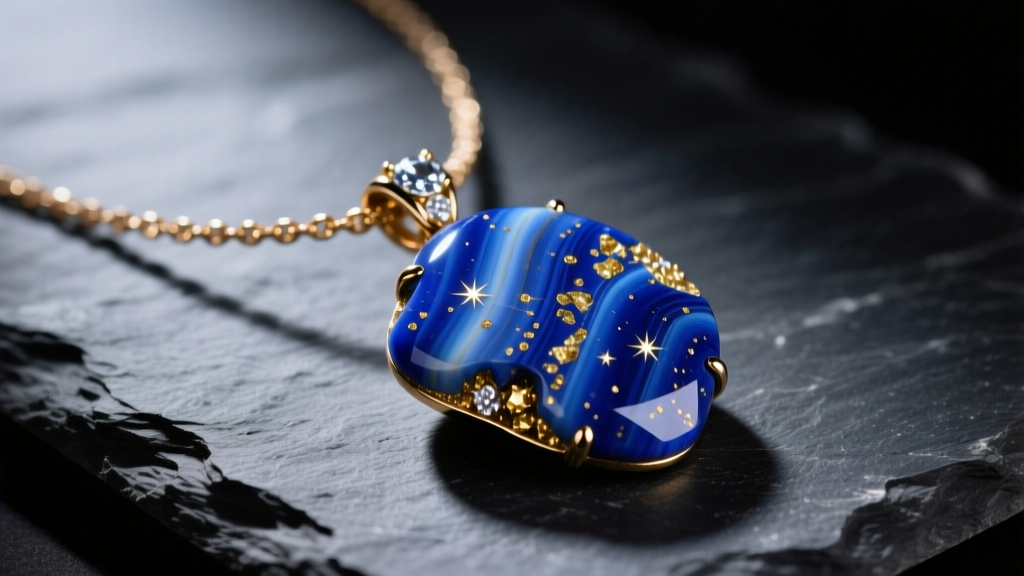
Lapis lazuli is not a single mineral, but a complex metamorphic rock composed primarily of lazurite (which provides the deep blue color), calcite (white webbing), and pyrite (golden flecks). Because it is a composite rock rather than a unified crystalline structure, a blue lapis necklace presents unique structural and chemical vulnerabilities. Whether you are dealing with sudden color fading, mysterious surface scratches, or a snapped strand, troubleshooting lapis requires an understanding of its specific gravity, porosity, and Mohs hardness. Below is a master guide to diagnosing and resolving the most common failures associated with lapis lazuli jewelry.
The Mohs Scale Dilemma: Why Your Lapis is Scratching
One of the most frequent complaints from collectors is the sudden appearance of micro-scratches and dull spots on their lapis beads or pendants. Lapis lazuli registers between 5 and 5.5 on the Mohs hardness scale. To put this in perspective, it is significantly softer than quartz (7) and vastly softer than diamond (10) or sapphire (9).
Diagnosing the Scratch Pattern
If your blue lapis necklace is scratched, examine the damage under a 10x jeweler's loupe. If the scratches are concentrated near the clasp, the culprit is likely the metal hardware. Stainless steel and sterling silver clasps can easily abrade lapis if they rest against the stone during storage. If the scratches are randomized across the beads, the necklace has likely been stored in a communal jewelry box alongside harder gemstones.
The Troubleshooting Fix
Do not attempt to polish lapis lazuli with standard jewelry polishing cloths infused with diamond or aluminum oxide compounds; these will strip the natural polish and leave a chalky residue. For minor surface scuffs, a lapidary professional will use a cerium oxide paste on a soft felt wheel to gently re-polish the stone without removing the pyrite inclusions. For deep gouges, the bead or cabochon must be re-cabbed (reshaped) by a gem cutter, which will slightly reduce its carat weight but restore the mirror finish.
Color Fading and Chalkiness: The Water Damage Problem
Lapis lazuli is highly sensitive to moisture and acidic environments. The white calcite veins running through the stone are essentially calcium carbonate, which is porous and reactive to mild acids. Human sweat has a pH ranging from 4.5 to 7.0, and everyday cosmetics, perfumes, and lotions contain alcohols and fatty acids that slowly dissolve the calcite matrix.
Why Your Lapis is Turning White or Gray
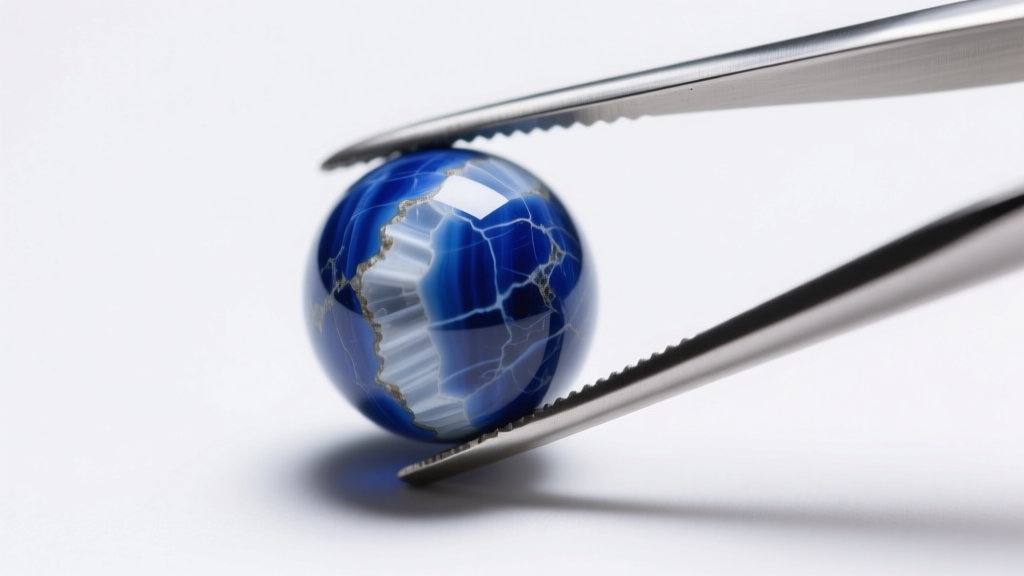
If the vibrant royal blue of your necklace is fading to a dull, chalky gray, the stone is suffering from chemical erosion. The lazurite itself is relatively stable, but the degradation of the surrounding calcite and the loss of the factory-applied wax or oil polish causes the stone to scatter light poorly, resulting in a faded appearance. According to mineralogical data from Mindat.org, prolonged exposure to water can also cause the pyrite (iron sulfide) inclusions to oxidize, leading to unsightly brown rust spots that bleed into the blue lazurite.
Restoring the Color
Once lapis has dried out and chalked, you cannot reverse the chemical damage, but you can restore the optical depth.
- The Temporary Fix: Apply a single drop of food-grade mineral oil to a microfiber cloth and gently buff the beads. The oil fills the microscopic pores left by the degraded calcite, temporarily restoring the deep blue saturation. This must be repeated every few months.
- The Permanent Fix: Send the necklace to a professional lapidary for a light tumble-polish using walnut shell media and a mild, non-acidic polishing agent to remove the damaged outer layer of the stone.
Never use ultrasonic cleaners or steamers on a blue lapis necklace. The high-frequency vibrations will shatter the stone along its natural calcite fault lines.
Authentication Troubleshooting: Spotting the Fakes
The market is saturated with lapis lazuli imitations. Because high-quality Afghan lapis (characterized by deep royal blue with minimal calcite) commands premium prices, manufacturers frequently use dyed howlite, dyed sodalite, or "Swiss lapis" (dyed jasper) to deceive buyers. The Gemological Institute of America (GIA) notes that synthetic Gilson lapis is also prevalent, though it lacks the natural randomness of pyrite inclusions.
The Acetone and UV Testing Framework
To troubleshoot a suspicious blue lapis necklace, perform these two non-destructive (or micro-destructive) tests:
- The Acetone Swab Test: Dip a cotton swab in pure acetone (nail polish remover) and rub it vigorously on an inconspicuous area, such as the back of a pendant or the edge of a bead hole. If the swab turns blue, the stone is dyed howlite or jasper. Genuine lazurite will not bleed color onto acetone.
- The UV Fluorescence Test: Shine a shortwave (254nm) UV flashlight on the stone. The calcite in natural lapis will often fluoresce with a faint chalky white or orange glow. Synthetic Gilson lapis and dyed sodalite typically show no reaction or exhibit a uniform, unnatural plastic glow from the binding resins.
| Material | Specific Gravity | Acetone Test | Visual Clues |
|---|---|---|---|
| Genuine Lapis | 2.7 - 2.9 | Negative (No dye) | Random pyrite flecks, uneven blue saturation |
| Dyed Howlite | 2.5 - 2.6 | Positive (Bleeds blue) | Dye concentrates in cracks, feels too light |
| Dyed Sodalite | 2.1 - 2.3 | Usually Negative | Lacks pyrite, heavier white veining, lower SG |
| Gilson Synthetic | 2.4 - 2.5 | Negative | Pyrite is artificially painted, unnaturally uniform |
Structural Failures: Restringing Heavy Lapis Beads
A major point of failure for vintage and bead-strung lapis necklaces is the snapping of the stringing material. Lapis is a dense rock; an 8mm round lapis bead weighs significantly more than an equivalent glass or quartz bead. Historically, jewelers strung lapis on silk thread with French knots. However, silk is a protein fiber that degrades, stretches, and rots when exposed to the acidic oils from the wearer's neck, eventually leading to catastrophic strand failure.
Upgrading to Modern Micro-Fused Wire
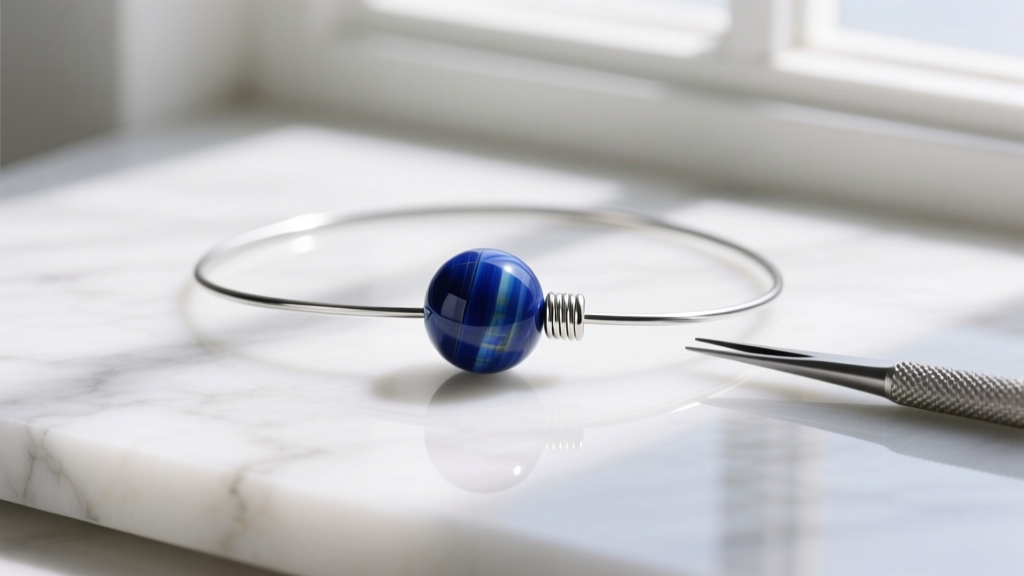
If your blue lapis necklace requires restringing, abandon silk entirely. The modern standard for heavy, porous gemstones is a 49-strand micro-fused stainless steel beading wire, specifically in a 0.018-inch gauge.
- Why 49-strand? The 49-strand wire offers the drape and flexibility of silk but possesses the tensile strength of steel, preventing the necklace from kinking when hung on a jewelry hook.
- Why 0.018-inch? Lapis beads are often drilled with small, uneven holes (typically 0.8mm to 1.0mm). A 0.018-inch wire (approx. 0.45mm) fits comfortably through the drill hole while leaving enough clearance for the bead to move freely without stressing the wire.
Protecting the Drill Holes
Steel wire will eventually act like a saw blade against the soft interior of the lapis bead hole, especially at the clasp where tension is highest. To troubleshoot this, you must use stainless steel or sterling silver wire protectors (also known as French wire or bullion loops) at the clasp connection points. Additionally, use a nylon-lined crimp bead to secure the wire, as bare metal crimps can crush and weaken the steel strands if applied with excessive force.
Preventative Care Checklist for Lapis Lazuli
To ensure your blue lapis necklace survives for generations without requiring major lapidary intervention, adhere to this strict maintenance protocol:
- The "Last On, First Off" Rule: Always put your lapis necklace on after applying makeup, hairspray, and perfume. Remove it immediately upon returning home to minimize sweat exposure.
- Isolated Storage: Store the necklace flat in a dedicated, soft flannel pouch. Never hang it by the clasp, as the constant gravitational pull on a single strand of wire or thread will cause permanent stretching and kinking.
- Dry Wiping Only: After wearing, gently wipe the beads with a dry, lint-free microfiber cloth to remove skin oils. If absolutely necessary, use a barely damp cloth with distilled water, but dry it immediately.
By understanding the mineralogical quirks of lazurite, calcite, and pyrite, you can effectively troubleshoot any issue your blue lapis necklace presents, ensuring it remains a vibrant, structurally sound centerpiece in your collection.


