How to Determine the Perfect Necklaces Length: Step-by-Step Guide
Learn how to measure and choose the perfect necklaces length for any neckline. Step-by-step guide to standard sizes, layering math, and pendant pairing.


Finding the ideal necklaces length is less about guesswork and more about applied geometry. The distance between your collarbone and the hem of your top dictates visual proportion, while the weight of your chosen pendant alters how a chain actually drapes. According to Angara's jewelry education guide, a chain that looks perfect on a mannequin can easily look disproportionate on a human frame due to variations in neck circumference, shoulder slope, and bust size. Whether you are shopping for a delicate 14k gold cable chain or a heavy sterling silver rope chain, mastering the metrics of necklaces length ensures your jewelry complements your anatomy rather than fighting it.
The Standard Necklaces Length Chart & Anatomical Landings
Before measuring, you must understand the industry-standard terminology. Jewelers categorize necklaces length into six distinct tiers. However, these measurements assume a standard 14-inch neck circumference. If your neck measures 15 inches, a standard 16-inch choker will fit like a tight collar.
| Standard Length | Industry Name | Anatomical Landing Point | Best Pendant Weight |
|---|---|---|---|
| 14 Inches | Collar | Wraps tightly around the base of the neck | 0g - 2g (Beads only) |
| 16 Inches | Choker | Rests exactly on the collarbone | 2g - 5g (Small charms) |
| 18 Inches | Princess | Drops just below the collarbone (clavicle) | 5g - 12g (Standard pendants) |
| 20 - 22 Inches | Matinee | Falls at the upper bustline / neckline | 10g - 20g (Statement pieces) |
| 24 - 26 Inches | Opera | Rests on the sternum, below the bust | 15g+ (Heavy medallions) |
| 30+ Inches | Rope / Lariat | Falls to the navel or can be double-wrapped | N/A (Usually bead/pearl strands) |
Step-by-Step: How to Measure for Your Custom Necklaces Length
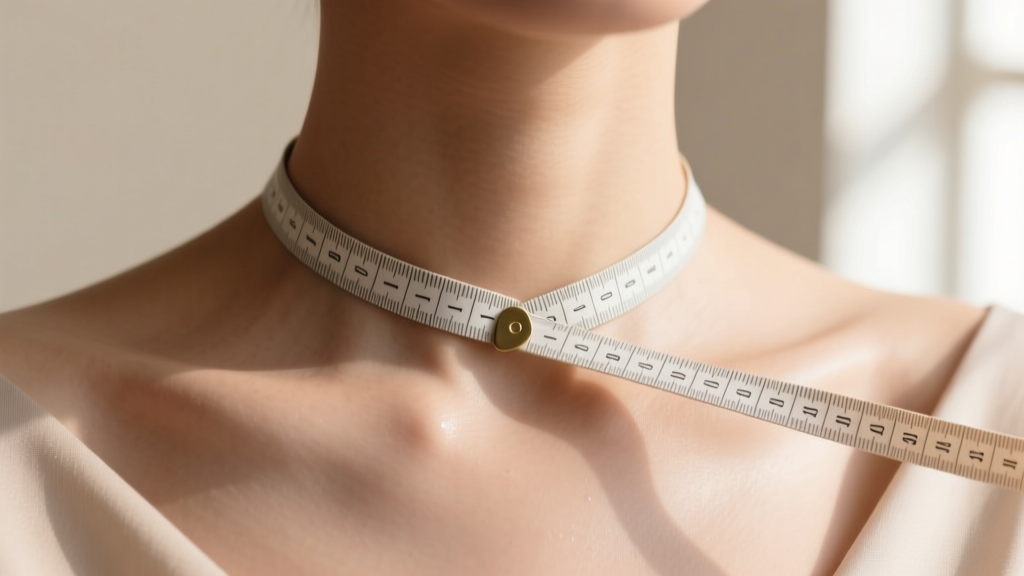
Relying on a soft tailor's tape measure wrapped tightly around your neck is a common mistake that leads to purchasing chains that sit too high. To accurately determine your personal necklaces length, follow this three-step physical test.
Step 1: The String and Mirror Method
Cut a piece of non-stretchy string or twine to about 36 inches. Stand in front of a mirror wearing the exact neckline (e.g., a crew-neck t-shirt or a V-neck blouse) you plan to pair with the jewelry. Drape the string around your neck and adjust it until the bottom loop hits your desired visual anchor point. Pinch the string where it meets the base of your neck, remove it carefully, and measure the pinched section with a rigid metal ruler.
Step 2: The Pendant Drop Calculation
If you intend to wear a pendant, you must subtract the pendant's drop from your total chain length. A 30mm (approx. 1.2 inch) pendant on a bail will pull the center of an 18-inch chain down by roughly 1.5 inches. Therefore, if you want the bottom of the pendant to rest exactly at 18 inches, you must purchase a 16.5-inch chain. According to Kay Jewelers' necklace guide, failing to account for pendant drop is the primary reason customers return chains for being 'too long'.
Step 3: Factoring in Bust and Shoulder Slope
Chains do not hang in a perfect semi-circle; they are pulled outward by the bust and downward by sloping shoulders. If you have a prominent bust, an 18-inch chain will ride up in the front, effectively shortening the visual drop by up to an inch. In this scenario, sizing up to a 20-inch Matinee length will yield the visual result of a standard Princess length.
Proportional Harmony: Matching Length to Necklines
The golden rule of styling is that your jewelry should never compete with the hem of your garment. Here is how to map your measurements to common wardrobe staples:
- Crew Necks: The neckline sits high and tight. You have two options: wear a 14-inch collar that sits entirely above the fabric, or a 22-inch Matinee that drops entirely below it. An 18-inch chain will tangle with the crew neck hem, creating visual clutter.
- V-Necks: The ideal necklaces length mimics the angle of the V. An 18-inch or 20-inch chain with a Y-drop or teardrop pendant perfectly frames the exposed skin without overlapping the garment's stitching.
- Off-the-Shoulder / Boat Necks: These expose the collarbones and shoulders. A 16-inch choker or a multi-strand 14-inch collar provides a striking contrast against the wide horizontal expanse of bare skin.
- Button-Down Shirts: Wear the shirt unbuttoned to the mid-chest and layer a 24-inch Opera length chain underneath. The long chain creates a vertical line that elongates the torso.
The Layering Formula: Calculating Multi-Strand Lengths
Layering is a dominant trend, but stacking chains without mathematical precision results in a tangled mess. To achieve a flawless cascade, you must adhere to the 'Minimum Gap Rule'.
The Minimum Gap Rule: When layering, there must be a minimum 2-inch difference between each chain's length to prevent the clasps from migrating to the front and tangling. For optimal visual separation, a 3-inch to 4-inch gap is recommended.
The 2026 Layering Blueprint:
- Base Layer (Choker): 15 inches (Snug, 1mm cable chain, no pendant)
- Mid Layer (Princess): 18 inches (3-inch gap, 1.5mm box chain, small 5mm coin pendant)
- Anchor Layer (Matinee): 22 inches (4-inch gap, 2.5mm rope chain, heavy 15g geometric pendant)
Hardware & Gauge: When Length Dictates Chain Thickness
The longer the necklaces length, the more kinetic energy the chain absorbs as it swings against your body. A 14-inch collar remains relatively static, meaning a delicate 0.9mm chain is sufficient. However, a 24-inch Opera chain swings freely, generating momentum that puts immense shear stress on the links and the clasp.
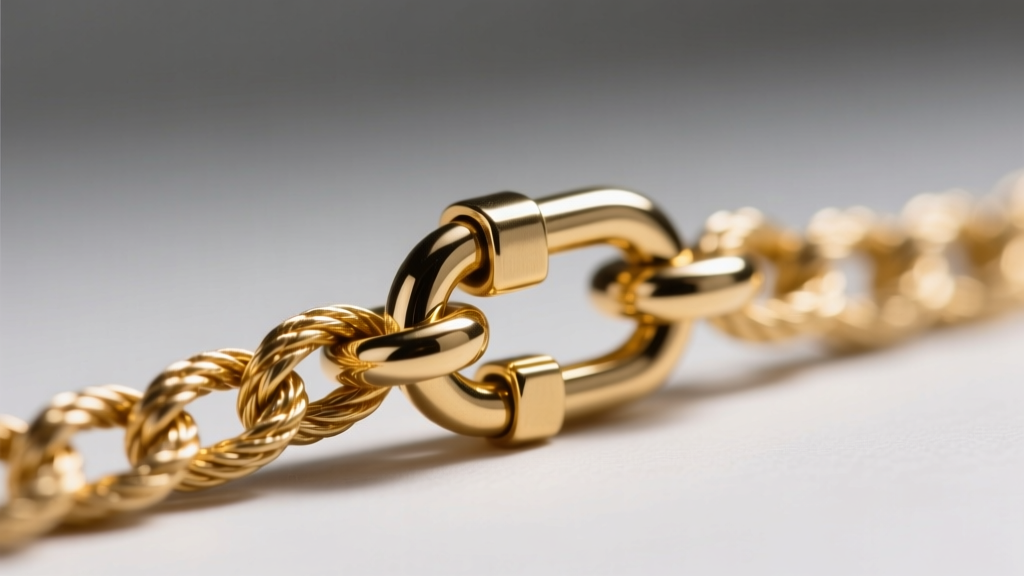
If you are wearing a 24-inch chain with a heavy 20-gram pendant, a standard spring-ring clasp will eventually fail. You must upgrade to a lobster claw or a magnetic neodymium clasp rated for at least 15 lbs of tensile strength. Furthermore, the chain gauge must scale with the length and weight: never hang a pendant heavier than 10 grams on a chain thinner than 1.5mm, regardless of the metal's karat purity.
Quick Fixes for Incorrect Lengths
If you have already purchased a chain and the necklaces length is slightly off, you do not necessarily need to visit a jeweler for a solder job. You can purchase a 2-inch to 4-inch chain extender (typically a 1.5mm cable chain with a lobster clasp on one end and a jump ring on the other). These cost between $15 and $35 in 14k gold-filled materials and allow you to dynamically adjust an 18-inch chain to 20 or 22 inches depending on your daily outfit, providing ultimate versatility without compromising the structural integrity of the original piece.


