Troubleshoot Your Chunky Gold Heart Necklace Issues
Is your chunky gold heart necklace flipping, pulling, or breaking? Learn expert troubleshooting tips for chain weight, bail sizing, and clasp upgrades.


The chunky gold heart necklace is a timeless statement piece, blending vintage 90s nostalgia with modern luxury. However, the very traits that make these pendants desirable—their substantial size, bold silhouettes, and heavy gold content—also introduce a unique set of structural and ergonomic challenges. Whether you are dealing with a pendant that constantly flips backward, a chain that stretches under the weight, or a clasp that refuses to stay secure, these issues are incredibly common.
As jewelry construction experts, we see these failure modes daily. Below, we break down the exact physics behind heavy pendant problems and provide actionable, metallurgical, and mechanical troubleshooting steps to fix your favorite statement piece.
The Physics of a Heavy Heart Pendant
Before troubleshooting, you must understand the weight distribution of your jewelry. A standard 25mm x 25mm solid 14k gold heart pendant with a 5mm depth can easily weigh between 18 and 28 grams. According to the Gemological Institute of America (GIA), the density of 14k gold alloys makes them highly durable but exceptionally heavy in high-volume castings. This concentrated mass creates a low, swinging center of gravity that tests the tensile strength of your chain and the friction of your bail.
Issue 1: The Pendant Keeps Flipping Over
There is nothing more frustrating than adjusting your necklace every five minutes because the heart pendant has flipped to show its flat, unpolished back. This happens when the chain moves too freely through the pendant's bail (the loop at the top).
The 80% Bail-to-Chain Rule
The most common cause of flipping is a mismatch between the chain's width and the bail's inner diameter. If you have a 6mm inner-diameter bail but are wearing a 2mm cable chain, the pendant has too much lateral and rotational freedom. The Fix: Upgrade your chain so that its width fills at least 80% of the bail's inner diameter. A 4.5mm to 5mm chain inside a 6mm bail creates enough friction to keep the heart facing forward while still allowing it to slide for adjustment.
The Counterweight Method
If you love your current chain and refuse to change it, you can alter the necklace's center of gravity. Have a jeweler solder a small, solid 3mm to 5mm gold bead onto the chain exactly opposite the pendant (at the nape of your neck). This counterweight pulls the back of the chain down, forcing the heavy heart to remain upright at the front.
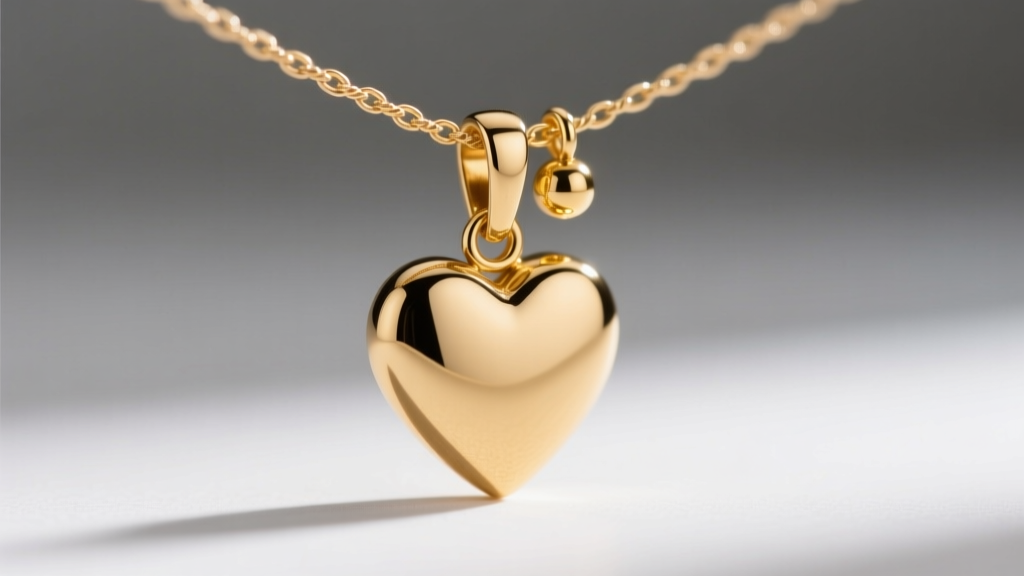
Issue 2: Chain Stretching and Clasp Snapping
A 25-gram pendant generates significant kinetic force when you walk, bend over, or catch the necklace on clothing. Standard spring-ring clasps and lightweight chains are simply not engineered for this dynamic load.
Upgrading the Clasp Mechanism
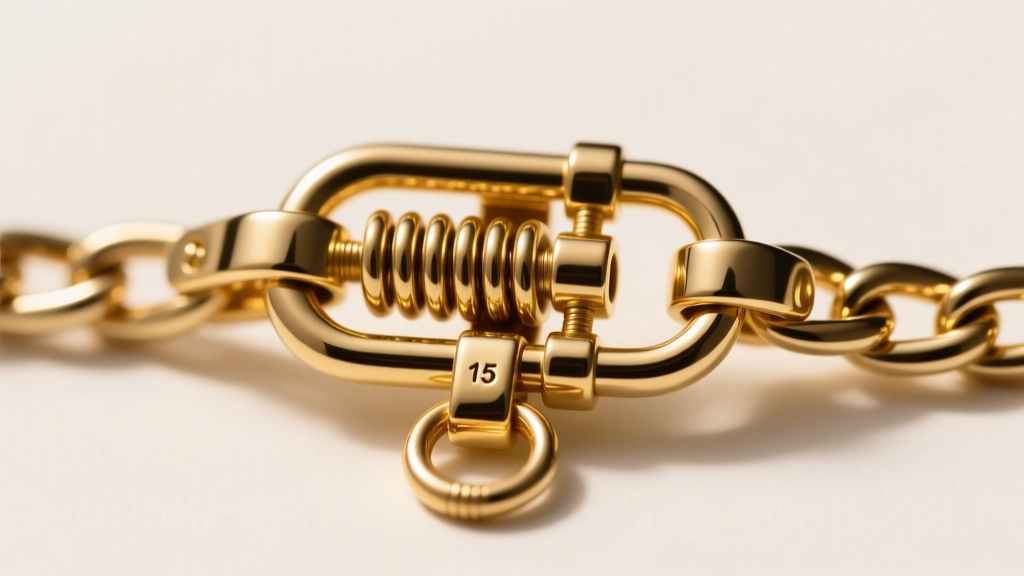
Spring ring clasps are rated for static loads of roughly 5 to 8 grams. When subjected to the swinging weight of a chunky heart, the internal spring mechanism fatigues, or the tiny soldered ring on the clasp pulls apart. You must upgrade to a 12mm to 15mm lobster clasp or a box clasp with a figure-8 safety catch. Lobster clasps feature a heavier internal tension spring and a thicker cast body that can withstand up to 40 grams of dynamic pull.
Chain Tensile Strength Comparison
Not all chain links are created equal. Hollow chains will crush, and delicate links will ovalize (stretch into ovals) under heavy pendants. Refer to the table below to match your chain style to your pendant's weight.
| Chain Style | Recommended Width | Max Pendant Weight (Solid 14k) | Structural Notes |
|---|---|---|---|
| Miami Cuban Link | 4.0mm - 6.0mm | Up to 45g | Interlocking flat links distribute weight evenly; highly resistant to stretching. |
| Wheat (Spiga) | 3.0mm - 5.0mm | Up to 35g | Woven oval links offer excellent multi-directional tensile strength. |
| Solid Rope | 3.5mm - 5.0mm | Up to 30g | Twisted links provide great drape, but ensure it is solid-core, not hollow. |
| Standard Cable | 2.0mm - 3.0mm | Under 12g | Prone to ovalization and snapping under heavy, chunky pendants. |
Issue 3: Hollow Gold Dents and Crushing
To make a chunky gold heart necklace affordable, many manufacturers use electroforming to create hollow gold jewelry. These pieces look massive but weigh a mere 3 to 6 grams. While great for your neck, they are a nightmare to maintain.
Expert Warning: Hollow gold has a paper-thin outer shell. If dropped on a tile floor or pressed against a hard surface, it will dent. Unlike solid gold, hollow electroformed pieces usually cannot be soldered or hammered out by a bench jeweler without collapsing the internal resin or empty cavity.
Troubleshooting Hollow Dents: If your hollow heart has a minor depression, do not attempt to push it out from the inside with a needle; you will puncture the gold. Instead, take it to a specialist who can use specialized micro-suction tools or carefully inject a hardening jewelry epoxy to stabilize the dent from the inside before gently buffing the exterior. For long-term durability, always verify the gram weight before purchasing a chunky pendant; a 25mm solid heart should weigh no less than 14 grams.
Issue 4: Neck Strain and Collarbone Bruising
Wearing a 30-gram pendant on a thin, 2mm chain concentrates all that weight onto a tiny surface area of your cervical spine and collarbones. Over an 8-hour day, this acts like a wire cutting into your skin, causing redness, bruising, and muscle fatigue.
Ergonomic Weight Distribution
The solution is surface area distribution. According to guidelines from Jewelers of America, proper jewelry fit is essential for comfort and skin health. By switching to a wider, flatter chain profile—such as a 5mm Figaro or a flat Herringbone chain—you spread the 30-gram load across a wider band of skin at the nape of your neck. Furthermore, ensure your necklace length is correctly sized; a 16-inch choker length will bear the weight on the delicate front of the neck, while an 18-inch or 20-inch princess/maternity length allows the weight to rest securely on the upper chest and sternum.
The Ultimate Maintenance Checklist
To keep your heavy heart necklace functioning perfectly, follow this bi-annual troubleshooting checklist:
- Inspect the Bail Ring: Check where the bail rubs against the chain. Heavy pendants act like saws and can wear through the bottom of the bail loop over 2-3 years. Have a jeweler add a tiny drop of solder to reinforce this friction point.
- Test the Clasp Spring: Flick the lever of your lobster clasp. It should snap back instantly with a sharp 'click'. If it returns sluggishly, the internal spring is failing and the clasp must be replaced before you lose your pendant.
- Check Jump Rings: The jump ring connecting the clasp to the chain must be soldered shut. If it is an open split-ring, the heavy swinging heart will eventually twist it open and detach.
- Avoid Ultrasonic Cleaners on Hollow Pieces: If your chunky heart is hollow, the high-frequency vibrations of an ultrasonic cleaner can cause micro-fractures in the thin gold shell. Stick to warm water, mild dish soap, and a soft baby toothbrush.
By addressing the mechanical realities of heavy jewelry, you can ensure your chunky gold heart necklace remains a comfortable, secure, and flawless staple in your collection for decades to come.


