Troubleshooting a Flipping Ladies Pendant Necklace and Tangled Chains
Learn how to troubleshoot a flipping ladies pendant necklace, prevent chain tangling, and fix bail wear with expert jewelry repair techniques.

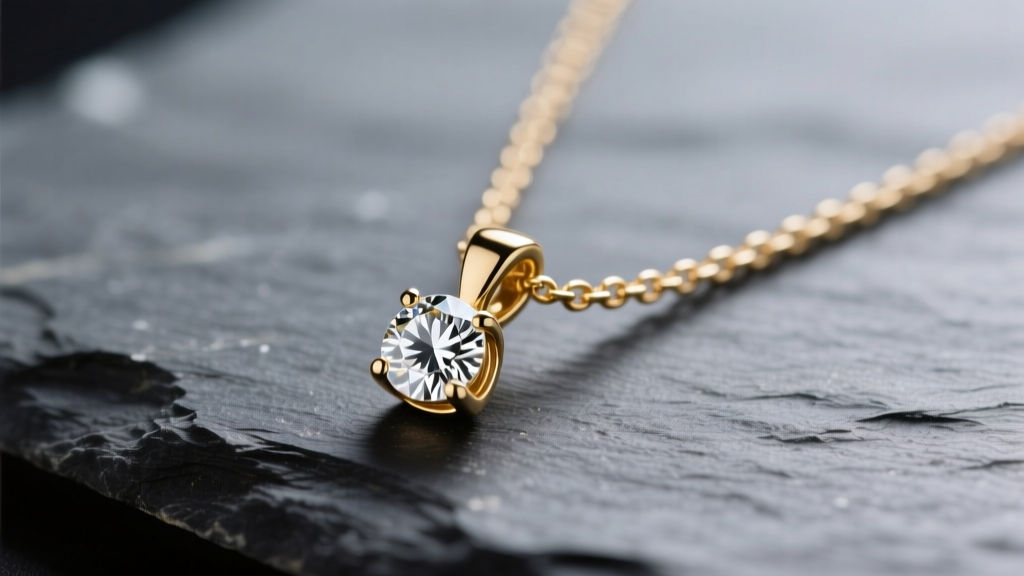
There is nothing more frustrating than investing in a beautiful ladies pendant necklace, only to find the pendant constantly flipping upside down or the chain tangling into an impossible knot by midday. While these issues are incredibly common, they are rarely the result of bad luck. In almost every case, flipping, tangling, and premature bail wear are rooted in basic physics, metallurgical mismatches, or incorrect component sizing.
As jewelry construction evolves in 2026, with advancements in laser-welding and micro-pave settings, the fundamental mechanics of how a pendant interacts with its chain remain unchanged. Below is a comprehensive, expert-level troubleshooting guide to diagnosing and permanently fixing the most common issues plaguing your favorite necklaces.
The Physics of Pendant Flipping (and How to Stop It)
When a pendant refuses to stay face-forward, the issue is almost always a mismatch between the chain's thickness and the bail's inner diameter, or an off-center center of gravity. If you have a heavy, bottom-weighted gemstone pendant paired with a thick chain and a wide bail, the pendant has too much rotational freedom. It will flip every time you lean forward or adjust your clothing.
Center of Gravity and Bail Sizing
To stabilize a flipping ladies pendant necklace, you must restrict the rotational axis. The ideal ratio is a bail inner diameter that is no more than 1.5 times the width of the chain. For example, if you are using a 1.2mm cable chain, your bail's inner opening should not exceed 2.0mm.
- The Silicone O-Ring Fix: If your bail is too large and you cannot replace it, purchase 1.5mm inner-diameter clear silicone jewelry o-rings. Slipping one onto the chain on either side of the bail acts as a friction stopper, preventing the pendant from sliding and flipping.
- The Chain Swap: If the pendant is heavy, avoid stiff chains like box or herringbone. A flexible 1.2mm to 1.5mm rope chain will drape better and allow the pendant's center of gravity to naturally pull it face-forward.
Diagnosing Chain Tangling and Kinking
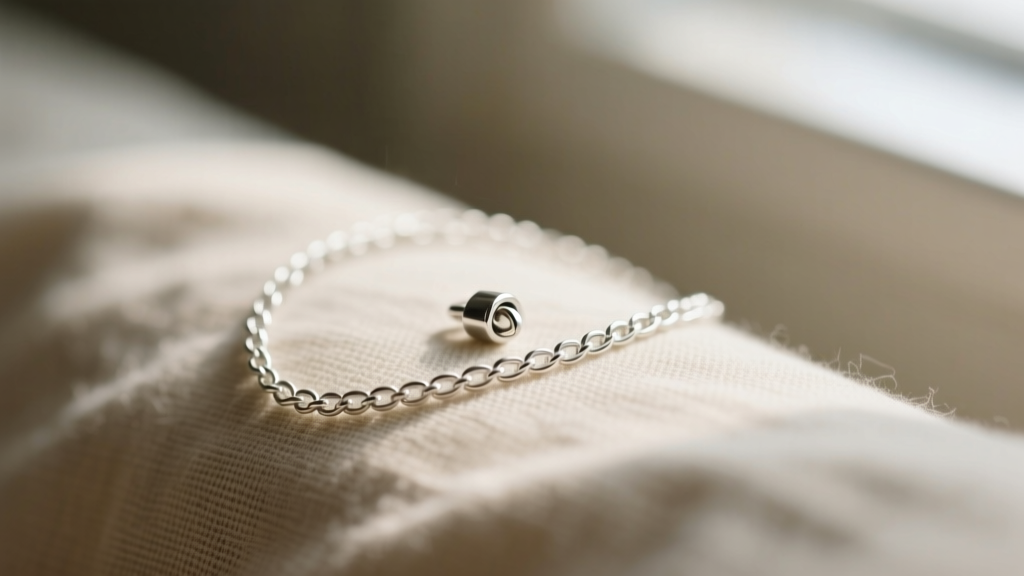
Tangling is heavily dependent on the chain's link geometry. Certain styles are structurally prone to kinking, which then catches on hair, sweaters, and other jewelry. According to the Jewelers of America, chains with rigid, interlocking geometric links require meticulous care, whereas helical structures resist knotting naturally.
| Chain Style | Structure Type | Tangle/Kink Risk | Best Bail Pairing |
|---|---|---|---|
| Box Chain | Geometric Interlocking | High (Prone to sharp kinks) | Wide, flat bails |
| Snake Chain | Tight Metal Bands | High (Kinks permanently) | Smooth, rounded bails |
| Rope Chain | Helical Twisted Links | Low (Highly flexible) | Standard round bails |
| Wheat Chain | Braided Oval Links | Very Low (Resists catching) | Textured or ribbed bails |
| Cable Chain | Uniform Oval Links | Moderate (Can catch on hair) | Small, lightweight bails |
Troubleshooting Tip: If your current chain constantly knots at the clasp, the issue is likely the clasp itself. Standard spring-ring clasps are lightweight and tend to flip around to the front of the neck, dragging the chain with them. Upgrading to a heavier lobster clasp or adding a 2mm counterweight tag near the clasp will keep the closure anchored at the nape of your neck, drastically reducing chain migration and tangling.
Bail Friction and Metal Mismatching
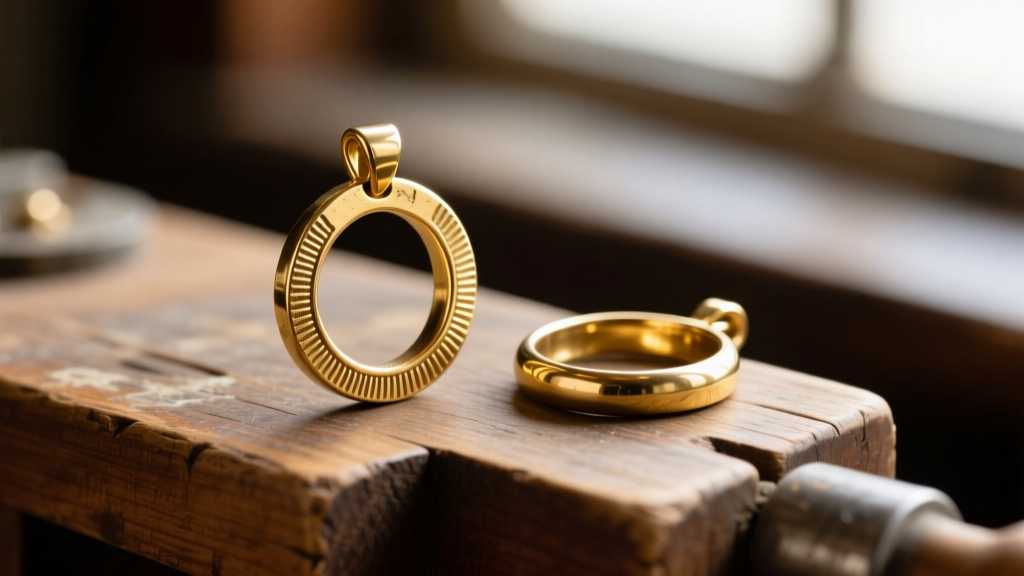
The bail—the loop that connects the pendant to the chain—is the highest-stress point on any necklace. A frequent failure mode we see in repair shops is the bail wearing completely through, causing the pendant to detach and fall off. This is often accelerated by metal mismatching.
The 18-Gauge Rule for Daily Wear
For a ladies pendant necklace worn daily, the bail should be cast or stamped at a minimum of 18-gauge (approximately 1.02mm thick). Anything thinner, such as 22-gauge sheet metal bails often found on mass-produced fashion jewelry, will succumb to friction wear within 12 to 18 months.
Furthermore, mixing metals creates a micro-abrasive environment. If you thread a solid 14k gold chain through a gold-filled or gold-plated brass bail, the harder solid gold chain acts like a file against the softer plated surface. Within months, the plating will wear away, exposing the brass core. Not only will this cause green discoloration on your skin, but the exposed brass will oxidize and become brittle, leading to a sudden snap. Always match your chain and bail metallurgy exactly—solid 14k with solid 14k, or platinum with platinum. The Gemological Institute of America (GIA) frequently notes that alloy hardness varies wildly between karats and plating bases, making uniform metal pairing essential for longevity.
Step-by-Step Knot Removal for Delicate Chains
When a 1.0mm or thinner chain tangles, pulling it will only tighten the microscopic knots, leading to metal fatigue and broken links. Do not use your fingernails, as the natural oils and microscopic ridges can snag delicate links. Instead, use the jeweler's needle-and-oil method:
- Prepare the Surface: Lay the necklace flat on a hard, non-porous surface like a glass tray or ceramic plate. Good lighting is essential.
- Apply Lubricant: Place a single drop of baby oil, mineral oil, or specialized jewelry detangling fluid directly onto the knot. Avoid olive oil or lotions, which leave sticky residues that attract dirt.
- The Needle Technique: Take two fine sewing needles (or specialized jewelry knot-picking tools). Insert the tip of the first needle into the exact center of the knot to create slack. Use the second needle to gently tease the outermost link outward.
- Cleanse: Once untangled, wash the chain in a bowl of warm water with a few drops of mild dish soap to remove the oil, then pat dry with a microfiber cloth.
Summary Checklist for a Flawless Drape
To ensure your ladies pendant necklace drapes beautifully and withstands daily wear, run through this quick diagnostic checklist before purchasing or repairing your jewelry:
- Bail-to-Chain Ratio: Is the bail inner diameter less than 1.5x the chain width to prevent flipping?
- Metal Uniformity: Are the chain and bail made of the exact same metal karat and base to prevent friction wear?
- Gauge Thickness: Is the bail at least 18-gauge (1.0mm) thick for daily wear durability?
- Clasp Counterweight: Does the clasp have enough weight (or a counterweight tag) to stay anchored at the back of the neck?
- Chain Geometry: Have you selected a helical chain (rope/wheat) if you are prone to tangling and hair snagging?
By understanding the structural mechanics of your jewelry, you can transition from constantly adjusting your necklace to enjoying a flawless, secure drape every time you wear it.


