Expert Care Guide: Cleaning Your Lapis Lazuli Necklace
Discover expert tips to clean, protect, and maintain your lapis lazuli necklace. Learn safe washing methods to preserve its pyrite inclusions and deep blue hue.

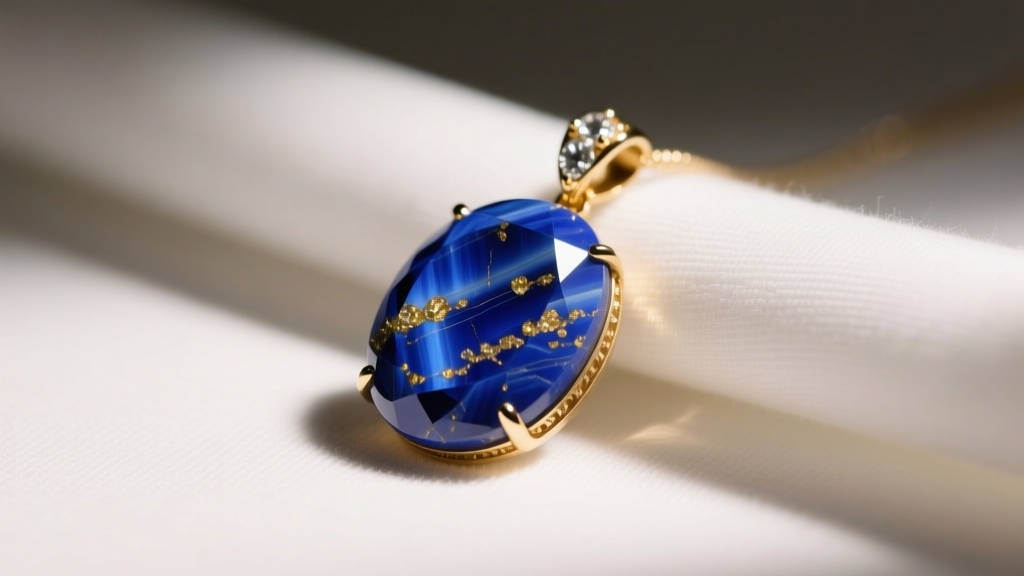
A lapis lazuli necklace is more than just a piece of jewelry; it is a wearable slice of ancient geological history. Prized for its deep, celestial blue hue and striking golden flecks, lapis lazuli has been a cornerstone of fine jewelry for millennia. However, as any seasoned gemologist will tell you, this stunning material is notoriously temperamental when it comes to maintenance. Unlike hard, non-porous gemstones such as diamonds or sapphires, lapis lazuli is a complex rock aggregate that requires a highly specific, gentle approach to cleaning and care.
In this comprehensive guide, we will break down the exact mineralogical reasons why lapis lazuli demands special attention, outline the destructive cleaning methods you must avoid at all costs, and provide a meticulous, step-by-step protocol to safely restore your necklace to its original luster without damaging the stone or its metal settings.
The Mineralogy of Lapis: Why It Demands Special Care
To understand how to clean lapis lazuli, you must first understand what it actually is. Lapis lazuli is not a single mineral; it is a metamorphic rock composed primarily of lazurite (which provides the intense blue color), calcite (the white streaks), and pyrite (the metallic golden flecks). According to mineralogical data from Mindat.org, this varied composition creates a stone with inherent structural vulnerabilities.
The overall Mohs hardness of lapis lazuli ranges from 5 to 6, making it relatively soft and highly susceptible to scratching. More importantly, the stone is naturally porous. The calcite inclusions are particularly problematic, as calcite is highly reactive to acids and has a much lower Mohs hardness of 3. Furthermore, the golden pyrite inclusions are iron sulfide. When exposed to harsh chemicals, pyrite can degrade, pit, or release trace amounts of sulfur, permanently marring the surface of your necklace. Finally, many lower-grade lapis stones on the market are dyed to enhance their color; aggressive cleaning will strip this dye, leaving you with a pale, mottled gray-blue stone.
The Golden Rule: What NEVER to Do
Before discussing how to clean your lapis lazuli necklace, we must establish a strict list of prohibitions. The Gemological Institute of America (GIA) explicitly warns against several common jewelry cleaning methods that will instantly ruin this specific gemstone.
- Never use ultrasonic cleaners: The high-frequency vibrations can easily fracture the stone along its natural cleavage planes, particularly where the softer calcite meets the harder lazurite.
- Never use steam cleaners: Lapis lazuli is highly sensitive to thermal shock. Sudden temperature changes from steam can cause internal fracturing and permanent clouding.
- Never use commercial silver dips or acids: If your lapis is set in tarnished sterling silver, avoid liquid silver dips at all costs. These thiourea-based acidic solutions will aggressively etch the calcite inclusions and dissolve the pyrite flecks.
- Never use abrasive polishing cloths: Cloths embedded with jeweler's rouge or diamond dust will scratch the polished surface of the lazurite, leaving microscopic grooves that trap dirt and dull the stone's luster.
Step-by-Step Safe Cleaning Protocol
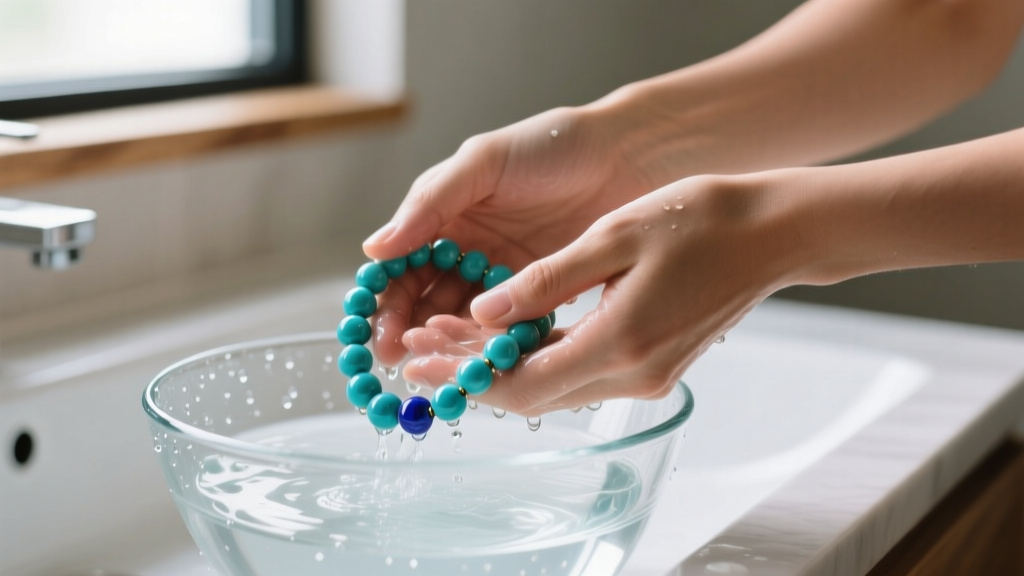
When your lapis lazuli necklace accumulates skin oils, cosmetic residue, or environmental dust, it requires a gentle, pH-neutral cleaning process. Follow this exact protocol to ensure the safety of the porous stone.
- Dry Dusting First: Airborne dust often contains microscopic quartz particles (Mohs hardness 7). If you wipe a dusty stone with a wet cloth, you will grind these quartz particles into the lapis, causing micro-scratches. Always begin by gently brushing the necklace with a clean, ultra-soft makeup brush or a dry microfiber cloth to remove loose particulate matter.
- Prepare a Neutral Solution: Fill a small glass bowl with lukewarm distilled water. Tap water contains chlorine and dissolved minerals that can leave deposits in the stone's pores. Add exactly one drop of pH-neutral baby shampoo or mild castile soap. Avoid any detergents containing degreasers, citrus extracts, or ammonia.
- The Gentle Agitation: Submerge the necklace for no more than 60 seconds. Do not let the stone soak for extended periods, as water can seep into microscopic fissures and weaken the stone's internal matrix or degrade the stringing material.
- Targeted Brushing: Using an extra-soft baby toothbrush, gently sweep the bristles across the surface of the beads or pendant. Pay special attention to the back of the stone and the areas where the lapis meets the metal setting, as this is where sebum and dead skin cells accumulate.
- Rinsing and Drying: Rinse the necklace briefly under a gentle stream of lukewarm distilled water. Immediately pat it dry with a lint-free microfiber towel. Do not allow the necklace to air dry, as evaporating water will leave mineral spots trapped inside the porous surface.
Maintaining the Metal Settings and Pyrite Flecks
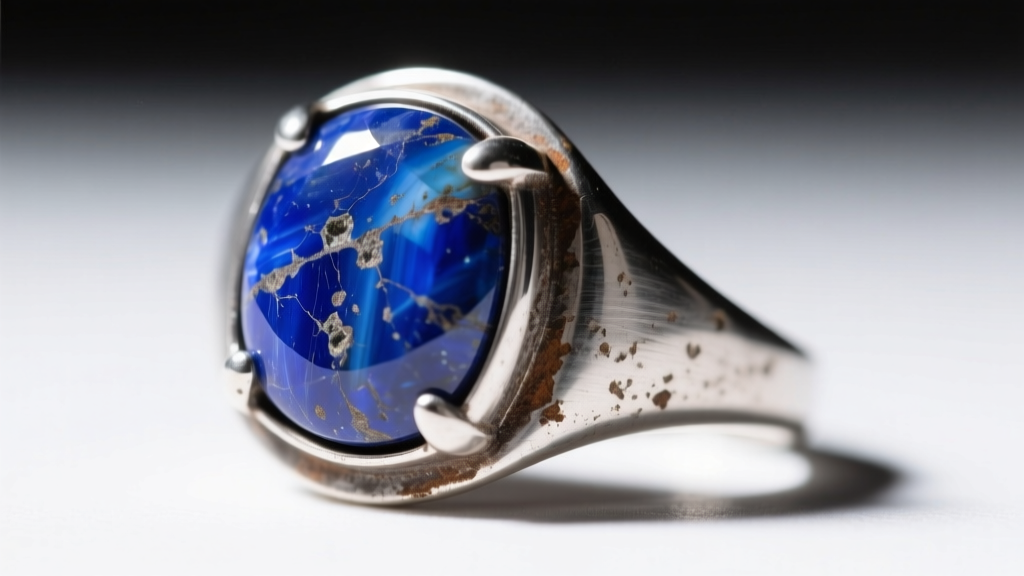
Cleaning the metal setting of a lapis lazuli necklace requires a delicate balancing act. You want to remove tarnish from the silver or gold without exposing the adjacent gemstone to polishing compounds. If your lapis is set in sterling silver, oxidation is inevitable.
To clean the setting, apply a tiny amount of non-abrasive silver polish to a cotton swab. Carefully trace the metal bezel or prongs, ensuring the swab does not touch the lapis lazuli. If any polish accidentally smears onto the stone, wipe it away immediately with a damp cloth. For gold settings, a simple wipe with a soft, untreated jeweler's cloth is usually sufficient to restore the shine without risking chemical transfer to the porous gemstone.
Storage and Environmental Protection
Proper storage is just as critical as the cleaning process. Because lapis lazuli is relatively soft and porous, how you store your necklace when it is not being worn will dictate its lifespan. Review the environmental hazards below and adjust your storage habits accordingly.
| Environmental Hazard | Effect on Lapis Lazuli | Prevention Strategy |
|---|---|---|
| Direct Sunlight | Can fade dyed stones and dehydrate natural oils | Store in an opaque, lined jewelry box |
| High Humidity | Promotes silver tarnish and degrades silk threads | Use silica gel packets in your storage drawer |
| Harder Gemstones | Causes deep scratches from diamonds or sapphires | Store in individual soft flannel pouches |
| Cosmetics and Perfume | Clogs pores and chemically alters the polish | Always put the necklace on after applying scents |
Restringing and Long-Term Maintenance
If your lapis lazuli necklace is a beaded strand rather than a single pendant on a metal chain, you must monitor the stringing material closely. Traditional high-end lapis necklaces are strung on pure silk thread. While silk drapes beautifully, it is highly susceptible to stretching and rotting when exposed to the natural acids in human sweat and skin oils.
As a general rule, a frequently worn silk-strung lapis lazuli necklace should be professionally restrung every 18 to 24 months. When taking it to a jeweler, insist on French wire (a protective metal coil) at the clasp to prevent the metal from sawing through the thread over time. If you prefer a more durable, low-maintenance option, ask your jeweler to use high-grade bonded nylon thread, which resists stretching and moisture degradation far better than silk, though it lacks the traditional luxurious drape of natural fibers.
By respecting the unique mineralogical profile of lapis lazuli and adhering to these strict, conservative cleaning protocols, your necklace will retain its deep, starry-night blue and golden brilliance for generations to come.


