Troubleshooting Your Letter N Necklace: Fix Flipping & Tangling
Is your letter n necklace constantly flipping or tangling? Discover expert troubleshooting tips on bail types, chain weights, and clasp fixes.

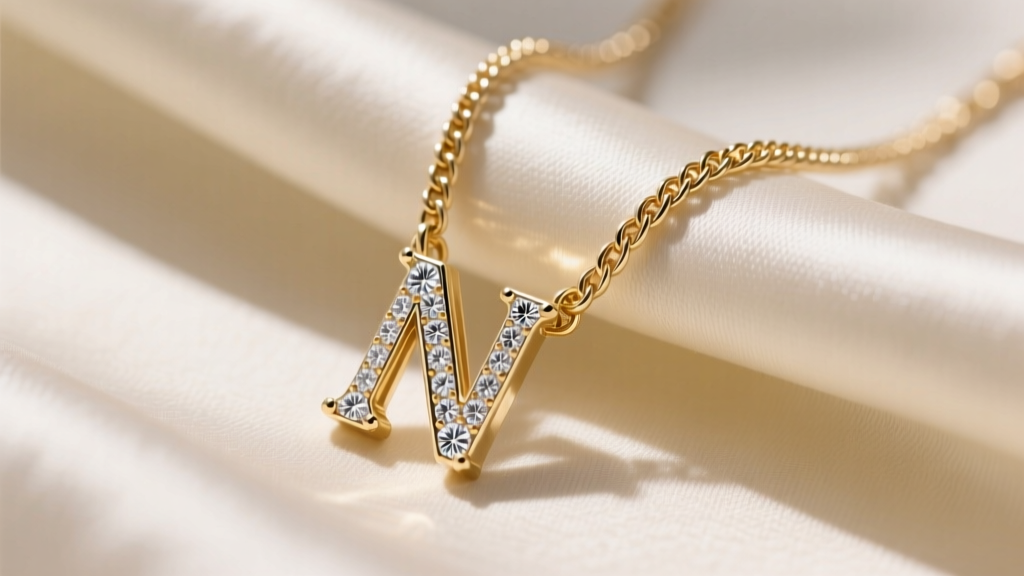
The Physics of Pendant Flip: Why Your Letter N Won't Stay Put
Initial necklaces are a cornerstone of personalized jewelry, but wearers of the letter n necklace frequently encounter a frustrating structural issue: the pendant constantly flips backward, hiding the initial against the skin. Unlike symmetrical letters such as A, O, or M, the letter N possesses an asymmetrical geometric weight distribution. The diagonal stroke inherently shifts the center of mass away from the vertical axis.
When the bail (the loop connecting the pendant to the chain) is soldered exactly at the top horizontal center, the heavier side of the N will naturally drag downward due to gravity. This causes the pendant to rotate 180 degrees on the chain, resting upside down or backward against your chest. This is not a defect in your specific piece, but rather a fundamental challenge in jewelry physics related to asymmetrical typography.
Troubleshooting the Center of Gravity
To solve the flipping dilemma, you must alter how the pendant interacts with the chain's tension. There are three primary structural fixes:
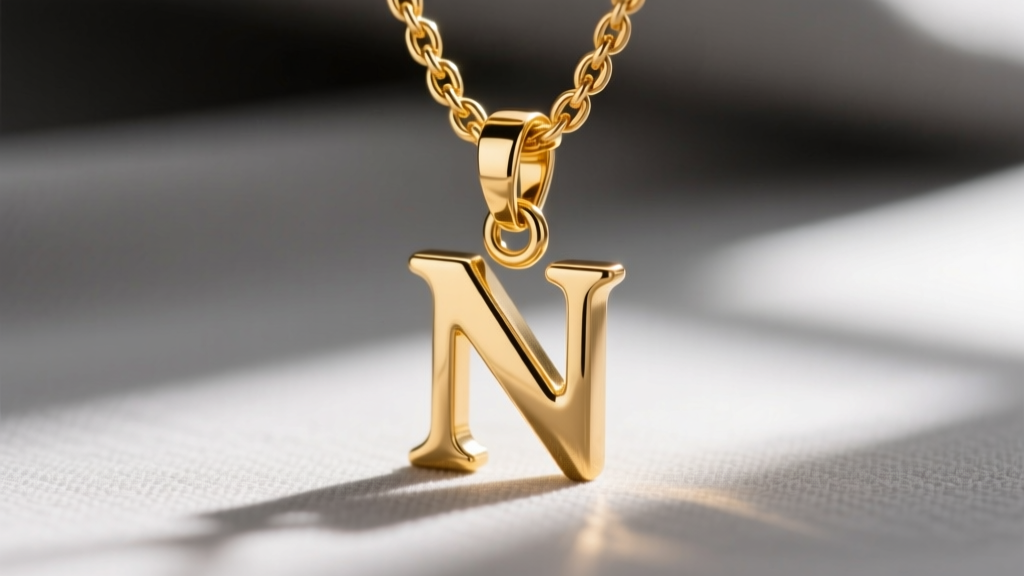
- Offset Bail Placement: A professional jeweler can remove the center bail and solder a new one slightly off-center toward the heavier side of the N. This artificially re-centers the gravity point, allowing the pendant to hang flat.
- Upgrade to a Sliding Bail: Instead of a fixed soldered loop, a sliding bail features a wider, flattened tube that the chain threads through. The increased surface area creates friction, preventing the pendant from spinning freely.
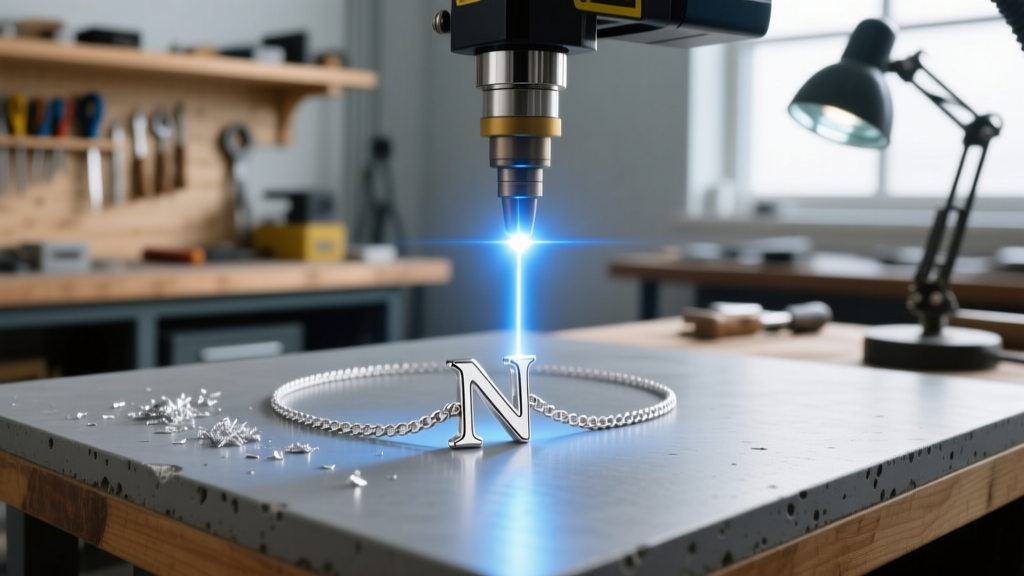
- Micro-Counterweighting: For delicate, lightweight letter N pendants (under 2 grams), a jeweler can laser-weld a microscopic gold bead to the lighter bottom corner of the letter. This balances the diagonal stroke without altering the visual aesthetic.
Troubleshooting Chain Tangling and Knotting
A lightweight letter n necklace acts as a pendulum. When paired with a thin, highly flexible chain, everyday movements and static electricity cause the chain to wrap around itself, resulting in stubborn knots. The friction between the pendant's bail and the chain links exacerbates this issue, especially with certain chain weaves that are prone to interlocking.
To eliminate tangling, you must match the chain's structural rigidity to the pendant's weight. A chain that is too flexible will knot; a chain that is too rigid will not drape correctly. Below is a matrix to help you select the correct chain weave based on your specific pendant weight.
Chain Weave vs. Pendant Weight Matrix
| Chain Type | Thickness / Gauge | Tangle Resistance | Ideal Pendant Weight |
|---|---|---|---|
| Cable Chain | 0.9mm - 1.2mm (22-20g) | Low | Under 3 grams |
| Box Chain | 1.0mm - 1.5mm (20-18g) | High | 3 to 8 grams |
| Wheat Chain | 1.2mm - 2.0mm (18-16g) | Very High | 5 to 12 grams |
| Rope Chain | 1.5mm+ (16g+) | High | Over 10 grams |
Expert Tip: If you prefer the look of a delicate cable chain but suffer from constant knotting, switch to a 1.2mm Box chain. The flat, interlocking geometric links of a box chain physically prevent the chain from folding in on itself, virtually eliminating tangles while maintaining a refined appearance.
Solving the Tarnish and Skin Irritation Dilemma
Because initial pendants rest directly against the pulse point of the neck, they are exposed to high levels of body heat, sweat, and cosmetic products. Many affordable letter N necklaces on the market are constructed from brass or copper base alloys, plated with a micro-layer of gold (often less than 0.5 microns thick). Once this thin plating wears away at the high-friction bail area, the base metal reacts with sulfur and acidic sweat, resulting in the dreaded 'green neck' syndrome and rapid tarnishing.
Metal Grade Breakdown for Longevity
To troubleshoot skin irritation and tarnish, you must verify the metallurgical composition of your necklace. According to the Gemological Institute of America (GIA), gold alloys below 14k contain higher percentages of reactive metals like copper and zinc, which can trigger contact dermatitis in sensitive individuals.
- Avoid Flash Plating: Any piece labeled simply as 'gold plated' without a micron specification is likely flash-plated (under 0.1 microns) and will wear through to the base metal within weeks of daily wear.
- Demand Heavy Vermeil: If solid gold is outside your budget, ensure the piece is certified Gold Vermeil. True vermeil requires a base of 925 sterling silver coated with a minimum of 2.5 microns of gold. The silver base prevents the green skin reaction, while the thick gold layer withstands the friction of the letter N bail.
- Opt for 14k Solid Gold: For a piece you intend to wear in the shower and during sleep, 14k solid gold (58.5% pure gold) offers the ideal balance of structural hardness and tarnish resistance. The alloy metals used in 14k gold provide enough tensile strength to support the delicate stems of the letter N without bending.
Upgrading the Hardware: Clasps, Jump Rings, and Bails
The hardware connecting your chain and pendant is often the weakest point of failure. Mass-produced initial necklaces frequently utilize 24-gauge or 26-gauge unsoldered jump rings to attach the bail. A simple snag on a sweater or towel can easily pull these thin rings open, resulting in a lost pendant.
The Jump Ring and Soldering Fix
Troubleshoot this vulnerability by taking your necklace to a local bench jeweler. Request that the bail jump ring be replaced with a 20-gauge (0.8mm) soldered jump ring. Soldering seals the gap in the ring, meaning the chain would have to physically snap before the jump ring could open. As noted by Jewelers of America, regular inspection of jump rings and clasps is a critical component of preventative jewelry maintenance.
Fixing Clasp Migration
Another common annoyance is the clasp sliding from the back of the neck to the front, constantly requiring you to readjust the necklace. This occurs because standard spring-ring clasps are lightweight and lack a counterbalance to the pendant.
The Solution: Swap the spring ring for a lobster clasp and add a heavy counterweight tag to the chain link directly opposite the clasp. Alternatively, upgrade to a neodymium magnetic clasp. The inherent weight and bulk of a magnetic clasp act as a natural counterweight, anchoring the back of the chain in place and keeping your letter N pendant perfectly centered on your collarbone.
Quick-Fix Checklist for Daily Wear
Before putting on your letter n necklace for the day, run through this rapid troubleshooting checklist to ensure optimal wear and longevity:
- Inspect the Bail Gap: Look closely at the jump ring connecting the N to the chain. If you see a visible gap or if the ring is slightly oval-shaped, take it to a jeweler for soldering immediately.
- Check Chain Kinks: Run the chain through your fingers. If you feel a kink, lay the necklace flat on a table and use two straight pins to gently coax the kink out. Never pull a kinked chain tight, as this will weaken the metal links.
- Wipe Down the Pendant: Use a microfiber cloth to wipe the back of the letter N before storing it. Removing daily sebum and lotion buildup prevents the bail hole from clogging and reduces friction-induced wear on the chain.
By understanding the unique structural geometry of the letter N and matching it with the correct chain weight, soldered hardware, and appropriate metal grades, you can transform a frustrating, tangled piece of jewelry into a flawless, everyday staple.


