Troubleshooting Your Minimalist Sterling Silver Necklace
Learn how to troubleshoot, clean, and repair a minimalist sterling silver necklace. Expert fixes for tarnish, tangled chains, and broken clasps.

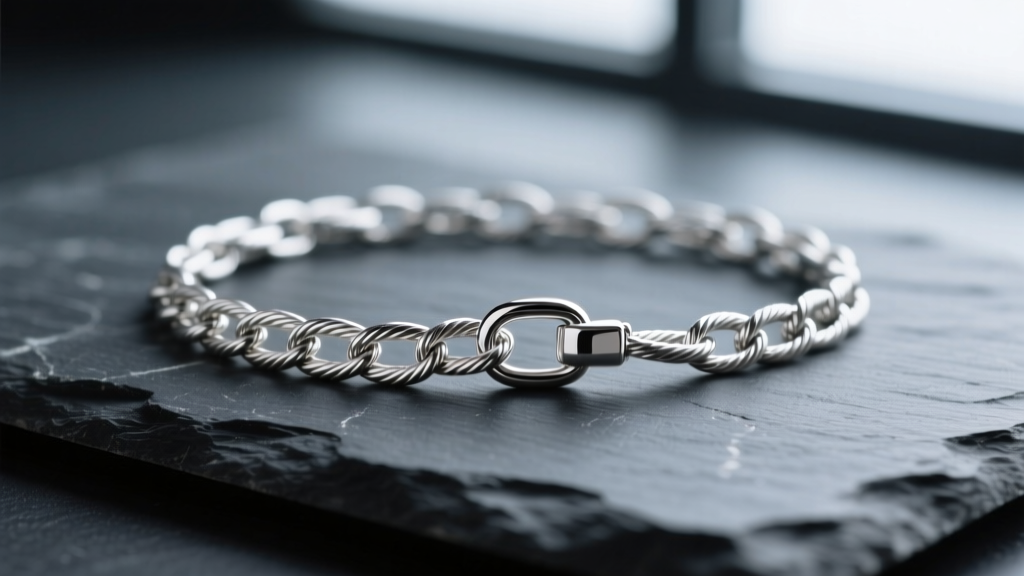
The Unique Vulnerabilities of Minimalist Silver Chains
A minimalist sterling silver necklace is a staple of modern jewelry, prized for its understated elegance and versatility. However, the very design elements that make these pieces so appealing—ultra-fine chains, delicate jump rings, and lightweight clasps—also make them highly susceptible to mechanical and chemical failures. When you are working with chain widths between 0.8mm and 1.2mm, there is virtually no margin for error when it comes to tension, friction, or environmental exposure.
Troubleshooting these delicate pieces requires an understanding of both metallurgy and micro-mechanics. Unlike heavy statement pieces, a minimalist chain cannot simply be yanked apart when tangled, nor can it be aggressively polished without risking structural compromise. This guide provides a professional-level troubleshooting framework for the most common issues plaguing 925 silver minimalist necklaces, from irreversible tarnish to micro-clasp fatigue.
Troubleshooting Tarnish: The Chemistry of 925 Silver
To effectively troubleshoot tarnish, you must first understand its chemical origin. By definition, sterling silver must contain exactly 92.5% pure silver and 7.5% alloy metals, which is almost universally copper. Pure silver does not tarnish easily; it is the copper that reacts with hydrogen sulfide and moisture in the ambient air to form copper sulfide and silver sulfide. This manifests as a yellowish, brown, or eventually black film on your necklace.
Many consumers reach for abrasive silver polishing cloths. However, according to the Gemological Institute of America (GIA), abrasive polishing physically removes a microscopic layer of metal each time you use it. On a 0.9mm minimalist cable chain, repeated abrasive polishing will eventually wear down the links, creating weak points that lead to snapping.
The Electrochemical Reduction Bath (Non-Abrasive Fix)
For heavy, uniform tarnish on a chain without porous gemstones (like opals, turquoise, or pearls), an electrochemical reduction bath is the safest and most effective troubleshooting method. This process reverses the chemical reaction, converting the silver sulfide back into pure silver without removing any metal.
- Step 1: Line a glass or ceramic bowl with aluminum foil, shiny side up.
- Step 2: Add 1 tablespoon of baking soda and 1 tablespoon of non-iodized salt.
- Step 3: Pour 1 cup of boiling water into the bowl and stir to dissolve the powders.
- Step 4: Submerge your minimalist sterling silver necklace, ensuring it physically touches the aluminum foil.
- Step 5: Let it sit for 2 to 5 minutes. You will smell a faint sulfur (rotten egg) odor as the sulfide ions transfer from the silver to the aluminum sacrificial anode.
- Step 6: Remove with plastic tongs, rinse thoroughly in distilled water, and pat dry with a microfiber cloth.
Warning: Never use this method on oxidized (intentionally blackened) silver details or necklaces featuring glued-in gemstones, as the boiling water and chemical reaction will dissolve the jeweler's epoxy.
Untangling Micro-Chains Without Breaking Links
Because minimalist chains are so fine, they easily slip through their own links, creating dense, microscopic knots. The primary enemy here is friction. Pulling on the ends of a knotted 0.8mm box chain will cause the links to warp or snap under as little as 2 pounds of tension.
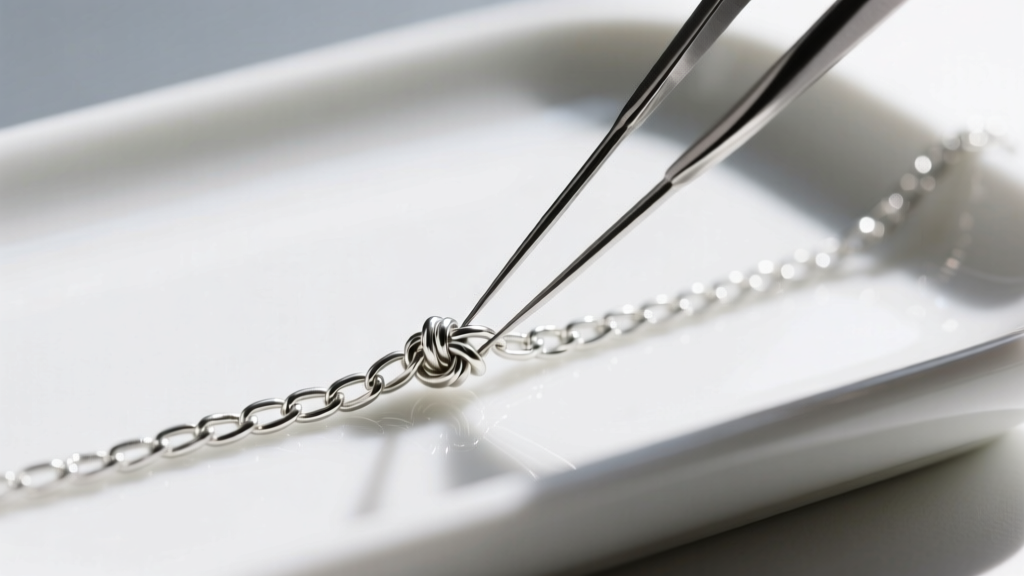
The Friction-Reduction Method
To safely untangle your necklace, you must eliminate the friction between the metal links.
- Apply a Dry Lubricant: Lay the necklace flat on a hard, smooth surface (like a ceramic tray or glass table). Generously dust the knot with cornstarch or talc-free baby powder. Work the powder gently into the knot with your fingertips to coat the interior of the links.
- Use Precision Tools: Do not use your fingernails or thick tweezers. Instead, use two size-10 beading needles or fine sewing needles.
- Work from the Center Out: Insert the tip of one needle into the absolute center of the knot and gently wiggle it to create a micro-gap. Insert the second needle into the gap and slowly pull the links in opposite directions.
- Clear the Powder: Once untangled, use a soft-bristled makeup brush to sweep away the cornstarch, then rinse the chain in warm water with a drop of mild dish soap to remove any residue.
Diagnosing and Fixing Clasp & Jump Ring Failures
The most frequent point of catastrophic failure on a minimalist sterling silver necklace is the hardware. Manufacturers often prioritize a seamless, invisible aesthetic over structural integrity, resulting in undersized jump rings and weak clasps.
| Component | Standard Minimalist Spec | Common Failure Mode | Expert Upgrade |
|---|---|---|---|
| Chain Width | 0.8mm - 1.0mm Cable | Snapping under 2-3 lbs of tension | 1.2mm Box or Rolo Chain |
| Jump Rings | 22-Gauge (0.64mm) Wire | Pulling apart at the seam | 20-Gauge (0.81mm) Soldered |
| Clasp | 5mm Spring Ring | Internal spring fatigue / sticking | 9mm Lobster or Magnetic |
The Jump Ring Vulnerability
According to data from Rio Grande Jewelry Supply, a standard 22-gauge unsoldered jump ring will pull apart under roughly 1.5 pounds of tension. If your pendant is heavy, or if the necklace catches on a sweater, the jump ring will open, and you will lose the piece. If your necklace repeatedly opens at the clasp, take it to a local jeweler and ask them to replace the 22-gauge split rings with 20-gauge (0.81mm) or 18-gauge (1.02mm) soldered jump rings. Soldering the seam completely eliminates the risk of the ring pulling open.
Spring Ring vs. Lobster Clasp Fatigue
Minimalist necklaces frequently use 5mm spring rings to maintain a delicate profile. However, the internal steel spring in a 5mm silver clasp is incredibly fragile and prone to moisture-induced rust or mechanical fatigue, causing the clasp to stick open or refuse to close. If your spring ring is failing, do not attempt to oil it with household lubricants, which will attract dirt and degrade the silver. Instead, have a jeweler swap it for a 9mm or 10mm sterling silver lobster clasp, which utilizes a much thicker, more durable internal spring mechanism and offers a larger surface area for your fingers to operate.
Preventative Maintenance and 2026 Nanocoatings
Once you have repaired and cleaned your minimalist sterling silver necklace, implementing a strict storage protocol is vital to prevent the issues from recurring.
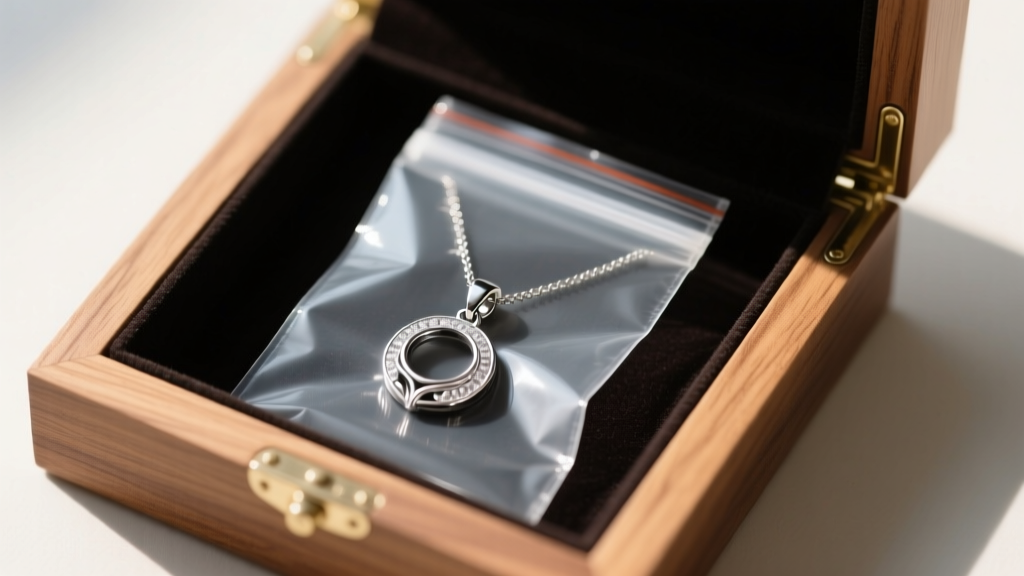
Micro-Environment Storage
Silver tarnishes when exposed to airborne sulfur compounds and humidity. Storing your necklace in an open jewelry box guarantees a steady supply of both. The most effective, low-cost troubleshooting prevention is micro-environment storage. Place the necklace in a small, airtight polyethylene ziplock bag along with a 3M anti-tarnish strip. These strips contain activated carbon and silver particles that aggressively absorb sulfur gases before they can reach your necklace. Replace the strips every 6 months.
The Rise of Anti-Tarnish Nanocoatings
As of 2026, many high-end minimalist jewelry brands are applying invisible ceramic nanocoatings or flash-plating their 925 silver with ultra-thin layers of rhodium or platinum. These coatings act as a physical barrier, completely sealing the copper alloy away from the air. If you are purchasing a new minimalist piece and suffer from severe tarnish allergies or live in a high-humidity coastal environment, specifically seek out brands that advertise 'rhodium-plated 925 silver' or 'tarnish-shield technology.' While this adds roughly 15% to 20% to the retail price, it virtually eliminates the need for chemical cleaning and extends the mechanical lifespan of ultra-fine chains by preventing the microscopic pitting that leads to metal fatigue.
When to Seek Professional Jeweler Intervention
While you can safely untangle knots and reverse tarnish at home, certain failures require professional micro-welding or laser soldering. If your 0.9mm cable chain has physically snapped, do not attempt to bend the links back together with pliers; the metal has already work-hardened and will simply break again at the bend point. A professional jeweler will use a laser welder to fuse the broken link with a microscopic bead of pure silver solder, restoring the chain's structural integrity without leaving a visible seam or requiring the removal of the surrounding links.


