Troubleshooting Your Nativity Necklace: Repairs & Care
Is your nativity necklace tarnishing or breaking? Learn expert troubleshooting tips to restore enamel, fix chains, and prevent skin irritation.

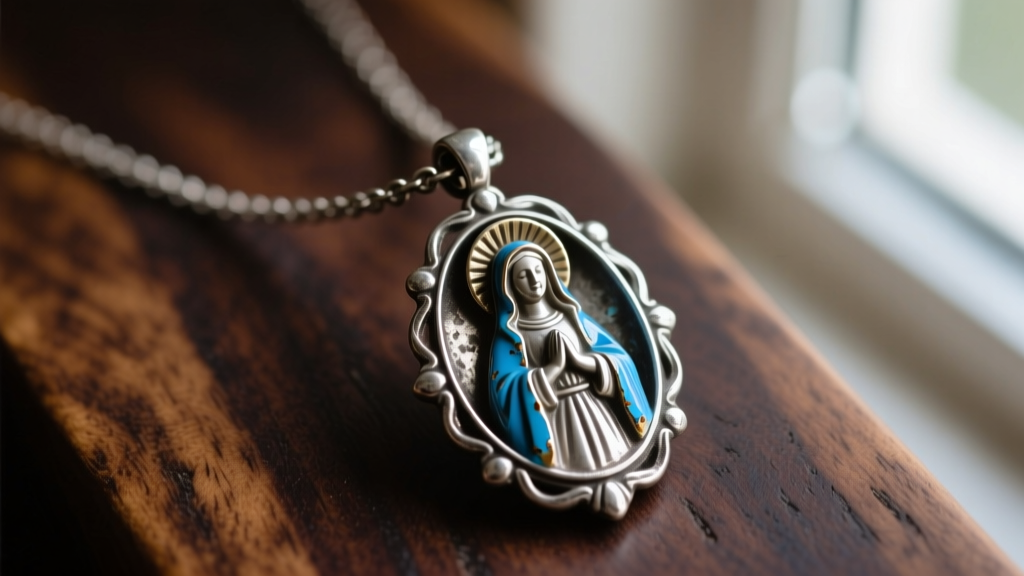
The Hidden Metallurgy of Mass-Produced Nativity Pendants
Nativity necklaces hold profound sentimental and spiritual value, often gifted during baptisms, confirmations, or Christmas celebrations. However, from a materials science perspective, many affordable religious pendants are highly susceptible to structural and cosmetic failures. The core issue lies in the base metal. To keep costs low while allowing for intricate, multi-figurine casting, manufacturers frequently use Zamak—a zinc alloy containing aluminum, magnesium, and copper. While Zamak captures fine details beautifully, it is notoriously prone to a destructive form of degradation known as 'zinc pest' when the protective plating wears thin.
When troubleshooting a deteriorating nativity necklace, the first step is identifying the base metal. If the pendant feels unusually heavy but the silver or gold plating is flaking to reveal a dull, grayish-white porous underlayer, you are dealing with Zamak. Unlike solid sterling silver or stainless steel, you cannot simply polish this metal. Aggressive polishing compounds will embed into the microscopic pores, accelerating oxidation and causing the metal to literally crumble over time. Understanding this metallurgical reality is the foundation of effective religious jewelry restoration.
Troubleshooting Tarnish and 'Zinc Pest'
If your nativity pendant has developed a powdery white or green crust beneath the plating, moisture has breached the surface. This galvanic corrosion requires immediate intervention to halt the spread. According to conservation guidelines outlined by the Gemological Institute of America (GIA), harsh chemical dips and ultrasonic cleaners are strictly prohibited for porous cast alloys and painted religious artifacts.
Safe Cleaning Protocol for Plated Zamak
- Step 1: Mix a solution of distilled water and a few drops of pH-neutral dish soap (like Dawn). Avoid tap water, as dissolved minerals and chlorine can trigger further zinc oxidation.
- Step 2: Using a microfiber cloth lightly dampened with the solution, gently wipe the surface. Do not soak the pendant.
- Step 3: Dry immediately and thoroughly with a lint-free cloth, followed by a blast of compressed air to remove moisture from the crevices between the figurines.
- Step 4: Seal the metal using a micro-crystalline wax (such as Renaissance Wax). Apply a microscopically thin layer with a soft brush, let it haze for 10 minutes, and buff gently. This creates an oxygen barrier that halts zinc pest.
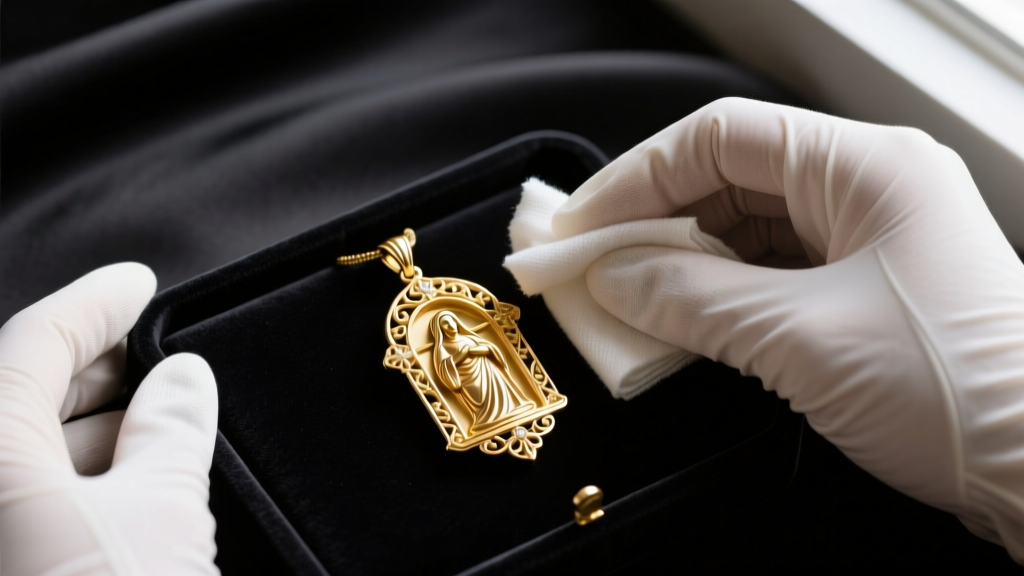
Restoring Chipped Enamel on Figurines
Many nativity sets feature cold enamel (epoxy resin) or acrylic paint to differentiate the robes of Mary, Joseph, and the Magi. Over time, friction against clothing causes these painted areas to chip. Because these pendants were not fired in a kiln with vitreous glass enamel, traditional torch-fired repairs are impossible—the heat would melt the Zamak base and destroy the remaining paint.
To troubleshoot chipped enamel, you must perform a cold repair using jewelry-grade adhesives. A 2-part clear epoxy, such as Devcon 5-Minute Epoxy, is ideal. To match the original color, mix a tiny amount of cosmetic-grade mica powder into the epoxy before it sets. Using a 0.5mm detail liner brush, carefully dab the tinted epoxy into the chipped cavity. Allow it to self-level and cure for 24 hours. Once hardened, you can lightly polish the surface with a dry microfiber cloth to restore the gloss, being careful not to abrade the surrounding original paint.
Solving Chain Breakage and Bail Friction
A solid cast nativity pendant typically weighs between 15 and 25 grams. When paired with the flimsy 0.5mm cable chains often included in retail packaging, structural failure is inevitable. Furthermore, the pendant's bail (the loop through which the chain passes) acts as a friction saw, slowly cutting through weak chain links over months of daily wear.
Chain Gauge and Material Upgrade Guide
To solve chronic breakage, you must upgrade the chain based on tensile strength and material hardness. Below is a troubleshooting matrix for selecting the correct replacement chain:
| Chain Material | Recommended Gauge | Style | Troubleshooting Benefit |
|---|---|---|---|
| 316L Surgical Steel | 1.2mm - 1.5mm | Box or Wheat | Hypoallergenic; resists snapping under 25g loads; does not tarnish. |
| 14k Gold-Filled | 1.0mm - 1.2mm | Cable or Rope | Thick gold layer prevents brass core oxidation; high tensile strength. |
| Sterling Silver (925) | 1.5mm+ | Figaro or Curb | Softer metal requires thicker gauge to prevent stretching and bail friction. |
When selecting a new chain, pay close attention to the end links. As detailed in jewelry fabrication resources like Fire Mountain Gems, the end links must be large enough to accommodate a sturdy jump ring without pinching, which creates a weak point that will eventually pull apart under the pendant's pendulum-like motion.
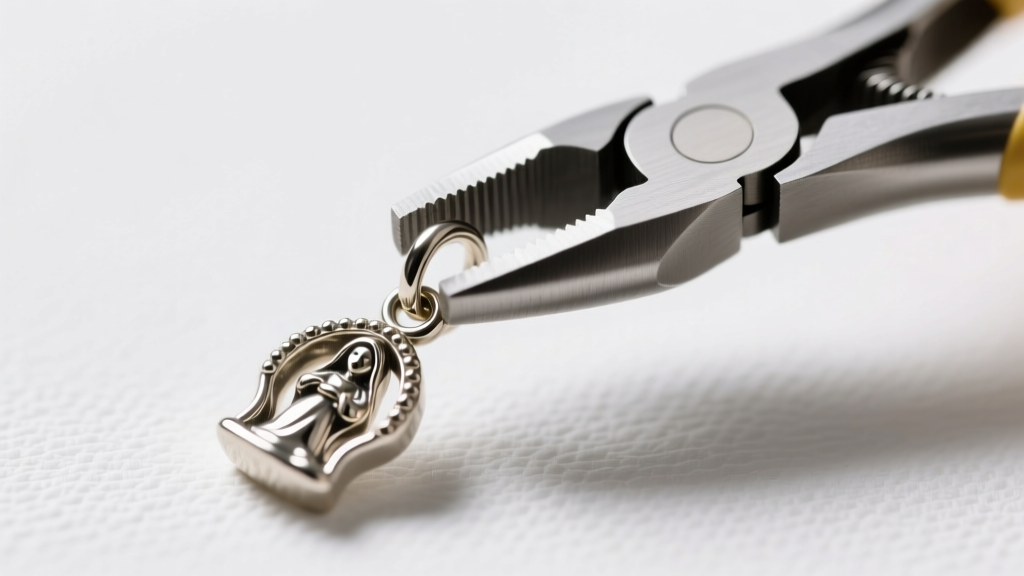
Upgrading Clasps and Jump Rings for Security
The clasp and jump ring assembly is the most common point of catastrophic failure on sentimental necklaces. Standard spring-ring clasps frequently fail due to internal spring fatigue, while thin, poorly soldered jump rings easily pull open when the necklace catches on a sweater or towel.
The Jump Ring Fix: Replace the factory jump ring with a 20-gauge or 18-gauge stainless steel or sterling silver split ring, or a soldered solid jump ring. If using a standard open jump ring, ensure it has an outer diameter (OD) of at least 4mm to 5mm. When closing the jump ring, never pull the ends apart laterally; instead, use two pairs of flat-nose pliers to twist the ends past each other and back into perfect alignment. This work-hardens the metal and maintains the circular tension.
The Clasp Fix: Swap the spring ring for a stainless steel lobster clasp. Lobster clasps feature a more robust internal mechanism and a wider gate, making them significantly easier to operate and far less prone to accidental unhooking. For heavy nativity pendants, a 12mm or 14mm lobster clasp provides the necessary counterweight and structural integrity to keep the necklace securely fastened at the nape of the neck.
Preventative Maintenance for Heirloom Pieces
Once you have restored the enamel, sealed the Zamak, and upgraded the chain hardware, ongoing preventative maintenance is crucial. Store the nativity necklace in an anti-tarnish ziplock bag with a silica gel desiccant packet to control ambient humidity. Avoid wearing the pendant in chlorinated pools or hot tubs, as halogens will rapidly destroy both the metallic plating and the cold enamel repairs. By applying these metallurgical and mechanical troubleshooting techniques, you can ensure that your nativity necklace remains a durable, beautiful heirloom capable of being passed down through generations.


