Troubleshooting Your Tuareg Necklace: Care, Cleaning & Fakes
Learn how to authenticate, clean, and repair your Tuareg necklace. Expert troubleshooting for silver tarnish, leather cord wear, and spotting fakes.

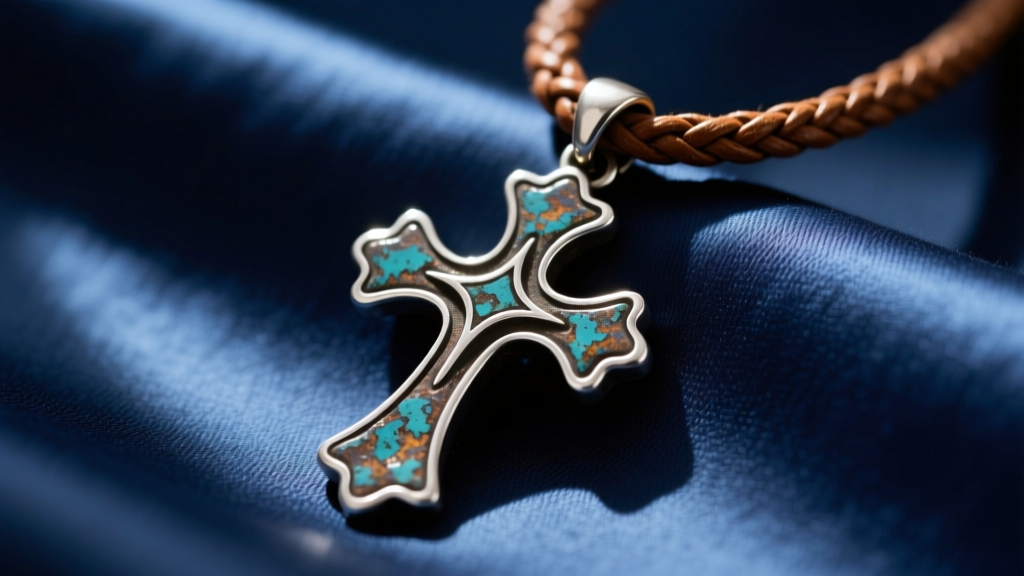
Tuareg jewelry, particularly the iconic Agadez crosses and heavy geometric silver collars, represents centuries of Saharan nomadic artistry. Historically crafted by the inadan (the artisan caste of the Tuareg people), these pieces are not merely decorative; they are talismans, geographic markers, and repositories of wealth. However, acquiring and maintaining a genuine Tuareg necklace in today's market presents a unique set of challenges. From distinguishing authentic coin silver from modern pot-metal fakes to preserving the delicate intentional oxidation without ruining the piece, ownership requires specialized knowledge.
This comprehensive troubleshooting guide addresses the most common structural, metallurgical, and aesthetic issues collectors and wearers face with Tuareg necklaces, providing actionable, expert-level solutions.
Decoding the Metallurgy: Is Your Tuareg Necklace Real?
The most pervasive issue in the ethnic jewelry market is the proliferation of counterfeit Tuareg pieces. Mass-produced replicas are frequently cast from aluminum, zinc alloys, or "nickel silver" (a copper-nickel-zinc alloy containing zero actual silver) and sold to unsuspecting tourists and online buyers.
Historical Silver vs. Modern Alloys
Traditionally, Tuareg silversmiths melted down Maria Theresa thalers (Austrian silver coins with an 83.3% silver purity) or French silver francs to cast their pendants. Consequently, authentic vintage Tuareg silver rarely tests at the modern 925 sterling standard; it usually falls between 800 and 900 parts per thousand. If a piece tests at exactly 925, it is likely a modern reproduction made for the export market, though still potentially genuine silver.
To troubleshoot authenticity without damaging the piece, employ these non-destructive tests:
- The Magnet Test: Silver is diamagnetic. If your necklace clings to a strong neodymium magnet, it contains a ferromagnetic core (like iron or steel) and is an immediate fake.
- The Ice Test: Silver possesses the highest thermal conductivity of any metal. Place an ice cube on the pendant; it should begin melting almost instantly, significantly faster than on glass or base metals.
- The Acoustic Ring Test: Gently tap a heavy silver cross with a wooden dowel. Authentic silver produces a clear, high-pitched, sustained ringing tone. Base metals like zinc or lead emit a dull, short thud.
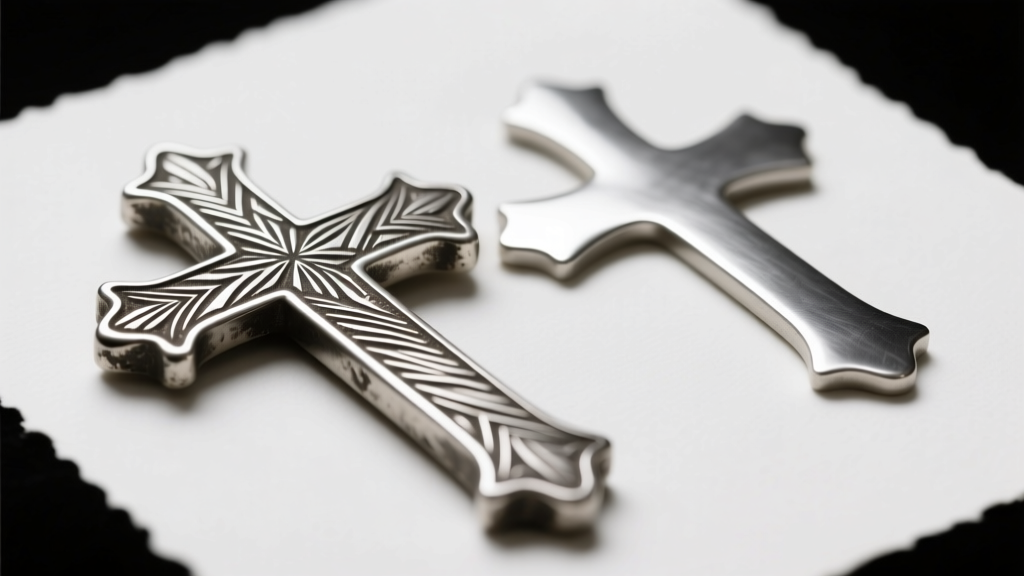
Furthermore, examine the engravings. Authentic pieces are hand-chased and engraved. According to archival insights from the Metropolitan Museum of Art, traditional Islamic and African metalwork relies on sharp, intentional tool marks. If the geometric lines look soft, rounded, or lack the microscopic striations of a hand-held burin, the piece is likely a cast mold replica.
The Patina Paradox: Cleaning Oxidized Saharan Silver
A major mistake new collectors make is attempting to clean their Tuareg necklace with commercial silver dips or harsh polishing pastes. Tuareg silver is supposed to be dark. The deep, black oxidation in the engraved grooves provides the necessary contrast to make the intricate geometric patterns and Koranic motifs visible.
How to Clean Without Stripping the Contrast
If your necklace has accumulated skin oils, lotion residue, or environmental grime on the raised surfaces, follow this safe cleaning protocol:
- Dry Brush: Use a soft-bristled horsehair brush to dislodge dry particulate matter from the deep engravings.
- Targeted Washing: Mix a few drops of pH-neutral dish soap in lukewarm water. Dip a soft toothbrush into the solution and gently agitate only the raised, high-relief areas of the silver. Avoid scrubbing the recessed, oxidized grooves.
- Pat Dry: Immediately dry the piece with a lint-free microfiber cloth. Do not air dry, as water spots will form on the polished high points.
- Selective Polishing: Wrap a silver polishing cloth tightly around your index finger and lightly buff only the raised edges. Never use liquid tarnish removers (like Tarn-X), as they will strip the intentional black patina and leave the piece looking flat, modern, and significantly devalued.
"The beauty of Tuareg silver lies in its topography. The interplay between the bright, polished high points and the deep, oxidized valleys is what gives the jewelry its soul and readability. Stripping the patina is akin to erasing the artist's shading."
Structural Troubleshooting: Leather Cords and Bail Wear
Tuareg pendants, particularly the large Agadez or Tahoua crosses, are exceptionally heavy, often weighing between 50 and 150 grams. This concentrated mass creates severe structural stress on the necklace cord, leading to a common and frustrating failure mode: the pendant bail sawing through the leather cord, resulting in a lost heirloom.
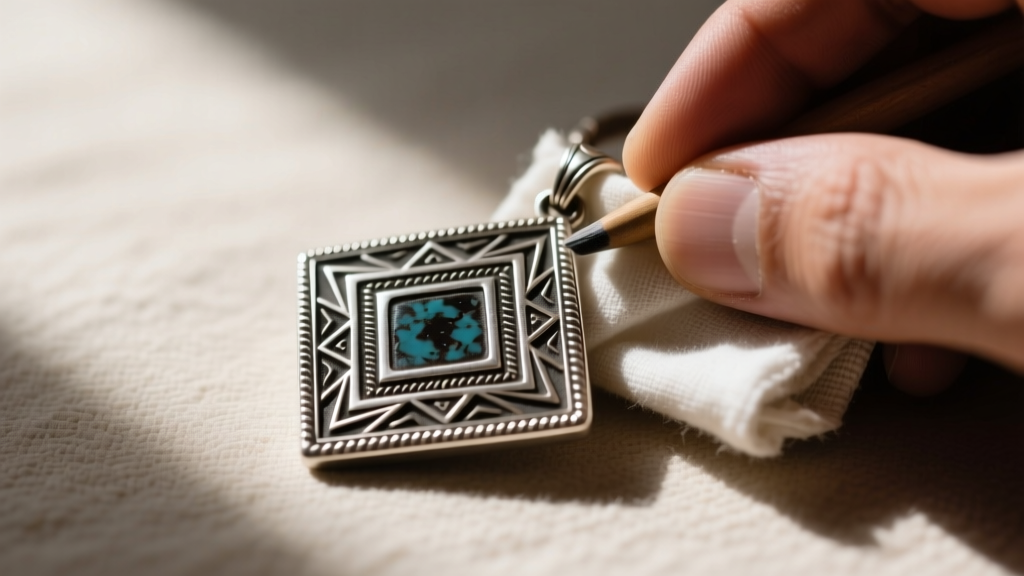
Diagnosing Bail Friction
Inspect the inside of the pendant's bail (the loop through which the cord passes). In older or roughly finished pieces, the interior of the bail may have sharp casting burrs or micro-serrations. When paired with a traditional, relatively soft goat or cowhide leather cord, the heavy pendant acts like a pendulum saw, slowly cutting through the fibers.
The Expert Repair and Upgrade Protocol
To permanently solve this structural vulnerability, you must upgrade the suspension system:
- Deburr the Bail: Use a 400-grit diamond needle file or a piece of folded 600-grit wet/dry sandpaper to gently smooth the interior of the silver bail until it is perfectly flush and rounded.
- Upgrade the Cord: Discard the stiff, generic leather cord. Replace it with a 3mm braided kangaroo leather cord. Kangaroo leather possesses a tensile strength exceeding 200 lbs, making it virtually impervious to the weight of the pendant.
- Install a Sacrificial Jump Ring: Instead of threading the leather directly through the silver bail, thread a heavy-duty, 14-gauge sterling silver jump ring through the bail first, and then pass the leather cord through the jump ring. The silver-on-silver friction will preserve the leather indefinitely, and the jump ring can be easily replaced every decade if it wears thin.
Skin Reactions and the "Green Neck" Phenomenon
If your Tuareg necklace leaves a green or black smudge on your chest, it is not a "toxin detox" reaction, nor is it a sign of authentic silver oxidizing. Pure silver and high-grade coin silver do not turn skin green. This reaction is a definitive troubleshooting indicator of a base-metal core.
The green color is caused by copper or brass reacting with the natural acidity of your sweat (which typically has a pH between 4.5 and 7.0), creating copper chloride. If your necklace causes this reaction, it is likely a modern tourist-market fake made of brass or copper that has been lightly silver-plated or electroplated. Once the microscopic plating wears off at the back of the pendant where it rests against the skin, the base metal is exposed. The only solution for a piece causing this reaction is to have a professional jeweler apply a thick rhodium plating to the back of the pendant to create a hypoallergenic barrier, or to retire the piece from daily wear.
Comprehensive Tuareg Necklace Troubleshooting Matrix
Use the following matrix to quickly diagnose and resolve common issues associated with Saharan silver jewelry.
| Issue / Symptom | Root Cause | Expert Solution |
|---|---|---|
| Pendant bail cutting through leather cord | Sharp interior burrs + heavy pendant mass (50g+) | File bail smooth with 400-grit diamond file; install a 14-gauge sterling jump ring. |
| Skin turning green beneath the pendant | Copper/brass core reacting with sweat acidity (pH 4.5-7.0) | Confirm piece is a fake; apply rhodium plating to the back to seal the base metal. |
| Silver looks flat, gray, and lacks contrast | Previous owner used chemical silver dip, stripping intentional oxidation | Use a liver of sulfur solution to carefully re-oxidize the piece, then polish only the high points. |
| Leather cord is stiff, cracked, and dry | Loss of natural lipids due to arid climates or UV exposure | Massage a small amount of pure neatsfoot oil into the leather; let cure for 24 hours before wearing. |
| Pendant rattles or feels hollow | Cast replica with trapped air or loose internal slag | Authentic Tuareg crosses are solid cast or heavily forged; a hollow sound indicates a cheap modern fake. |
Final Thoughts on Sourcing and Preservation
Maintaining a Tuareg necklace requires respecting its origins and its metallurgical realities. Whether you are referencing the ethnographic collections at the Smithsonian National Museum of African Art or consulting with specialized ethnic jewelry appraisers, the key to preservation is minimal, targeted intervention. By understanding the specific gravity, intentional patina, and structural stress points of these remarkable pieces, you ensure they survive not just as accessories, but as enduring artifacts of Saharan heritage.


