Troubleshooting Your Style: How to Choose a Truly Versatile Necklace
Struggling with mismatched jewelry? Learn how to troubleshoot your collection, fix tangling layers, and choose a truly versatile necklace for any outfit.

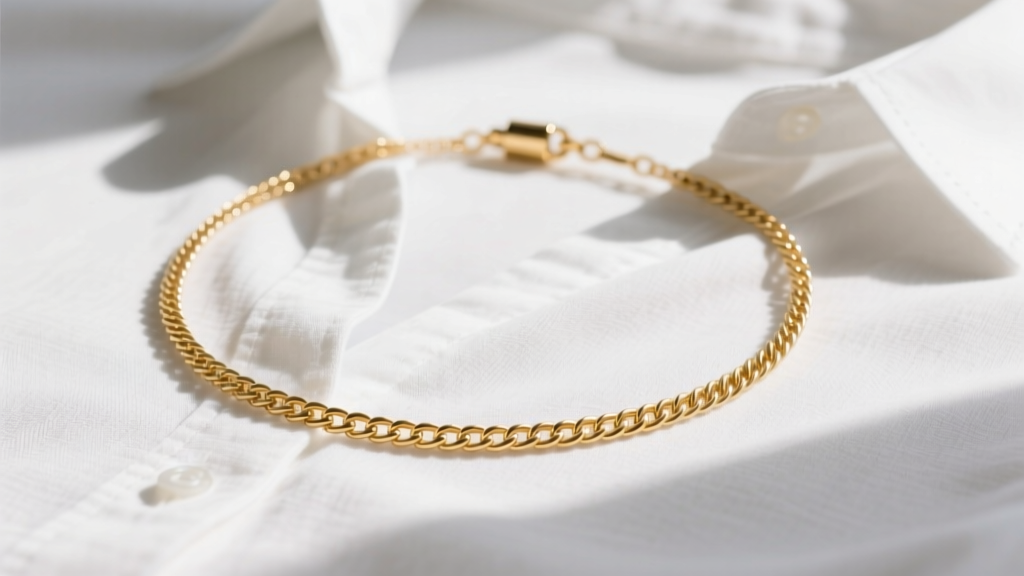
We have all experienced the frustration of standing in front of a mirror with a jewelry box full of pieces, yet feeling like we have absolutely nothing to wear. You buy a stunning pendant for a specific event, but it clashes with your daily wardrobe. You attempt to layer three chains, only for them to twist into an inseparable knot by lunchtime. As we navigate the jewelry landscape in 2026, the industry has seen a massive shift away from hyper-specific micro-trends toward sustainable, modular capsule wardrobes. At the heart of this shift is the search for a truly versatile necklace.
However, versatility is not just about a minimalist aesthetic; it is a matter of structural engineering, metallurgical stability, and proportional mathematics. If your current collection is failing you, it is time to diagnose the issues. Below, we break down the most common necklace styling failures and provide expert troubleshooting frameworks to help you build a reliable, everyday jewelry rotation.
The Anatomy of a Versatile Necklace: Diagnosing Proportional Failures
Why do some chains look elegant on a mannequin but awkward on your body? The culprit is usually a mismatch between the chain's width (gauge) and its overall length. A versatile necklace must maintain visual balance across different neck circumferences.
If a chain is too thick for its length, it will sit rigidly like a collar rather than draping naturally. Conversely, a chain that is too thin for its length will look flimsy and is highly prone to snapping under the weight of even a modest pendant.
- The 16-Inch Standard: For a 16-inch chain (sitting at the base of the neck), the ideal width for daily versatility is between 1.5mm and 2.5mm. This provides enough tensile strength to hold a 3-gram pendant without kinking.
- The 20-to-24 Inch Drop: Longer chains that fall over the bust require heavier links to maintain a vertical drape. A 22-inch chain should be at least 2.0mm wide; otherwise, it will catch on fabrics and twist.
- The Pendant-to-Chain Ratio: A fundamental rule of jewelry design is that the pendant's bail (the loop it hangs from) should be no more than three times the width of the chain. If your versatile necklace keeps catching on the bail, the chain is too thick for the hardware.
Troubleshooting Chain Tangles in Layered Configurations
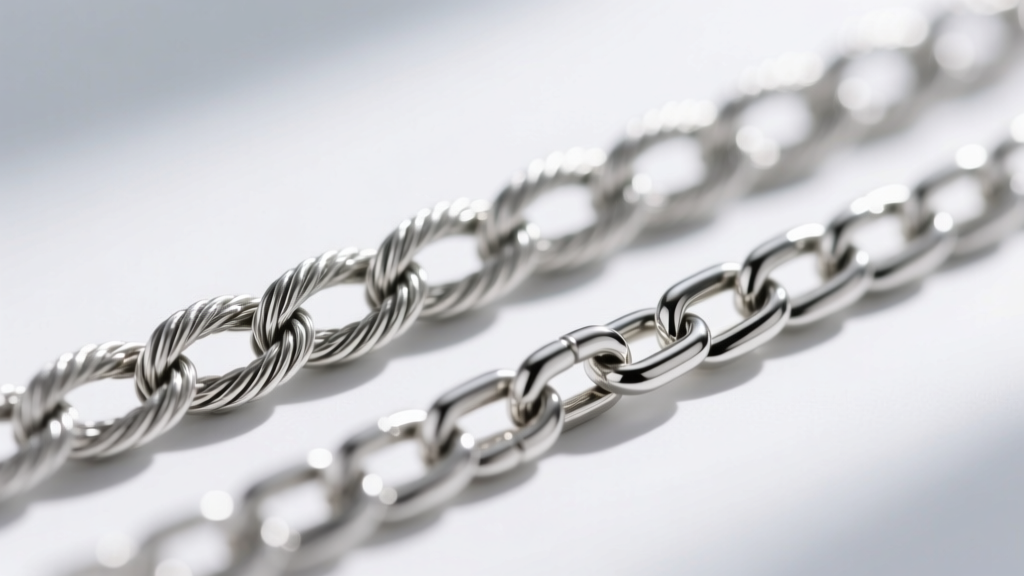
Layering is the ultimate test of a versatile necklace. If your layers are constantly tangling, you are likely mixing incompatible chain weaves. Tangling is not bad luck; it is physics. Different weaves have different friction coefficients and surface areas.
The Weave Compatibility Matrix
Flat chains (like Herringbone or Snake) have high surface-area friction and will act like magnets to round, textured chains (like Rope or Cable). When troubleshooting a tangled mess, separate your weaves by profile:
| Chain Profile | Examples | Best Paired With | Avoid Pairing With |
|---|---|---|---|
| Flat / Smooth | Herringbone, Snake, Box | Other flat chains, smooth pendants | Rope, Bead, Cable |
| Round / Textured | Cable, Rope, Wheat | Other round chains, chunky charms | Herringbone, Snake |
| Hybrid / Faceted | Curb, Figaro, Mariner | Almost anything (with a 2-inch length gap) | Ultra-fine bead chains |
The Troubleshooting Fix: If you must mix a flat box chain with a round cable chain, ensure there is a minimum 2-inch length differential between them. This prevents the links from occupying the same spatial plane and grinding against one another, which causes micro-abrasions and severe knotting.
The Neckline Compatibility Matrix: Fixing the Awkward Gap
A versatile necklace must adapt to your clothing, not the other way around. The most common styling error is allowing a pendant to rest exactly on the hemline of a high neckline, creating a visual collision that looks unintentional. To troubleshoot this, map your chain lengths to your most-worn garments.
- 14-Inch (Collar): Best for open V-necks and off-the-shoulder tops. Troubleshooting: Never wear a 14-inch chain with a crew neck; it will look like a restrictive choker and cause skin irritation due to friction.
- 16-Inch (Base of Neck): The ultimate versatile length for scoop necks and button-down shirts left slightly unfastened.
- 18-Inch (Collarbone Drop): Perfect for crew necks and boat necks. The pendant will sit roughly two inches below the fabric hem, creating a clean, intentional border.
- 20-to-24 Inch (Plunge): Reserved for deep V-necks, turtlenecks, and winter layering over heavy knits.
Pro Tip: Invest in a versatile necklace featuring an adjustable extender chain (typically 2 inches). This allows you to micro-adjust the drop from 16 to 18 inches, instantly solving the "awkward gap" problem when transitioning from a t-shirt to a thicker sweater.
Metallurgical Mismatches: Troubleshooting Tarnish and Skin Discoloration
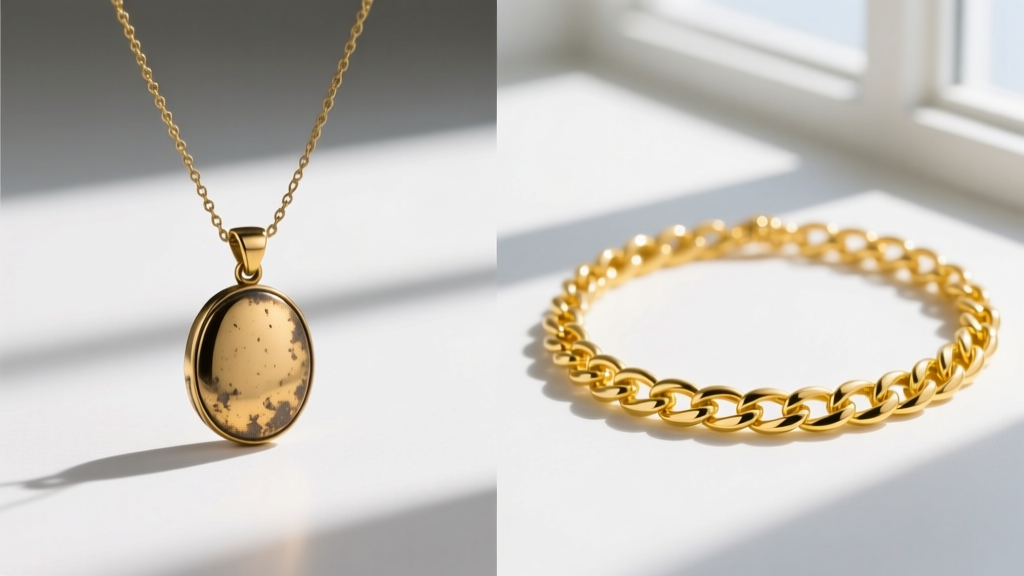
A necklace cannot be considered versatile if it requires constant polishing or if it turns your skin green after four hours of wear. Many consumers mistakenly believe they are buying durable jewelry when they are actually purchasing flash-plated brass.
According to the Federal Trade Commission Jewelry Guides, true gold vermeil must consist of a sterling silver base coated with at least 2.5 microns of gold. However, the market is flooded with "gold plated" items that feature a mere 0.5 microns of gold over a brass or copper core. When the microscopic gold layer wears off at the friction points (like the clasp and jump rings), the copper reacts with the acids in your sweat, resulting in green skin and irreversible tarnish.
Choosing the Right Metal for Daily Versatility
To troubleshoot premature aging in your jewelry box, audit your metals against these standards, as outlined by the Gemological Institute of America (GIA):
- Solid 14k Gold: The gold standard for a versatile necklace. The 58.5% gold alloy mixed with copper and silver provides the perfect balance of tarnish resistance and tensile strength. It will not flake or turn skin green.
- 14k Gold-Filled: A highly durable, budget-friendly alternative. It features a thick outer layer of 14k gold mechanically bonded to a brass core. It contains 100 times more gold than standard plating and can last decades with proper care.
- 316L Surgical Stainless Steel: Excellent for heavy, chunky chains that need to be waterproof and sweat-proof. However, it is heavy and cannot be easily resized or soldered by a standard jeweler if it breaks.
Hardware Failures: Clasps and Jump Rings
The weakest point of any versatile necklace is the hardware. If your necklace frequently slips off or the pendant falls away, you are dealing with a hardware failure.
The Spring Ring Problem: Spring ring clasps (the small circular ones with a tiny lever) are notorious for failing on chains under 1.5mm. The internal tension spring degrades over time, leaving the clasp slightly open. The Fix: Upgrade your anchor chains to feature a lobster claw clasp, which utilizes a heavier, more reliable internal spring mechanism and is easier to operate with one hand.
Unsoldered Jump Rings: The jump ring is the small circle of wire connecting the clasp to the chain. If the ring is simply cut and bent shut (unsoldered), it will eventually pull apart under the weight of a pendant. Always inspect the jump rings on a new necklace; if the seam is visible and not welded (soldered) shut, take it to a jeweler for a quick laser-welding fix to prevent catastrophic loss.
The Ultimate Versatile Necklace Troubleshooting Checklist
Before adding a new piece to your daily rotation, run it through this rapid diagnostic checklist to ensure it meets the criteria of true versatility:
- The Fabric Test: Does the chain catch on a silk blouse or knit sweater? (If yes, avoid snake or herringbone weaves for daily wear).
- The Weight Test: Can the chain support a 5-gram pendant without the jump ring gaping open?
- The Shower Test: Is the metal solid 14k, platinum, or 316L steel? (If it is gold-plated brass, remove it before showering to prevent immediate tarnishing).
- The Layering Test: Does the chain profile complement your existing 16-inch and 18-inch anchor chains without causing friction-based tangling?
By shifting your perspective from purely aesthetic choices to structural and metallurgical troubleshooting, you can curate a jewelry box where every single piece earns its keep. A truly versatile necklace is an investment in reliable engineering, ensuring you never have to compromise your style for practicality again.


