Troubleshooting Your Colombian Emerald Necklace: Care & Repairs
Discover expert troubleshooting for your Colombian emerald necklace. Learn to identify oil treatments, fix setting damage, and safely clean fragile gems.

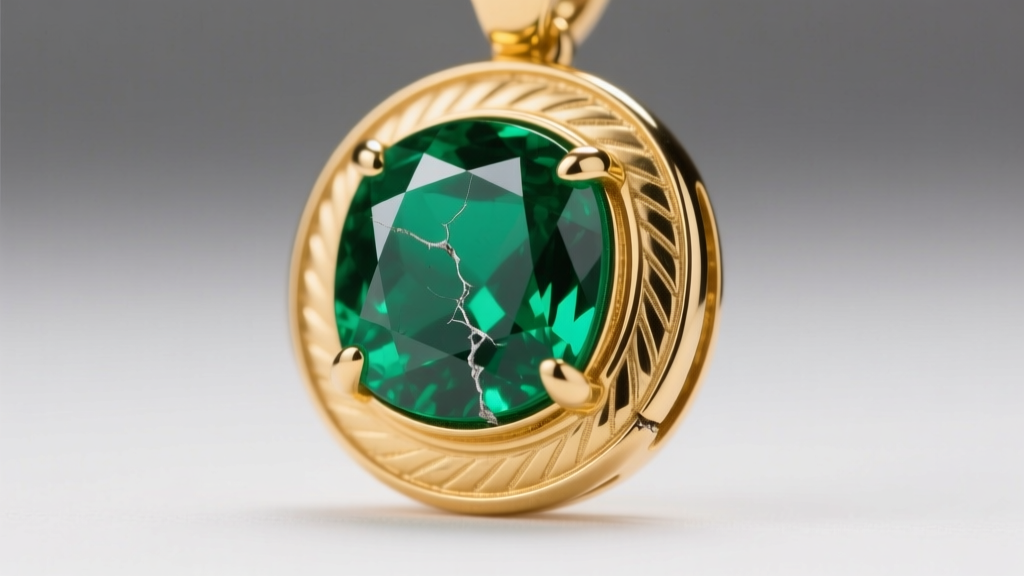
Owning a Colombian emerald necklace is akin to possessing a piece of geological history. Mined primarily from the legendary Andean regions of Muzo, Chivor, and Coscuez, these gems are celebrated for their unparalleled, chromium-rich vivid green saturation. However, this breathtaking beauty comes with a notorious structural vulnerability. As a senior gemologist and jewelry consultant, I frequently encounter clients facing catastrophic damage to their emerald pendants due to improper care, faulty settings, or misunderstood clarity enhancements. If your prized necklace has suffered a chip, lost its luster, or suddenly looks cloudy, this comprehensive troubleshooting guide will help you diagnose the issue and execute the correct recovery protocol.
The Inherent Fragility: Why Your Emerald Chipped
To troubleshoot damage, you must first understand the gemological reality of beryl. While emeralds rank a respectable 7.5 to 8 on the Mohs scale of hardness, their toughness (resistance to breaking and chipping) is classified as poor. This is due to the 'jardin'—the French term for the dense network of internal fractures and inclusions that give Colombian emeralds their unique fingerprint.
When an emerald necklace is subjected to a sudden impact, such as dropping the pendant against a marble countertop or catching it on a heavy wool sweater, the kinetic energy travels through the stone. Because the internal crystal lattice is already interrupted by these natural fissures, the stone will cleave or chip along the path of least resistance. If your pendant has chipped near the girdle (the outer edge), it is highly likely that the setting failed to protect the most vulnerable geometric points of the emerald cut.
Troubleshooting Setting Failures: Prongs vs. Bezels
The most common point of failure for a Colombian emerald necklace is the metal setting. Traditional four-prong or six-prong settings, while excellent for maximizing light return in diamonds, are actively dangerous for heavily included emeralds.
Diagnosing Prong Stress
If your emerald is held by prongs, inspect the metal under a 10x jeweler's loupe. Are the prongs gripping the stone tightly, or is there a microscopic gap? When a prong loosens, the emerald rattles within the setting. Over time, the metal impacts the fragile edges of the gem during daily wear, causing micro-chips that eventually lead to catastrophic corner blowouts.
| Setting Type | Protection Level | Light Exposure | Maintenance Interval |
|---|---|---|---|
| 4-Prong Basket | Low (High Risk) | Maximum | Every 3 Months |
| 6-Prong Cathedral | Moderate | High | Every 6 Months |
| Full Bezel | Maximum (Ideal) | Reduced | Annually |
| Half-Bezel | Moderate-High | High | Every 6 Months |
The Fix: If your stone is currently in a prong setting and has sustained edge damage, consult a master jeweler about re-cutting the stone and transitioning it to a full bezel setting. A bezel wraps a continuous ribbon of metal (preferably 18k yellow gold or platinum) around the entire girdle, neutralizing impact risks and hiding pre-existing edge abrasions.
The Clarity Enhancement Crisis: Spotting Dried Treatments
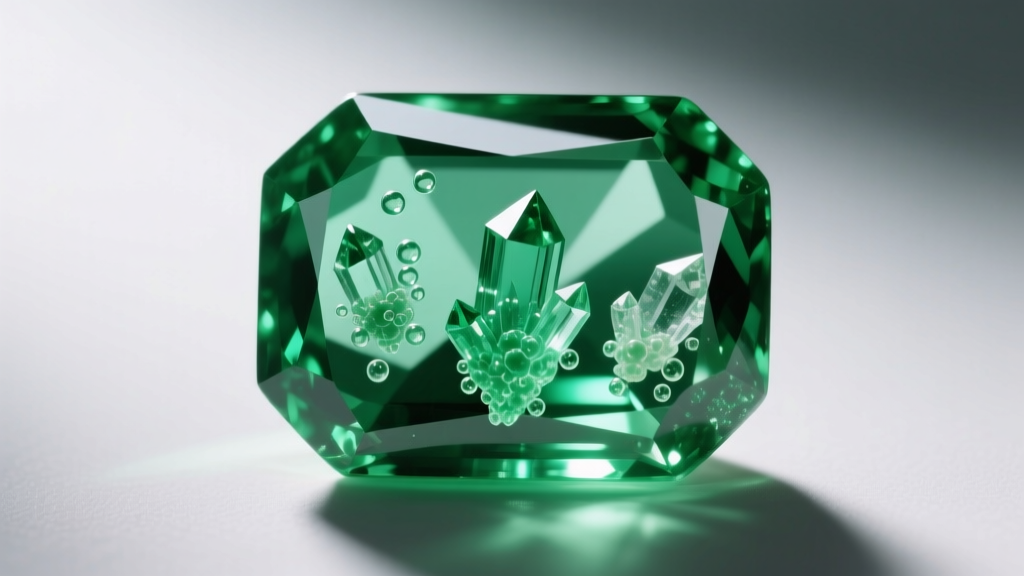
Over 95% of Colombian emeralds undergo clarity enhancement to improve their transparency. The traditional method involves submerging the rough or cut stone in cedarwood oil, which has a refractive index closely matching that of beryl, effectively masking internal fractures.
According to the Gemological Institute of America (GIA), the type and extent of clarity enhancement drastically dictate an emerald's value, durability, and required maintenance routine.
Diagnosing Cloudiness and Leaking Oil
If your once-vivid emerald necklace has developed a milky, cloudy appearance, or if you notice a sticky residue on the bail or chain, the cedar oil has either dried out, oxidized, or leaked. This happens frequently when the jewelry is exposed to heat, such as being left on a windowsill in direct sunlight or worn in a sauna.
The Fix: Do not attempt to re-oil the stone at home using household oils, as these will turn rancid and yellow over time. The necklace must be sent to a specialized lapidary. They will use a vacuum chamber to gently extract the dried, oxidized oil from the microscopic fissures and replace it with a stable, colorless synthetic resin (like Opticon or Perma) or fresh, high-grade cedar oil under controlled pressure.
Cleaning Disasters: Recovering from Ultrasonic Damage
The single most destructive mistake a consumer can make is placing a Colombian emerald necklace into an ultrasonic cleaner or using a steam cleaner. The high-frequency cavitation bubbles generated by ultrasonics will violently expand and contract inside the emerald's natural fissures, literally shattering the stone from the inside out. Steam cleaners will instantly boil the clarity-enhancing oils out of the gem, leaving it opaque and fractured.
Safe Cleaning Protocol
If your necklace has been exposed to harsh chemicals or improper cleaning, follow this immediate recovery protocol:
- Neutralize: Rinse the pendant under a gentle stream of distilled, lukewarm water to remove any chemical residue.
- Prepare Solution: Mix one part pH-neutral baby shampoo with four parts distilled water in a glass bowl.
- Agitate Gently: Submerge the necklace for exactly three minutes. Use a brand-new, ultra-soft baby-hair brush to lightly sweep the back of the stone (the pavilion) where skin oils accumulate.
- Dry: Pat dry with a lint-free microfiber cloth. Never use a hair dryer or compressed air, as forced air can push moisture deeper into the fissures.
Authenticity Red Flags: Is Your Necklace Actually Colombian?
Troubleshooting also involves verifying the origin and authenticity of your piece, especially if you are attempting to insure or resell it. The market is saturated with synthetic emeralds (created via hydrothermal or flux-growth methods) and heavily fracture-filled stones from Zambia or Brazil mislabeled as Colombian.
The 'Jardin' and Three-Phase Inclusion Test
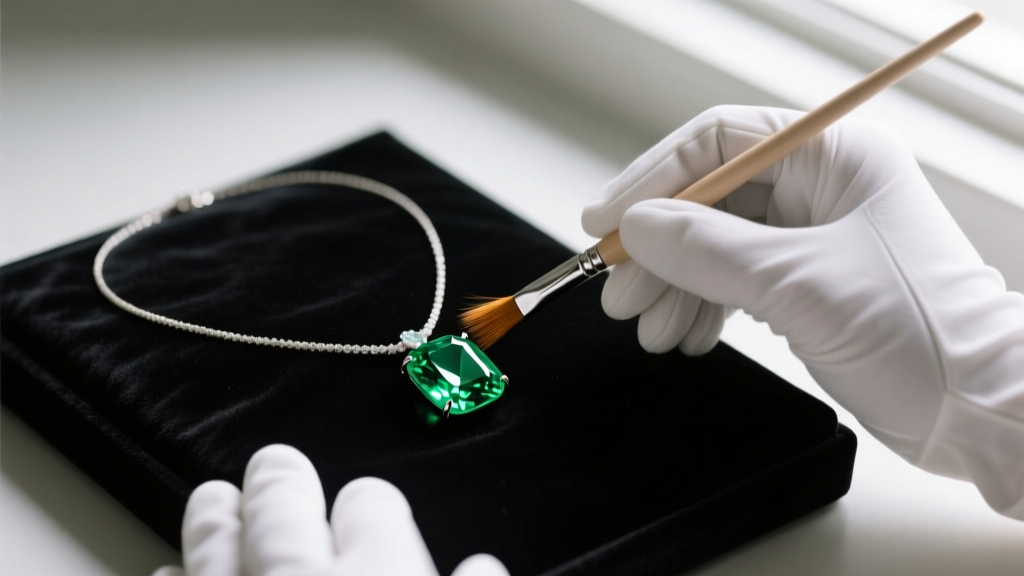
To authenticate a natural Colombian emerald, gemologists look for specific microscopic markers. Under high magnification, a genuine Muzo or Chivor emerald will often display 'three-phase inclusions.' These are tiny, microscopic cavities trapped inside the crystal during its formation millions of years ago, containing three distinct states of matter: a liquid droplet, a gas bubble, and a solid crystal (usually halite or calcite). Synthetic emeralds may contain flux inclusions or nail-head spicule fractures, but they will never contain naturally occurring three-phase inclusions. If your stone lacks a complex jardin and appears flawlessly clean to the naked eye, it is either a synthetic lab-grown stone or a heavily glass-filled composite, both of which require entirely different care regimens.
Insurance and Appraisal Troubleshooting
Finally, a major point of failure occurs when a damaged Colombian emerald necklace needs to be replaced via insurance. Standard jewelry appraisals often fail to note the exact level of clarity enhancement (e.g., AGTA code 'F' for Filled vs. 'O' for Oiled). If your original stone had 'Minor' oiling and the insurance company replaces it with a 'Highly Enhanced' resin-filled stone of the same carat weight and color, you have suffered a massive financial loss. Always ensure your appraisal includes a report from a top-tier laboratory like GIA, SSEF, or Gübelin, explicitly stating the origin (Colombia) and the exact enhancement grade. For more on standardized disclosure, refer to the GIA's official emerald care and disclosure guidelines.
By understanding the unique geological quirks of Colombian emeralds, you can transition from reactive panic to proactive maintenance. Protect the girdle with a bezel, avoid thermal shock, respect the cedar oil treatments, and your emerald necklace will remain a vibrant, heirloom-grade treasure for generations.


