Troubleshooting Your Funky Necklace: Tangles, Weight, and Wear
Fix common issues with your favorite funky necklace. Learn expert troubleshooting for tangling, weight distribution, clasp failures, and mixed-metal care.

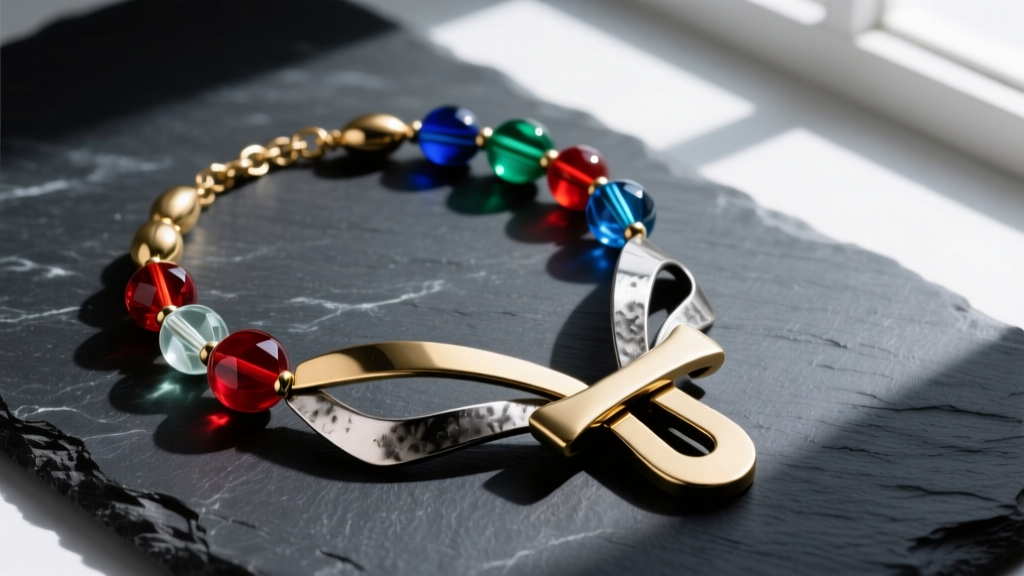
A truly avant-garde, funky necklace is a triumph of personal style. Whether it features asymmetrical geometric brass hardware, multi-strand upcycled resin beads, or heavy raw-stone pendants, these statement pieces defy conventional jewelry norms. However, the very elements that make these designs visually striking—heavy focal points, mixed media, and unconventional silhouettes—also make them highly susceptible to mechanical failure, tangling, and premature wear.
If your favorite statement piece is constantly knotting up, pulling at your nape, or leaving green marks on your collarbone, the issue is rarely user error. It is almost always a structural engineering flaw. In this comprehensive troubleshooting guide, we break down the exact mechanical failure modes of unconventional neckwear and provide actionable, professional-grade solutions to restore your jewelry to perfect working order.
The Anatomy of a Funky Necklace: Why They Fail
To troubleshoot effectively, we must first understand why unconventional necklaces fail at a higher rate than standard cable-chain pendants. A typical funky necklace relies on mixed materials—combining rigid elements like stamped metal with flexible elements like silk cord or leather. This mismatch in tensile strength and flexibility creates stress points. Furthermore, the use of salvaged or upcycled hardware often means the structural components (like jump rings and clasps) were never rated for the dynamic load of being worn on the human body, which subjects jewelry to constant pulling, twisting, and moisture exposure.
Troubleshooting Tangling in Asymmetrical and Multi-Strand Designs
When dealing with a multi-strand or heavily layered funky necklace, tangling is a structural failure of tension and spacing. If your strands are constantly crossing over one another and knotting at the clasp, the stringing material and component spacing are incorrect.
The Spacer Bar Solution
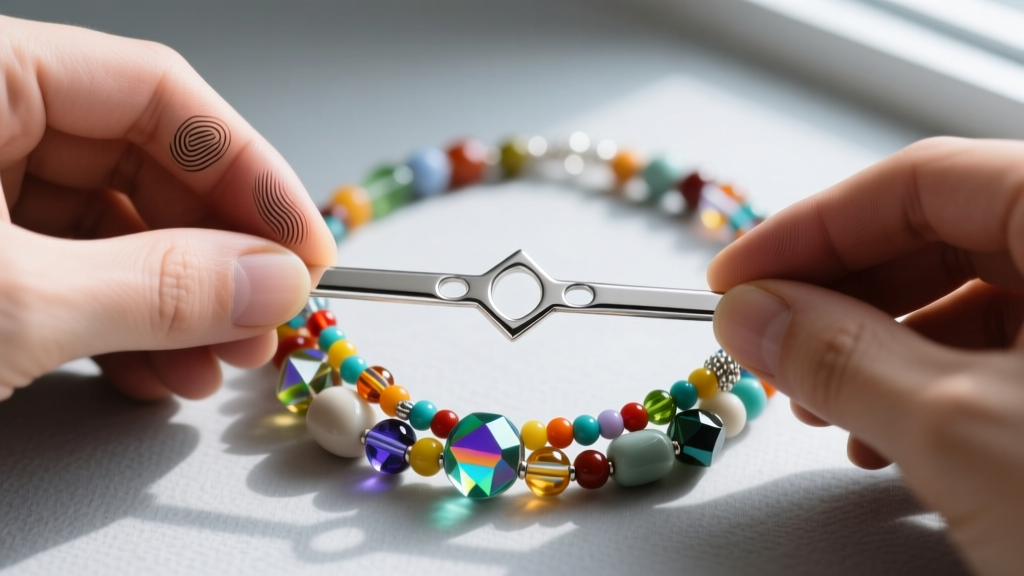
The most effective fix for multi-strand tangling is the integration of a multi-strand spacer bar. These are small, rectangular metal components with multiple loops that keep strands parallel. For a three-strand design, use a sterling silver or brass spacer bar with 2mm to 3mm holes, placing one about two inches from the clasp on each side. This prevents the strands from collapsing into a single knot when the necklace moves.
Wire Gauge and Tension Adjustments
Never use nylon thread or standard monofilament for heavy, funky beadwork. These materials hold 'memory' and will kink over time, causing the necklace to twist uncontrollably. Upgrade your stringing material to a 49-strand micro-woven stainless steel beading wire (such as Soft Flex .019-inch). According to stringing experts at Fire Mountain Gems, 49-strand wire offers the highest drape and flexibility, behaving more like fabric than wire, which drastically reduces structural tangling. Expect to invest around $12 to $18 per spool for professional-grade 49-strand wire.
Fixing Weight Distribution and Chain Stretching
A hallmark of avant-garde neckwear is the use of unconventional, heavy focal points—think raw pyrite geodes, upcycled brass gears, or oversized resin sculptures. However, hanging a 60-gram pendant from a standard 22-gauge cable chain guarantees plastic deformation (stretching) of the chain links within a few weeks.
To fix a stretched chain or prevent future warping, you must match the chain's wire gauge to the pendant's exact weight. Furthermore, the jump ring connecting the pendant to the chain is often the weakest link. Never use a jump ring thinner than 18-gauge (1.0mm) for pendants exceeding 30 grams. For heavy pieces, always use a soldered jump ring or a heavy-duty split ring to prevent the metal from pulling apart under dynamic stress.
Chain Style vs. Weight Capacity Chart
Use this reference chart to ensure your chain can support your heavy, funky pendants without stretching. Data based on standard sterling silver and brass tensile limits provided by jewelry suppliers like Rio Grande.
| Chain Style | Wire Gauge (Thickness) | Max Safe Pendant Weight | Best For |
|---|---|---|---|
| Standard Cable | 20-gauge (0.8mm) | 15 grams | Lightweight acrylic, small resin pieces |
| Box Chain | 18-gauge (1.0mm) | 45 grams | Medium mixed-media pendants, wood |
| Wheat Chain | 16-gauge (1.3mm) | 80 grams | Heavy brass hardware, carved stone |
| Rope Chain | 14-gauge (1.6mm) | 120+ grams | Massive geodes, solid metal sculptures |
Resolving Clasp Failures on Heavy Statement Pieces
Standard spring-ring and lobster clasps are engineered for lightweight chains. The internal spring mechanism in a standard 10mm lobster clasp is rated for a maximum tensile load of roughly 2 to 4 pounds before the lever bends or the spring fatigues, leaving your heavy necklace vulnerable to dropping and shattering.
The Fix: Remove the lobster clasp and upgrade to a 14mm to 18mm toggle clasp. Toggle clasps rely on mechanical geometry (a T-bar passing through a ring) rather than a fragile internal spring, making them virtually fail-proof for heavy neckwear. Alternatively, for a seamless look, install a neodymium magnetic clasp. Ensure you purchase a clasp utilizing N52 grade magnets—the strongest commercially available grade—to ensure the necklace stays securely fastened even when supporting heavy, swinging pendants.
Skin Reactions and Mixed-Material Tarnish Troubleshooting
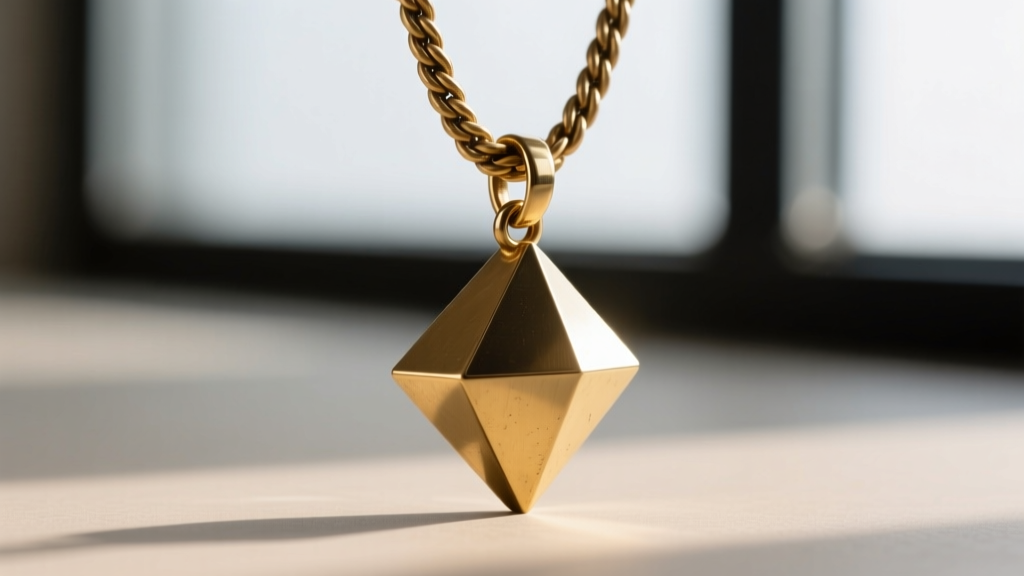
Funky necklaces frequently incorporate raw brass, copper, or salvaged industrial hardware. When these base metals react with the pH of your skin, ambient humidity, and lotions, they oxidize rapidly, leaving a green or black residue on your chest. This is not an allergy; it is a simple chemical oxidation reaction.
Do not abandon your favorite piece. Instead, seal the metal. You have two professional options:
- ProtectaClear Coating: This is a tough, skin-safe, clear polyurethane coating specifically designed for jewelry. A small $15 to $25 kit from Everbrite Coatings will allow you to paint a micro-thin layer over the brass or copper components. It cures in 24 hours and completely blocks skin contact, preventing oxidation for years.
- Renaissance Wax: For a more temporary, matte-finish solution, apply a thin layer of Renaissance Wax using a microfiber cloth. Buff it until it is invisible. This will need to be reapplied every 4 to 6 weeks depending on how often you wear the necklace, but it is excellent for preserving the raw, unpolished look of upcycled metals without adding a glossy sheen.
The 3-Point Framework for Styling Avant-Garde Neckwear
Once your funky necklace is structurally sound, the final troubleshooting step is visual. Heavy, asymmetrical necklaces can easily overwhelm an outfit or look messy if not anchored correctly. Use the 'Anchor, Statement, Void' framework to style your piece flawlessly:
- The Anchor: Your clothing must provide a solid visual base. A funky, multi-textured necklace requires a high-neck, solid-color, matte-fabric garment (like a black cotton turtleneck or a crisp white poplin button-down) to act as a canvas.
- The Statement: The necklace itself. Ensure the heaviest part of the pendant rests precisely at the hollow of your throat or the upper sternum, depending on the chain length.
- The Void: Create negative space. If you are wearing a massive, funky statement necklace, your ears and wrists must remain entirely bare. Remove all earrings, rings, and bracelets. Let the necklace occupy the visual void without competing for attention.
By addressing the mechanical realities of mixed-media jewelry—from upgrading to 49-strand wire and 16-gauge chains to sealing raw metals—you ensure your boldest pieces remain as functional and durable as they are visually striking.


