Troubleshooting Guide: Hailey Bieber Bubble Necklace
Is your Hailey Bieber bubble necklace tangled or tarnished? Discover expert troubleshooting tips for cleaning, detangling, and repairing spherical link chains.

The Anatomy of the Bubble Link Chain
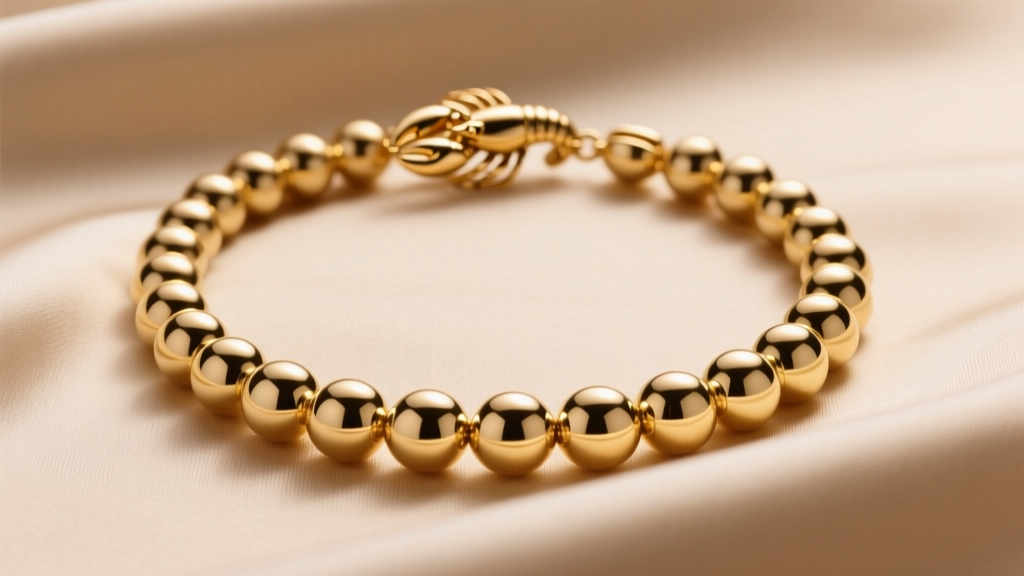
The "Hailey Bieber bubble necklace" trend—characterized by its striking spherical link chains—has evolved from a fleeting celebrity moment into a permanent jewelry box staple by 2026. Whether you are wearing a solid 14k gold vintage piece, a contemporary designer iteration, or a gold vermeil dupe, the bubble chain is undeniably iconic. However, its unique geometry presents specific structural and maintenance challenges that standard cable or curb chains simply do not face.
Unlike flat links that lay flush against the skin, spherical bubble links have a high surface area but rely on tiny, often 18-gauge or 20-gauge connecting loops. This disparity between the heavy mass of the spheres and the delicate wire connecting them creates distinct failure points. From severe tangling and trapped sebum to clasp slippage and plating loss, troubleshooting your bubble necklace requires an understanding of its metallurgy and mechanics. Below, we break down the most common issues and provide professional-grade solutions to restore your chain.
Problem 1: Severe Tangling and Knotting
Bubble chains tangle differently than any other chain style. Because the links are perfectly round, they act like tiny ball bearings. When stored loosely in a drawer or jewelry box, the spheres nest into one another, and the small connecting loops slip through the gaps, creating complex, multi-layered friction knots. Pulling on these knots only tightens the spheres against each other, making them nearly impossible to separate with bare fingers.
The Talc and Pin Method
To safely detangle a bubble chain without warping the delicate connecting loops, you must reduce the friction coefficient between the metal surfaces. Jewelers use a dry lubricant technique that works perfectly at home:
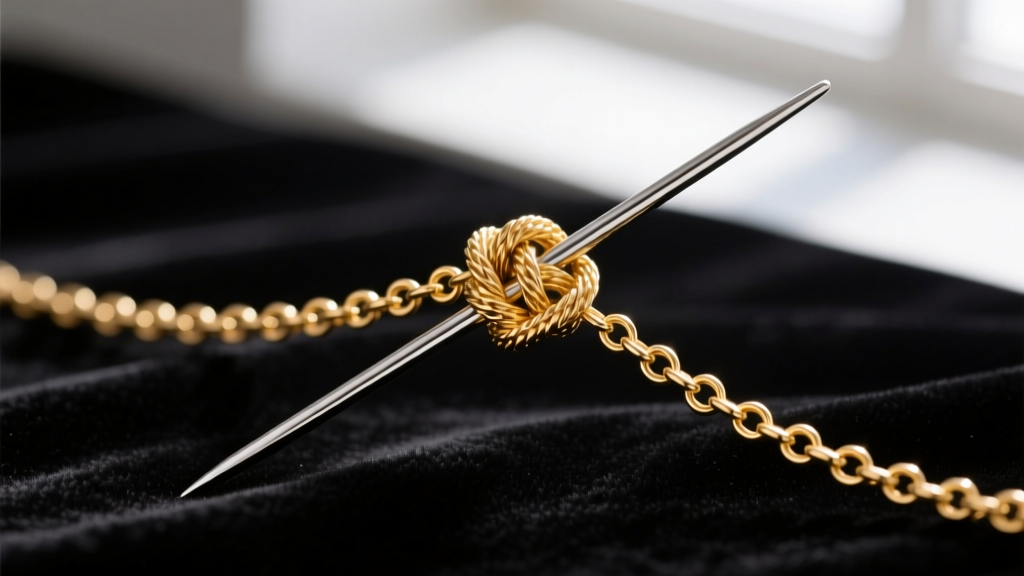
- Step 1: Lay the necklace completely flat on a dark, non-slip surface like a velvet jeweler's mat or a microfiber cloth.
- Step 2: Generously dust the tangled area with talcum powder, cornstarch, or baby powder. The fine particles will work their way into the microscopic gaps between the nested spheres.
- Step 3: Using two fine-tipped steel pin vises or sewing needles, gently work the powder into the knot. Do not pull the ends of the chain; instead, push the spheres inward to create slack.
- Step 4: Once the knot is loosened, use a soft-bristled makeup brush to sweep away the excess powder before storing.
Problem 2: Trapped Grime in Spherical Crevices
The equator of each bubble link, where the two halves of the sphere meet (or where the connecting loop is soldered), is a magnet for sebum, dead skin cells, lotion, and environmental dust. Over time, this accumulation creates a dark, dull ring around each sphere, severely diminishing the chain's light reflection.

Why You Must Avoid Ultrasonic Cleaners
According to the Jewelers of America, while ultrasonic cleaners are excellent for diamond rings, they can be catastrophic for certain bubble chains. Many affordable and vintage bubble chains feature electroformed hollow links to reduce weight and cost. The high-frequency cavitation bubbles in an ultrasonic cleaner can implode inside micro-fissures of hollow links, causing the spheres to crush or crack from the inside out.
The Safe Manual Cleaning Protocol
- The Solution: Mix three drops of ammonia-free, phosphate-free dish soap (like Dawn) into a bowl of lukewarm distilled water. Avoid hot water, which can weaken solder joints on older chains.
- The Agitation: Submerge the chain for exactly 5 minutes. Do not exceed this, especially if your chain is gold vermeil, to prevent water from compromising the silver-to-gold bond.
- The Scrub: Use an extra-soft baby toothbrush to gently sweep along the equator of each sphere. Brush in a single direction to avoid pushing grime deeper into the connecting loops.
- The Rinse & Dry: Rinse under a gentle stream of distilled water. Pat dry with a lint-free microfiber cloth, and use a hair dryer on the "cool" setting to blow moisture out of the tiny connecting rings.
Problem 3: Clasp Slippage and Chain Breakage
A standard 20-inch, 5mm solid gold bubble chain can weigh between 18 and 28 grams. The dynamic load placed on the clasp when the chain swings or catches on clothing far exceeds the static weight. Most mass-produced bubble chains are fitted with standard 6mm spring ring clasps, which are rated for a maximum tensile load of just 4 to 6 grams. This mismatch is the leading cause of lost necklaces.
Clasp Upgrade Matrix
If your bubble necklace frequently slips open or the clasp feels flimsy, take it to a local bench jeweler to upgrade the hardware. Refer to the table below to select the correct replacement based on your chain's weight and thickness.
| Chain Weight / Thickness | Current Clasp (Failure Risk) | Recommended Upgrade | Safety Feature Required |
|---|---|---|---|
| Under 10g (3mm - 4mm) | 6mm Spring Ring | 9mm Lobster Clasp | None required |
| 10g - 20g (5mm - 6mm) | 8mm Spring Ring | 12mm Lobster Clasp | Figure-8 Safety Catch |
| Over 20g (7mm+) | Standard Lobster | Weighted Toggle or Magnetic | Double Safety Figure-8 |
Pro Tip: For heavy bubble chains, a neodymium magnetic clasp with an integrated fold-over safety latch provides the best balance of security and ease of use, preventing the clasp from rotating to the front of your neck.
Problem 4: Plating Loss on Budget Dupes
The Hailey Bieber bubble necklace trend spawned thousands of affordable alternatives. While solid 14k or 18k gold chains will last generations, gold vermeil (sterling silver plated with at least 2.5 microns of gold) and PVD (Physical Vapor Deposition) plated brass chains require specific troubleshooting when the finish begins to wear.
On bubble chains, plating loss occurs almost exclusively at the friction points—specifically the inside of the connecting loops where metal rubs against metal with every movement. If you notice the silver or brass base metal showing through at the joints, your chain has reached the end of its original finish life.
"Unlike solid gold, which can be polished indefinitely, plated bubble chains require a delicate touch. Aggressive polishing cloths will strip the remaining microns of gold right off the high points of the spheres." — GIA Jewelry Care Guidelines
How to Manage Fading Plating
If your vermeil bubble chain is fading, you have two options:
- Professional Replating: A jeweler can strip the remaining gold, polish the sterling silver base, and re-plate it with a heavy 3-micron layer of 18k yellow gold. This typically costs between $60 and $120, depending on the chain's surface area.
- Embrace the Two-Tone Look: If the connecting loops have worn down to silver, you can intentionally lean into a mixed-metal aesthetic by lightly polishing the silver joints with a Sunshine cloth, creating a deliberate contrast against the gold spheres. This works exceptionally well for layered, grunge-inspired 2026 styling.
Long-Term Storage Solutions
To prevent 90% of the issues outlined above, proper storage is non-negotiable for spherical link chains. Never store a bubble necklace in a communal jewelry box. The weight of other pieces will force the spheres into the connecting loops, guaranteeing a tangle.
Instead, hang the necklace on a velvet-lined jewelry stand with a wide, padded hook that supports the chain's weight without stressing the top clasp. If you must store it in a drawer, lay it completely flat in its own individual microfiber pouch, and fasten the clasp to a paperclip or the chain's own end-ring to prevent the tail from slipping through the links during transit. By respecting the unique engineering of the bubble chain, your necklace will remain a flawless, light-catching staple for years to come.


