Troubleshooting Standard Necklace Sizes for a Perfect Fit
Struggling with necklace fit? Learn how to troubleshoot standard necklace sizes, measure correctly, and solve common length and clasp issues.


There are few jewelry frustrations more common than ordering an 18-inch chain online, only to find it choking you like a 16-inch choker or hanging awkwardly over your neckline. While the jewelry industry relies on standard necklace sizes as a baseline for manufacturing, human anatomy, chain physics, and hardware bulk rarely conform to a rigid chart. As a senior style consultant, I see countless clients struggle with fit issues that have nothing to do with the tape measure and everything to do with chain gauge, pendant drop, and clasp dead-space.
In this comprehensive troubleshooting guide, we will decode why standard lengths fail, how to accurately measure your unique anatomy, and the exact hardware hacks needed to fix a necklace that just won't sit right.
The Anatomy of a Sizing Disaster
Before we troubleshoot, we must understand why standard jewelry measurements often fall short in real-world wear. A necklace's length is measured from end to end, including the clasp. However, the way a chain drapes is dictated by three hidden variables:
- Chain Gauge and Thickness: A 4mm Cuban link chain loses about 0.5 to 1 inch of effective drape length compared to a 1mm cable chain. Thicker links cannot bend as tightly around the cervical spine, forcing the necklace to sit higher.
- Pendant Drop Weight: A heavy 15-gram brass pendant will pull a lightweight chain downward, artificially adding up to an inch of visual length.
- Neck and Shoulder Geometry: A broader neck circumference or sloping shoulders will drastically alter where an 18-inch princess length actually rests on your chest.
Decoding Standard Necklace Sizes vs. Actual Fit
Below is a troubleshooting matrix designed to help you identify where your current necklace falls and why it might be failing your outfit or comfort level.
| Size Category | Standard Length | Where It Sits | Common Fit Problem | Troubleshooting Fix |
|---|---|---|---|---|
| Collar | 12 - 13 Inches | Wraps tightly above the collarbone | Feels restrictive; clasp digs into the neck | Add a 1-inch ribbon tie or custom extender chain |
| Choker | 14 - 16 Inches | Rests on the lower neck / collarbone | Thick chains choke the wearer; thin chains get lost in skin folds | Size up 1 inch for chains over 3mm thick |
| Princess | 17 - 19 Inches | Clavicle to upper bust | Hits the collarbone awkwardly; pendant flips upside down | Use a heavier pendant bail or add a jump ring |
| Matinee | 20 - 24 Inches | Center of the bust | Gets caught on high-neck clothing; swings too much | Shorten with a decorative slide clasp or brooch |
| Opera | 28 - 36 Inches | Below the bust / stomach | Tangles easily; catches on desk edges | Double-wrap using a silicone O-ring or magnetic slide |
The Choker Conundrum (14-16 Inches)
The 16-inch choker is the most widely produced standard size, yet it causes the most returns. If your neck measures exactly 14 inches, a 14-inch chain will act as a tourniquet. The Golden Rule of Chokers: Always add 1.5 to 2 inches to your raw neck measurement for a comfortable choker fit. If you are buying a rigid metal torque or a thick leather cord, add a full 2 inches, as these materials lack the drape of a flexible cable chain.
The Princess Length Problem (18 Inches)
The 18-inch necklace is considered the "universal standard," but universal is a myth. On a petite frame with a narrow ribcage, an 18-inch chain may dip into the cleavage, acting more like a Matinee. Conversely, on a broader chest, it may sit rigidly on the collarbone. If your 18-inch chain feels too short, the culprit is often the clasp dead-space. A standard 12mm lobster clasp and accompanying jump ring account for nearly 0.75 inches of the total chain length, robbing you of actual drape.
How to Accurately Measure Your Neck for Troubleshooting

Stop using a rigid ruler or a piece of printer paper. To troubleshoot your ideal size, you need a soft tailor's measuring tape and a mirror. Follow this exact protocol:
- The Baseline Wrap: Wrap the tape measure around your neck where a collar would naturally sit. Note this number (e.g., 14.5 inches).
- The Two-Finger Rule: Slide two fingers under the tape. This simulates the breathing room and movement required for daily wear.
- The Drop Simulation: Use a piece of non-stretch string to simulate longer lengths. Tie a small washer or heavy coin to the end of the string to mimic the gravitational pull of a pendant. Stand in front of a mirror and adjust the string until it hits your desired landmark (e.g., the sternal notch).
- Measure the String: Lay the string flat against a metal tape measure. This is your true required length, factoring in your bust and shoulder slope.
Troubleshooting Hardware: Clasps, Extenders, and Chain Weight
Sometimes the chain length is correct, but the hardware is ruining the fit. According to jewelry manufacturing standards outlined by Rio Grande's findings catalog, the weight and dimensions of your clasp dictate how the chain behaves.
The Pendant Drop Effect
If you slide a 25mm pendant onto an 18-inch chain, the necklace will visually sit at 19 inches. The pendant's bail and the stone's length add physical drop. If you are layering an 18-inch pendant necklace with a 16-inch choker, a large pendant will cause the two chains to tangle and overlap. Fix: When layering, ensure a minimum 3-inch gap between chains if the longer chain features a pendant larger than 15mm.
Extender Chain Hacks
Many mass-market necklaces come with a 2-inch extender chain. While useful, these thin, unsightly chains often catch on hair and sweaters. If you consistently use the last loop of the extender, the necklace is fundamentally too short. Instead of relying on the flimsy extender, visit a local jeweler to have a matching 1-inch segment of chain soldered directly into the main line, or swap the lobster clasp for a sleek magnetic barrel clasp that sits flush against the skin.
Quick Fixes for Common Necklace Sizing Issues
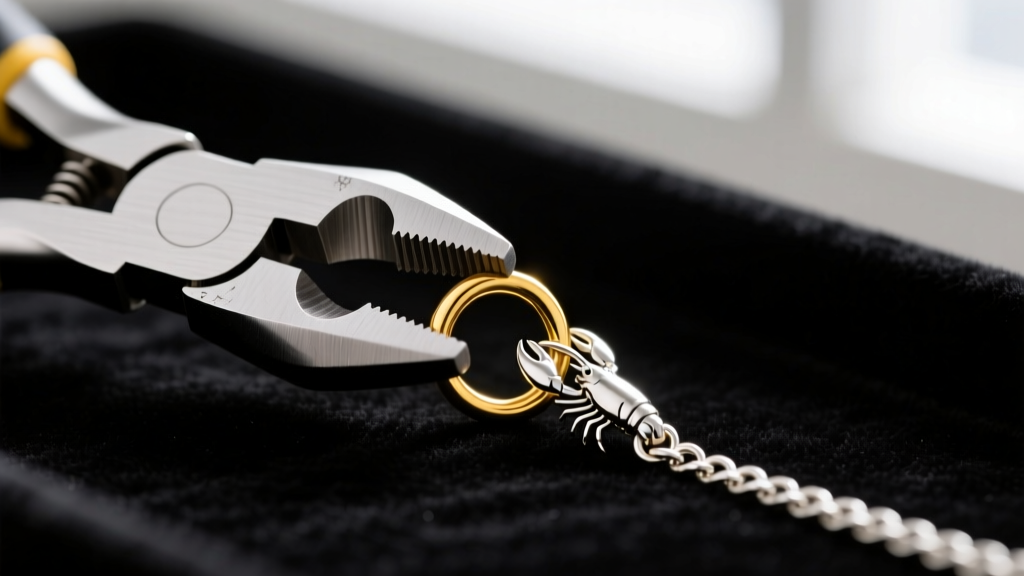
Don't abandon a necklace just because the standard size failed you. Here are three professional troubleshooting fixes you can implement at home or with a quick jeweler visit:
- The Jump Ring Addition: If a necklace is just half an inch too tight, use chain-nose pliers to open a 5mm heavy-gauge jump ring and attach it between the clasp and the chain. This adds exactly 0.25 to 0.4 inches of length without altering the chain's aesthetic.
- The Ribbon Tie Swap: For pearl strands or heavy beaded necklaces that are too short, remove the metal clasp entirely and thread a velvet or silk ribbon through the end loops. This allows for infinite micro-adjustments and adds a romantic, customizable element to the piece.
- The Silicone O-Ring Trick: If an Opera-length chain (30+ inches) keeps slipping off your shoulder or tangling, fold it in half to create a doubled 15-inch choker, and secure the fold with a small, clear silicone jewelry O-ring. This creates a secure, layered look without any permanent alterations.
Expert Tips for Buying Online Without Trying It On
When shopping online, ignore the model photos; models are often pinned into garments, and necklaces are taped to their skin to prevent movement. Instead, read the product specifications for chain width (gauge). If the chain is over 3mm thick, mentally add 1 inch to your desired standard length to compensate for the inner circumference loss. Finally, always verify the retailer's return policy regarding resized or modified chains. By understanding the physics of drape and the reality of standard necklace sizes, you can curate a collection that fits your body perfectly, every single time.