Troubleshooting Your Vintage Watch Necklace: A Repair Guide
Learn how to troubleshoot, clean, and repair a vintage watch necklace. Expert tips on fixing battery leaks, replacing crystals, and securing chains.

The Appeal and Pitfalls of Vintage Watch Necklaces
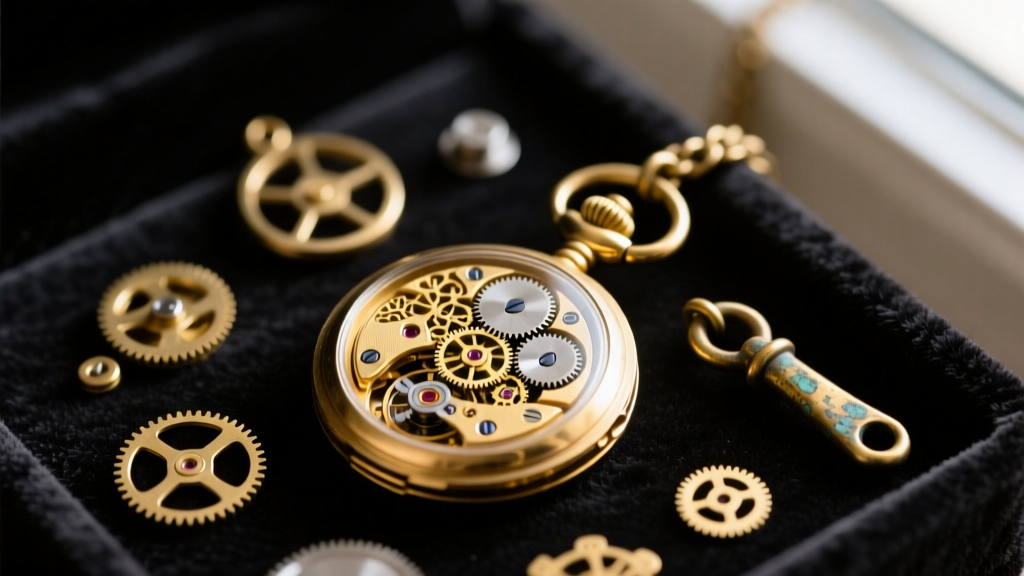
Upcycling heirloom timepieces into wearable art has become a cornerstone of modern jewelry styling. A vintage watch necklace transforms a forgotten pocket watch or a damaged wristwatch into a striking, conversation-starting pendant. However, the transition from a timekeeping instrument to a piece of kinetic neck jewelry introduces unique mechanical and structural vulnerabilities. As of 2026, the secondary market for upcycled horology is booming, but many wearers find their pendants suffering from premature crystal scratching, chain breakage, or sudden movement failure.
Troubleshooting a vintage watch necklace requires a dual mindset: you must think like a horologist diagnosing a movement, and like a jeweler assessing structural stress points. Whether you are dealing with a 1920s Waltham hunter-case pocket watch or a 1970s Bulova Accutron tuning fork pendant, this guide will walk you through the most common failure modes and their precise, actionable solutions.
Diagnosing Common Vintage Watch Pendant Failures
The orientation and kinetic environment of a necklace pendant are vastly different from a watch resting in a pocket or strapped to a wrist. This shift in physics is the root cause of many vintage watch necklace malfunctions.
1. Quartz Movement Corrosion (1970s–1990s Pendants)
If your vintage watch necklace houses an early quartz movement (such as the ubiquitous ESA or Miyota calibers from the 1980s), the most catastrophic threat is battery leakage. A depleted 377 (SR626SW) silver oxide battery left inside a pendant for over a year will leak potassium hydroxide. This highly alkaline fluid creeps along the battery straps and corrodes the copper stepping motor coils, resulting in a dead movement.
The Fix: Remove the battery immediately using non-magnetic plastic tweezers. Do not use metal tweezers, as they can short-circuit the remaining coil wires. Neutralize the alkaline corrosion by applying a microscopic drop of white vinegar to the affected copper traces using a fine oiler, then gently scrub with a fiberglass scratch pen. If the copper wire in the stepping motor is severed, the movement must be replaced, as rewinding a vintage quartz coil is rarely cost-effective.
2. Mechanical Poising Errors and Stem Bending
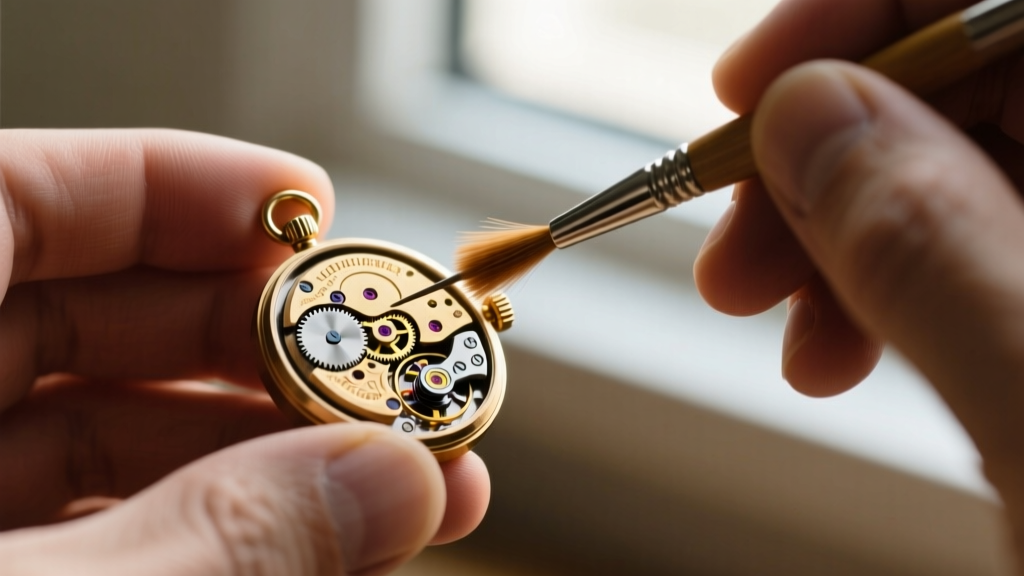
Pocket watches from the early 20th century were engineered to lay flat in a vest pocket or hang perfectly vertical from a top-wind bow. When a jeweler solders a side-bail to the case to convert it into a vintage watch necklace, the watch now hangs at an angle, constantly swinging against the wearer's chest. This erratic positioning can cause poising errors in the balance wheel, leading to severe amplitude drops and timekeeping inaccuracies. Furthermore, the constant swinging puts lateral stress on the crown stem, which was designed for vertical winding, not horizontal pulling.
The Fix: Have a watchmaker adjust the balance wheel poising screws to account for the new vertical hanging position. To protect the stem, ensure the crown is a "push-pull" style rather than a screw-down, and consider having a jeweler install a secondary, non-functional "dummy" crown on the opposite side to act as a structural bumper against chest impacts.
Crystal Restoration: Acrylic vs. Mineral Glass
Because a pendant rests on the sternum, it is highly susceptible to impacts from desks, doorframes, and the wearer's own hands. The type of crystal dictates your troubleshooting approach.
- Acrylic (Hesalite/Plexiglass): Common on pre-1980s pieces. These scratch easily but are simple to restore. Apply a specialized acrylic polishing compound (like Polywatch) and buff in tight, circular motions with a microfiber cloth for 3-5 minutes. Never use a Dremel or high-speed rotary tool, as the friction heat will melt and warp the acrylic.
- Mineral Glass: Found on mid-century wristwatches and later pocket watches. Deep scratches cannot be buffed out with paste. You must source a New Old Stock (NOS) replacement crystal and use a crystal lift or a nylon die press to seat it back into the bezel gasket.
Chain and Bail Troubleshooting: Securing the Connection
The most frequent point of catastrophic failure in a vintage watch necklace is the bail—the small loop connecting the watch case to the chain. A heavy Elgin or Hamilton pocket watch can weigh upwards of 60 grams. When the wearer moves, the kinetic force multiplies, easily snapping a standard jewelry jump ring and sending the heirloom crashing to the floor.
According to the American Watchmakers-Clockmakers Institute (AWCI), structural integrity in horological jewelry must prioritize soldered connections over mechanical ones. Below is a troubleshooting matrix for selecting the correct hardware based on your pendant's weight.
| Pendant Weight | Jump Ring Gauge | Bail Type | Chain Recommendation |
|---|---|---|---|
| Under 15g (Wristwatch) | 18g - 20g | Soldered Loop | 1.5mm - 2.0mm Cable |
| 15g - 35g (Small Pocket) | 16g | Heavy Soldered | 2.5mm - 3.0mm Curb |
| 35g+ (Large Hunter Case) | 14g - 12g | Custom Fabricated | 4.0mm+ Rope or Figaro |
Critical Warning: Never use an unsoldered, split jump ring to attach a heavy vintage pocket watch. The lateral swinging will eventually pry the split open. Always use a laser welder or a micro-torch to solder the jump ring shut after threading it through the bail.
Step-by-Step Restoration Workflow
If you have acquired a tarnished, non-functioning vintage watch necklace at an estate sale or flea market, follow this systematic restoration workflow to bring it back to life without destroying its historical patina.
- Case Opening: Use a Bergeon case knife or a friction ball opener to remove the case back. Avoid excessive downward pressure, which can crack the dial or bend the mainplate.
- Movement Extraction: Remove the movement from the case. Never place a vintage watch movement into an ultrasonic cleaner. The high-frequency vibrations will shatter the jewel settings and strip the delicate lacquer off the dial. The National Association of Watch and Clock Collectors (NAWCC) strictly advises against ultrasonic cleaning of assembled vintage movements.
- Case Polishing: Clean the empty gold-filled or sterling silver case using a mild solution of warm water and dish soap. Use a soft-bristled toothbrush to clean the bezel crevices. Avoid harsh chemical dips, which will strip the gold plating from vintage gold-filled cases.
- Bail Inspection: Examine the solder joint where the bail meets the case. If you see dark oxidation or micro-fractures, the bail must be re-soldered using hard silver or gold solder to withstand the tensile stress of daily wear.
- Reassembly and Sealing: Once the movement is serviced and re-cased, apply a thin layer of silicone grease to the case back gasket to prevent moisture ingress from the wearer's skin and ambient humidity.
When to Seek Professional Horological Help
While basic crystal polishing, battery changes, and chain upgrades can be handled at home, certain issues require a master watchmaker. If your vintage mechanical watch necklace features a complication (such as a chronograph or a moonphase), or if the mainspring has snapped inside the barrel, do not attempt a DIY repair. The cost of sourcing genuine vintage replacement parts far outweighs the initial diagnostic fee of a certified professional.
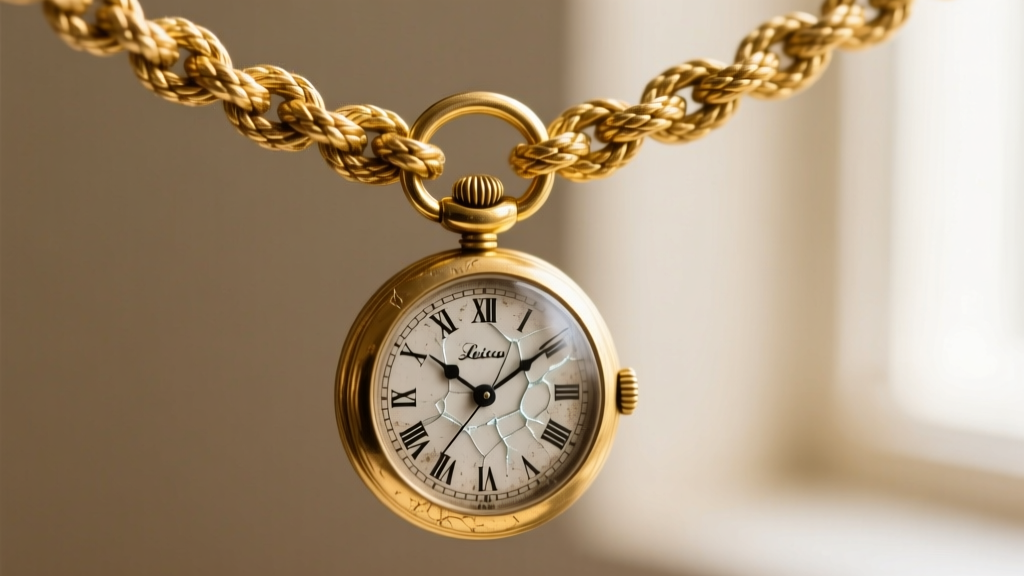
Furthermore, if the dial exhibits "spiderweb" cracking or the radium lume plots are flaking off, a professional can stabilize the dial with specialized archival lacquers, preventing further degradation of the watch's historical value.
Conclusion
A vintage watch necklace is more than just an accessory; it is a wearable piece of history. By understanding the unique mechanical stresses of pendant orientation, selecting the correct gauge for your bails and chains, and employing safe, non-destructive cleaning methods, you can ensure your heirloom timepiece remains a stunning and functional staple of your jewelry collection for decades to come.


