2026 Turquoise Clover Necklace Trend & Style Guide
Discover 2026 turquoise clover necklace trends. Expert styling tips, stone grading, layering techniques, and market pricing for this iconic motif.

The 2026 Resurgence: Why Turquoise Clover Motifs Are Dominating
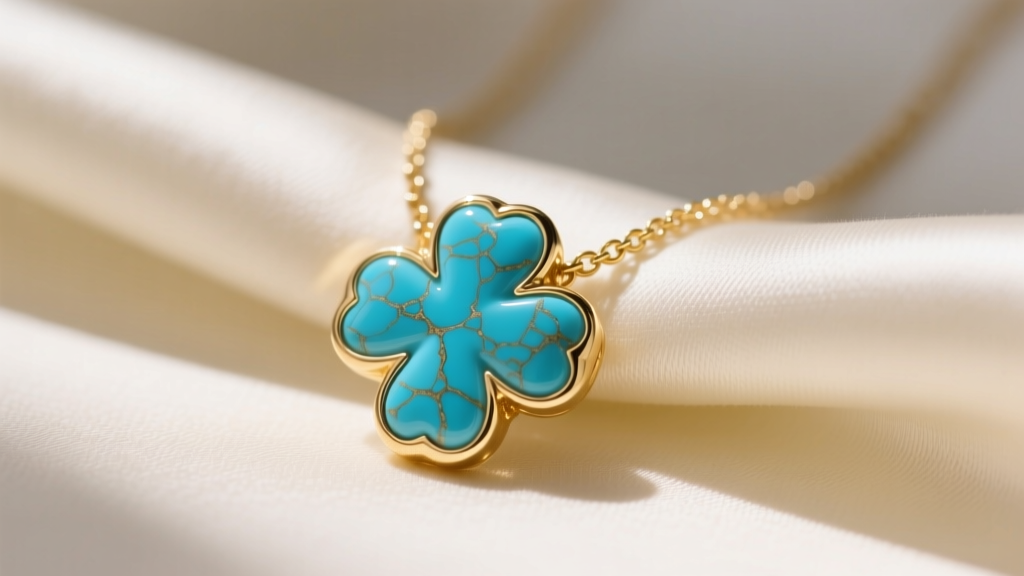
The jewelry landscape of 2026 has decisively pivoted away from the ultra-minimalist, high-polish aesthetics of the previous decade, embracing what industry analysts are calling "organic maximalism." At the epicenter of this shift is the turquoise clover necklace. Historically anchored by heritage houses like Van Cleef & Arpels and their iconic Alhambra collection, the quatrefoil or clover motif has transcended its legacy status to become a staple of contemporary, bohemian-leaning luxury.
But why turquoise? In 2026, consumers are gravitating toward gemstones that offer unique, unrepeatable visual fingerprints. Unlike diamonds or sapphires, turquoise is an opaque, microcrystalline phosphate mineral that carries the geological history of its host rock in the form of matrix—the intricate brown, black, or golden webbing that veines through the stone. When cut into the symmetrical, four-leaf clover shape, the organic chaos of the turquoise matrix creates a striking visual contrast against the precise geometry of the gold bezel.
The Shift from High-Polish to Organic Textures
This year, the most sought-after turquoise clover necklaces feature a "raw luxury" finish. Jewelers are increasingly pairing highly polished 18k yellow gold rims with matte-finished or lightly tumbled turquoise cabochons. This textural dissonance catches the light differently, allowing the waxy luster of the natural stone to take center stage rather than competing with mirrored metal reflections. Furthermore, the standard 15mm "vintage" clover size is being challenged by oversized 22mm statement pieces that drape heavily against the clavicle, reflecting a broader 2026 trend toward bold, singular pendants over delicate, barely-there chains.
Material Breakdown: Grading Your Turquoise
Not all turquoise is created equal, and understanding the gemological nuances is critical when investing in a turquoise clover necklace. According to the Gemological Institute of America (GIA), turquoise ranks between 5 and 6 on the Mohs scale of hardness, making it relatively soft and porous. Because of this, the vast majority of turquoise on the market undergoes some form of stabilization to prevent it from absorbing oils, cosmetics, and moisture, which can alter its color over time.
When evaluating a clover pendant, the origin and treatment of the stone dictate both its aesthetic appeal and its long-term value. Below is a breakdown of the most prominent turquoise varieties used in fine clover motifs today.
| Turquoise Variety | Visual Characteristics | Treatment & Stability | Market Value Tier |
|---|---|---|---|
| Sleeping Beauty (Arizona) | Uniform, intense sky-blue; little to no matrix. | Often stabilized via the Zachery method; highly stable. | Premium (Mine closed; vintage stock commands high prices) |
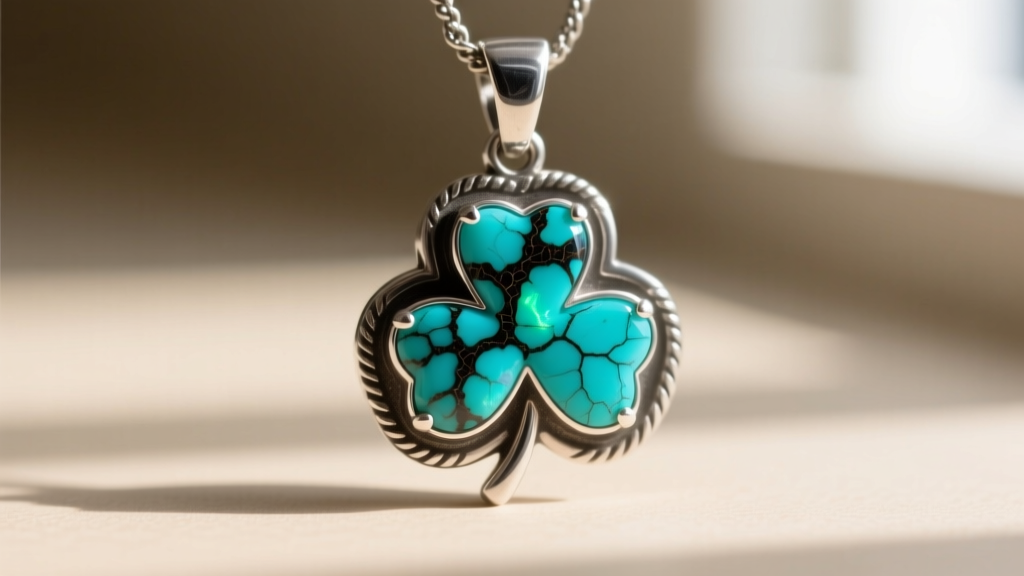
| Kingman (Arizona) | Deep blue to blue-green with striking black/brown webbed matrix. | Epoxy or polymer stabilization common; excellent durability. | High (Favored for organic, high-contrast clover designs) |
| Hubei (China) | Varied blues and greens, often with heavy, muddy matrix. | Heavily treated with dyes and polymers; lower structural integrity. | Accessible (Common in demi-fine and fashion jewelry) |
| Persian (Neyshabur) | Robins-egg blue, highly translucent waxy luster, minimal matrix. | Naturally hard; often left untreated or lightly waxed. | Ultra-Premium (Rare in commercial clover motifs; mostly bespoke) |
Styling Frameworks: Necklines & Layering
The versatility of the turquoise clover necklace makes it a cornerstone of the 2026 wardrobe, but styling it requires an understanding of proportion and chain mechanics. A standard 15mm solid gold and turquoise clover pendant weighs between 4.5 and 7 grams. Many mass-market retailers pair these pendants with flimsy 0.9mm cable chains that are prone to kinking and snapping at the jump ring. For lasting durability, always ensure your necklace features at least a 1.2mm to 1.5mm box, rope, or paperclip chain, secured with an 18-gauge lobster clasp.
The Asymmetrical Drape Technique
With the rise of asymmetrical cutouts and one-shoulder sheer organza tops in 2026 spring/summer collections, the traditional centered pendant drop is being replaced by the asymmetrical drape. To achieve this, utilize a 20-inch to 24-inch paperclip chain. Allow the turquoise clover to rest off-center, hovering near the collarbone on one side, while the elongated chain creates a sweeping, diagonal line across the chest. This technique breaks up the rigid symmetry of the quatrefoil shape, giving it a modern, effortless edge.
Metal Pairings for 2026
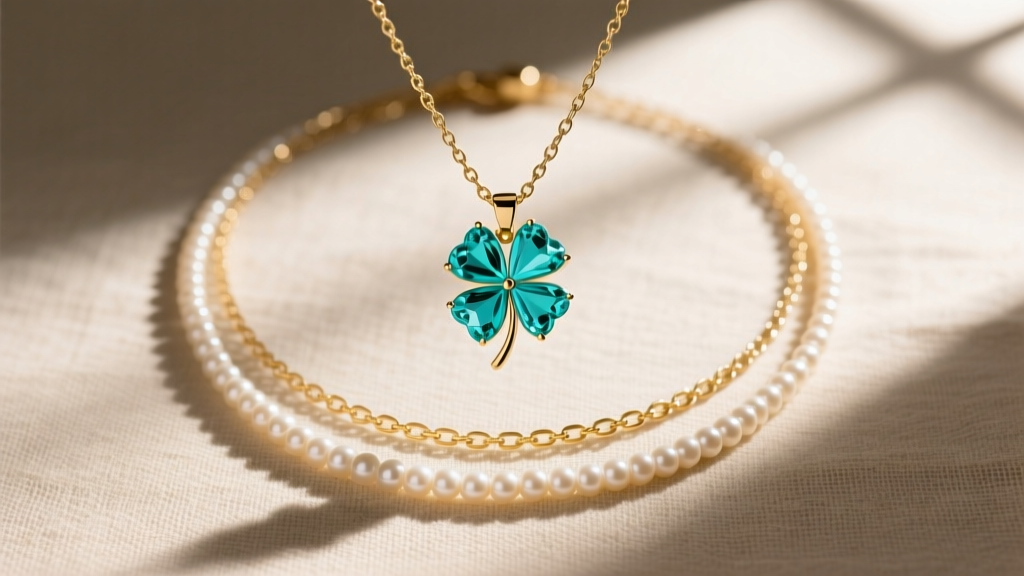
While 18k yellow gold remains the undisputed champion for pairing with turquoise—enhancing the stone's warm undertones and contrasting beautifully with dark matrix webbing—2026 has seen a massive surge in mixed-metal layering. Stylists are pairing yellow gold turquoise clover pendants with 14k rose gold satellite chains and oxidized sterling silver seed-pearl chokers. The key to successful mixed-metal layering is maintaining a unified textural theme; if the clover pendant features a hammered or brushed gold bezel, ensure the accompanying chains feature matte or brushed finishes rather than high-polish links.
Pricing Tiers: From Demi-Fine to Heritage Luxury
The market for turquoise clover necklaces is highly stratified. Understanding where your budget aligns with material quality will help you make an informed purchase and avoid overpaying for heavily treated stones in gold-plated settings.
- Heritage Luxury ($4,500 - $18,000+): The original domain of houses like Van Cleef & Arpels. These pieces feature meticulously matched, high-grade natural turquoise, 18k solid gold milgrain bezels, and proprietary silk-cord or articulated gold link chains. You are paying for brand heritage, flawless stone selection, and impeccable resale value.
- Fine Jewelry Artisans ($1,200 - $3,800): Independent jewelers and boutique brands crafting solid 14k or 18k gold clover motifs using premium Kingman or vintage Sleeping Beauty turquoise. These offer superior craftsmanship and unique, unrepeatable matrix patterns without the heritage brand markup.
- Demi-Fine ($250 - $650): Typically featuring gold vermeil (thick gold plating over sterling silver) or solid 10k gold, paired with stabilized Hubei or lower-grade American turquoise. Excellent for trend-driven styling, though the vermeil will eventually require re-plating if worn daily.
- Fashion & Vintage-Inspired ($40 - $150): Gold-plated brass or copper settings with dyed howlite or reconstituted turquoise dust. These lack gemological value and are best treated as seasonal accessories rather than long-term investments.
Authenticity & Care: Protecting Your Investment
Because turquoise is highly porous, a turquoise clover necklace requires specific care protocols to maintain its structural integrity and color vibrancy. The most common failure mode for turquoise jewelry is chemical degradation from daily wear. Lotions, perfumes, and even the natural acidity of human sweat can penetrate untreated or poorly stabilized stones, causing them to turn a dull, muddy green over time.
To protect your investment, adopt the "last on, first off" rule: put your necklace on only after your cosmetics and fragrances have fully dried, and remove it before showering or exercising. Never use ultrasonic cleaners or commercial silver dips on a turquoise clover pendant; the high-frequency vibrations can fracture the stone along its natural matrix lines, and the harsh chemicals will strip the stone's waxy luster. Instead, gently wipe the turquoise with a dry, untreated microfiber cloth after each wear to remove surface oils. If the gold bezel requires cleaning, use a soft-bristled baby toothbrush dipped in warm water and a drop of mild, phosphate-free dish soap, carefully avoiding direct scrubbing on the turquoise cabochon itself.
Final Thoughts
The turquoise clover necklace in 2026 is more than just a nod to vintage luxury; it is a celebration of geological imperfection framed by human precision. Whether you are investing in a heritage piece with flawless Sleeping Beauty turquoise or layering a demi-fine Kingman clover with mixed-metal chains, understanding the material grades, chain gauges, and styling mechanics will ensure your necklace remains a cornerstone of your wardrobe for decades to come.


