Turquoise Cluster Necklace Buying Guide: What to Look For
Discover how to authenticate, evaluate, and buy a genuine turquoise cluster necklace. Learn about stone treatments, matrix patterns, and silver settings.

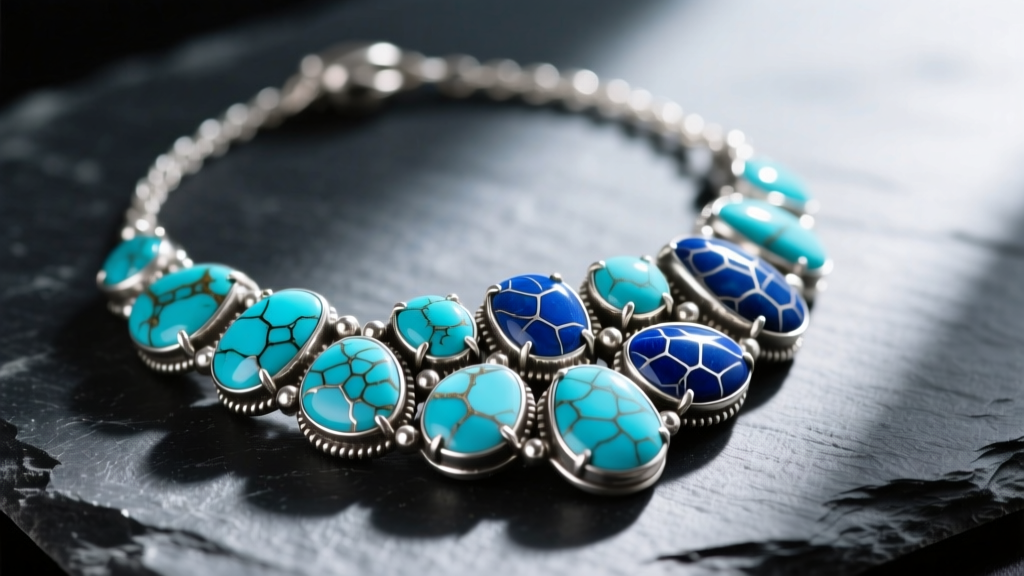
The Anatomy of a Turquoise Cluster Necklace
A turquoise cluster necklace is more than just a piece of jewelry; it is a masterclass in lapidary art and metalsmithing. Characterized by multiple turquoise cabochons grouped tightly together in intricate sterling silver settings, these necklaces trace their most iconic roots to Native American artisans, particularly the Zuni and Navajo tribes. As we navigate the 2026 vintage and contemporary jewelry markets, understanding the structural and material nuances of these pieces is critical for both collectors and first-time buyers.
Cluster necklaces generally fall into three distinct lapidary styles:
- Snake Eye: Features small, perfectly round, domed cabochons that resemble a snake's eye. This style requires immense precision in cutting and setting.
- Needlepoint: Utilizes tiny, elongated, tapered stones with sharp points. The silver bezels must be filed to a razor-thin edge to accommodate the delicate stones.
- Petit Point: Similar to needlepoint but with slightly rounded or teardrop-shaped stones, offering a softer geometric aesthetic.
- Nugget Cluster: Employs rougher, asymmetrical turquoise nuggets, often favored in heavier, more rustic Navajo designs.
When evaluating a piece, the symmetry of the stone cuts and the uniformity of the cluster arrangement are your first indicators of the artisan's skill level. Mass-produced imports often feature uneven spacing, thick clumsy bezels, and mismatched stone domes.
Evaluating the Stones: Natural vs. Treated Turquoise
The most critical factor in determining the value and longevity of a turquoise cluster necklace is the treatment of the stones. According to the Gemological Institute of America (GIA), natural turquoise is relatively soft and porous, rating between 5 and 6 on the Mohs hardness scale. Because a cluster necklace contains dozens of individual stones, the likelihood of every single stone being gem-grade natural turquoise is incredibly rare and commands a massive premium.
The Stabilization Reality
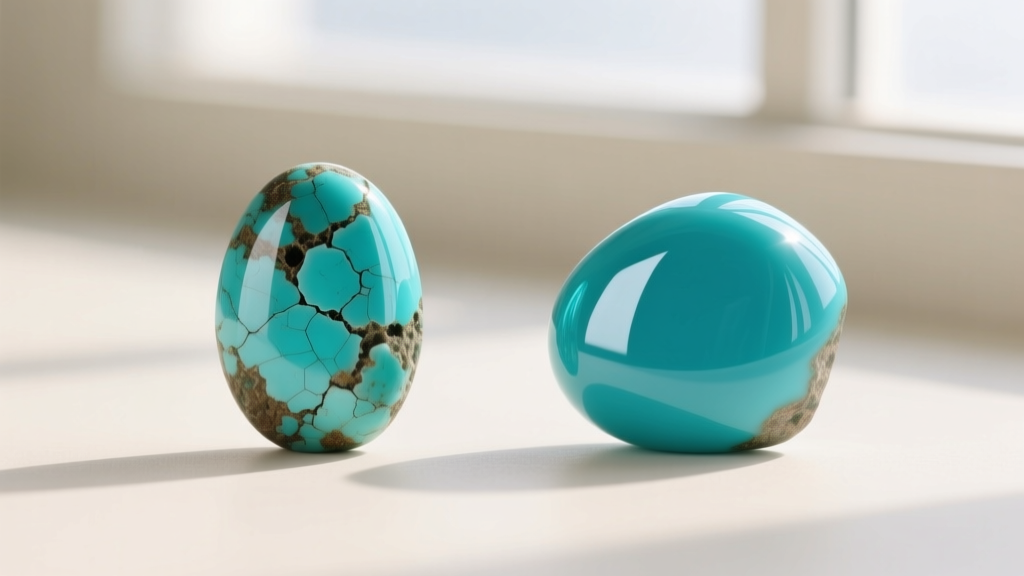
Do not let the word 'stabilized' deter you. In the modern jewelry market, roughly 90% of authentic turquoise is stabilized. This process involves submerging the porous turquoise in a clear epoxy resin or polystyrene under a vacuum. The resin penetrates the stone, hardening it to a Mohs 7, preventing it from absorbing skin oils, cosmetics, or water, which can cause natural turquoise to turn green or crack over time. A stabilized turquoise cluster necklace is highly durable for daily wear. However, ethical sellers must disclose this treatment. If a dealer claims a 40-stone cluster necklace is '100% natural untreated' but prices it under $2,000, you are likely looking at a misrepresentation.
Identifying Imitations and Fakes
The market is flooded with turquoise imitations. When inspecting a cluster necklace, look out for these common substitutes:
- Dyed Howlite or Magnesite: These are white, porous stones dyed blue. Under a jeweler's loupe, you can often see the dye concentrating in the natural crevices of the stone. The color is usually an unnatural, overly uniform robin's egg blue.
- Reconstituted 'Chalk' Turquoise: This is turquoise dust and chalk mixed with resin and dye, then pressed into blocks and cut into cabochons. It lacks the natural depth, matrix variation, and translucency of genuine stone.
- Block Turquoise: Entirely synthetic plastic or resin molded to look like turquoise. It feels unnaturally light and warm to the touch compared to real stone.
Matrix Patterns and Mine Origins
The 'matrix' refers to the host rock or mineral inclusions trapped within the turquoise. In a high-quality cluster necklace, the artisan will often attempt to match the matrix patterns across the dozens of stones, a painstaking process that drastically increases the piece's value. Understanding the mine origins helps you authenticate the stone's pedigree.
| Mine Origin | Location | Base Color | Matrix Characteristics | Market Premium |
|---|---|---|---|---|
| Sleeping Beauty | Arizona, USA | Uniform Sky Blue | None to very minimal | High (Mine closed in 2012) |
| Kingman | Arizona, USA | Light to Deep Blue | Black or golden spiderweb | Moderate to High |
| Bisbee | Arizona, USA | Deep Blue to Blue-Green | Chocolate brown, smoky | Very High (Rare) |
| Lander Blue | Nevada, USA | Varied Blue-Green | Complex black spiderweb | Extreme (Investment grade) |
If a seller claims a cluster necklace features 'Lander Blue' turquoise, demand provenance. Lander Blue is one of the rarest turquoises on earth, and a full necklace composed of it would easily fetch tens of thousands of dollars. More commonly, you will find Kingman or Nevada spiderweb turquoise in mid-tier to high-end cluster pieces.
Metalwork and Setting Quality
The silverwork in a turquoise cluster necklace is just as important as the stones. Authentic Native American and high-end contemporary pieces are crafted from solid .925 sterling silver. Avoid pieces marked 'Tibetan Silver,' 'Alpaca,' or 'Silver-Plated,' as these are base metals that will tarnish poorly, cause skin discoloration, and ultimately degrade, causing the cluster stones to fall out.
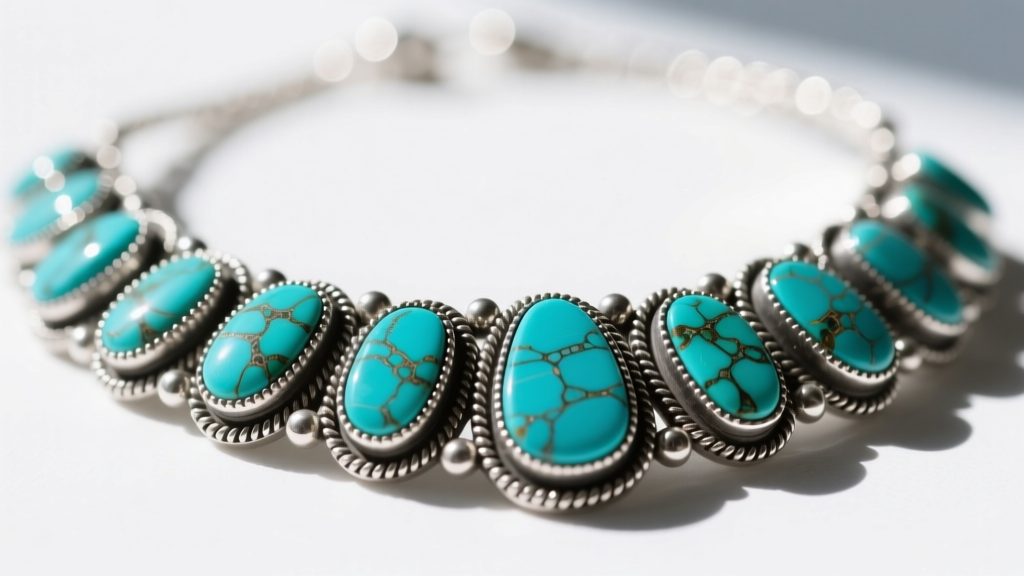
Examine the bezel settings closely. The bezel is the strip of silver wrapped around the edge of each cabochon to hold it in place. In a master-crafted necklace, the bezel will be filed completely smooth against the stone, with no gaps where dirt can accumulate. Many artisans use a 'sawtooth' bezel—a strip of silver with tiny teeth filed into it—which allows the metal to fold neatly over the curved dome of the cabochon without wrinkling.
Furthermore, look at the background silver between the clusters. High-quality pieces often feature 'oxidized' or 'antiqued' backgrounds. The silversmith intentionally darkens the recessed areas of the silver with liver of sulfur, then polishes the high points. This creates a stark, beautiful contrast that makes the vibrant blue and green of the turquoise cluster pop.
Pricing Tiers: What Should You Pay in 2026?
Pricing a turquoise cluster necklace requires analyzing the stone quality, the metal weight, and the artisan's reputation. Here is a realistic breakdown of the current market:
- $150 - $400 (Commercial / Import Grade): These pieces are typically mass-produced overseas using stabilized or dyed howlite, thin silver plating, and glued-in stones. They are fashion accessories, not heirlooms.
- $500 - $1,500 (Authentic Native American / Artisan): In this tier, you are buying genuine .925 sterling silver and real, stabilized turquoise. These are often crafted by recognized Zuni or Navajo families. The stone matching is good, and the bezel work is secure.
- $1,500 - $4,000 (Master Crafted / High-Grade Stabilized): Pieces in this range feature exceptional needlepoint or snake-eye clusters, heavy troy ounce silver weights, and perfectly matched stones from reputable mines like Kingman.
- $5,000 - $15,000+ (Natural, Gem-Grade, Vintage): Reserved for vintage mid-century pieces or contemporary masterworks using entirely natural, untreated, high-grade turquoise with documented provenance and complex, matched spiderweb matrices.
Final Authentication Checklist
Before finalizing your purchase, run the necklace through this quick diagnostic checklist to ensure you are getting exactly what you are paying for:
- Check the Stamp: Look for a '.925' or 'Sterling' stamp on the clasp or the back of the main pendant cluster. Note that some vintage Native American pieces were not stamped, so rely on a silver acid test if unsure.
- Inspect the Back: Turn the necklace over. High-quality cluster work will have clean, filed soldering lines. You should not see blobs of solder or rough, sharp edges that will catch on clothing.
- The Temperature Test: Real turquoise and sterling silver feel noticeably cold to the touch and take a moment to warm up against your skin. Plastic or resin fakes will feel room-temperature immediately.
- Verify the Source: When buying Native American jewelry, always purchase from dealers who are members of the Indian Arts and Crafts Association (IACA) or who provide a written certificate of authenticity detailing the artist's name, tribe, and materials used, as mandated by the Indian Arts and Crafts Act.
Expert Insight: Never use the 'hot pin test' or apply acetone to a finished turquoise cluster necklace to test for plastic or dye. These destructive tests will melt the epoxy used in legitimate stabilization processes, permanently ruining the finish of the stones and degrading the silver settings. Always rely on visual loupe inspection and dealer provenance.
Investing in a genuine turquoise cluster necklace is an investment in wearable history and exceptional craftsmanship. By understanding the nuances of stone treatments, matrix origins, and silversmithing techniques, you can confidently acquire a piece that will retain its beauty and value for generations to come.


