How to Style and Authenticate a Turquoise Disk Necklace
Discover how to choose, authenticate, and style a turquoise disk necklace. Learn about matrix patterns, stabilization, and metal pairings in our guide.

The Enduring Appeal of the Turquoise Disk Necklace
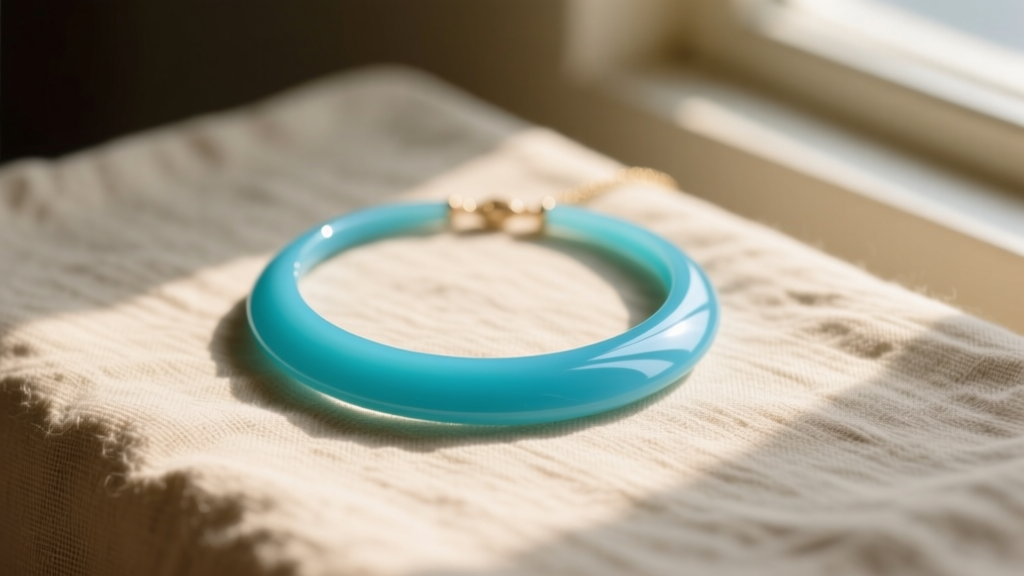
The turquoise disk necklace has transcended its Southwestern roots to become a staple in modern, minimalist, and bohemian jewelry wardrobes. Unlike traditional heishi beads, which are uniformly small and tubular, flat-cut turquoise disks offer a broader surface area, showcasing the stone's natural color variations and intricate matrix veining. In the 2026 jewelry market, the shift toward organic, earth-toned accessories has propelled these necklaces into the spotlight, making them a highly sought-after piece for both casual layering and statement styling.
However, navigating the turquoise market can be notoriously difficult for beginners. Because high-quality, natural turquoise is increasingly rare and heavily regulated, the market is flooded with stabilized, reconstituted, and outright fake alternatives. This comprehensive guide will walk you through the exact material grades, authentication techniques, and styling frameworks you need to confidently purchase and wear a turquoise disk necklace.
Natural vs. Stabilized Turquoise: What Beginners Must Know
The most critical concept to grasp when shopping for turquoise is the difference between natural and stabilized stones. Natural turquoise is a porous phosphate mineral with a Mohs hardness rating of 5 to 6. In its raw state, it is often too brittle to be cut into thin, flat disks without cracking or chipping during the lapidary process.
The Stabilization Process Explained
To solve this fragility issue, approximately 90% of the turquoise on the commercial market undergoes stabilization. This is an accepted and permanent enhancement where the porous stone is infused with a clear epoxy resin or polymer under high pressure. According to the Gemological Institute of America (GIA), stabilization hardens the stone, making it durable enough for jewelry manufacturing while locking in its vibrant color. If a seller advertises a 'natural' turquoise disk necklace at a budget-friendly price point (under $100), it is almost certainly stabilized.
Reconstituted and Dyed Alternatives
Beginners should actively avoid 'reconstituted' or 'block' turquoise. This material is created by grinding low-grade turquoise dust into a fine powder, mixing it with dyes and heavy resins, and pressing it into blocks before cutting. While it is technically turquoise-adjacent, it lacks the structural integrity, value, and unique matrix patterns of solid stone. Always ask the jeweler for a breakdown of the treatment process before purchasing.
Decoding the Matrix: Color and Veining Guide
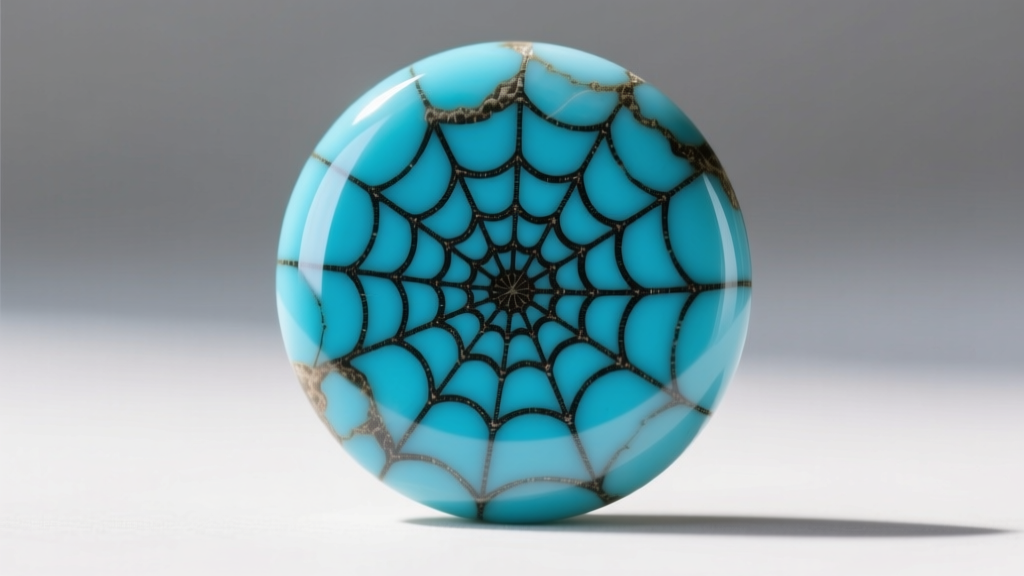
The 'matrix' refers to the host rock or mineral impurities that remain embedded in the turquoise when it is cut. In a turquoise disk necklace, the matrix is highly desirable, as it acts like a fingerprint, proving the stone's natural origin and adding visual depth. The color and pattern of the matrix can often tell you exactly which mine the stone was sourced from.
| Mine Origin | Base Color | Matrix Pattern & Color | Market Value |
|---|---|---|---|
| Sleeping Beauty (AZ) | Vivid, uniform sky blue | Little to no matrix (clean) | Premium ($15-$30/ct) |
| Kingman (AZ) | Light to medium blue | Black or brown spiderweb | High ($8-$20/ct) |
| Royston (NV) | Deep green to light blue | Heavy, thick brown veining | Moderate to High |
| Persian (Iran) | Intense robin's egg blue | Faint golden-brown webbing | Rare / Collector |
When selecting a disk necklace, consider your skin undertones. The deep greens and brown matrices of Royston turquoise beautifully complement warm, olive, and deep skin tones, while the stark, clean blues of Sleeping Beauty pop brilliantly against cool and fair complexions.
How to Spot Fakes: The Howlite and Magnesite Trap
Because genuine turquoise commands a high price, fraudulent sellers often dye cheaper, porous white minerals—most commonly howlite and magnesite—to mimic turquoise. As noted by mineralogical databases like Mindat, howlite has a distinctly different crystalline structure and Mohs hardness (3.5) compared to true turquoise.
To spot a fake, examine the crevices and drill holes of the disks under a jeweler's loupe. Dyed howlite will show concentrated pools of blue dye in the natural cracks of the white stone, and the 'matrix' will often look like superficial, painted-on lines rather than deep, structural inclusions. Additionally, genuine turquoise feels cool and heavy to the touch, whereas dyed magnesite or plastic reconstitutions will quickly warm to body temperature and feel unnaturally light.

Metal Pairings and Hardware Specifications
The metal you choose to house your turquoise disks drastically alters the necklace's overall aesthetic. Sterling silver (925) is the traditional pairing, offering a cool, vintage Southwestern vibe. However, silver oxidizes over time, and the resulting tarnish can sometimes rub off onto porous, unstabilized turquoise. To prevent this, ensure your silver components are rhodium-plated or commit to regular polishing.
For a more contemporary, luxurious look, 14k or 18k yellow gold provides a stunning, high-contrast backdrop that warms up the blue and green hues of the stone. When it comes to the chain itself, turquoise disks are surprisingly heavy. A delicate 0.8mm chain will eventually stretch or snap under the weight of a full strand of stone disks. Opt for a sturdy 1.2mm to 1.5mm rope, box, or wheat chain to ensure long-term durability and proper drape.
Sizing, Layering, and Neckline Matching
The thickness and diameter of the disks will dictate how the necklace sits on your chest. Standard disks range from 4mm to 8mm in diameter and 2mm to 4mm in thickness. Here is a practical framework for sizing and layering:
- 16-Inch Choker: Best worn with V-necks or scoop necks. A choker of 6mm disks creates a bold, collar-like statement piece that draws the eye directly to the face.
- 18-Inch Princess: The most versatile length. It rests perfectly on the collarbone and pairs flawlessly with crew necks, button-downs, and casual tees. This is the ideal base length for layering.
- 22 to 24-Inch Matinee: Perfect for bohemian styling over flowy blouses or turtlenecks in the autumn. The longer drop allows the heavy disks to swing freely, creating a dynamic, kinetic movement.
Expert Layering Tip: To avoid a cluttered look, pair your 18-inch turquoise disk necklace with a 16-inch delicate gold snake chain and a 22-inch elongated pearl strand. The contrast in textures—smooth metal, organic stone, and lustrous pearl—creates a highly curated, professional aesthetic.
Care and Maintenance for Porous Gems
Even stabilized turquoise requires mindful care. The stone is highly sensitive to chemicals, heat, and prolonged exposure to moisture. Never wear your turquoise disk necklace while swimming in chlorinated pools, applying self-tanner, or spraying perfume. The chemicals can strip the polish, alter the dye, or degrade the epoxy resin over time.
To clean your necklace, simply wipe the disks with a soft, slightly damp microfiber cloth after wearing. Avoid ultrasonic cleaners and steamers at all costs, as the high-frequency vibrations and intense heat can cause the stone to fracture or the resin to cloud. Store the necklace flat in a fabric-lined jewelry box, separated from harder gemstones like diamonds or sapphires that could easily scratch the turquoise's relatively soft surface.


