Beginner Guide to Buying a Turquoise Heishi Necklace
Learn how to choose an authentic turquoise heishi necklace. We cover stone grading, bead sizing, stringing materials, and pricing for beginners.

What Exactly is a Heishi Necklace?
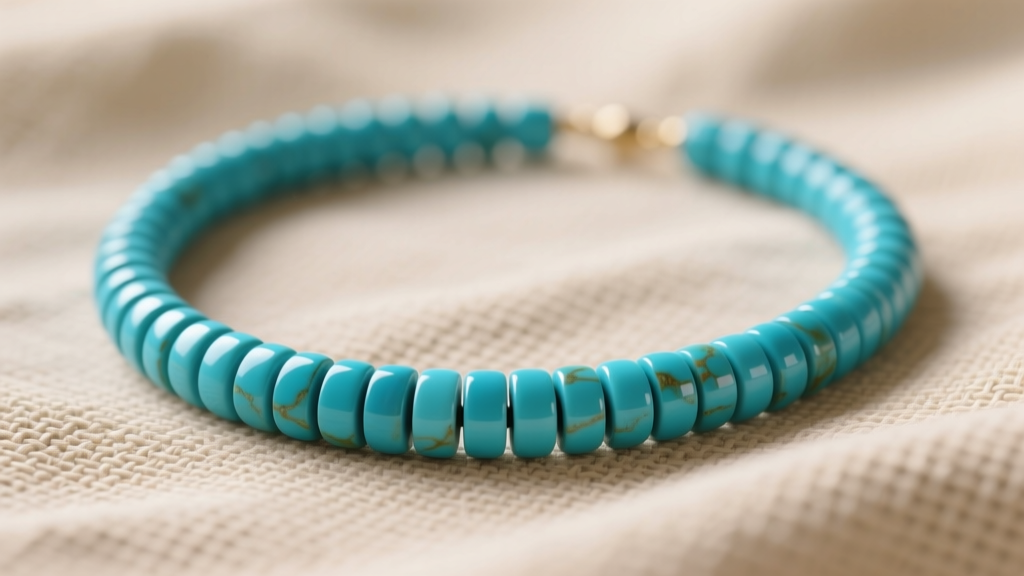
If you are stepping into the world of artisan jewelry, the turquoise heishi necklace is a cornerstone piece that bridges ancient tradition and modern bohemian style. The word 'heishi' (pronounced hee-shee) translates to 'shell' in the Keresan language spoken by the Kewa Pueblo people (formerly Santo Domingo Pueblo) of New Mexico. According to the Smithsonian National Museum of the American Indian, traditional heishi was hand-rolled from spiny oyster shell, mother-of-pearl, and coral. Today, the term has evolved to describe any flat, disc-shaped bead that is smoothly ground and strung together to create a seamless, liquid-like drape around the neck.
Unlike chunky statement necklaces, a turquoise heishi necklace offers a refined, uniform texture. The beads are typically cut into small discs, drilled through the center, and strung tightly so that the edges meet perfectly. This creates a flexible, rope-like necklace that feels incredibly smooth against the skin. For beginners, understanding the nuances of stone authenticity, bead sizing, and stringing durability is critical before making your first purchase.
Authentic Turquoise vs. Imitations: A Beginner's Breakdown
The market is currently flooded with imitation turquoise, making it the most significant hurdle for beginners. Because genuine turquoise is a porous, relatively soft stone (ranking 5 to 6 on the Mohs hardness scale), creating thin, uniform heishi discs from raw, untreated stone is incredibly difficult and results in high breakage rates. Therefore, understanding stone treatments is just as important as identifying outright fakes.
The 'Howlite' and 'Magnesite' Trap
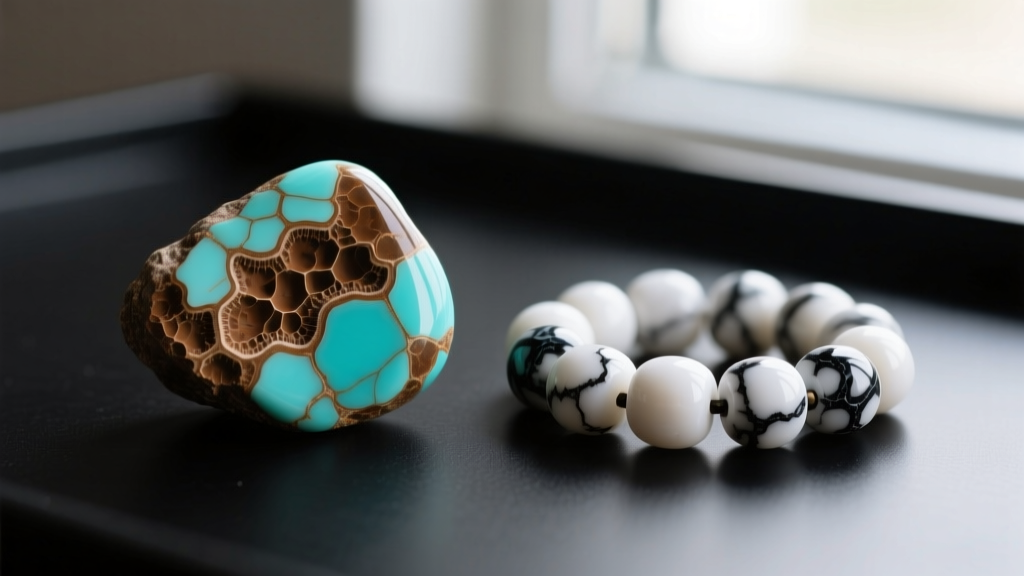
The most common imitations are howlite and magnesite. These are naturally white or gray, highly porous stones that easily absorb dyes. Manufacturers dye them bright blue and stamp or paint faux 'matrix' (the brown or black webbing seen in natural turquoise) onto the surface. Howlite is much softer (Mohs 3.5) and cheaper than turquoise. If a heishi necklace is perfectly uniform in color with thick, painted-looking black veins, and the price seems too good to be true, you are likely looking at dyed howlite.
Stabilized vs. Natural Turquoise
Many beginners mistakenly believe that 'stabilized' turquoise is fake. According to the Gemological Institute of America (GIA), stabilization is a widely accepted and necessary treatment for most turquoise used in jewelry. Because raw turquoise is brittle, it is placed in a vacuum chamber where a clear epoxy resin is forced into the stone's microscopic pores. This hardens the stone, deepens its color, and prevents it from absorbing oils and lotions that would otherwise turn it green over time. For a turquoise heishi necklace, stabilization is practically mandatory; without it, the thin discs would easily crack during the grinding and drilling process. Always look for sellers who transparently disclose 'stabilized' rather than claiming 'natural' for perfectly uniform, bright blue beads.
Sizing and Proportions: Finding Your Ideal Fit
The beauty of a turquoise heishi necklace lies in its versatility, but the visual impact changes drastically depending on the bead diameter and the overall length of the strand. Heishi beads are measured by their diameter (the width of the disc face). Below is a practical decision framework to help you choose the right proportions for your wardrobe.
| Bead Diameter | Best Length | Style Vibe | Neckline Pairing |
|---|---|---|---|
| 2mm - 3mm | 16" - 18" | Delicate, minimalist, subtle | V-necks, scoop necks, office wear |
| 4mm - 5mm | 18" - 22" | Classic bohemian, versatile | Crew necks, button-downs, casual tees |
| 6mm - 8mm | 24" - 30" | Bold, statement, Southwestern | Solid turtlenecks, maxi dresses, outerwear |
Pro Tip for Layering: If you plan to layer your turquoise heishi with gold or silver chains, stick to the 2mm to 3mm diameter range at a 16-inch choker length. This provides a pop of color at the base of the throat without tangling with longer, heavier metal pendants.
Stringing Materials: The Hidden Failure Point
Beginners often focus entirely on the stone and ignore what holds it together. The stringing material is the most common point of failure in vintage and poorly made heishi necklaces. Historically, artisans used silk thread. However, turquoise is highly porous. It absorbs sweat, body oils, and perfumes from your skin, which then transfer to the silk thread, causing it to rot, stretch, and eventually snap.
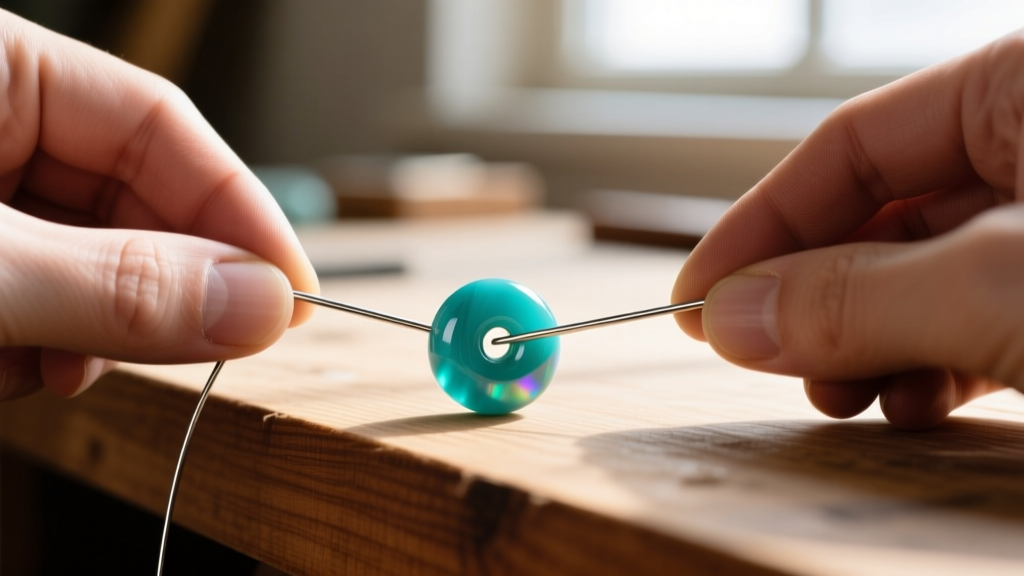
When buying a modern turquoise heishi necklace, or having one restrung, insist on nylon-coated stainless steel micro-wire. The industry standard is a 49-strand wire, such as Soft Flex or Beadalon, in a .018-inch or .019-inch gauge. This wire offers the flexibility of thread but the tensile strength of steel. It will not degrade from skin oils and can easily support the weight of dense stone beads. If the necklace uses a clasp, ensure the wire is finished with proper metal crimp beads and a wire guardian (French wire) to prevent the sharp edge of the clasp from sawing through the wire over time.
Pricing Guide: What Should You Actually Pay?
Pricing for turquoise jewelry can be opaque, but understanding the baseline market rates for 2026 will protect you from overpaying for fakes or underpaying for suspiciously low-quality goods. Here is what you can expect to pay for a standard 18-inch necklace with 4mm beads:
- Dyed Howlite/Magnesite (Imitation): $15 to $35. Often found in fast-fashion boutiques and mass-market online retailers.
- Stabilized Chinese or Low-Grade Turquoise: $40 to $80. Genuine stone, but heavily treated and often lacking distinct matrix patterns.
- Stabilized American Turquoise (e.g., Kingman, Sleeping Beauty): $120 to $350. High-quality, durable, with beautiful color and authentic matrix. This is the sweet spot for most buyers.
- Natural, Untreated High-Grade Turquoise (e.g., Lander Blue, Number 8): $800 to $3,000+. Extremely rare. Beads are usually uneven, and the necklace will come with extensive gemological documentation.
Care and Maintenance for Longevity
Even stabilized turquoise requires specific care to maintain its vibrant color and structural integrity. Because the stone is still somewhat porous, it is highly susceptible to chemical damage. Never wear your heishi necklace while swimming in chlorinated pools or hot tubs; chlorine can strip the polish and alter the stone's color.
Furthermore, never use ultrasonic or steam cleaners on turquoise. The high-frequency vibrations can cause microscopic fractures in the discs, and the heat can melt or cloud the epoxy resin used in stabilization. To clean your necklace, simply wipe it down with a soft, slightly damp microfiber cloth after wearing it to remove body oils, and lay it flat to dry. Store it in a soft pouch away from harder gemstones like diamonds or sapphires, which can easily scratch the surface of the heishi discs.


