Ultimate Care Guide for Your Turquoise Seed Bead Necklace
Learn expert cleaning and maintenance tips to protect your turquoise seed bead necklace from damage, discoloration, and string degradation.

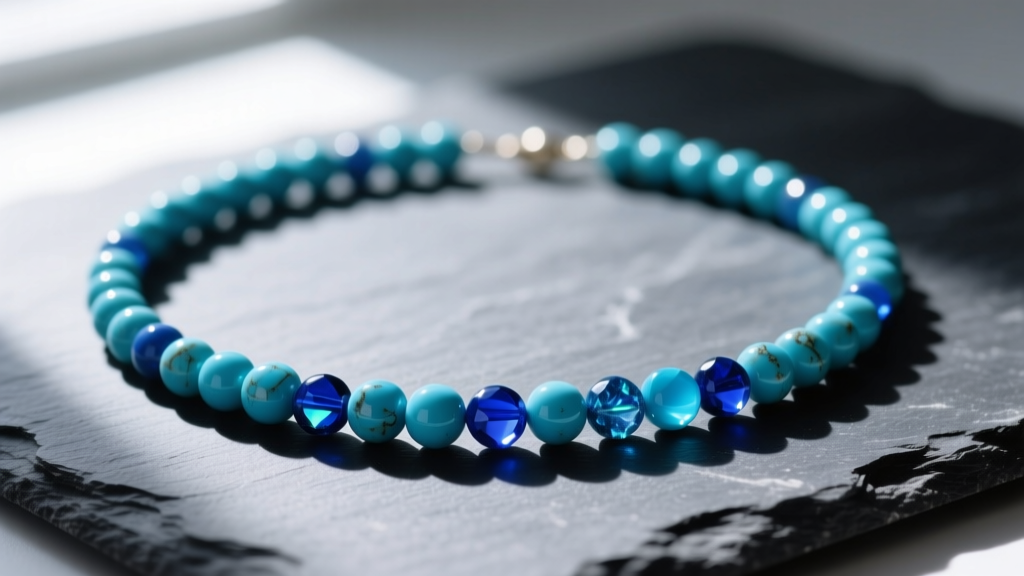
The Delicate Intersection of Stone and Thread
A turquoise seed bead necklace is a masterpiece of texture and color, often featuring hundreds of meticulously strung size 11/0 or 15/0 beads. However, caring for this specific type of jewelry requires navigating a dual-threat vulnerability: the extreme porosity of natural turquoise and the structural fragility of the threading material. Unlike solid gemstone pendants on metal chains, a seed bead necklace relies entirely on organic or synthetic threads that degrade over time, while the stones themselves act as tiny sponges for environmental pollutants. According to the Gemological Institute of America (GIA), turquoise is a hydrous phosphate of copper and aluminum, ranking just 5 to 6 on the Mohs hardness scale. This makes it highly susceptible to chemical alteration, dehydration, and physical abrasion. To preserve the vibrant sky-blue or deep green hues of your necklace, you must abandon standard jewelry cleaning protocols and adopt a specialized, conservation-grade approach.
Understanding the Vulnerabilities of Turquoise Seed Beads
Before applying any cleaning method, it is critical to understand the failure modes specific to turquoise seed beads. Because seed beads have microscopic drill holes, the surface area exposed to skin oils, cosmetics, and sweat is exponentially higher than that of a single large cabochon.
- Chemical Sensitivity: Turquoise is highly reactive to acids, alkalis, and even the natural pH of human sweat. Prolonged exposure can cause the copper within the stone to oxidize, shifting the color from a vibrant blue to a dull, muddy green.
- Porosity and Oil Absorption: Natural, unstabilized turquoise will absorb sebum and lotions, leading to permanent dark spots. Even stabilized turquoise (treated with epoxy or polymers) can suffer surface degradation if exposed to harsh solvents.
- Thread Degradation: The friction between the sharp edges of the bead drill holes and the thread creates microscopic fraying. When combined with the acidic breakdown caused by sweat, traditional nylon threads (like Nymo) can lose up to 40% of their tensile strength within a year of daily wear.
The Step-by-Step Dry Cleaning Method (Safest Approach)
Water is the enemy of both porous turquoise and many beading threads. Submerging your necklace can cause the thread to stretch, weaken, or harbor mildew inside the tiny bead holes. Therefore, dry cleaning is your primary maintenance protocol.
Tools Required
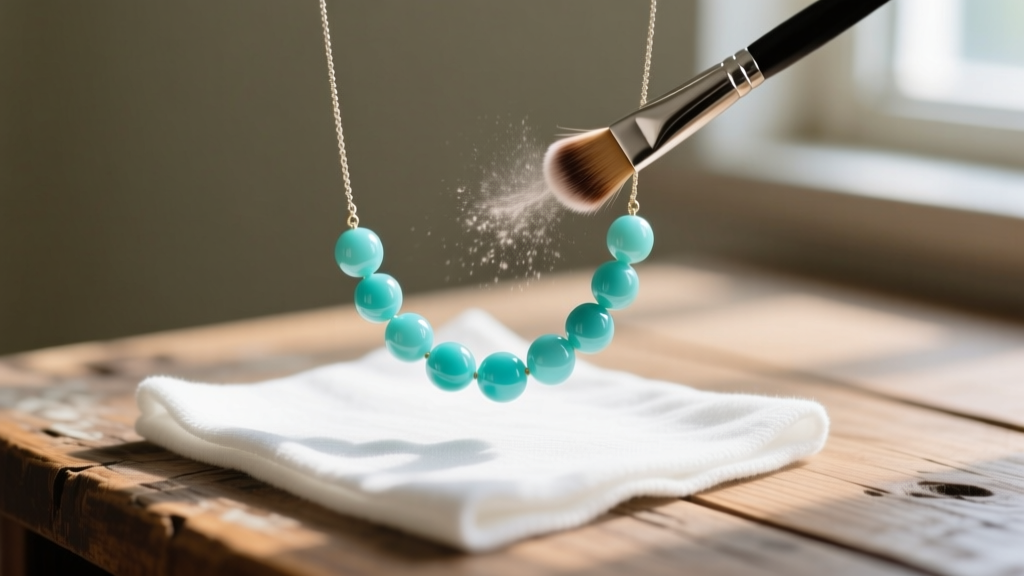
You will need a can of compressed air, a clean goat-hair makeup brush (or a dedicated soft-bristled jewelry brush), and a lint-free microfiber cloth. Avoid stiff bristles, which can scratch the polished surface of the seed beads.
The Process
- Air Dusting: Lay the necklace flat on a clean microfiber cloth. Use short bursts of compressed air from a distance of 6 to 8 inches to dislodge dust, dead skin cells, and cosmetic powders trapped between the tightly packed seed beads.
- Brush Sweeping: Gently sweep the goat-hair brush along the length of the necklace, working in the direction of the thread. This lifts remaining particulate matter without applying lateral pressure that could stress the string.
- Clasp Detailing: If your necklace features a sterling silver or gold-filled clasp, use a dry cotton swab to clean the crevices of the lobster claw or toggle mechanism. Never apply liquid silver polish, as accidental contact with the turquoise will cause immediate chemical spotting.
Spot-Cleaning and Catastrophic Failures to Avoid
Occasionally, dry cleaning is insufficient to remove localized grime or body oils. When spot-cleaning is absolutely necessary, use a barely damp microfiber cloth. Moisten a small corner of the cloth with distilled water—never tap water, which contains chlorine and dissolved minerals that can leave microscopic calcified deposits on the beads. Gently pinch a single soiled bead through the cloth and twist. Allow the necklace to air dry completely flat before storing.
Never under any circumstances place a turquoise seed bead necklace in an ultrasonic cleaner or a jewelry steamer. The high-frequency cavitation bubbles will shatter the fragile seed beads, and the heat will instantly melt or warp synthetic beading threads like Wildfire or Fireline.
Furthermore, avoid all commercial jewelry dips, ammonia-based cleaners, and even mild dish soaps. As noted by Jewelers of America, porous gemstones require strictly mechanical, non-chemical cleaning to prevent irreversible structural damage and color leaching.
Thread Integrity and Storage Protocols
The lifespan of a turquoise seed bead necklace is ultimately dictated by its thread. Modern beadweavers often use gel-spun polyethylene threads (such as Fireline or Wildfire) which offer superior abrasion resistance and do not stretch. However, if your necklace was strung on traditional silk or standard nylon, it requires rigorous monitoring.
Inspecting for Wear
Every three months, gently stretch a small section of the necklace. If you see gaps of thread appearing between the beads (a phenomenon known as 'thread show'), or if the thread feels stiff and brittle, the structural integrity is compromised. The necklace must be professionally restrung immediately to prevent a catastrophic snap.
Optimal Storage Conditions
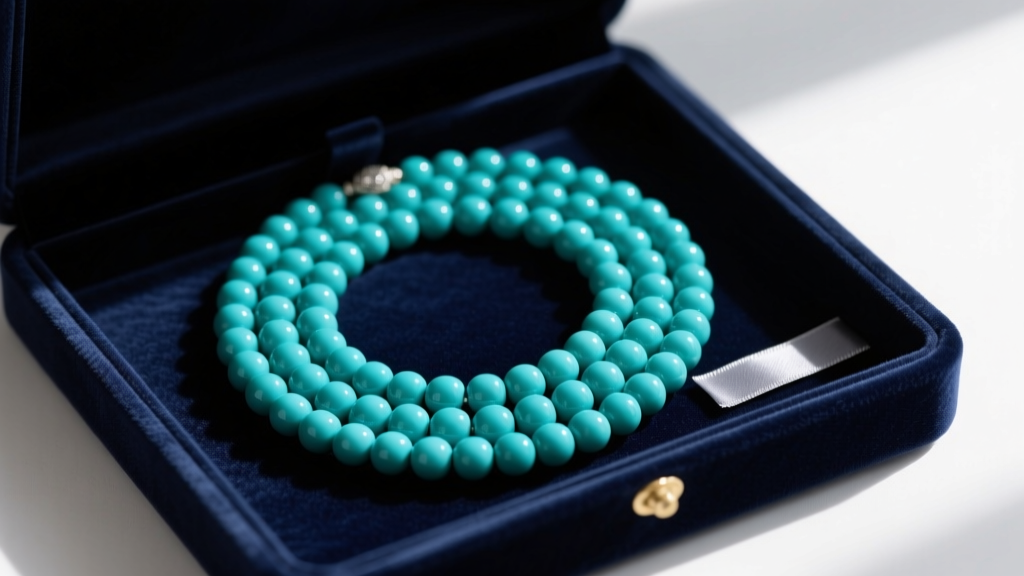
Turquoise can dehydrate and crack in excessively dry environments, while high humidity promotes thread rot and metal clasp tarnishing. Store your necklace in a climate-controlled environment with a relative humidity (RH) between 40% and 50%. Keep it laid flat or loosely coiled in a fabric-lined jewelry box. Avoid hanging the necklace, as the constant gravitational pull will cause the thread to stretch permanently over time, leading to unsightly gaps between the seed beads. Always store the piece away from direct sunlight, as UV radiation will rapidly degrade nylon and silk threads, causing them to snap without warning.
Quick Reference: Care Do's and Don'ts
| Maintenance Action | Status | Expert Reasoning |
|---|---|---|
| Wearing after applying perfume | DON'T | Alcohol and essential oils in perfumes will penetrate the porous turquoise, causing permanent discoloration and chemical breakdown. |
| Using compressed air for dust | DO | Safely removes abrasive particulates from tight bead gaps without introducing moisture or friction. |
| Storing in a sealed plastic bag | DON'T | Traps ambient moisture and off-gassing plastics, which can accelerate thread degradation and tarnish metal clasps. |
| Wiping with a damp microfiber | DO | Safe for localized spot-cleaning of body oils, provided distilled water is used and the piece is air-dried flat. |
| Hanging on a jewelry tree | DON'T | Gravity induces continuous tension on the thread, leading to permanent stretching and 'thread show' between beads. |
By treating your turquoise seed bead necklace not just as jewelry, but as a delicate textile-stone hybrid, you ensure its structural integrity and vibrant color remain intact for generations. Consistent, gentle dry cleaning and mindful storage are the ultimate keys to preserving this intricate wearable art.


