Two Diamond Necklace Buying Guide: What to Look For
Discover expert tips for choosing a two diamond necklace. Compare settings, carat ratios, chain gauges, and 2026 pricing for natural and lab stones.

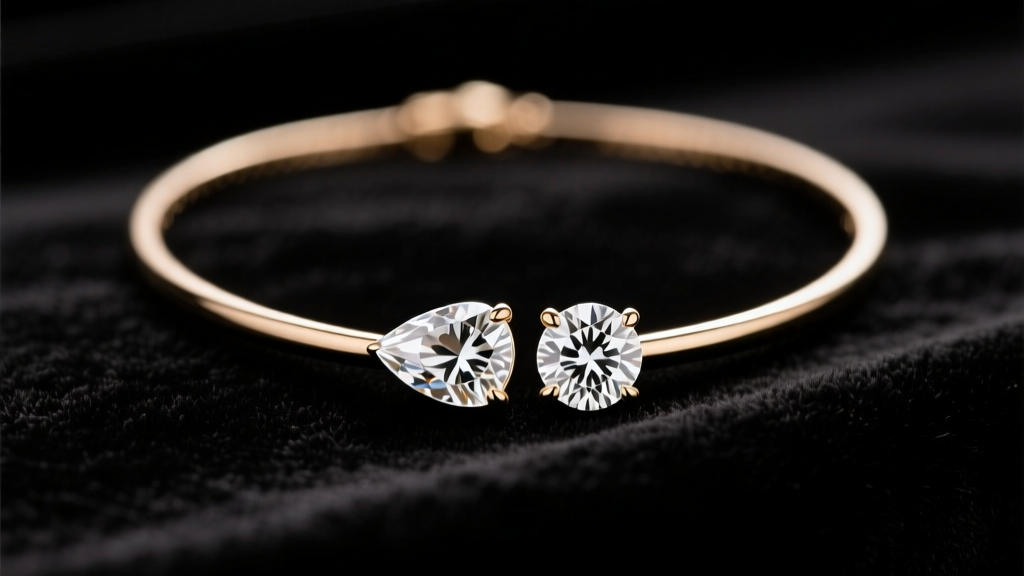
The Anatomy of a Two Diamond Necklace
The term two diamond necklace encompasses several distinct design architectures, each serving a different aesthetic purpose. Unlike a traditional solitaire that relies on a single focal point, a dual-stone pendant plays with balance, asymmetry, and light return. In 2026, the market is dominated by three primary layouts:
- Toi et Moi (Side-by-Side): Two stones of equal or varying sizes sit horizontally or diagonally adjacent to one another. This style maximizes the millimeter spread across the collarbone.
- Asymmetric Drop: A larger primary stone is suspended below a smaller accent stone, often connected by a delicate gold link or a hidden diamond bail.
- Matched Pair Solitaires: Two identical pendants (e.g., two 0.25 CT bezel-set rounds) spaced an inch apart on a single cable chain, creating a modern, minimalist look.
Understanding which layout you are purchasing is critical, as it dictates the required chain gauge, the setting security, and the optimal carat weight distribution.
Carat Weight Ratios and Millimeter Spread
When buying a two diamond necklace, Total Carat Weight (TCW) can be deceptive. A 1.00 CTW pendant could consist of two perfectly matched 0.50 CT stones, or a 0.85 CT center with a 0.15 CT accent. The visual impact is determined by the millimeter spread, not just the carat weight. According to the GIA Diamond Anatomy guidelines, a well-cut 0.50 CT round brilliant measures approximately 5.15mm in diameter.
| TCW Split | Stone 1 (CT / mm) | Stone 2 (CT / mm) | Visual Effect & Best Use |
|---|---|---|---|
| 1.00 CTW (50/50) | 0.50 CT / 5.15mm | 0.50 CT / 5.15mm | Symmetrical, balanced. Ideal for Toi et Moi styles. |
| 1.00 CTW (75/25) | 0.75 CT / 5.80mm | 0.25 CT / 4.00mm | Dramatic focal point. Best for asymmetric drops. |
| 0.50 CTW (50/50) | 0.25 CT / 4.00mm | 0.25 CT / 4.00mm | Subtle, everyday wear. Perfect for matched pair spacing. |
| 1.50 CTW (Mixed) | 1.00 CT Pear (8x5mm) | 0.50 CT Marquise (8x4mm) | High-fashion, elongated silhouette for deep necklines. |
Expert Insight: If you are pairing two different diamond shapes (like a pear and a marquise), ensure their lengths are within 0.5mm of each other to maintain visual harmony, even if their carat weights differ significantly.
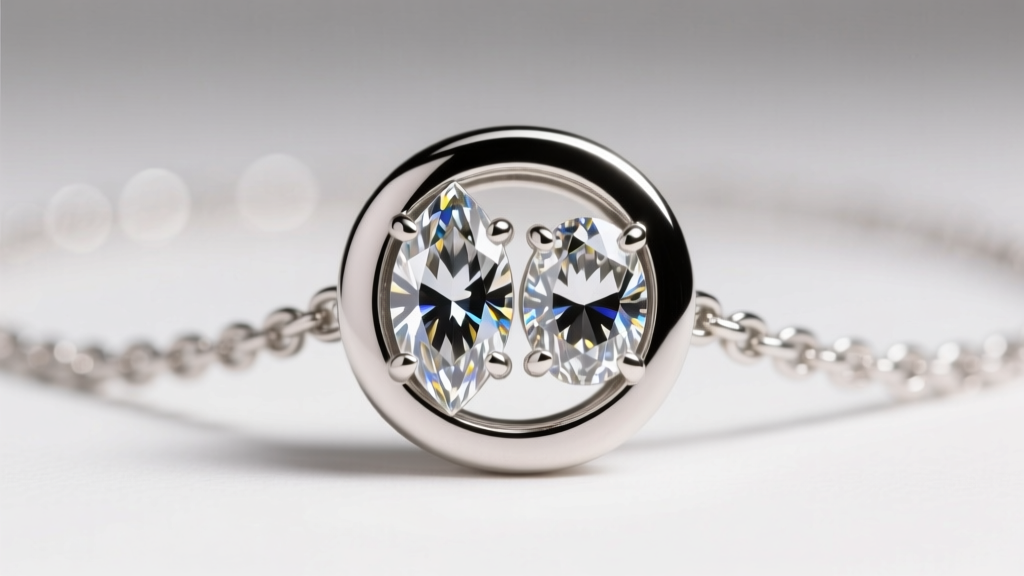
Setting Styles: Security Meets Brilliance
The setting must secure two stones without obstructing their light performance. Because dual-stone pendants experience more rotational friction against the skin than single solitaires, the setting choice is paramount.
Shared Prong vs. Individual Prong
In a Toi et Moi design, jewelers often use a shared prong where the two stones meet to reduce metal visibility. However, shared prongs require precise stone calibration. If one stone is even 0.1mm larger than the specification, the shared prong will not seat properly, leading to a loose stone. For active wearers, individual 4-prong settings are vastly superior, offering independent tension for each diamond.
Full Bezel and Half-Bezel
A full bezel wraps the entire girdle of both diamonds in metal. While it sacrifices about 10-15% of the diamond's visible surface area and slightly reduces edge-to-edge brilliance, it is the most secure setting for a two diamond necklace. It prevents the girdles from chipping if the pendant swings and strikes a hard surface.
Metal Alloys and Prong Durability
The FTC Jewelry Guides mandate strict hallmarks for precious metals, but they don't dictate which is best for pendant prongs. Here is how the primary alloys perform in dual-stone settings:
- Platinum (950): Dense and malleable. If a prong is bumped, it bends rather than snaps. However, its softness means prongs can pull away from the diamond over years of friction.
- 14K White Gold: Stiffer and more rigid than platinum or 18K gold. The higher alloy content (usually nickel or zinc) gives the prongs a "memory" that tightly grips the diamond girdle. Highly recommended for bezel and prong settings under 1.50 CTW.
- 18K Yellow Gold: Softer and richer in color. Best used in bezel settings where the metal is pushed over the stone, rather than prong settings which require high tensile strength.
Chain Selection: Gauge and Clasp Mechanics
A two diamond necklace requires a chain that can support the pendant's weight without snapping, yet remain delicate enough to complement the stones. For pendants weighing between 1.5 and 3.5 grams, a 0.9mm to 1.1mm box chain or cable chain is optimal. Avoid hollow-cored chains, as they will crush under the torque of a dual-stone pendant.
Furthermore, inspect the bail (the loop connecting the pendant to the chain). High-end manufacturers use laser-soldered jump rings. If the jump ring is merely pushed shut without solder, the chain will eventually act like a saw, cutting through the soft gold bail within a year of daily wear.

Natural vs. Lab-Grown: 2026 Market Realities
The pricing landscape for diamonds has shifted dramatically. As of 2026, lab-grown diamonds offer identical chemical and optical properties to natural stones but at a fraction of the cost. According to the GIA Diamond Buying Guide, lab-grown stones are graded on the exact same 4Cs scale.
Pricing Benchmark (1.00 CTW Two Diamond Pendant, VS1/G Color):
Natural Earth-Mined: $5,200 – $7,800
Lab-Grown (CVD/HPHT): $1,100 – $1,800
If purchasing natural diamonds, it is vital that both stones share the same fluorescence grade. If one stone has "Strong Blue" fluorescence and the other has "None," the pendant will look visibly mismatched and potentially milky when exposed to UV light or direct sunlight.
The Pre-Purchase Inspection Checklist
Before finalizing your purchase, run through this expert checklist to ensure structural integrity and aesthetic perfection:
- Girdle Thickness: Ensure neither diamond has an "Extremely Thin" girdle, especially on the edges where the two stones meet or where the prongs sit.
- Color Matching: For natural stones, the color grade must be within one step of each other (e.g., an F color paired with a G color is acceptable; an E paired with an H will show a noticeable yellow tint on one side).
- Bail Clearance: Check that the inner diameter of the pendant bail can comfortably slide over the specific clasp of the included chain without forcing it.
- Certificate Verification: Both stones over 0.30 CT should have independent laser inscriptions on their girdles matching their respective GIA or AGS grading reports.
By prioritizing precise millimeter proportions, robust chain gauges, and matched optical characteristics, your two diamond necklace will remain a secure, brilliant staple in your jewelry rotation for decades.


