Two Stone Necklace Guide: Meanings, Styles, and How to Wear
Discover everything about the two stone necklace. Learn about Toi et Moi meanings, gemstone pairings, chain lengths, and how to style this classic piece.

What Exactly is a Two Stone Necklace?
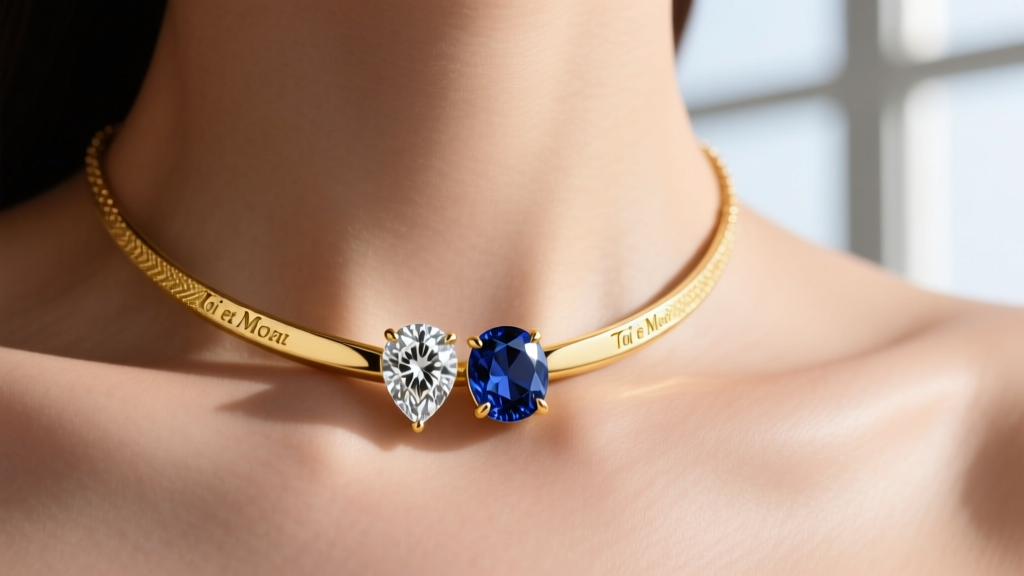
When building a foundational jewelry collection, beginners often gravitate toward single-solitaire pendants. However, the two stone necklace offers a sophisticated alternative that balances visual weight and deep symbolism. In the jewelry industry, this design generally falls into two distinct categories: the Toi et Moi (You and Me) pendant and the dual-station necklace.
A Toi et Moi pendant features two gemstones set in an intertwined, bypass, or adjacent mounting. The stones physically touch or wrap around one another, symbolizing the union of two souls. Conversely, a dual-station necklace features two distinct gemstones spaced apart on a single chain, often resting symmetrically on the collarbone. While both are technically two stone necklaces, the Toi et Moi style is currently dominating fine jewelry trends due to its romantic heritage and striking visual contrast.
The Romantic History of Toi et Moi
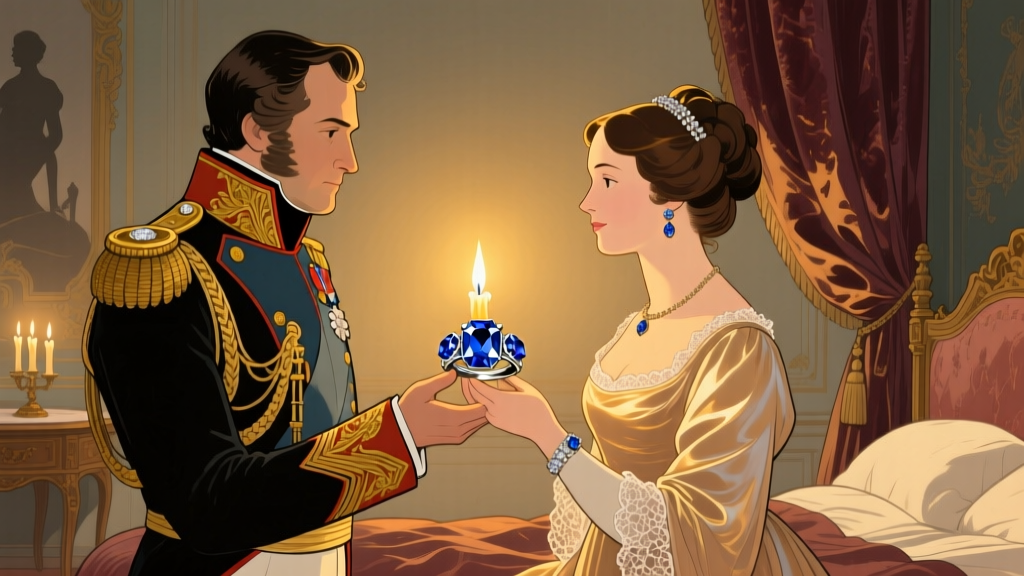
The dual-gemstone motif is not a modern invention; it is steeped in centuries of romantic lore. The trend traces its origins back to 1796 when Napoleon Bonaparte proposed to Joséphine de Beauharnais with a bypass ring featuring a pear-cut diamond and a pear-cut blue sapphire. According to Britannica's historical archives on jewelry, this design quickly became a status symbol among European aristocracy, representing the coming together of two distinct lives.
Today, this historical motif has been adapted from rings into necklaces, allowing wearers to keep the symbolic stones close to the heart. Modern jewelers frequently mix gemstone cuts—such as pairing an emerald-cut diamond with a round sapphire—to create an organic, asymmetrical aesthetic that feels both vintage and distinctly contemporary.
Decoding the Anatomy: Settings and Metals
Choosing the right metal and setting for your two stone necklace is critical for both durability and light performance. As a beginner, you must understand how different alloys interact with delicate prongs.
Metal Grades Explained
- 14k Gold (58.5% pure gold): The industry standard for everyday necklaces. Alloyed with copper, silver, and zinc, 14k gold provides the tensile strength necessary to hold 4-prong settings securely without bending.
- 18k Gold (75% pure gold): Offers a richer, warmer yellow hue but is noticeably softer. If you choose 18k gold for a two stone pendant, opt for bezel settings to protect the stones from impact.
- Platinum (95% pure): Dense, hypoallergenic, and naturally white. Platinum prongs are highly malleable yet incredibly strong, making them the safest choice for securing expensive natural diamonds. Over time, platinum develops a soft patina rather than wearing away like gold.
Prong vs. Bezel Settings
A standard 4-prong setting maximizes light return by exposing the crown and pavilion of the gemstone, but it leaves the girdle (the widest edge) vulnerable to chipping. A bezel setting, where a thin rim of metal completely encircles the stone, reduces light return by approximately 10% but offers superior protection for active wearers. For a two stone necklace where the gems might knock against each other, a bezel or a 6-prong setting is highly recommended.
Gemstone Pairing Matrix for Beginners
Pairing two different gemstones requires an understanding of the Mohs Hardness Scale. If you pair a very hard stone with a softer one, the harder stone can scratch the softer one over time if they are set in a bypass style where they touch. The GIA Gem Encyclopedia emphasizes the importance of matching durability when designing multi-gemstone pieces.
| Gemstone Pairing | Mohs Hardness | Est. Price (0.50ct TW) | Vibe & Best For |
|---|---|---|---|
| Diamond & Sapphire | 10 & 9 | $800 - $2,500 | Classic, high-contrast, everyday wear |
| Diamond & Emerald | 10 & 7.5 | $600 - $2,000 | Vintage, luxurious, requires careful wear |
| Moissanite & Morganite | 9.25 & 7.5 | $250 - $600 | Romantic, budget-friendly, peach/pink hues |
| Lab Diamond & Ruby | 10 & 9 | $500 - $1,500 | Bold, passionate, highly durable |
Expert Tip: If you are pairing an Emerald (Mohs 7.5) with a Diamond (Mohs 10), ensure the jeweler sets them with a small metal barrier or uses a bypass design where the stones do not physically rub against one another to prevent long-term abrasion.
Chain Lengths and Layering Framework
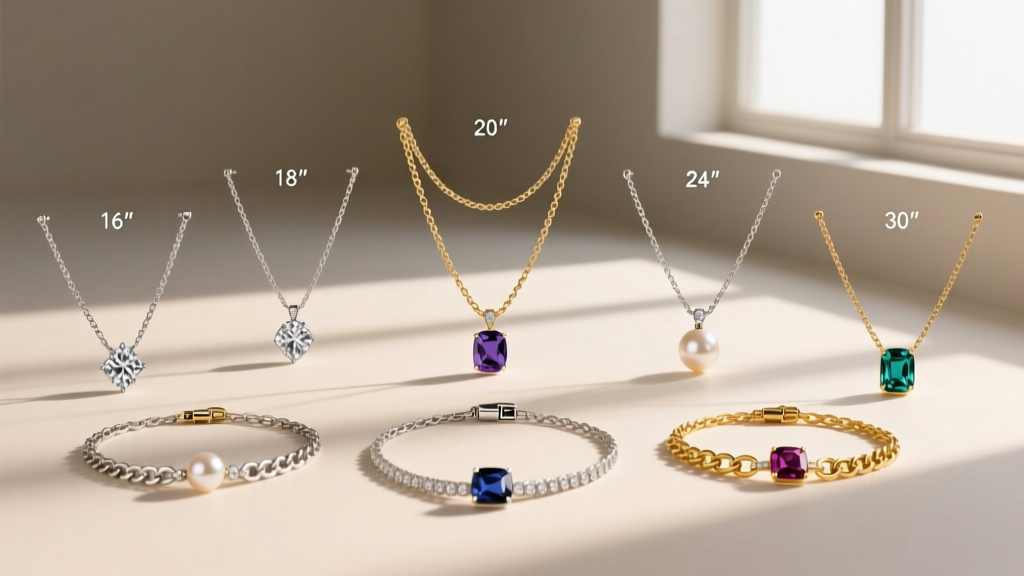
The visual impact of a two stone necklace relies heavily on chain length and how it interacts with your neckline. The placement of the pendant dictates whether it acts as a subtle accent or a bold statement.
The 14-16-18 Layering Rule
To layer your two stone pendant without tangling, follow the graduated spacing rule:
- Base Layer (14 inches): A simple gold or silver choker, or a delicate pearl strand.
- The Focal Point (16 inches): Your two stone necklace should sit right at the hollow of the collarbone. A 1.2mm to 1.5mm box chain is ideal here, as it resists kinking and supports the weight of dual gemstones.
- The Anchor (18+ inches): A longer, heavier chain, such as a paperclip link or a simple lariat, to draw the eye downward and frame the face.
Matching Necklines
- V-Neck: The natural geometry of a V-neck perfectly mirrors the intertwined shape of a Toi et Moi pendant. Keep the chain at 16 inches so the pendant rests just above the fabric line.
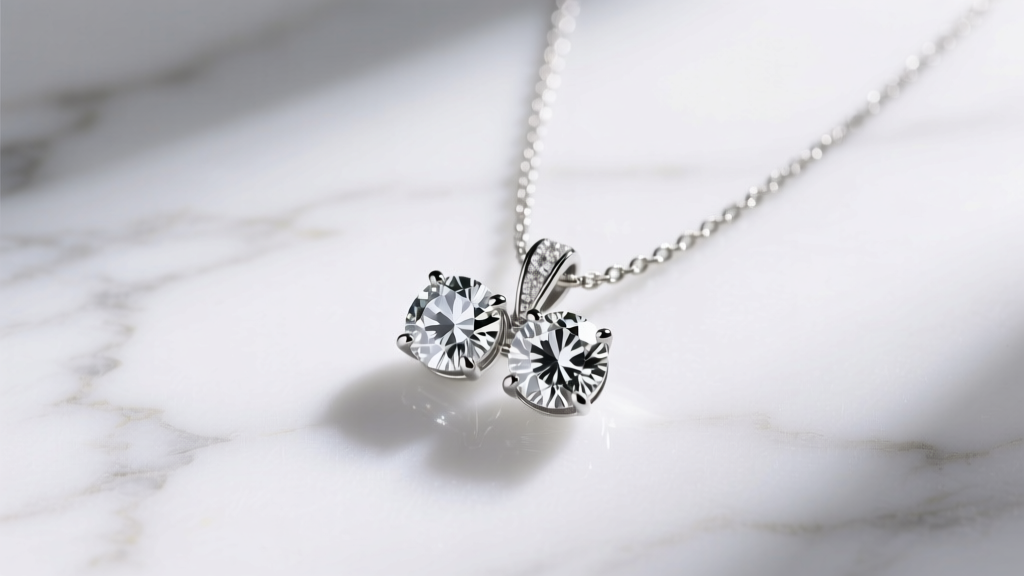
- Scoop Neck: A wider neckline allows for a slightly longer chain (18 inches) or a dual-station necklace where the stones span across the collarbones.
- Crew Neck: Avoid short chains that will clash with the high collar. Opt for a 20-inch chain so the two stone pendant rests visibly on the skin below the fabric.
The Ultimate Buying Checklist
Before purchasing a two stone necklace, run through this quick quality-assurance checklist to ensure you are investing in a piece that will last a lifetime:
- Prong Inspection: Use a jeweler's loupe to ensure all prongs are flush against the stone's crown. Snagging on fabric is a sign of poorly filed prongs.
- Color Matching: If buying two diamonds, ensure they are within one color grade of each other (e.g., G and H) so one does not look visibly yellow next to the other.
- Clasp Security: A two stone pendant carries more weight than a single solitaire. Ensure the chain features a sturdy lobster clasp rather than a delicate spring ring, which can easily snap under the weight of dual gemstones.
- Hallmark Verification: Always look for the metal purity stamp (e.g., 14K, 18K, PT950) on the jump ring or the clasp itself to verify the metal grade.
By understanding the historical significance, structural anatomy, and styling mechanics of the two stone necklace, you can confidently select a piece that is not only visually stunning but deeply meaningful. Whether you choose a high-contrast diamond and sapphire Toi et Moi or a subtle dual-diamond station piece, this versatile design will remain a cornerstone of your jewelry wardrobe for decades to come.