How to Style Gold Layered Necklaces for Women: A Step-by-Step Guide
Master the art of stacking with our step-by-step guide to gold layered necklaces for women. Learn lengths, karats, and anti-tangle secrets.


Curating the perfect stack of gold layered necklaces for women is less about simply draping multiple chains around your neck and more about understanding the physics of jewelry, the geometry of your neckline, and the metallurgy of gold. A poorly planned layering attempt results in a tangled, frustrating mess that spends more time in the repair shop than on your skin. A masterfully executed stack, however, elevates a basic wardrobe into a signature personal style.
This comprehensive, step-by-step guide will teach you how to build a cohesive, tangle-free gold necklace stack. We will cover exact chain gauges, the Vickers hardness scale of different gold karats, and the mechanical secrets to preventing friction tangling.
The Anatomy of a Perfect Gold Necklace Stack
The foundation of any successful layered look is spatial distribution. If your chains are within a half-inch of the same length, they will twist, knot, and compete for visual dominance. The golden rule of layering is the Two-Inch Increment. Each subsequent chain should be at least 1.5 to 2 inches longer than the one above it to allow for natural movement and visual separation.
| Tier | Target Length | Recommended Chain Style | Pendant / Weight Profile |
|---|---|---|---|
| 1 (Base) | 14" - 15" | 1.0mm - 1.2mm Cable or Box | Minimalist (e.g., 2mm solitaire, tiny bezel) |
| 2 (Middle) | 16" - 17" | 1.5mm Paperclip or Rope | Medium (e.g., 8mm coin, vintage locket) |
| 3 (Anchor) | 18" - 20" | 2.0mm+ Curb, Figaro, or Bead | Statement (e.g., large medallion, heavy cross) |
Step 1: Choose Your Gold Karat and Color Consistency
Before mixing chain styles, you must decide on your gold karat. While 24k gold is pure, it is far too soft for daily layering. According to the Gemological Institute of America (GIA), pure gold ranks low on the Vickers hardness scale, making it highly susceptible to scratching and stretching when chains rub against one another.
14k vs. 18k Gold for Layering
For a stack that will endure daily friction, 14k gold is the superior choice. With a Vickers hardness of approximately 140 HV, 14k gold contains 58.3% pure gold alloyed with metals like copper, silver, and zinc, giving it the tensile strength to resist micro-abrasions. 18k gold (75% pure gold, ~125 HV) offers a richer, deeper yellow hue but is softer. If you layer 18k chains, expect visible surface wear within the first year of daily use.
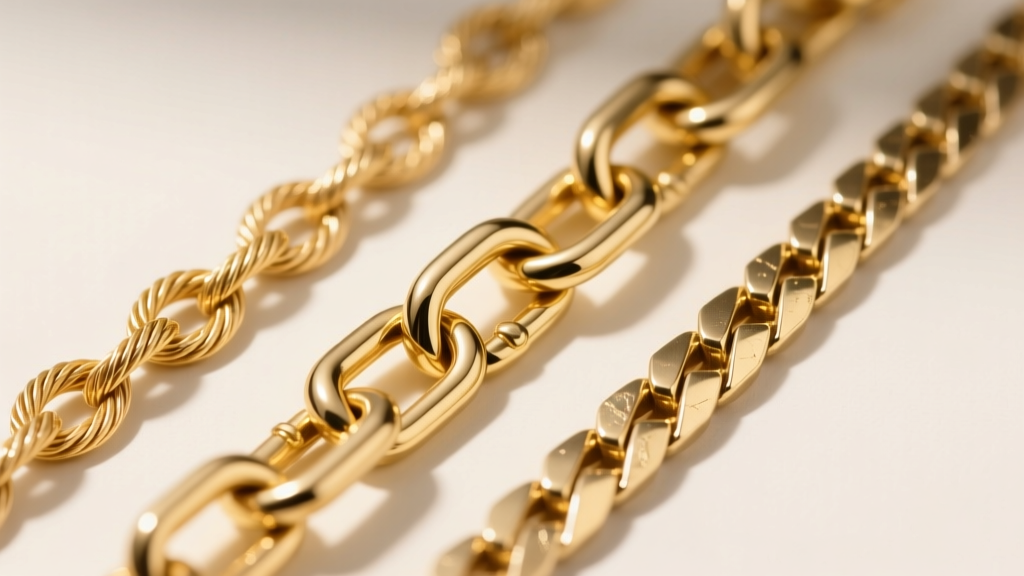
Expert Tip: Maintain color consistency. Mixing 14k yellow gold with 18k yellow gold in the same stack will highlight the slight color discrepancy, making the stack look mismatched rather than intentional. Stick to one karat across your entire layered set.
Step 2: Map Your Neckline and Occasion
Gold layered necklaces for women must be adapted to the canvas they rest upon: your clothing. The neckline of your top dictates the optimal anchor length of your stack.
- Crew Necks & High Collars: Opt for a shorter stack (14", 16", 18"). The base chain should sit just above the fabric hem, while the anchor chain rests directly on the cotton or wool. Avoid chains longer than 18", as they will get lost in the drape of the fabric.
- V-Necks & Wrap Dresses: This is the ideal canvas for layering. Mimic the V-shape of the garment by using longer lengths (16", 18", 22"). Ensure the middle chain features a vertical pendant (like a marquise diamond or a teardrop pearl) to elongate the torso.
- Scoop Necks & Button-Downs: Leave the top two buttons of a shirt undone and fill the negative space with a 15" choker-style chain, an 18" mid-layer, and a 20" heavy curb chain. The contrast between the structured shirt and the fluid gold creates a high-fashion editorial look.
Step 3: The Anti-Tangle Protocol
The most common complaint regarding layered necklaces is tangling. Tangling is not a matter of bad luck; it is a matter of physics and surface friction. When two chains with high surface-area contact rub together, they act like suction cups, wrapping around each other and forming complex knots.
Chain Profiles and Tangle Risk
To prevent this, you must mix chain textures. Never layer two flat chains together, and never layer two highly textured chains together.
- High Tangle Risk (Avoid Layering Together): Herringbone, Snake, and Omega chains. These lie completely flat against the skin. When layered, their smooth surfaces create maximum friction, guaranteeing a knot within an hour of wear.
- Medium Tangle Risk: Box and Bead chains. These have geometric edges that can catch on the links of other delicate chains.
- Low Tangle Risk (Ideal Base Layers): Cable, Rope, and Paperclip chains. The open links and textured surfaces create micro-gaps of air between the chains, drastically reducing the surface contact area and allowing them to slide past one another smoothly.
By pairing a smooth herringbone chain as your base layer with a highly textured rope chain as your middle layer, you actively engineer a tangle-resistant stack.
Step 4: Fastening and Adjusting for Comfort
Hardware weight is the silent killer of a comfortable necklace stack. A heavy, oversized lobster clasp on a delicate 14-inch 1.0mm cable chain will act as a pendulum, constantly pulling the chain to the back of your neck and causing the pendant to slide off-center.
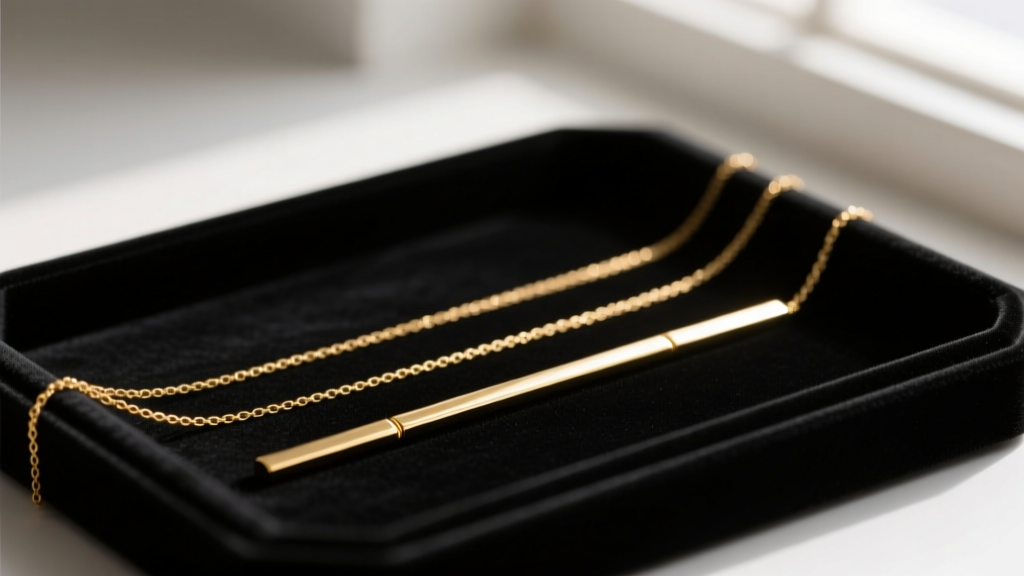
Match your clasp weight to your chain gauge. For chains under 1.5mm, utilize a 5x9mm spring ring clasp or a lightweight trigger clasp. If you are building a permanent stack and want to eliminate the hassle of fastening three separate clasps every morning, invest in a gold necklace spacer bar. This specialized clasp features three to five parallel loops that secure all your chains into a single, uniform point of connection, ensuring they remain perfectly spaced and completely tangle-free at the nape of your neck.
Step 5: Maintenance and Care for Layered Stacks
Layering accelerates the wear and tear on your jewelry. The constant micro-friction between chains can slowly wear down the metal over years of use, particularly at the jump rings connecting your pendants.
According to Jewelers of America, regular cleaning and inspection are vital for layered pieces. Once a month, clean your stack using a few drops of mild dish soap, warm water, and a soft-bristled baby toothbrush. This removes the buildup of body oils and lotions that act as an abrasive paste between the chain links. Furthermore, inspect the jump rings holding your pendants. If you notice a visible gap in the jump ring, take the piece to a jeweler to have it laser-welded shut before the pendant is lost.
Expert Troubleshooting: Fixing Common Layering Mistakes
"The biggest mistake I see clients make is trying to layer gold vermeil chains with solid gold chains. The friction from layering will strip the thin gold plating off the vermeil within months, exposing the brass or silver base metal and ruining the aesthetic of the entire stack."
If you are committed to the layered look, invest in solid 14k gold for the pieces that will touch and rub against each other. While gold vermeil is an excellent budget-friendly option for single, standalone statement pieces, it lacks the durability required for the friction-heavy environment of a layered stack. Expect to pay $150–$300 for a high-quality solid 14k gold 16-inch cable chain, a worthwhile investment for a stack designed to last a lifetime.
Quick Fixes for a Shifting Stack
If your middle chain keeps sliding under your base chain, the issue is likely a lack of visual and physical weight. Add a slightly heavier pendant to the middle chain to anchor it against your chest, or use a tiny silicone jewelry stopper bead on the back of the neck to create artificial tension and keep the lengths locked in place.
Mastering gold layered necklaces for women requires a blend of aesthetic intuition and mechanical understanding. By respecting the two-inch increment rule, mixing chain textures to defeat friction, and choosing the correct gold karat for your lifestyle, you can build a signature stack that remains elegant, comfortable, and entirely tangle-free.


